
Iran Goes On a Disinformation Offensive
In the wake of its war with the U.S. and Israel, Iranian state media outlets have stepped up their disinformation delivered to Iranians through claims of supposed battlefield victories, many backed by old or manipulated images.
NewsGuard has so far identified 18 war-related provably false claims pushed by Iran since the U.S. and Israel launched attacks on the Islamic republic on Feb. 28, 2026. In contrast, in the two weeks before the U.S-Israel attack on Iran, NewsGuard identified five false claims pushed by Iranian sources.
NewsGuard’s monitoring of Iranian outlets previously rarely turned up examples of AI-manipulated images used to spread false claims. NewsGuard is now finding that Iranian media have been increasingly using such images, often with these images originating outside Iran.
For example, in a Feb. 28, 2026, X post, Iranian state-controlled outlet Tehran Times published a satellite image supposedly showing the destruction of an advanced U.S. radar at Al-Udeid Air Base in Qatar. The post said, “An American radar in Qatar was completely destroyed today in an Iranian drone strike,” alongside the image showing the site before and after the purported attack.
The image of the destroyed radar was circulated first by the X account “Legitimate Targets” strike. (@LegitTargets), which is based in Austria. However, information warfare analyst Tal Hagin said on X that the image was an AI-generated version of an image taken from Google Earth on Feb. 2, 2025, a month before the war started.
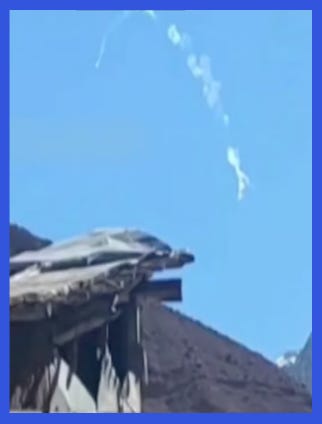
Another video pushed by Iranian state-linked sources claimed to show a fighter jet being shot down over Tehran on March 4, which Islamic Revolutionary Guard Corps (IRGC)-linked Telegram channels celebrated as proof that Iran had downed a U.S. F-15. In fact, the video was originally released by the Israeli Air Force, who said it showed an Iranian Yak-130 shot down over Tehran using an F-35.
FEWER SOURCES, MORE LIES
Such images can be especially convincing because the Iranian regime has almost totally cut Iranians off from the global internet. On Feb. 28, web infrastructure company Cloudflare described Iran’s connectivity collapse since the war began as a “near-complete shutdown,” with traffic down 98 percent compared to the prior week.
Without access to outside news, Iranians are left to get their information from state TV and radio outlets, the state-controlled domestic internet network known as the National Information Network, and domestic platforms such as state-backed messaging app Bale. All these sources largely offer a steady stream of reports about the Iranian military’s supposed triumphs.
For example, the semi-official Mehr outlet reported that the USS Abraham Lincoln was hit by four Iranian ballistic missiles and attributed the claim to an Islamic Revolutionary Guard Corps (IRGC) statement. U.S. Central Command stated on March 1: “The Lincoln was not hit. The missiles launched didn’t even come close.”
In a similar vein, Tasnim, the military-aligned news outlet, quoted an IRGC spokesperson claiming that 650 U.S. troops were killed or wounded in the first two days of the war. CENTCOM said six U.S. service members have been killed in the conflict with Iran, including troops killed in a March 1, 2026 Iranian drone attack on a U.S. military facility at Port Shuaiba in Kuwait, far below the casualty figures reported by Iranian state media.
In some cases, Iranian sources used old images to back new false narratives. Agence France-Presse Fact Check found that a widely shared clip supposedly showing missiles hitting Tel Aviv actually showed a Dubai warehouse fire from November 2025. In others, video games were used to provide war images. Factnameh, a Persian-language fact-checking website, found that a clip shared by Iranian social media users on Telegram, X, Instagram, and Facebook, claiming to show Iranian air defense confronting an F-35 in Bandar Abbas, was extracted from the video game Arma 3.
Learn more about Reality Check’s Premium Membership here.
In Case You Missed It … Kremlin Creates Iran War Fakes to Undermine Ukraine and its Allies
As coordinated U.S. and Israeli strikes on Iran enter their sixth day — and retaliatory attacks continue across multiple Gulf states — the Russian influence campaign known as Matryoshka has exploited the turmoil to spread fabricated reports targeting Ukraine and its allies, NewsGuard found.
The campaign named after the Russian nesting dolls for its methods of fabricating reports that mimic credible outlets has used the conflict to fabricate nine claims painting Ukraine as corrupt and its close ally France as weak, NewsGuard found.
Read the full report here.
This newsletter was edited by Dina Contini and Eric Effron.
You find, we report: Let your fellow Reality Check readers know about false claims you run across online. Our analysts debunk false claims before any others 80% of the time, but we can’t catch everything. If you find what looks like a false claim, let us know. We’ll investigate and report back in Reality Check.
Reality Check is produced by co-CEOs Steven Brill and Gordon Crovitz, and the NewsGuard team.
We launched Reality Check to shed light on the false claims spreading online, how they spread, and the forces behind them. Each day, we aim to bring you the story behind your news feed and help you stay informed about the false claims circulating in the news. Support our work by becoming a premium member.
Have feedback? Send us an email: realitycheck@newsguardtech.com.
Related stories
Related Knowledge Center: Fact-checking and its detractors
Fact-checking has become a familiar tool for political reporters to hold office-holders and candidates accountable. But critics ask if fact-checkers sometimes miss the forest for the trees, and if the practice often struggles with false equivalency the way conventional political coverage does.