
Women's solar training brightens homes and education
Posted on March, 08 2026
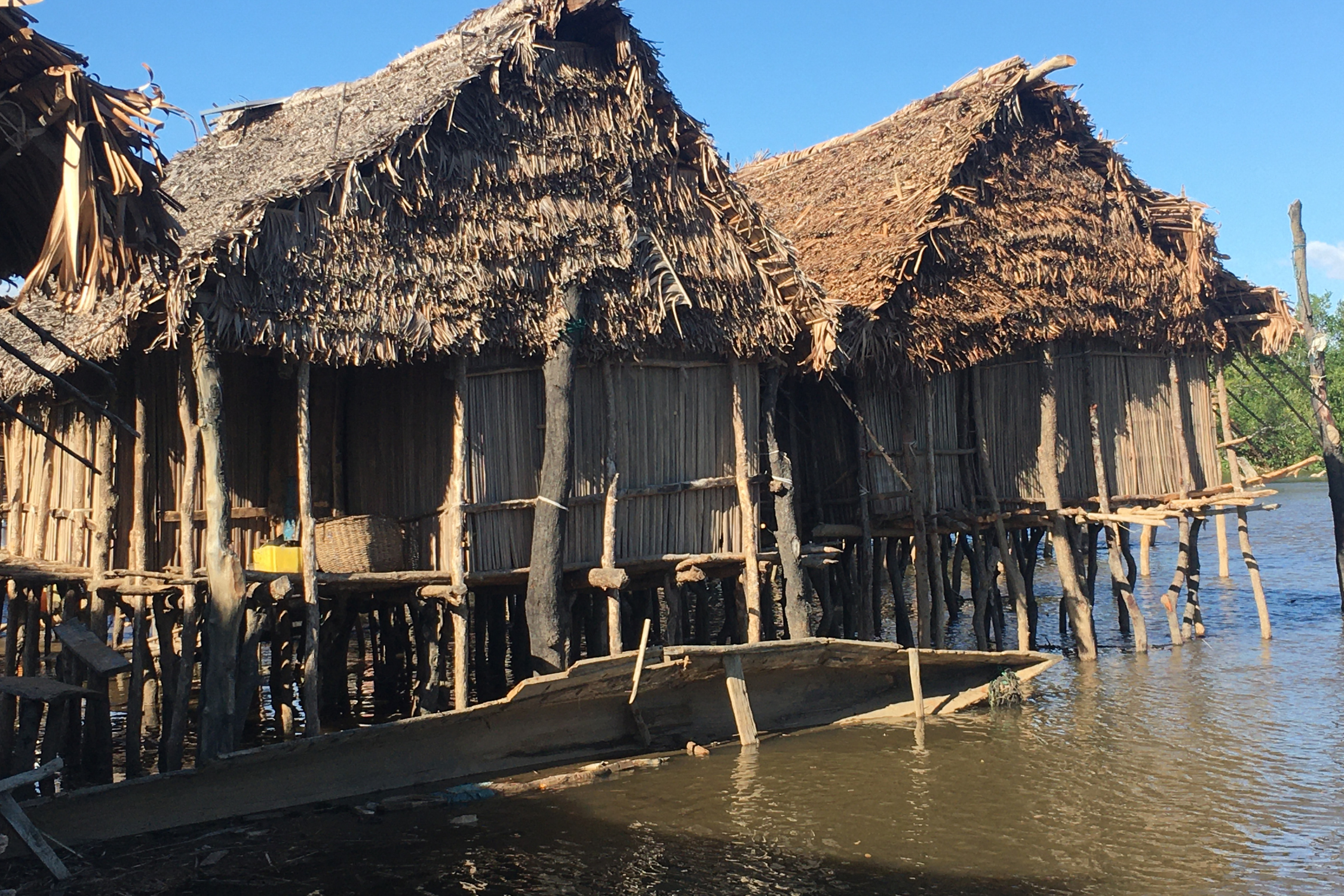 Stilted homes in Andavoanemboka village, Madagascar, where female solar technicians have brought solar-powered light. © Bella Roscher / WWF-CH
In the stilted homes of Madagascar’s coastal villages, women trained through the Barefoot College National Programme – with support from WWF – are expanding access to solar-powered light. As the light spreads, so does opportunity.
“We have lived here above the water for as long as I can remember,” said Henriette Mahafeno.
Mahafeno wakes up each morning in a stilted wooden hut, rising to start her day while the sea waters rise below. Through little gaps in the floor, she watches the sea flow beneath her feet.
“During high tide, we move through the village on narrow wooden bridges that lead over the water. Many visitors are surprised by this.” Mahafeno said.
About 200 fishing families live with Mahafeno on the edge of the sea in a northern village called Andavoanemboka. Their stilted homes are near the coast’s sprawling mangroves – a natural shield from flooding and storms.
“They are also spawning grounds for fish and other marine animals. This is how we make our living, so we take good care of our mangroves.”
The women lighting Madagascar
Mahafeno is among Madagascar’s growing numbers of female solar technicians, educated at the Barefoot College Training Centre south of the capital city. Through four months of training, rural women with little or no past education gain technical prowess in solar technology and other life skills. Then, they serve as powerful agents for change in their villages, lighting up homes with their newfound knowledge.
“The training at Barefoot College changed my life,” she said. She learned how to assemble electronic circuits and components into solar systems, in addition to installing, maintaining and repairing these systems. She even took away major lessons in women empowerment and reproductive rights.
“We also talked about contraception there. I mean, I love my children, but five is enough for me. And I made that clear to my husband after I returned,” she giggled.
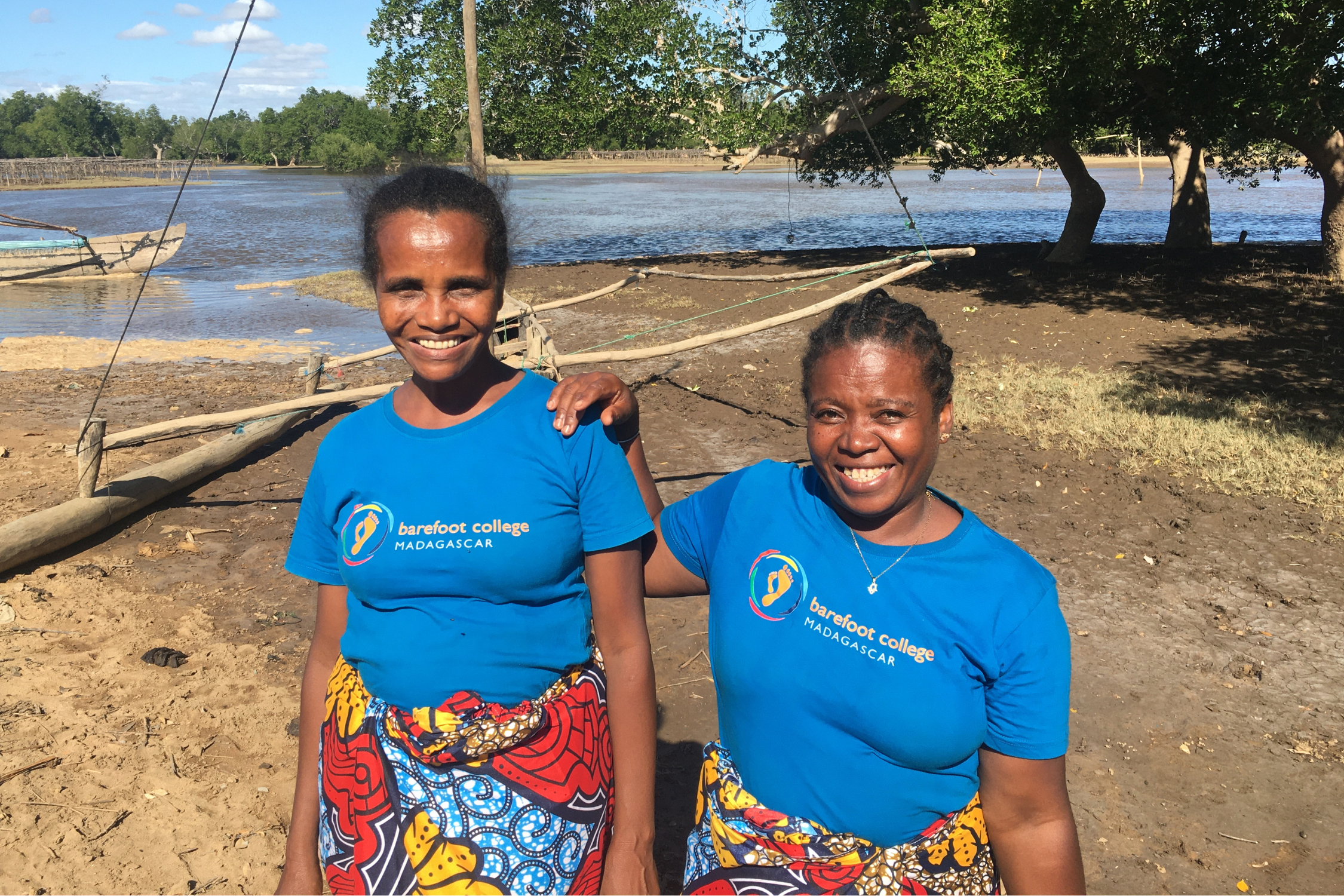 Henriette Mahafeno (left) and another solar technician in her village, Claudia (right), trained at the Barefoot College Training Centre. © Bella Roscher / WWF-CH
After her training, she and another solar technician got to work solarizing their village. Now, 165 households out of 210 have solar-powered light – replacing the dangerous use of candles in wooden homes or costly battery-powered flashlights.
“The light is a blessing for everyone. The children can play longer, listen to music or do their homework at night, and we can prepare more fish for sale. With our training, we have become more important to the community because we have brought electricity to the village.”
The impact goes far beyond Mahafeno’s village. So far, 131 rural women have been trained to light up their villages through the joint efforts of the Ministry of Energy and Hydrocarbons and Barefoot College Madagascar NGO. As a ground partner, WWF-Madagascar supported Barefoot College in training 78 of these women from 21 villages. Their work will brighten the daily lives of hundreds of thousands of people.
Ripples of change: Safety, education, opportunity
Across the island in southern Madagascar, another coastal fishing village called Lanirano is seeing the light. Lanirano joined the Barefoot College National Programme in May 2023. After careful work by solar technicians, solar committees and programme partners, the community was electrified for the first time in July 2025.
“When we return late from the city, seeing the lights of Lanirano from afar gives us a sense of comfort and progress,” said Tovondrainy, a father and fisherman in Lanirano.
Tovondrainy joined the local electricity users’ association to help move this transformation forward. Since the introduction of solar, his family life and community are shining brighter.
“Our children can now study and review their lessons at night, which was impossible before. The light also brings greater security, since thieves are now afraid to approach well-lit houses.”
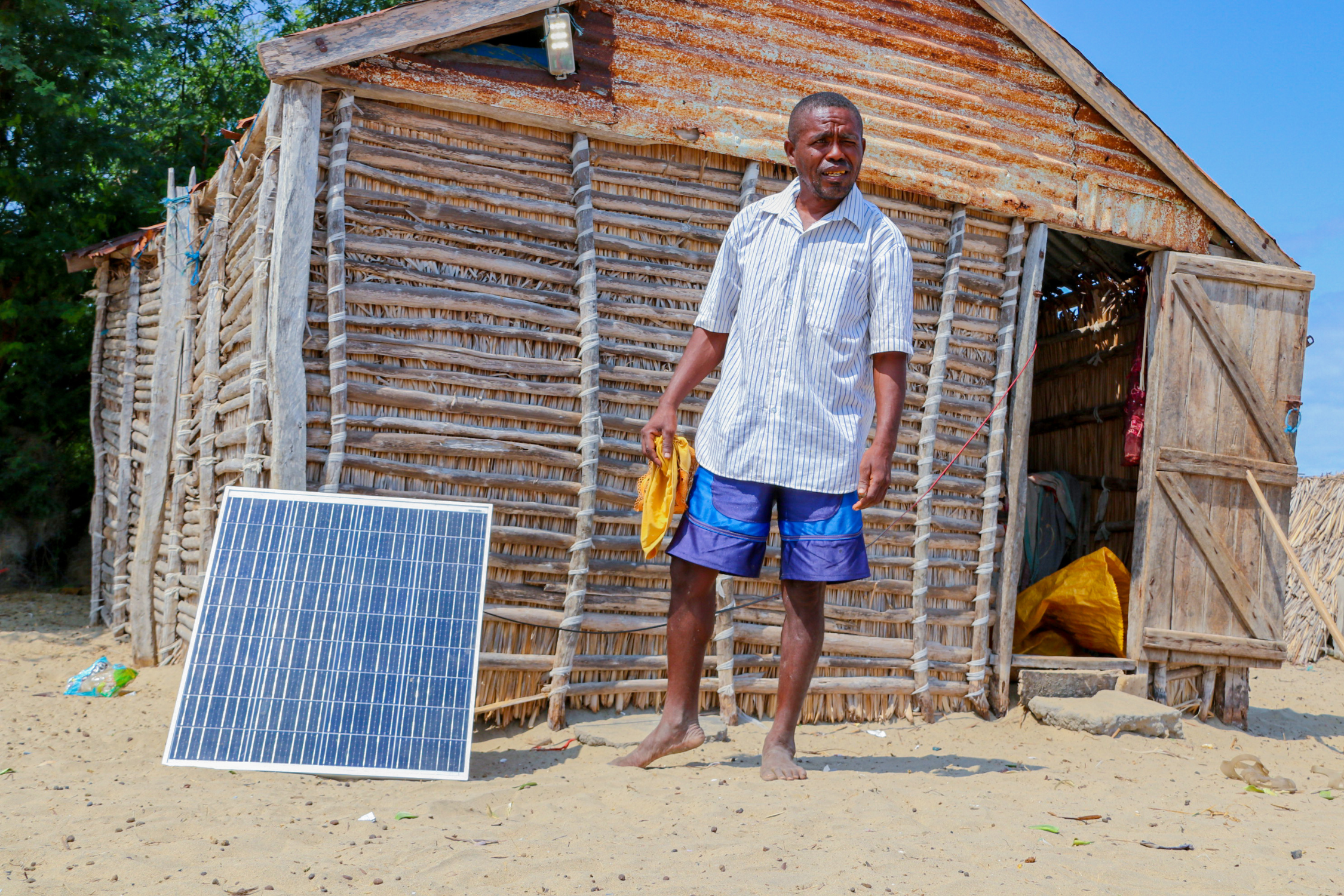 Tovondrainy, a member of the local electricity users’ association in Lanirano, with his solar panels. © Barefoot College Madagascar
The change has sparked economic opportunity and savings for Tovondrainy’s family. With light in the evenings, they can prepare fishing nets after sunset and cut spending on flashlight batteries, which cost them 15,000 ariary (about US$3.29) every month. There’s no need for burning kerosene either, a common fossil-based lighting solution that’s not only costly but also unsafe.
“With solar energy, our expenses have dropped significantly. It’s a big help for us,” he said.
With this programme, an energy revolution marches onward in Madagascar’s most remote rural villages, equipping communities to break free from darkness. By embracing the light, they also embrace education, employment and safer homes.
Mahafeno has high hopes for her youngest children to finish their baccalaureate degrees, now that they have access to light. “It is important to me that they work hard at school…A good education gives them better opportunities for the future.”
As for herself, Mahafeno has many dreams for tomorrow. Back at the training centre, she learned how to sew and run a small business. “Maybe I’ll take out a small loan to buy fabric to make clothes to sell,” she smiled. “If that works out, I’ll earn more.”
“If not, I’ll try something else; there are always opportunities in life to move forward.”
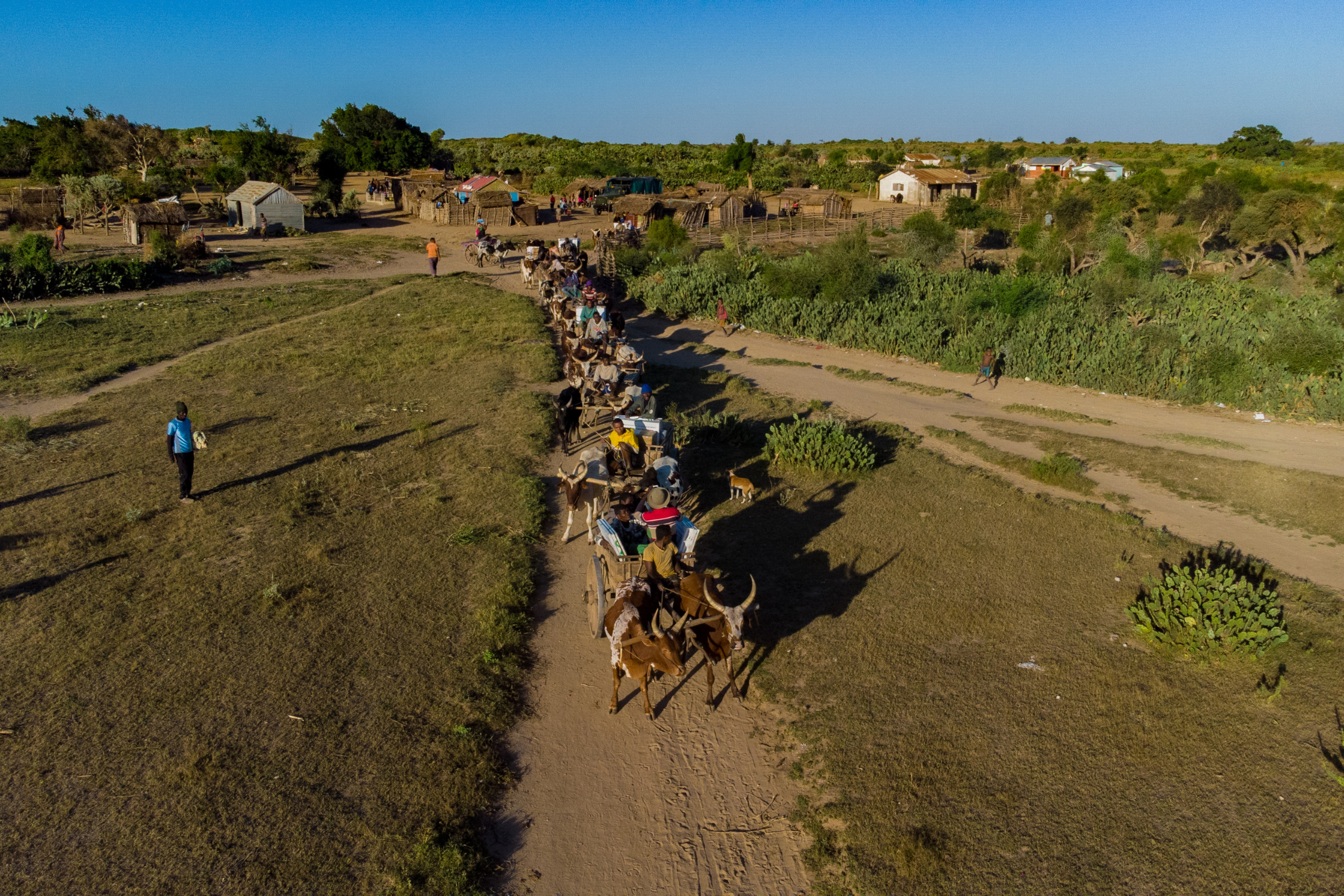 Transportation of solar equipment to Lanirano village. © Barefoot College Madagscar
Since 2017, the Malagasy Ministry of Energy and Hydrocarbons, NGO Barefoot College Madagascar and WWF have worked in close partnership to develop Madagascar’s training centre and educational curriculum for training rural women in solar technology. Through WWF’s Energizing Communities and Conservation (ECCo) programme, the training curriculum will soon expand to include solar-powered services beyond lighting. Mahafeno’s village, supported by WWF since 2014, will soon receive a solar-powered water pump.
Discover more
Madagascar’s “solar mamas” are lighting the way
Quiet currents of change in the Sunderbans
Elephants, energy and football in the forest
For more information, contact Solo Thierry Randriamanalina strandriamanalina@wwf.mg.