
The Wolf Came As A Wolf: Trump and the First Amendment
Tonight’s post is long. I bet you knew it would be. Be kind to yourself and consider reading it in “courses” or with an intermission. But please do read the whole thing. It matters.
Justice Scalia once used the phrase “this wolf comes as a wolf” in dissent to describe what he viewed as a naked assault on executive power, the Special Counsel Act. But the phrase is just as apt to describe the challenge Donald Trump poses to the First Amendment. This morning, MS NOW, CNN & POLITICO sued Donald Trump for banning them from the White House. He did that because he doesn’t like their reporting about him; he made that very clear. The plaintiffs argue that Trump has violated the First and Fifth Amendments, and as we discussed Saturday night, there is no doubt that they are correct.
The plaintiffs also sued Presidential Assistant for Communications Steven Cheung, Secret Service Director Sean Curran, and White House Chief of Staff Susie Wiles. At the same time, they asked the court to enter a temporary restraining order against the government and filed a memo of law in support of their position. The case is Cable News Network v. Trump.
The need to file suit was triggered when journalists for the outlets who attempted to enter the White House on Saturday found that their badges did not work. Secret Service employees then confiscated the badges. Those journalists, Akayla Gardner, Cheyenne Haslett, and Betsy Klein, are also plaintiffs in the case.
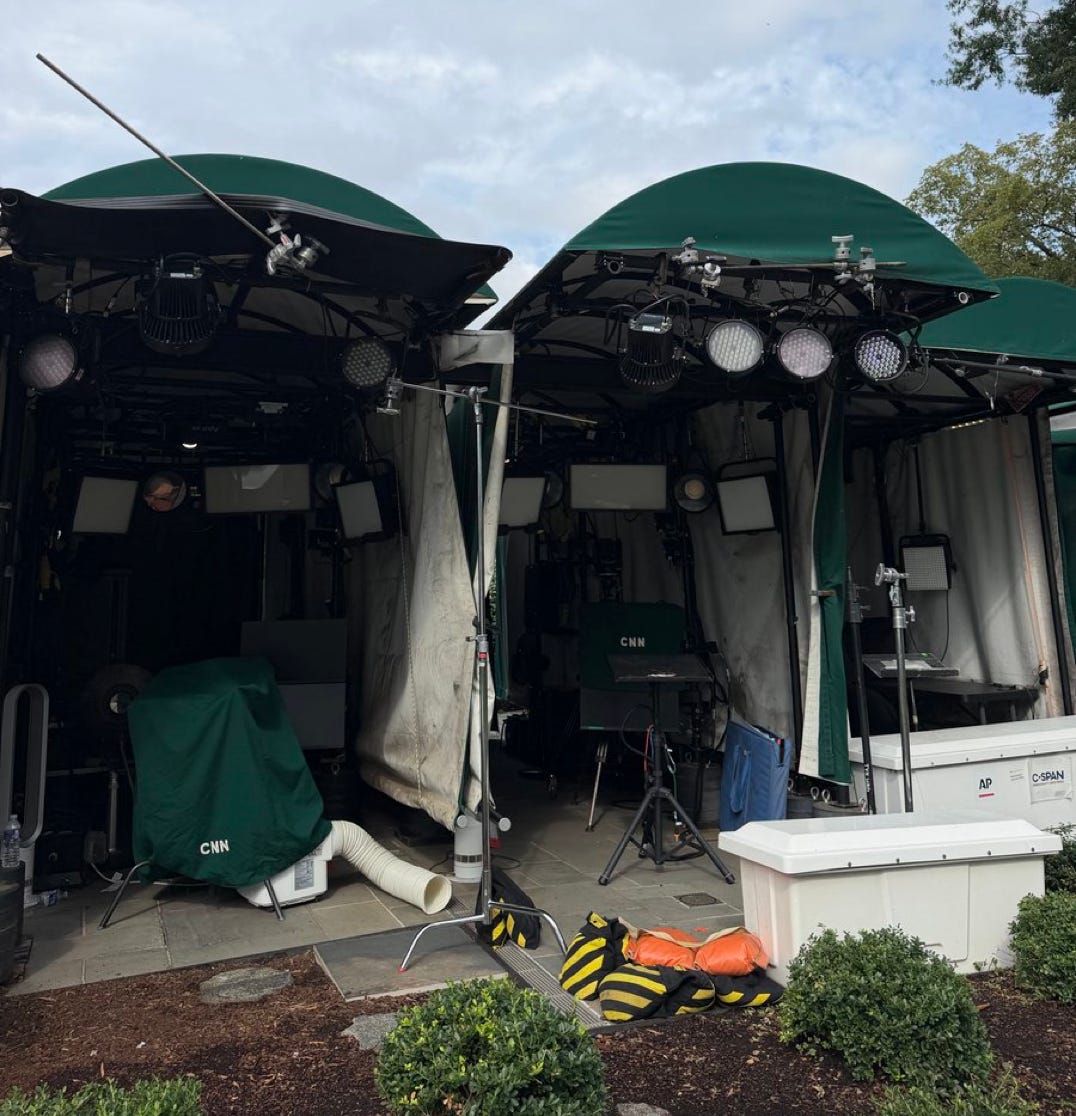
This isn’t just another squabble between the president and the press; it’s a serious situation that cuts to the core of our First Amendment rights. Put simply, this is a case about whether the press, and by extension the rest of us, can be critical of the president and his administration. It’s about whether journalists can gather information that is essential if they are to do their jobs and keep the rest of us informed.
Thomas Jefferson wrote to a friend: “Were it left to me to decide whether we should have a government without newspapers or newspapers without a government, I should not hesitate a moment to prefer the latter.” (I assume that a Supreme Court that protects assault weapons like they’re muskets can manage to protect cable news networks and online media just like newspapers.)
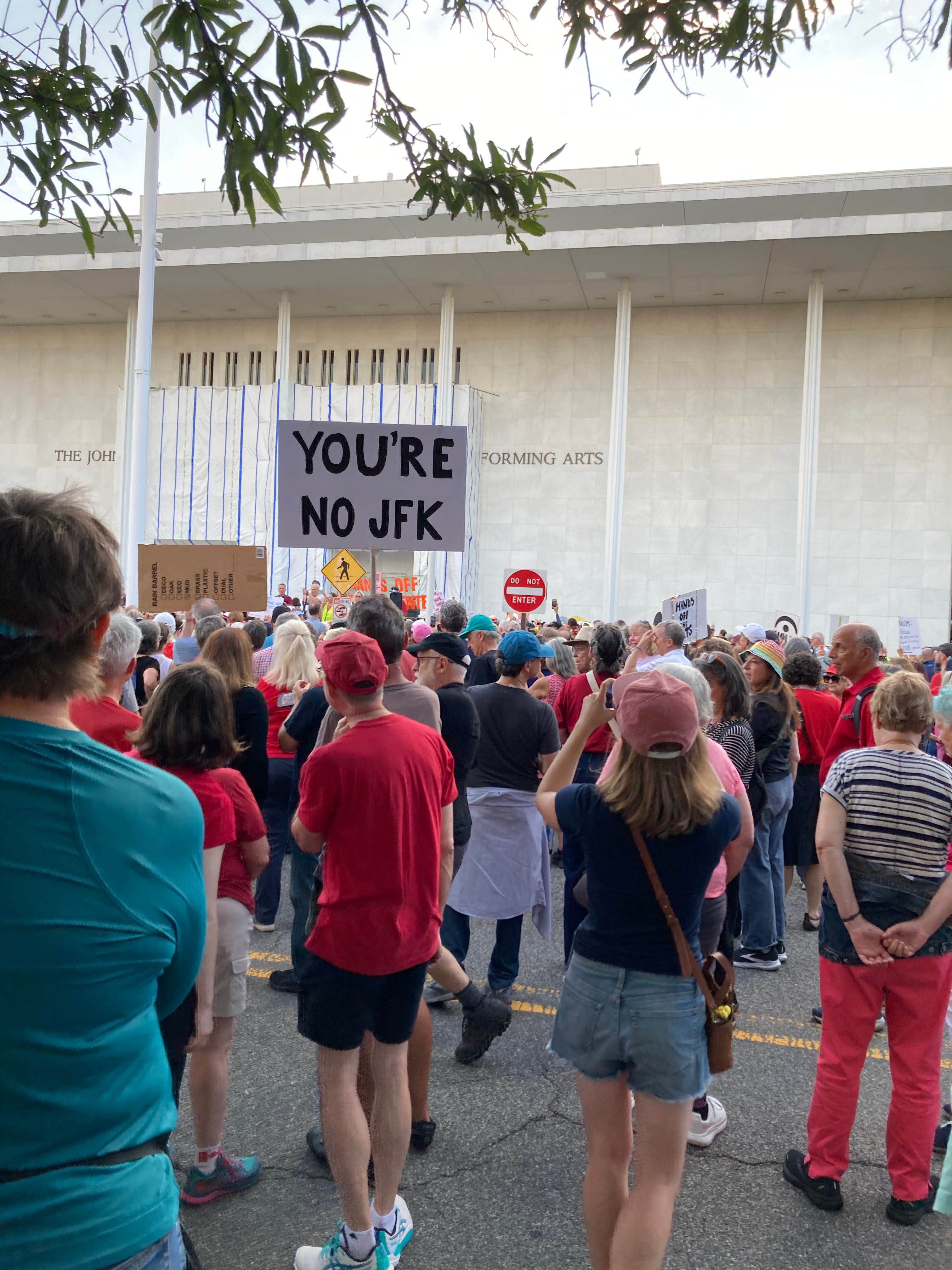
Details on the lawsuit
The plaintiffs are asking the judge to:
Prohibit the administration from taking any other steps to implement Trump’s ban, and
force the administration “to immediately restore to Plaintiffs their ‘hard pass’ press credentials along with the access that Plaintiffs and their reporters had to the White House prior to the September 18, 2026 ban.”
They issued a joint statement in advance of filing the lawsuit: “This morning, we notified the government that we are filing a lawsuit today to protect our First Amendment rights and defend the principle that the government does not decide what the press reports or publishes. Without notice or process, the White House revoked our journalists’ credentials because it objected to our reporting. Left unchallenged, this threatens press freedom and the public’s right to independent journalism free from government interference.”
The plaintiffs argue that what Trump has done is illegal for at least three reasons:
His ban violates their Fifth Amendment due process rights because the White House failed to create “explicit and meaningful standards” for denying access to the White House grounds before it banned them and didn’t give them an opportunity to be heard before they were banned. The Fifth Amendment requires notice and a hearing.
His ban violates the First Amendment by retaliating against the plaintiffs for what the President considers negative coverage.
His ban violates the First Amendment because it discriminates against the plaintiffs based on their viewpoint.
By now we’re familiar with what plaintiffs must show to receive an injunction: that they are likely to win, that they will suffer irreparable injury in the meantime without an injunction, and that an injunction is in the public interest. The plaintiffs have asked for a temporary restraining order (TRO), but that request will almost certainly morph into one for a longer term preliminary injunction that would stay in place until the case is decided, if the White House doesn’t back down.
There were a number of developments today:
CNN was scheduled to handle pool coverage of Trump’s visit to the United Nations General Assembly, happening in New York this week. But that didn’t happen because of the ban.
The networks that make up the TV pool, Fox News, ABC, CBS, and NBC, along with CNN, stopped covering presidential events this morning. Fox News Washington bureau chief Bryan Boughton wrote to pool subscribers that “The nation’s major television networks are declining to participate in White House pool duties in response to the Trump administration’s decision to bar CNN, MS NOW and POLITICO from the White House.” Real journalists rose to the moment, as Boughton put it like this: “The public has a vital interest in receiving accurate, independent information about its government. No administration should restrict a news organization because it objects to its reporting.”
Later in the day, the impact of losing the press pool became clear. According to Aaron Rupar, “Trump is holding an event at the White House right now but there’s no audio because the press pool isn’t there. The Newsmax host notes that this is an example of Trump’s attacks on the press ‘backfiring just a little bit.’” Trump was trying to show off his new taxpayer-funded helipad.
Former White House Correspondents Association president Weijia Jiang of CBS News has been trying to explain how important the pool is all day on Twitter, taking on people who kept trying to mansplain her.

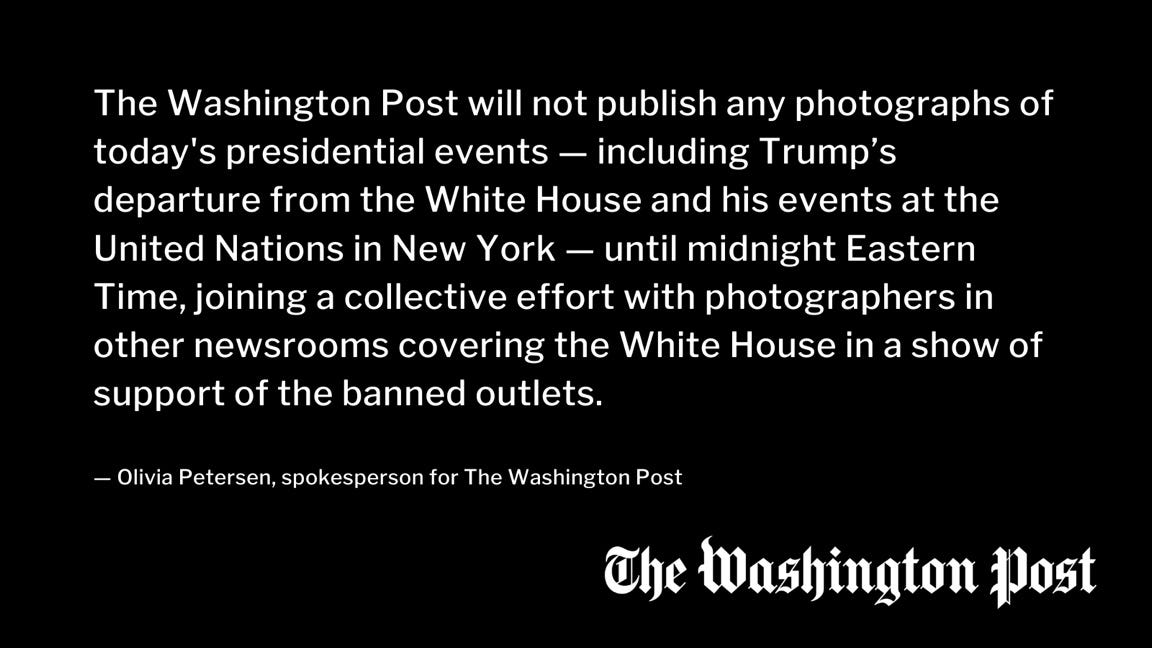
Both The Washington Post and The New York Times, which have already condemned the Trump administration’s ban, led a protest today, avoiding even still photos of Trump’s events.
Various “White House correspondent independent reporters,” which seems to mean ultra-right-wing conservative ecosystem types regardless of journalistic credentials, christened themselves as a new White House pool, while delegitimizing professional journalists. However, they lack the technology it takes to run the pool (see Weijia’s comments above).
The White House announced it would roll out its own network, and shortly after 7 p.m. ET Monday night, they posted on Twitter: “IT’S LIVE. TRUMP TV IS STREAMING NOW. 24/7, updated in real time, with top past moments, announcements, and the latest and greatest from the administration all in one place.” It sounds positively authoritarian, like if Hitler had an internet. Or perhaps it’s more Stalinist, although lately, it’s been Republicans accusing Democrats of being the communists. Either way, that feels like something that’s been in the works for a while. The White House is also offering an app for people who prefer to get their news that way. What a novel idea—if you don’t like the news, write it yourself, or as George Orwell wrote in one of his essays, “Political language is designed to make lies sound truthful and murder respectable, and to give an appearance of solidity to pure wind.” That’s why we have a free press that’s independent of government in the first place.
It’s tempting to feel happy you don’t have to hear Trump’s voice or see his face, but without pool reporting, this administration can get away with a lot. Trump is frequently his own worst enemy, saying the quiet part out loud. Much of what we know about his worst excesses became public because there happened to be a reporter at his side in the moment. The danger is real if the press is absent from this space.
Fox News’ Brit Hume explained why there’s a pool: “The White House tv pool was created because many rooms in the White House, e.g. the Oval Office, are too small to accommodate all the tv outlets who may want to cover a presidential event. The same is true for Air Force One and presidential motorcades. So one network covers for all on a rotating basis. To be a part of it, an organization must have present every day a full broadcast crew, a producer or reporter and the equipment and personnel needed to record and distribute the video shot by the pool crew. At the moment, only a handful of outlets qualify. Back when ABC, CBS and NBC were dominant, they tried to keep CNN out of the pool. But CNN had the equipment and personnel to do the pool job and were admitted by court order.” He goes on to criticize a poster who advocated for letting the White House report on itself, “And he suggests the White House could cover these events. Then it would be ‘official’ for sure. Would he really like that better?”
Federal District Judge Timothy Kelly, a Trump appointee, was assigned to the case. He is the same Judge who handled the 2018 case involving Jim Acosta that we discussed on Saturday. Judge Kelly granted a TRO in that case, and the White House was forced to restore Acosta’s credentials. Kyle Cheney pointed out on Twitter that “Kelly is perhaps best known for presiding over the six-month seditious conspiracy trial of the Proud Boys — and sentencing Enrique Tarrio to a 22-year prison term, the lengthiest of any Jan. 6 defendant until he was pardoned by Trump.”
Judge Kelly set a Wednesday hearing at 3:30 p.m. on the media organizations’ motion to immediately lift Trump’s ban on White House access. DOJ has until tomorrow night to respond to the emergency motion ahead of the hearing.
Trump denigrated the Judge on Truth Social, even though he’s one of his own appointees. But Trump had already put him in the bad judge column, posting, “With such a Crooked and Corrupt Press, how did I win in such a LANDSLIDE? … Perhaps Judge Kelly could explain that!” But Trump seemed to emphasize the strength of the plaintiffs’ case, which is that he opposes their presence at the White House because he doesn’t like their point of view. “We’ll go for appeal,” the President wrote, already prepared for and excusing a loss in the district court.
Sort of relatedly, there was news that Paramount Skydance reached a settlement with California and other states that had sued to block its proposed acquisition of Warner Bros., and remained in the fight after the federal government switched sides to back Paramount. Still waiting on full details and an explanation for what changed. We’ve spoken several times with California Attorney General Rob Bonta, who explained how problematic the deal would be for consumers—including dramatically narrowing who owns major media outlets. I’m curious, since this merger means CNN and CBS would become sisters, is CBS banned from the White House too?
And completely unrelated, but I have to mention this, because we can never take our eyes off of the administration’s deportations: There is news that a Judge in the Southern District of Alabama ordered ICE and other DHS agencies to stop conducting warrantless raids of construction sites, to stop detaining people in the absence of individualized suspicion (possibly a gentle slap at “Kavanaugh stops,” although the Judge says ICE is exceeding what he allowed for), and to stop detaining people with valid IDs. The Southern District of Alabama, where Jeff Sessions was once the U.S. Attorney, is not exactly a bastion of liberalism. Chief Judge Jeffrey Beaverstock was appointed by Donald Trump in 2018. The plaintiff in this case, Leonardo Venegas, is a U.S. citizen of Mexican descent who was arrested while working at a construction site. Five masked, armed men (ICE agents) jumped the fencing around the site, which was marked “No Trespassing.” Venegas began to film after agents dragged his brother to the ground. “When they came after him, Venegas yelled, ‘Don’t touch me! I’m a citizen!’ and ‘I’ll show you my papers!’ Even after seeing his Star ID, the agents arrested him, telling him the ID was ‘fake.’” They were ultimately forced to unarrest him when they realized their error. Venegas had a similar encounter with ICE about a month later. Judge Beaverstock’s opinion is worth your time if you want to learn more about the Fourth Amendment, but he also goes into detail about how abusive their practices are. His assessment at one point, “The Court is unpersuaded by the Government’s position,” summarizes things nicely.
Back to the First Amendment
The plaintiffs in Cable News Network v. Trump are capably represented by highly regarded First Amendment lawyers Ted Boutrous and Katie Townsend, who lead a team of equally talented lawyers from their firm, Gibson Dunn. Ted was our guest for Five Questions back in 2023. I asked him how important the First Amendment was during the first Trump presidency, and he said, “In short, he [Trump] was and is a First Amendment wrecking ball … Rigorous press scrutiny of Mr. Trump and the government has been crucial to preserving our democracy during this historic and difficult period.”
Katie was our guest for Five Questions in December of 2025, after she sued the administration on behalf of The New York Times and one of its reporters after it conditioned access to the Pentagon on agreeing to abandon journalistic principles. She raised similar due process and First Amendment arguments in that case, and answered many of the weak justifications for the policy the administration will likely raise again here, noting, “Who is in a position to ask questions of Department leadership and report on what is happening at the Pentagon has a very real effect on what information gets to the public, and it is an issue that we should all care about.” That applies with even more force when we’re talking about the White House.
Tonight’s post is longer than what I usually write, but this lawsuit deserves more than a quick take. That’s what Civil Discourse is for: a place to take in the complaint, the legal strategy, and who the people involved are. We have the time to figure out what is actually happening, not just what everyone else is saying about it.
Almost everything I write is available for free, because that matters to me. Paid subscribers make that possible. So if you’re already one, thank you. You made tonight’s deep dive possible. If you’re reading for free and you can, this is a good night to become a paid subscriber.
We’re in this together,
Joyce