
Will the Beacon Go Dark?
Millions of Americans have just joined one of more than 2700 No Kings demonstrations across the country. I went to observe the DC march, and found a lot of homemade signs, a wide range of people, many different kinds of opinions and a gentle, cheerful vibe (the crowd shot was taken by a colleague, the rest are mine).
The next day, the president posted an AI video showing himself as a pilot, wearing a crown, literally dumping shit on protesters from the air: A clear statement of what he feels about Americans exercising their rights to free assembly and free speech.
Just in time, the Atlantic has published an issue entitled The Unfinished Revolution to mark in advance the 250th anniversary of the signing of the Declaration of Independence and the American Revolution, a much older No Kings Rally. A painting was commissioned for the cover:
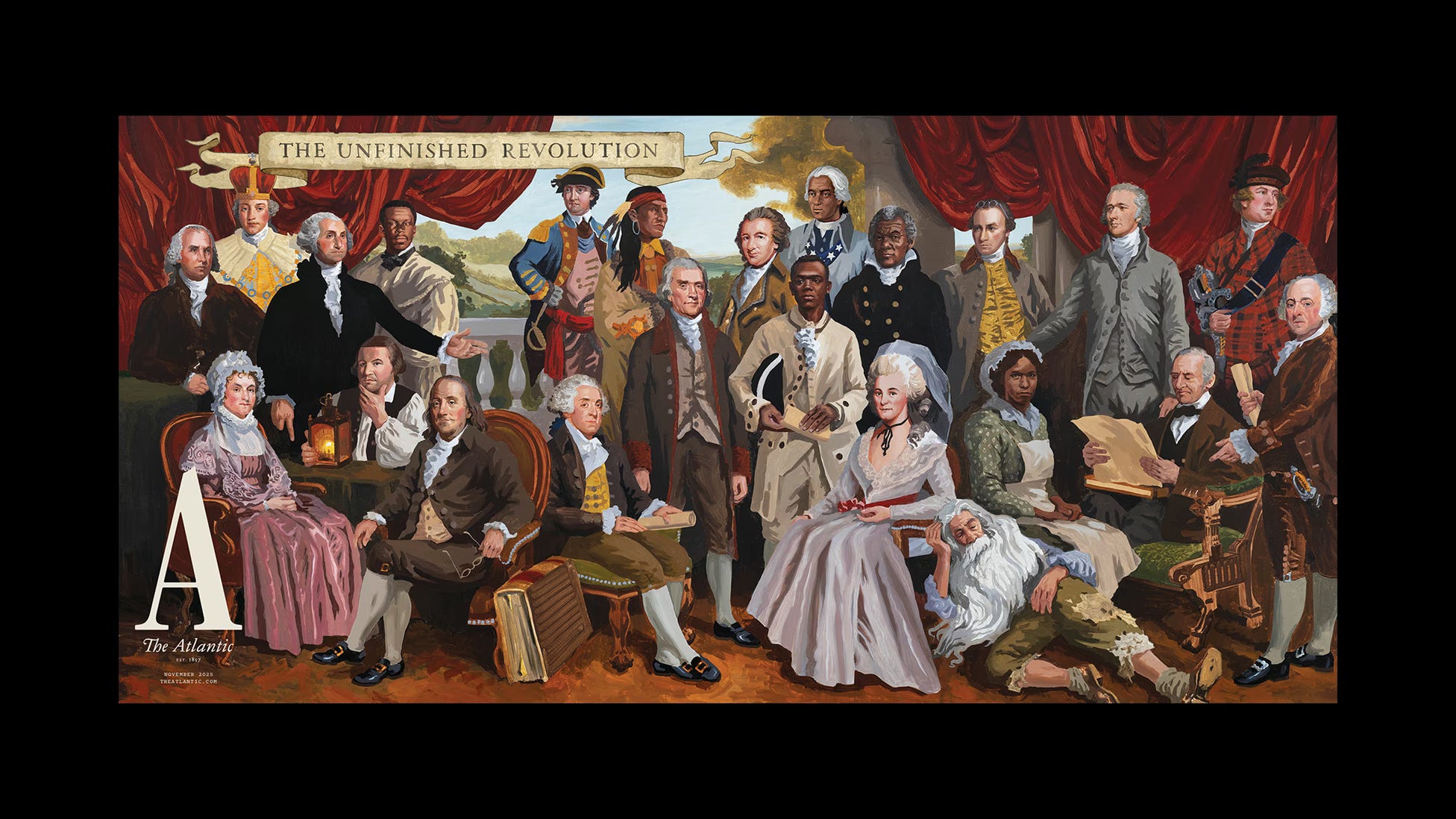
My contribution is an essay asking what it would mean, and not only for Americans, if “democracy” is no longer a part of our national identity. We’ve long thought about ourselves as promoting or exporting democracy to others, almost as an act of charity. But what if we were the real beneficiaries?
We always think about America’s postwar role in Europe as an act of great generosity, the defense of allies from Soviet aggression. But by putting democracy at the center of our international and national identity, we also helped strengthen our own political system. If nothing else, all Americans, even those on different sides of our deepest cultural divides, had a common cause: Right-wing or left-wing, Christian or atheist, we could all be in favor of freedom.
Considering how deeply we were divided about so many other things, it’s extraordinary how bipartisan our foreign policy was for so long, and how many energetically bipartisan institutions we built to promote it. Radio Free Europe and Voice of America—and later Radio Free Asia and a clutch of other foreign-language broadcasters—always enjoyed support from Democrats and Republicans, as well as every president from Harry Truman onward. From the time of its founding in 1983, so did the National Endowment for Democracy, which was inspired by Ronald Reagan’s call for new institutions to “foster the infrastructure of democracy—the system of a free press, unions, political parties, universities—which allows a people to choose their own way, to develop their own culture, to reconcile their own differences through peaceful means.”
In the past year, the Trump administration has tried to shut down all of those institutions, and to change the language the American government uses, at home and abroad, even redefining what is meant by “human rights.” The result:
Trump’s own attacks on “radical-left judges” and “fake-news media” now travel around the world much faster than “We hold these truths to be self-evident, that all men are created equal” did. Vladimir Putin has banned media that spread “fake news”—that is, accurate information—about the Russian invasion of Ukraine. The autocratic ex-president of the Philippines, Rodrigo Duterte, called Rappler, a famous investigative-reporting site, a “fake-news outlet” to discredit its work. In places as varied as Egypt and Myanmar, the fake charge of “fake news” has been used to destroy legitimate journalists.
All of these changes are part of a larger shift, a revolutionary transformation in the way Americans present themselves to the world, and the way they are therefore perceived by others. The most ubiquitous form of American culture nowadays is not jazz programming going out on shortwave radio across Eurasia, but the social-media platforms that pump conspiracy theories, extremism, advertising, pornography, and spam into every corner of the globe.
The very existence of American democracy inspired people in every corner of the planet, and the decline of American democracy will have a similarly profound impact, on the world and on Americans. Read the whole thing:
I talked about these ideas, and other things, with Tim Miller of the Bulwark this week too:
Kleptocracy Tracker
Continuing to monitor conflicts of interest, ostentatious emoluments, outright corruption and policy changes that will facilitate outright corruption. (Read my original article, Kleptocracy Inc.)
October 10
- The Department of Homeland Security awarded a $915 million contract to an inexperienced vendor with connections to senior department officials after a rushed, noncompetitive bidding process.
- Trump has appointed more than 40 officials with ties to the fossil fuel industry to positions within the White House and in agencies overseeing energy, environmental, and climate policy.
October 11
- Cryptocurrency interests spent more than $40 million to unseat Sherrod Brown—a vocal crypto critic—in his 2024 Senate race and are preparing to pour more money into defeating his 2026 comeback bid.
October 13
- Donald Trump Jr.’s venture capital fund, 1789 Capital, pitched sponsorship slots to technology companies for a conference it billed as a Treasury Department event—promising access to senior officials—even though the department has no involvement in the event.
October 14
- During the Gaza summit in Egypt, Indonesian President Prabowo Subianto asked Trump for a meeting with his son Eric, an executive vice president at the Trump Organization, which operates a resort south of Jakarta in partnership with MNC Land.
October 15
- US regulators granted preliminary and conditional approval to a new bank backed by billionaires with ties to Trump, just four months after its application for a national bank charter.
- The Emirates-backed venture firm MGX—which purchased $2 billion worth of World Liberty Financial’s stablecoin to provide funding to Binance—also joined Oracle and Silver Lake to take a combined 45% stake in the US offshoot of TikTok.
- Trump hosted a dinner for representatives of major corporations—including government contractors such as Lockheed Martin, Microsoft, Meta, Google, Amazon, and Palantir—in recognition of their donations supporting the $200 million White House ballroom construction.
- Eric Trump confirmed to the Financial Times that his family has made “probably more” than a billion dollars from cryptocurrency ventures since the president’s reelection.
White House Office of Management and Budget Director Russ Vought said he expects to close the Consumer Financial Protection Bureau within two to three months
HRC Awards
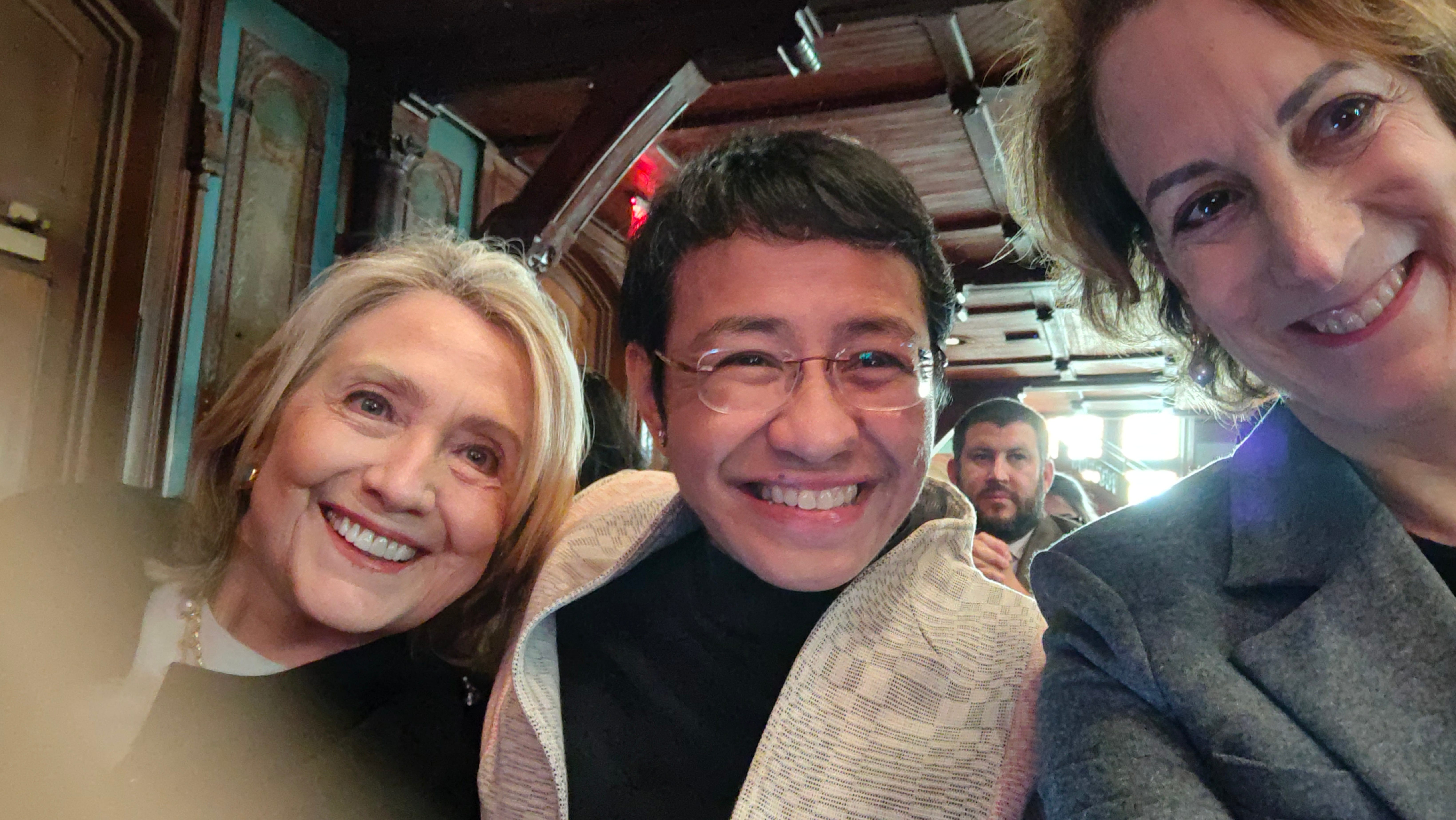
Every year, the Georgetown Institute for Women, Peace and Security chooses several women to receive the annual Hillary Clinton Award. This year, one of the awards went to the great Maria Ressa, who has been sounding the alarm about online manipulation and authoritarian propaganda for more than a decade. Tanjina Tammim Hapsa also accepted an award on behalf of the Women Student Protest Leaders of Bangladesh, who led a movement that brought about real political change. Daneli Hernández, whose mother is in prison, accepted an award on behalf of Venezuelan Women Political Prisoners, along with several other amazing Venezuelan women, both ex-prisoners and relatives of prisoners. I also received an award—really because I write about people like them.
You can watch the event here. The citations were a reminder of how hard people have worked around the world to make their countries better, and how lucky we still are, in America, to have as much freedom as we do:
Also, here I am with HRC and Maria Ressa, rather blurry:
Signs of the Times
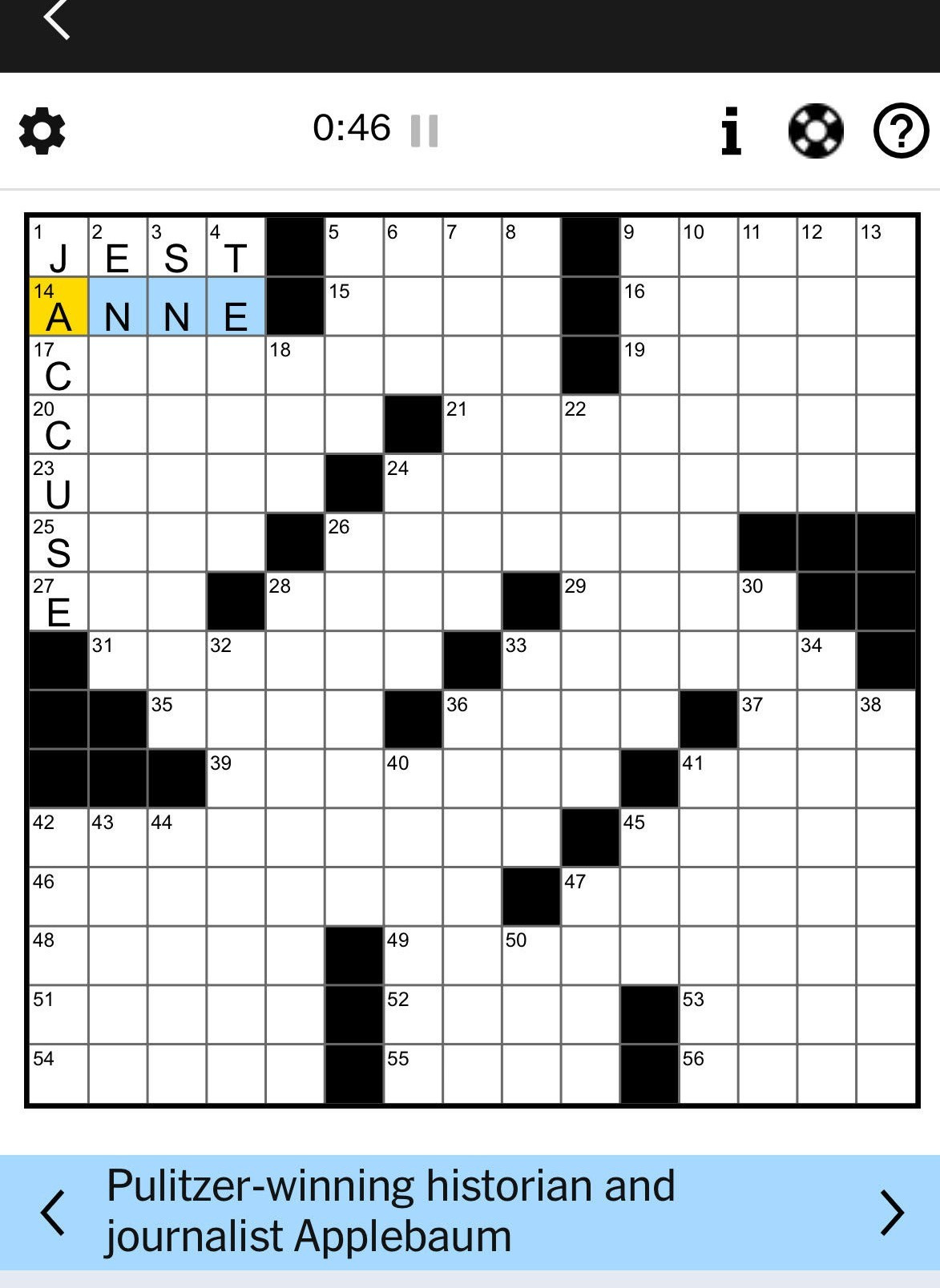
I don’t know what it means, exactly, or whether it’s good or bad, but this week I was a clue in one of the New York Times crossword puzzles. A colleague sent me a screenshot:
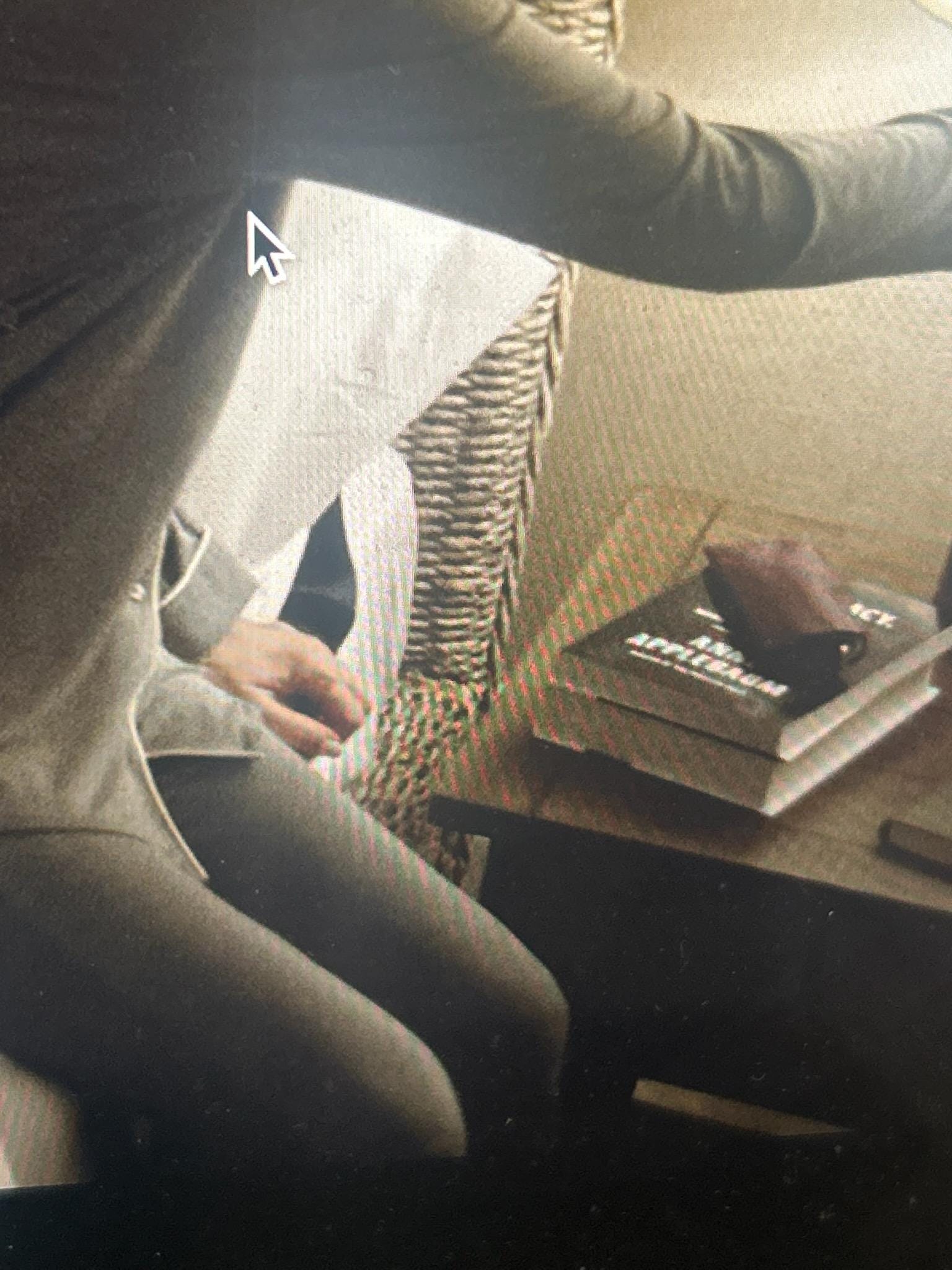
Meanwhile, in season three of the The Diplomat, the Netflix series, the president has a copy of Autocracy Inc on his bedside table. A friend’s daughter spotted it:
Buy Autocracy Inc for yourself
Open Letters, from Anne Applebaum is a reader-supported publication. To receive new posts and support my work, consider becoming a free or paid subscriber.
Related Knowledge Center: Democracy and politics
News organizations are scrambling to find a coverage approach that adequately informs the American public about the country’s slide from democracy to authoritarian rule.