
Why Hearst is Buying Newspapers: A Conversation with Steve Swartz
The country’s largest newspaper chains have been sellers for years, and most of the papers they still own (and most daily papers in the country) are by now controlled by hedge funds or private equity. But the Hearst Corporation last month made its second significant acquisition of the year—of the Dallas Morning News—having bought the Austin American-Statesman in February. Hearst already owned the papers in Houston and San Antonio. In my view (and not mine alone), they have become the quality chain in the nation.
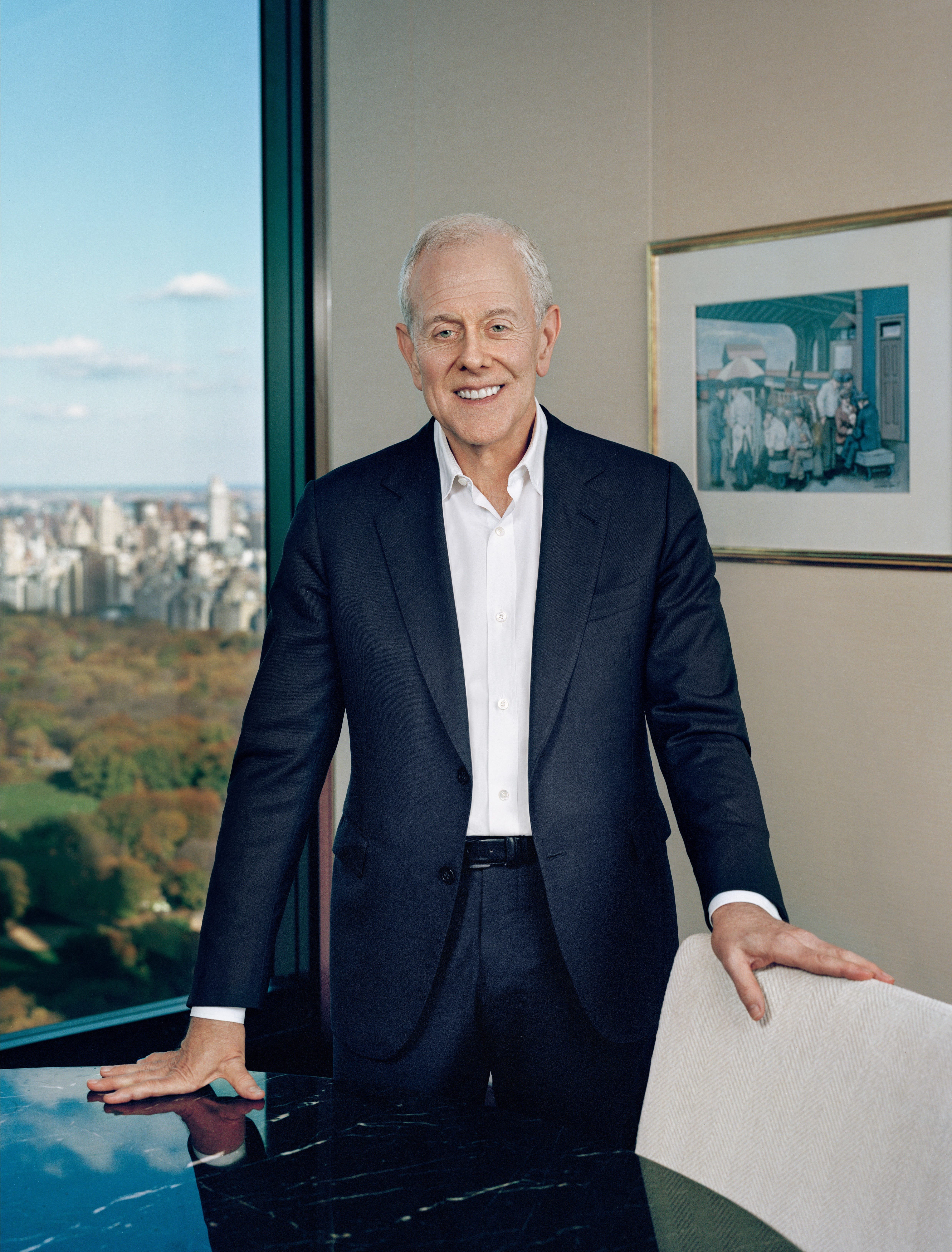
I wanted to better understand how this happened, and to hear more about the current thinking of the company behind it. Fortunately, the CEO of Hearst, Steve Swartz, is someone I have known, including as a one-time colleague, for more than 35 years. He has been CEO since 2013, and helped lead Hearst’s newspaper division beginning in 2001. Earlier, he founded SmartMoney magazine, where I served a couple of stints on the board, and was a reporter and editor at the Wall Street Journal, which was Hearst’s co-venturer in SmartMoney. Our conversation last week has been edited for length and clarity.
RT: Steve, thank you for doing this. Other than financial firms looking for short term returns, very few big companies are investing in newspapers these days. Why have you all taken a different approach in Texas, first in Austin and now in Dallas?
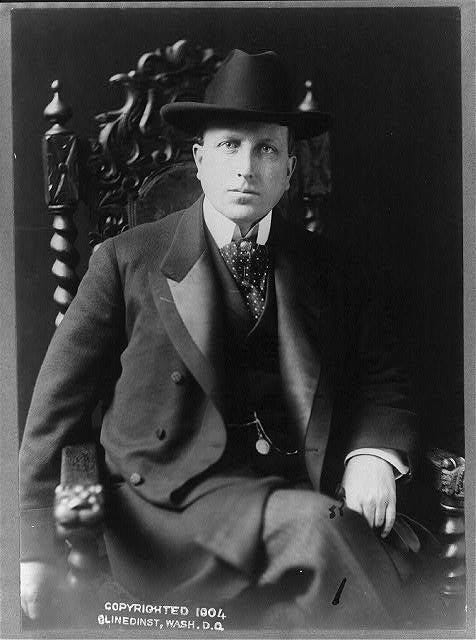
SS: Well, our company was founded in 1887 and the newspaper in San Francisco was the first business of our founder, William Randolph Hearst. It’s a business that we find is a very high calling. It establishes the strong mission on which our whole company is built. So we’re very proud to be in the local newspaper business.
This year some opportunities came about in Austin and Dallas. It was more opportunistic that they both came up for sale this year.
RT: What do you see as the business advantage of concentrating newspaper ownership in an area? How do you all think about that?
SS: There aren’t the same scale advantages as in other industries. These are still very local businesses. We believe it is very important to have a local publisher representing the newspaper, that the content is local. You have to have the local journalists on the street, and local advertising sales people making these important relationships and showing the commitment to the community. So I want to be very clear that these are local businesses, not meant to be some kind of regional scale play.
That said, I think that there are advantages to being concentrated in locales. Aside from Texas, we’ve been able to acquire a number of newspapers in Connecticut. We will be able to better service in Texas a number of advertisers, to reach more people for them. I think we’re going to be able to have the biggest and most effective capital bureau in Austin, the best coverage of the State House and of the political leaders both in Texas and in Washington.
There are some advantages with printing. We were already printing the Austin American Statesman before we bought it. So, this was just opportunistic. We know Texas, it’s a great market, and these two great properties just came up for sale at the same time.
Limits of regionalism
RT: When you started, the first thing you said was, these are local businesses. Do you see also organizing them at the regional level? How would you think about whether or not, for instance, to have one uber-editor for Texas or one uber-publisher for Texas?
SS: I want to be clear, I don’t directly supervise our newspaper division. Jeff Johnson is our president. I’m not aware of any plan to have a uber Texas publisher or an uber Texas editor. We have great editors and publishers in our markets, and we rely on them to do what is needed locally.
RT: Would you all think about investing in the newspaper business elsewhere? Or do you see it more likely that any further investments would tend to be concentrated where you already are?
SS: We try to be pragmatic and open minded. There is no grand plan here; we would look at opportunities as they came about. But, yeah, I think concentrating in regions just makes sense. I would say the same thing about our local television business. We would be more likely to buy another station in a region that we’re already in, as opposed to in a region that we’re not in.
RT: What’s your outlook, more broadly, for local news around the country these days. Do you see that as something that’s got a growing place in people’s lives? Do you see national news of greater interest to people than it used to be?
SS: With all the technological change, there’s more and more information out there. It’s not always quality, but there’s just more. That takes people’s eyeballs away from the traditional products that were always there. I think all those things are potential competitors to local news. It’s as competitive a time as there ever was.
How he sees local nonprofits
RT: How do you think about the role of nonprofit local news?
SS: Where there is a true news desert, or where there is a need for specialized journalism, about health, say, or medicine or what have you, I think that they can play a needed role. But I still think communities are best served when they have a functioning local newspaper and local television stations that have the resources to do good work. And I think that still exists in many places. We certainly like to think it exists in the markets we’re serving, but I understand that’s not true everywhere.
RT: As I know you’re well aware, most of the newspapers in this country at this point are owned or controlled by financial firms that are not making further investments in those properties.
SS: Well again, where there is more journalism needed and there’s a lack of investment, I think nonprofits can play a role certainly. But I think communities are better served when there is a true journalism business or businesses, that have the resources to do the job. Again, I understand that’s not true in every market.
RT: Do you think the federal defunding of public radio and television will have a significant effect on local news in the country?
SS: Any time that there is a credible, important source that runs low on funding, clearly that is going to impact the journalism.
The joy of being private
RT: Do you think it’s an advantage for Hearst to be privately rather than publicly held in today’s news business?
SS: We think we’re better off being privately held. We try to hold ourselves to high standards in terms of performance in every way, and we benchmark ourselves against whatever relevant public company is out there, in whatever space we’re operating in, to say, are we keeping up, whether it’s in terms of quality or financial performance. But I think the ability to have a long term focus is an advantage when you’re privately held.
RT: I’ve seen reports suggesting that if you were to sell all your news holdings, that your overall profit margins would rise. If that’s true, does it matter to you, or does the history of the company that you talked about at the outset outweigh that?
SS: We think it’s important that every business of ours be able to stand on its own two feet. We wouldn’t be in a sector, or we wouldn’t have a division, that was purely losing money and unable to generate enough cash to take care of its employees, to take care of their benefits, their retirement. You have to be able to invest. Sometimes you even have to replace the printing press. So I think having some profit margin is important for each individual business.
There is no question that our journalism businesses, particularly our newspaper businesses and our magazine businesses, run at a much lower profit margin than a number of our other businesses. If we were publicly traded, that could be more of a focus for outside investors. We’re a strong company. We have a very strong balance sheet. We believe in the magazine and newspaper business. We understand that those businesses do not run at a very high profit margin, but we believe they contribute a lot to society and help make us a more special company.
RT: The trust set up at the time of Mr. Hearst’s death in 1951 will eventually expire. Does that have an impact on your business strategy at this point?
SS: Not really. The actuarial estimates of when the trust would expire are enough years in the future that it doesn’t really affect anything we do. And the commitment of management and the Hearst family to journalism would be enduring even beyond when the trust would expire. But the trust has enough years to go that it’s not front and center.
It’s also not clear that even after the trust would expire, that there would be a need for a particularly different strategy. The Hearst family would control the entity after the trust expires, and there may be some structural moves that we would have to make, but the commitment to the businesses wouldn’t have to, and I don’t think would change. Whether it’s management, our board, our trustees, or the Hearst family, the commitment to the news business, the newspaper business, the magazine business, the local television business, could not be stronger.
RT: Steve, thanks again.
Thanks for reading Second Rough Draft! Subscribe for free.
Related Knowledge Center: State of the business model
The traditional journalism business model has long since collapsed, and news organizations have shrunk or disappeared entirely. While a number of promising experiments are under way, the public has not shown a willingness to buy what news organizations are selling.