
Why Amsterdam Schiphol Airport Is Suing Against Solar Panels
Earlier this year, Amsterdam Schiphol Airport (AMS) faced operational disruption amid problems with the glare from solar panels at a nearby solar farm. The situation resulted in temporary runway closures at one of Europe’s busiest airports, and, while the facility has six landing strips at its disposal, even putting one out of action can have a considerable knock-on effect, with local residents also impacted.
- IATA Code
- AMS
- City
- Amsterdam
- State/Province/Region
- Noord-Holland
With the issue set to arise again this summer, the Dutch hub, which is home to the national flag carrier and SkyTeam member KLM, is looking to tackle it head-on by taking legal action against the local solar farm. The facility is said to be looking to get the panels removed altogether, following unsuccessful negotiations with various stakeholders. Let’s take a look at why exactly this has become a hot topic.
Glare From The Solar Panels Can Hinder Pilots’ Eyesight
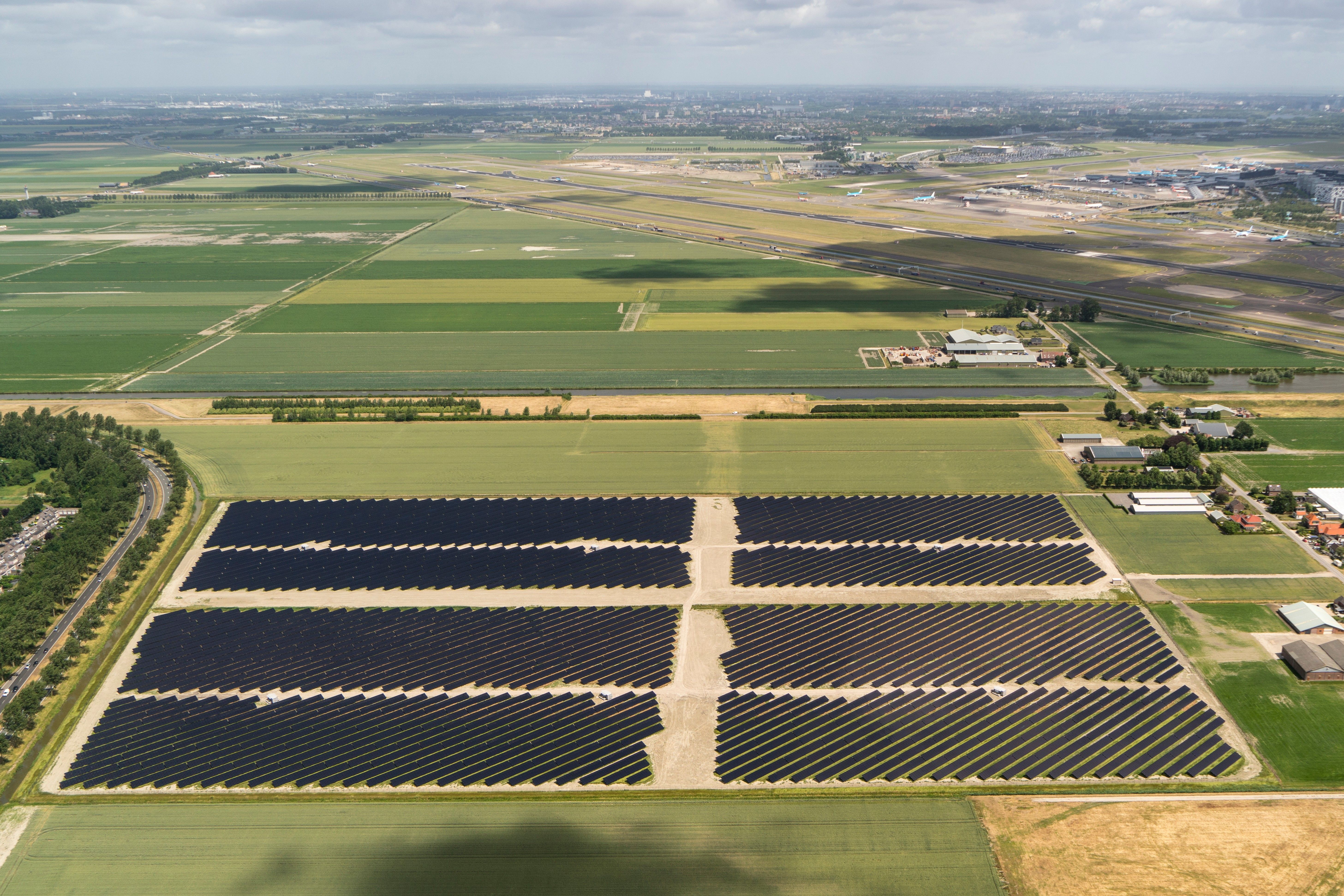
As reported by Aviation 24, March of this year saw Amsterdam Schiphol Airport forced to make temporary runway closures due to the glare from the nearby solar panels hindering pilots’ vision as they came into land at the Dutch hub. Specifically, the NL Times notes, runway 18R/36L, also known as the ‘Polderbaan,’ had to be taken out of action between the hours of 10:00 and 12:00 for several weeks.
As well as causing operational disruption in sunny weather, this enforced change also impacted local residents, with some subjected to more noise pollution than usual due to landing aircraft having to make use of alternative runways. This alteration was brought into effect on March 4th and, while initially slated to last until April 6th, the runway was fully reopened by March 31st. The airport stated:
“The solar panels below the approach route to the Polderbaan Runway are outside the landing area but due to glare when the sun shines, they are hindering visibility for pilots. The position of the sun means that this effect occurs in the morning. Pilots have made several reports about this recently.”
The Airport Is Taking Legal Action With The Issue Set To Arise Again

While the Polderbaan runway has now been fully reopened in sunny conditions for almost three months now, reports suggest that landing aircraft will once again face the issue of the glare from the nearby solar panels hindering their pilots’ vision this August. With this in mind, Amsterdam Schiphol Airport has opted to take legal action against the solar farm, in an attempt to prevent further disruption.
The facility, Aviation 24 notes, has reportedly sought a court order for the removal of the solar panels, following unsuccessful negotiations with the owners of the solar panel farm, as well as local authorities and the infrastructure ministry. According to Aviation Direct, the lawsuit alleges that the presence of the facility, which covers an area of approximately 100 hectares, poses a safety risk to air traffic.
According to the NL Times, the reason for August being a particularly challenging month on this front is the fact that the sun will be lower in the sky by then. The publication quotes a spokesperson for the airport as stating that “removing the solar panels takes several weeks to months, [which] is why Schiphol feels forced into filing a lawsuit.” Simple Flying has reached out to the airport for more information.
Removing The Solar Panels Would Be Costly
Citing De Telegraaf, the NL Times notes that it would cost millions of euros to remove the offending solar panels. The publication adds that Haarlemmermeer, the local municipality, was warned of the risks posed to planes by the glare of solar panels several years ago, but permission was ultimately granted to build the facility, which is located next to the A9 motorway near the northeast end of the runway.
A key issue regarding the glare appears to be the kind of glass used on the solar panels in this energy farm, which is reportedly not the same as the kind that had been recommended for use at the facility. Some say that this was unavailable, while others have said that it was available but would have been more expensive.