When Laura Jedeed attended an ICE (U.S. Immigration and Customs Enforcement) recruitment expo in Texas in August 2025, she figured her application would be dead on arrival. After all, it takes about five seconds of Googling to find her bylines criticizing the Trump administration, her social media posts condemning ICE, or her dossier on AntifaWatch, the right-wing website that tracks supposed members of the “domestic terror organization.” She went anyway, curious about the hiring process and confident that even the most cursory background check would show her the door.
Instead, they offered her a job.
Jedeed, 38, is a freelance journalist based in Brooklyn who covers America far-right extremism for outlets including Rolling Stone, the New Republic, and Politico. Her path to journalism was circuitous: She enlisted in the Army at 18 as a signals intelligence collector and analyst, deployed twice to Afghanistan with the 82nd Airborne Division, then cycled through startup work and bartending before landing at Reed College and eventually NYU’s Literary Reportage program. Her 2024 Rolling Stone feature on the rise and fall of Project Veritas — reported over two years while attending the organization’s parties and touring its offices — established her as a reporter willing to get close to even her most challenging subjects.
Learn from top longform journalists and find the best in-depth reporting. Subscribe to Depth Perception:
The ICE story, published in Slate earlier this month, has turned into something bigger. After the U.S. Department of Homeland Security (DHS) called her reporting “a lazy lie,” Jedeed responded with video evidence from the agency’s own portal, sparking a national conversation about who exactly is being armed and sent into America’s streets.
In this edition of Depth Perception, we speak with Jedeed about the journey from growing up watching a lot of Fox News to becoming an anti-fascist journalist, and why she didn’t accept ICE’s job offer. —Parker Molloy
Why did you become a journalist?
I like a few things. I like writing, I’m a politics junkie, and I like adrenaline. And the kind of journalism I do combines all three in a way that I find very, very fun.
At age 18, you enlisted as a signals intelligence collector and analyst, then deployed twice to Afghanistan with the 82nd Airborne. What drew you to that work at that age?
I grew up in a family that voted Republican. I watched a lot of Fox News as a kid, and I really, truly believed that we were fighting to keep Americans safe at home — that we were bringing freedom and democracy to people who wanted it. And I wanted to be part of that.
So I joined, and it took until I deployed to Afghanistan a few years later to realize that wasn’t true. We were not in any way fighting for any of those things. We were, in fact, just telling people what to do who really didn’t want to be told what to do. And I don’t like being told what to do, so I find that very relatable. I was like, “What else have I been lied to about?” And that’s honestly what led me to where I am today.
You mentioned in the ICE piece that Afghanistan “beat out” the appeal of that warrior mentality. Can you talk more about that shift?
There are two instances that really stood out to me. The first is right after my first deployment. I joined late — I had just gotten to the unit, and they were already deployed, so I was going to join them. They’d been there for about a year. And as I was beginning to do the work, it became very clear very quickly that tribal structure was really important in Afghanistan, and that if I was going to do analysis that was good, I would need to understand it. So I asked, “Hey, does anybody have a PDF or a PowerPoint about the tribal structures? I’d like to get up to speed.” And they’re like, “Oh, no, we don’t. Maybe we could find one?”
So they go looking, and eventually they do find one that they hadn’t been reading. It was a 12-page PDF that was basically like, “Here’s the basics, but we don’t really know.” And I thought, in what way are we bringing freedom and democracy to people if you don’t even know who they are [or] what they believe?
The second thing was during my second deployment. One of the things I did was go through the phones of people who were detained. They would give me the phone — I didn’t know anything else about them — and I’d go through, see if there was anything suspicious. Maybe once or twice there was something, but in the vast majority of cases, it was just mostly Bollywood videos. I don’t know what happened to these people, but nothing good. It was just very humanizing.
There was a lot, but those are the two things that really stand out. I was like, “This is wrong. We’re doing something wrong here.”
“Who brings guns to a protest?”
In the wake of the January 24 shooting death of Minneapolis ICU nurse Alex Pretti by ICE agents, many influential leaders — including President Trump, Department of Homeland Security Secretary Kristi Noem, U.S. Border Patrol Commander-at-Large Greg Bovino, and FBI director Kash Patel — blamed the victim, saying he should not have brought a gun to a protest. (Note: Bovino repeatedly called it a riot, though an unlawful assembly was only declared after the shooting.)
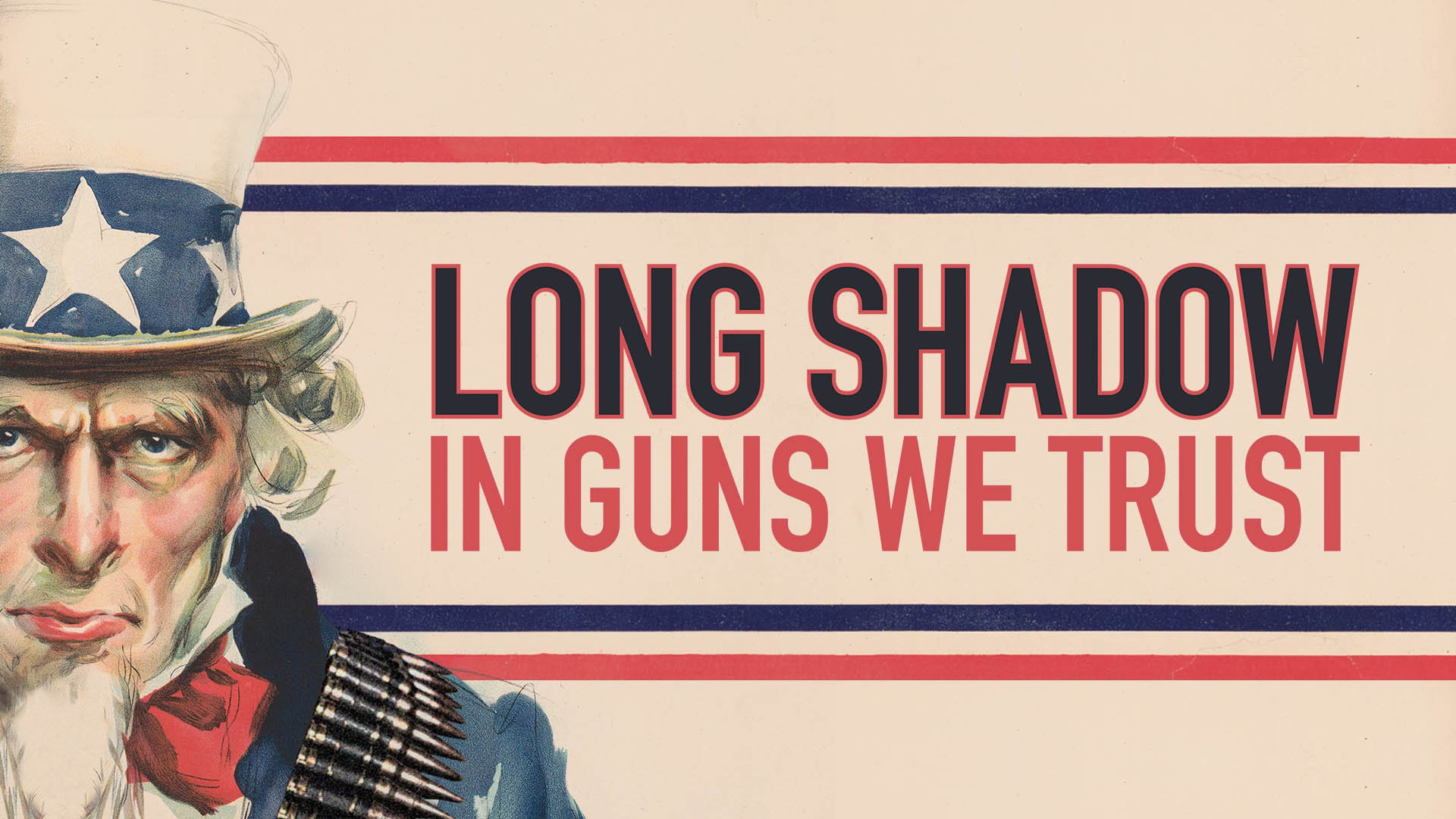
While Long Shadow: In Guns We Trust tells the story of the uniquely American problem of gun violence, the finale of Long Shadow: Rise of the American Far Rightrecaps a black mirror-version of last weekend’s tragic events. In 2020, President Trump tweeted “Liberate Minnesota” and urged people to “save your great 2nd Amendment. It is under siege!” spurring armed protestors to turn out at anti-lockdown protests. After that, armed militiamen went on to push their way into Michigan’s capital, law enforcement did not fire upon them, and only one person was arrested. Following that, armed people began showing up at demonstrations around the country, including Trump’s own speech at the Ellipse on January 6.
At the close of that season, back in 2023, host Garrett Graff noted “We are at a very pivotal point in our country.” We now live in the long shadow of that moment. Learn more about how we got here by listening to Long Shadow, wherever you get your podcasts.
Your path from military to journalism took some turns — analyst at a startup, bartender, Reed College, NYU’s Literary Reportage program. Was there a moment when journalism clicked as the thing you were actually supposed to be doing?
It was something I kind of wanted to do, and I was kind of trying to do it. I didn’t really know how. Right out of Reed College, I wasn’t really sure how to get into it. And then COVID hit, and I was in Portland, Oregon at the time. When the [Black Lives Matter] protests started, I went as an activist in the beginning for all the reasons you would expect.
About a couple weeks in, the PPB — the Portland Police — started really messing up journalists. They started targeting them and a lot of papers pulled out their coverage for insurance reasons. The reaction from the activist community was, “Okay, well, we’ll do it then.” So I started to live-tweet the protests. And I really enjoyed it. I got traction. At a certain point after a couple of weeks, I was like, “You know what? This is what I want to be doing.” So I pulled back from the activism. I didn’t participate. I watched and wrote about it, while making my sympathies very clear. But it felt so right, and I enjoyed it so much. And people seemed to like it too. I was like, “Maybe I could do this.”
Walk me through the decision to attend that ICE recruitment expo in the first place. What were you expecting versus what you found?
The expectation was I just wanted to see what the recruitment process was like. As soon as I heard about the event, I thought, “Oh my God, this is such an interesting opportunity to see who’s applying and what the application process is like.” I felt like with my résumé, I was in a unique position to do this, because at first glance, my résumé looks pretty good to them — especially if it’s a skills-based résumé where I don’t really talk about the last seven years.
So I pitched it to Slate. They liked the idea. I’d go, and I would just talk about [my] experience. And then eventually [the recruiters] would look up my name, which is very Googleable, and be like, “Oh, this isn’t who we’re looking for.” That’s what was supposed to happen. That’s not, of course, what happened. A bunch of things ended up happening and ultimately culminated in a final offer they said I’d accepted and an EOD — entry on duty — date, despite not filling out any paperwork and probably failing the drug test.
“The more stories like this one come out, the more maybe we can realize that ICE is not a normal institution that’s got some problems. There is something deeply wrong with this institution, which is barely 20 years old. It’s not like this is some kind of storied institution in our government.” —Laura Jedeed
You wrote that you figured even the most cursory background check would disqualify you. When the email came offering you the job anyway, what went through your mind?
That’s the thing — I didn’t see the tentative offer. I wasn’t looking for it because I wasn’t expecting it, and it was later than they said it would be. So it went to the bottom of my inbox. I didn’t realize I was under consideration until I got the email about a drug test a few weeks later. I was like, “Yeah, OK, sure. I’ll waste their money. Why not?”
From there, I was expecting to hear back because I was expecting to fail, and they have to tell you when you fail, is my understanding. But when I didn’t hear back, I was like, “I guess I could just get on the portal and see what’s going on.” And that’s when I found the thing about the final offer and my EOD date, and I was just like, “What? What is happening?”
After the piece ran, DHS publicly called your reporting “a lazy lie,” claiming you were never actually offered a job. You responded with video evidence proving otherwise. What was it like to have a federal agency attempt to discredit your reporting in real time, and what does it say that they were so confident no one would check?
As soon as I saw it, I was overjoyed, because I knew that this would make more people read the article, and I had the receipts, so this was the perfect opportunity to drop them. And for the very online people, I ended up ratioing them into the ground, and I didn’t know how much I’d wanted to do that. It was the most satisfying moment of my online life.
You had the receipts ready to go when DHS pushed back. Is that level of documentation something you’ve always done, or has covering this beat taught you to be more vigilant about protecting yourself?
Extraordinary claims require extraordinary evidence. I wouldn’t expect anyone to take my word on this. This is a crazy story, so yeah, you’ve got to be able to prove it.
There’s a moment in the piece where you describe hitting “decline” instead of “accept,” and you’re candid that self-preservation won out over potentially writing “the story of a lifetime.” How did you weigh that decision?
It took a while, and I’m still not entirely sure I made the right choice. I’ll probably never really know. But honestly, I had a friend a few days before absolutely read me the riot act about, “You can’t do this. They will get you.” It was in my mind, and it really was just — I don’t know if this is what I want my end to be. The reward would be incredible, but at this time, I think maybe I want to be sure that I’m around to write more things.
The piece ends with Renee Good’s killing, which made it all the more timely. ICE has been committing atrocities the whole time, but this one really caught the entire nation’s attention. How do you think about connecting your reporting on institutional failures to these very immediate human costs?
I think the Renee Good [killing] is powerful for a lot of reasons, but one of the things I don’t hear talked about enough is that Jonathan Ross was not a new hire. He’s got almost a decade in service. Democrats tend to only care about ICE when Republicans are in charge. There were horrific abuses under the Biden administration. It’s worse now by orders of magnitude, but it’s always been bad.
What I would hope is that the more stories like this one come out, the more maybe we can realize that ICE is not a normal institution that’s got some problems. There is something deeply wrong with this institution, which is barely 20 years old. It’s not like this is some kind of storied institution in our government. Why do we have this? This cannot be reformed. It’s got to go.
Covering the far right as a beat requires getting close to people and movements you find genuinely alarming. How do you manage that psychologically?
I feel like it’s a calling, not to be overly dramatic. I remember believing a lot of things I don’t believe anymore. And I remember believing them because I thought they were right. I wasn’t malevolent. I didn’t hate poor people. I just thought some really wrong things. I thought bootstraps worked, and that’s just one example.
I want to try to communicate that to people, and that work has gotten a lot harder as things have gotten worse. But I really try to approach it from wanting people to understand why these people think what they do, and then explain why it’s wrong.
Your AntifaWatch dossier comes up in the piece almost as a punchline, but there’s real risk in being publicly identified by these groups. How has that affected how you move through the world?
I actually got doxxed when I was in Portland. My home address was published. I had some very threatening messages. Someone threatened to pay my parents a visit. That was really very scary.
So I’ve taken a lot of precautions since then. I have one of those services that scrubs my address from the internet. I have a PO box. I’m very careful. My grandmother’s obituary — I had them remove my name from that. My family did not understand, and they were upset, but I insisted because this is for them. You take precautions, and then you just go forward. You can’t let that rule your life.
We also like to ask a string of what we call “Leading Questions” — boilerplate questions that journalists have interest answers to. The first: What story of yours are you proudest of?
I did a very large feature for Rolling Stone about the rise and fall of Project Veritas, that organization that does those gotcha videos. They took down ACORN [the Association of Community Organizations for Reform Now]. James O’Keefe was in charge of it and then was booted for reasons that are legit, as I go into in the article.
I’m proud of it because it took — I hung out with those guys for like two years. Not regularly, but I went to their parties. I toured their office. It took a lot of legwork. I visited one of them in Miami. We spent a couple of days talking about everything that happened. Rapport building was huge in that one. And I’m very proud I was able to write an article that I completely stand behind, that I think is fair and honest and holds them to account. And they weren’t angry enough to “gotcha” me. I didn’t get stung. So I’m very proud of that.
What story of yours do you most regret?
This is a minor thing, but I wrote an article about CPAC a few years ago. There was this guy who did this kind of art piece — I don’t know if he’d call it that. He was in a cell and he was crying, and it was supposed to represent the January 6 defendants. I really wanted to communicate his side of it. The article was supposed to have that in it. I wanted to communicate how seriously he took it and why he felt that way and how he believed that some people just got swept up in the moment and regretted it later.
I didn’t do it well. I don’t think I humanized him enough. He was very upset. That’s fine — I don’t care if he’s upset. But I’m upset with me that I didn’t do better. That was early in my career. I’ve learned a lot since then.
What’s the best journalistic career advice you’ve ever received?
This is a weird one, but I had a friend who wasn’t even a journalist tell me, “You’re too proud. You need to stop being so damn proud. Ask people for things. Go out there, ask editors for things you don’t think they’ll give you. Stop being scared of rejection.”
At the beginning, journalism is just rejection. It’s radio silence, and then sometimes you get a rejection letter, and that’s an amazing day because someone actually read your pitch. To make it in this industry, you really have to just get used to that. And I wasn’t doing a good job. That was really, really good advice.
What is a widely accepted journalistic rule or norm that you disagree with?
I’ll do two. I think some of the stuff around undercover journalism is messed up. There are some rules about disclosure that don’t always make sense, especially in our world. I believe in being as honest as you can be, but for example, in this ICE piece, if I’d gone in and said, “I’m a journalist and I want to know about this process,” they would have said, “Get out.” I think this was an important enough story to go in and do it the way I did.
The second one is that I think interviews are overrated. They’re good, but I don’t think every story needs a quote. Sometimes it’s actually detrimental. For example, if you’re writing about some abuse by DHS and you want to get a quote and they just say, “That’s not true,” but you know they’re lying — I don’t know if that’s really useful. Or if you’re at an event and you go up to someone as a journalist, and now you’re interacting with them as a journalist instead of just observing. Sometimes “here’s what the person next to me said” feels more authentic.
What makes you hopeful for the future of journalism, if anything?
Independent media, honestly. I think that’s the future. The legacy media is crumbling. The money is not there. It’s getting worse all the time. There are people who are really good that are still in it, but I think we’re seeing the rise of stuff like Substack. It’s not ideal — we have a thing where everyone’s paying $5 to a lot of people, and that’s not ideal. But I think it’s going to evolve over time into something that’s actually sustainable. I hope so.
We’re launching briefing.center with a focus on the press and media.
And we’re adding Citizen Cartwright, a daily quick-read news summary by veteran Washington journalist Linda Cartwright. (Sign-up for a dedicated morning email is available at Citizencartwright.com.)
We’re readying our first policy briefing.center, on energy and climate. We’d love to hear from you in what our other policy priorities should be.
You can use briefing.center as the center of your information management, or just one of your tools. We’re happy to discuss your connectivity needs.