
When There’s No Place for Silence in Science: A Personal Disclosure
I have spent years writing about the public health workforce while staying silent about my exact position within it. In this week’s newsletter, I share what changed when that silence no longer fit with the science I was trained to follow.
If you’d also like to share your own perspective on public health in these times, I’d love to hear from you.
Like all the articles in The Public Health Workforce is Not OK newsletter, this is not intended to be a monologue. This newsletter welcomes discussion, dialogue, disagreement, and amplification.
Please comment, like, share, recommend, subscribe, or get in touch!
By Katie Schenk, MSc PhD
I have something personal to share.
I have kept it quiet for long enough. After a lot of deliberation and more than a little struggle, I have decided it is time to say it out loud.
Some people close to me already know. Others may have guessed from what I have written or said. But for many reasons, I have never shared this publicly.
I have held it back because I did not want to be judged. I want to be known for my ideas, my values, and my work, unfiltered by whatever you may think about my position. But now it is time to name this part of my identity.
Storytelling questions
As the Editor of this newsletter, I started to wonder what kind of story I was telling and where it belongs:
Is this a hero’s journey, where I finally reveal the demons I have wrestled on the way to achieving my quest? A coming out story, where a secret long hidden is made public, despite overwhelming prejudice? A formal resignation letter dressed up as an intimate reflection? Or even the early chapter of my villain origin story, where I decide to betray the system in which I once believed? Should I publish it in the newsletter series of “Voices from the Field” or as part of the “Resignation Letters” series?
Maybe it is all of these things. Maybe it is none of them.
What I know is that it is time to say it plainly:
I have been a federal employee at the Centers for Disease Control and Prevention (CDC).
And I have recently resigned.
I have been carrying this professional secret, while continuing to write here publicly about public health, workforce challenges, burnout, and systems under strain. I have been telling the truth as I see it. But I have stopped short of naming where I have been sitting while I watched these changes unfold.
My silence about my role at CDC was a deliberate choice. Civil servants are held to strict standards of ethical conduct, including how and when we speak publicly. I took that responsibility seriously as I navigated what and how I communicated. I completed all ethical disclosures required of federal employees and followed all guidelines to avoid even the appearance of impropriety or partisanship. When I got the job at CDC, I chose not to put it on my LinkedIn profile, because I did not want to be seen as representing the agency in any capacity.
The Work Behind the Work
Over the course of my career in public health, now spanning more than 25 years, I have worked in non-profits, academia, the private sector, and government. Within the US governmental public health system, I have worked at local, state, and federal levels. These are the many and varied experiences that shape the perspectives I have been sharing about the public health workforce that I bring to this newsletter.
Like many others, I believed that staying inside the system gave me the best chance to do the work for which I had trained over decades. I believed that I could contribute, protect what could still be protected, and serve the public by continuing to show up. Working at CDC was not just another job for me: it was the fulfilment of a professional aspiration. I spent more than 20 years applying for roles there. To me, and to many other public health professionals all over the world, it represented the pinnacle of public health practice.
When I finally made it inside, I was elated. I had the privilege of working alongside some of the brightest and most dedicated public health professionals I have ever met, colleagues I respect deeply and admire.
When the System Starts to Shift
But over the past year, something has changed. The distance between scientific evidence and decision-making has grown, and the gap between what I was trained to do and what I was being asked to accept has widened.
The dismantling of the flagship institution of the US public health system and the erosion of the public health workforce represent serious threats to the stability and security of the United States. Public health is public safety. When the systems that detect, prevent, and respond to threats are weakened, the consequences show up everywhere, and the response to outbreaks feels increasingly muted and misaligned with the scale of the risk. We are already seeing it in measles. We are starting to see it in other diseases. We will continue to see it.
Crossing the Red Line
As civil servants, we swear an oath to serve the public. As scientists, we are trained to follow evidence wherever it leads. This is the core of the work, not an abstract ideal. Over time, each of us reaches a point where we have to decide what those commitments require. I reached mine.
My decision to leave the agency was not made lightly. It came after I recognized that I was being compelled to cross my red line, the point at which my professional obligations and the reality of continuing the work were no longer compatible. Once that became clear, staying was no longer a neutral choice.
Conditions within the agency had become untenable and unhealthy for me and for many others. I reached a point where I had to step away. In evaluating my personal and professional priorities, I came to a hard conclusion: my family needs me to be healthy more than they need me to be a breadwinner.
I am not alone in feeling these tensions. Many of my colleagues have made similar decisions, each for their own reasons, each at their own moment of clarity. Others have chosen to stay and continue their work under difficult conditions. I respect that. I understand it. I lived it. But this is my decision.
Leaving has meant walking away from an institution I believed in, from colleagues I respect deeply, and from work that has shaped my identity. It means uncertainty and risk. It also means telling the whole truth and being transparent about my full professional identity. So this is me, being clear. Not just privately, but publicly. Online and in real life. Yes, even in the places where we curate our professional identities. I will finally add my employment at CDC to my LinkedIn bio, because it is part of my story too.
Why Now
What we are seeing now is not just a workforce issue or an internal challenge within CDC. It is a structural weakening of the systems that protect the health of the population. When scientific expertise is sidelined, when evidence is overridden, and when experienced professionals are pushed out, the risks to the country grow. They show up in delayed responses, missed signals, and preventable harm. Tragically, the United States has already seen three measles-related deaths within the last year.
Revealing my story now is about accountability. Public health is about people, expertise, and decisions that shape real outcomes in the world. It is not abstract.
For a long time, I thought I could do more good by keeping this part of my identity private.
I no longer believe that.
So this is where I have been.
This is who I am.
And this is why I am speaking now.
I have more to say, and I will. But this is where I start.
In this op-ed about what I have been seeing, I connect the dots between chaos around vaccine policy, the erosion of public health infrastructure, and what the resurgence of measles is really telling us about where we are headed.
If you are navigating this moment too, I would like to hear how.
✨Starting in honour of MLK Day, all newsletter authors are invited to share action steps. We compile all suggestions into the Resistance Action page that we have been building since we started. ✨
If you would like to use your voice to speak up in support of the public health workforce, consider taking the following steps:
Share a note of thanks to the many public health heroes across the nation
Support former federal colleagues through donations and purchasing merch: CDC Mutual Aid Network, National Public Health Coalition, Fired But Fighting, Contagious Courage (NIH)
Stay informed with resources for former and current federal workers from the Partnership for Public Service
Nurture the future of public health by being a part of the APHA Mentor Match as mentor or mentee
Press your legislators to restore the public health workforce, not just the funding. Call, write, and meet with your members of Congress to demand that the RIFed positions be reinstated, hiring freezes lifted, the educational pipeline for public health protected, and operational restrictions removed so that federal agencies can actually do the work Congress funds. Make the point directly: money without staff, authority, and reach produces failure, not results. Advocate for the removal of ideological limitations on funding. Using this tool connects you straight to your legislators.
Demand that your tax dollars prioritize health and science over enforcement and war. Tell elected officials you want sustained investment in public health, research, and prevention rather than expanded spending on ICE, DHS, or foreign conflicts. Frame this as harm prevention: protecting health systems now is cheaper, smarter, and more humane than paying for widespread damage later.
Vote for leaders who will rebuild bipartisan commitment to public health. Support candidates with demonstrated science and public health expertise, who unite people across the aisle around shared values like clean water, clean air, safe food, and healthy communities, and who actively fight to protect those foundations.
Push back on false narratives about federal workers. When you hear claims that government employees are lazy or wasteful in conversations, op-eds, social media, or public forums, challenge these harmful and incorrect assumptions publicly. Name the reality that federal public health workers are highly skilled, mission-driven professionals who chose public service to improve lives and consistently deliver work that benefits the public.
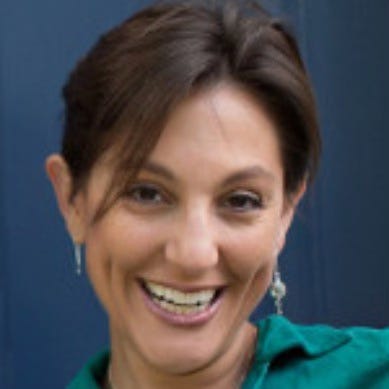
The views expressed here are those of the author and do not represent the views of any organization, employer, or institution with which they are affiliated.
Katie D. Schenk MSc PhD is the Founding Editor of The Public Health Workforce is Not OK newsletter and Founding Director of the Public Health Connections Lounge. She is an epidemiologist and public health informatics specialist with extensive experience in the US and globally, including frontline COVID-19 response, infectious disease surveillance, outbreak investigation, and social and behavioral HIV research in Southern and Eastern Africa. A passionate advocate for the public health workforce, she uses storytelling, data, and professional networks to elevate public health voices, foster connection, and strengthen the field while promoting workforce wellbeing and career development.
If you would like to share your perspective on public health right now in this Newsletter written TO and FOR and BY and ABOUT the public health workforce, we are currently running three series:
Write an opinion article grounded in lived experience for Voices from the Field: Meeting This Moment in Public Health; or
Compose a Love Letter to Public Health in poetry, prose, visual art, or another creative medium.
🆕 If you have left the public health workforce during this period, for any reason, I invite you to publicly share your Resignation Letter, documenting what is happening to our people and our institutions while the record is still being written.✨
Please get in touch if you would like to submit a draft to any of these series. I will work closely with you to prepare it for publication. Review previous instalments for examples. I will offer you my personal promise of confidentiality if requested.
I close by emphasising what I said in a previous newsletter:
“At this time of uncertainty for the public health workforce, let’s remember our commitment to science and evidence and data. We know that validating emotions and baggage has a place too, but we need to be able to identify them and distinguish opinion from fact.
Let’s recommit to kindness and mutual support for the public health workforce and beyond. If leaders are trying to sow divisions among us, the best we can do is to respond with empathy, and by strengthening, connecting, and lifting up one another.
Right now, the best I can offer my fellow public health professionals is a place* to gather and reflect and share and vent and organize and ask questions and offer support to one another. We’re going to need that now more than ever.”
*This is a plug for the Public Health Connections Lounge on LinkedIn, where we seek to build community and conversation among public health professionals. Join us.
Public Health Connections Lounge
If you are new around here, Welcome to The Public Health Workforce is Not OK! In this newsletter, I share frank insights and start conversations about the experiences of building a public health career. You can get to know me here and here. Please subscribe, review the action steps and the archive, and join the conversations in the Lounge. I am committed to keeping this newsletter free for job seekers (at least, for as long as I still have a job).
Related Knowledge Center: Inside the newsroom
As newsrooms struggle with rickety business models and precarious finances — as well as new technologies — they are deploying an array of editorial responses.
The Times and its critics | Washington Post mortem
Related Knowledge Center: Democracy and politics
News organizations are scrambling to find a coverage approach that adequately informs the American public about the country’s slide from democracy to authoritarian rule.