
On way to nuclear fusion, Chinese HL-3 reactor hits ‘dual 100 million degrees’
China has announced a milestone in the development of its next-generation “artificial sun”, marking another step towards harnessing controlled nuclear fusion.
For the first time, the Huanliu-3 (HL-3) tokamak reactor in Chengdu has achieved a plasma state with ion temperatures of 117 million degrees Celsius and electron temperatures of 160 million degrees, edging closer to the extreme conditions required to ignite fusion – the same process that powers the Sun – according to researchers.
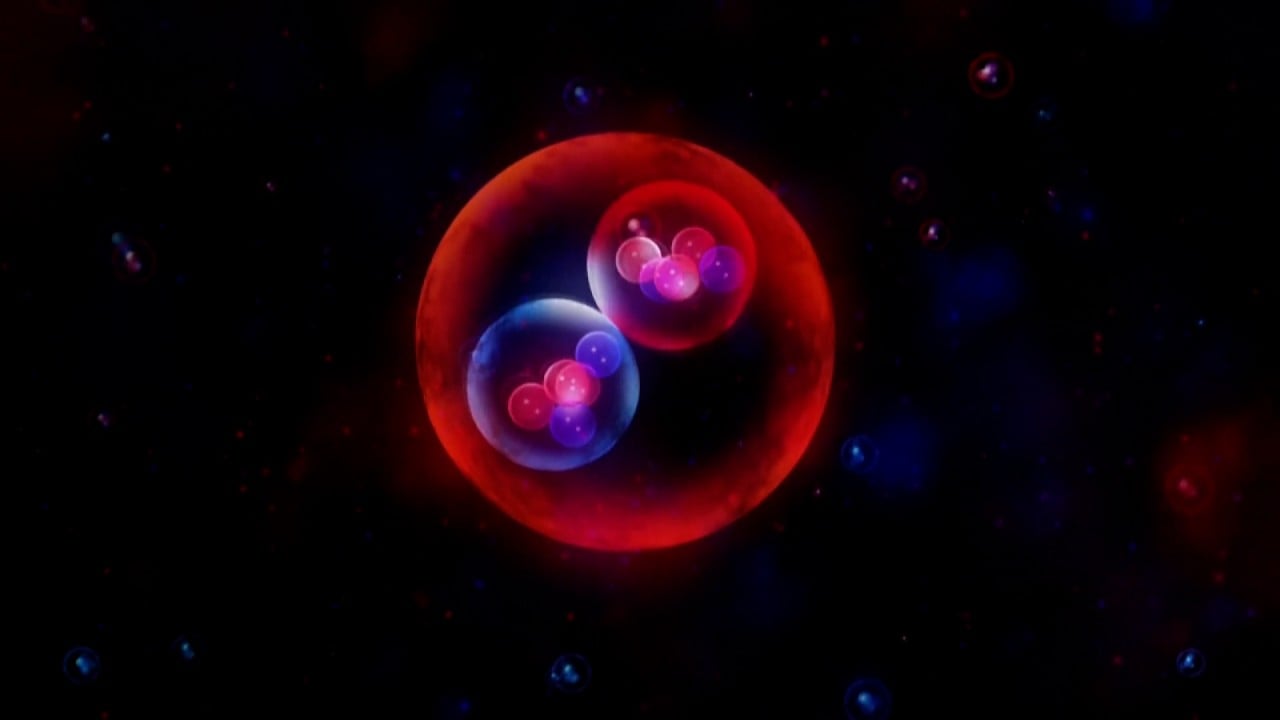
A tokamak is a doughnut-shaped device that uses powerful magnetic fields to confine superheated plasma, where hydrogen atoms – typically deuterium and tritium – fuse into helium and release vast amounts of energy.
01:20
China sets new world record in development of ‘artificial sun’
China sets new world record in development of ‘artificial sun’
“Our experiment has achieved the ‘dual 100 million degrees’ milestone, along with a major leap in overall fusion performance. This means China’s fusion research is entering the burning plasma phase,” said Zhong Wulu, chief designer of HL-3, in an interview with state broadcaster CCTV on Friday.
“For the first time, we’ve successfully deployed a full suite of heating, control and diagnostic systems developed entirely in China. These systems now rank among the best in the world, and they’ve helped set multiple records in China’s fusion research,” said Zhong, who is from the Southwestern Institute of Physics under the China National Nuclear Corporation.
The facility is open to the global community under a cooperation agreement between ITER and the Southwestern Institute of Physics. The latest round of experiments this spring has attracted teams from the United States, France, Japan, South Korea, Portugal and Thailand, according to ITER.
Together, the researchers are studying some of the most challenging issues facing ITER, including how to keep powerful plasmas stable, manage the intense heat produced inside the machine, and safely shut down the reaction if needed.
Compared with the Experimental Advanced Superconducting Tokamak (EAST) in Hefei – China’s other artificial sun known for long-duration plasma experiments – the HL-3 is larger, newer, entirely home-grown and designed not only for research but also to help realise a working fusion power plant.
Originally completed in 2020 as the HL-2M, the machine was renamed Huanliu-3 in 2023 after a major technical upgrade, including allowing the ability to produce ultra-strong magnetic fields and plasma currents exceeding 1 million amperes, which is essential for simulating reactor-grade conditions.
02:24
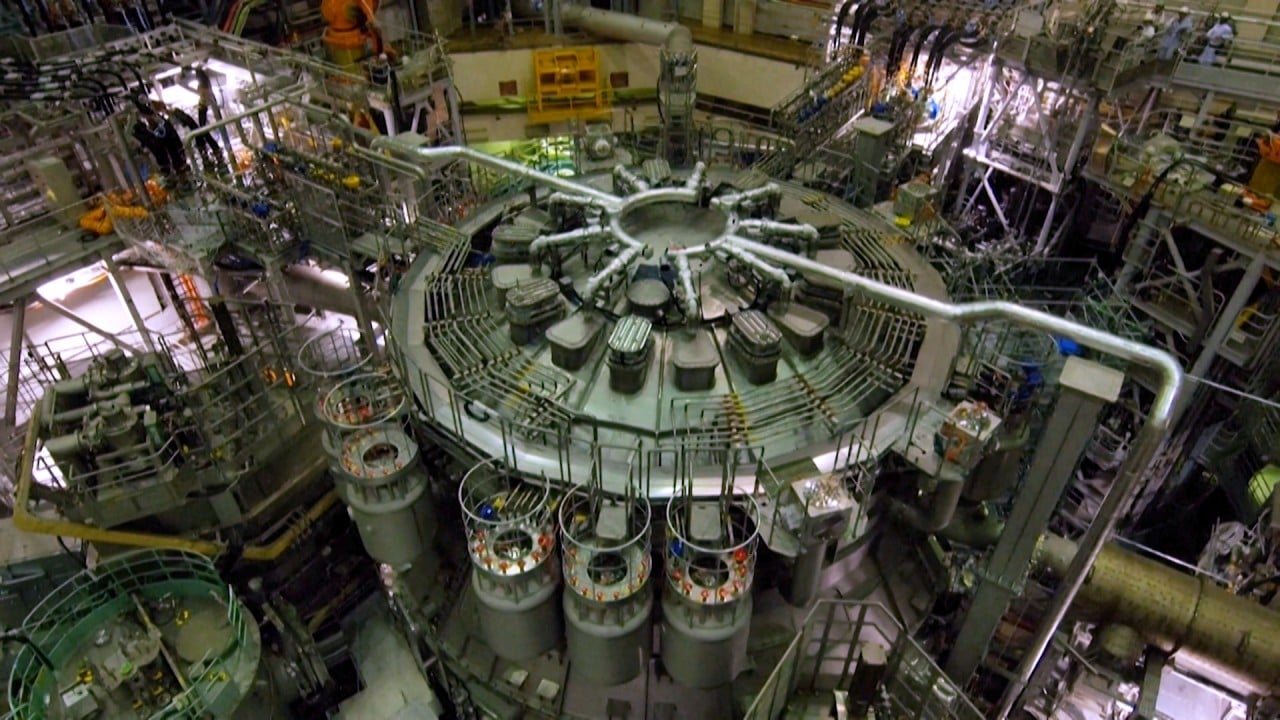
A look inside the world’s largest nuclear fusion reactor in Japan
A look inside the world’s largest nuclear fusion reactor in Japan
To reach the latest record-breaking temperatures, Zhong’s team built giant microwave generators to superheat electrons, and high-energy particle beams to raise the temperature of atomic nuclei – both systems ranking among the most advanced in the world, according to the institute’s website.
The team also developed a new method to better trap energy in the plasma core, overcoming instabilities that typically limit heating. At the same time, they introduced ultra-precise control and diagnostic tools that are now setting new global benchmarks for fusion experiments.
Next, the team plans to upgrade the HL-3 facility to gather even more critical data needed to unlock controlled nuclear fusion, according to CCTV.