
Viralflation comes to YouTube
To unlock more of my reporting on how the internet is reshaping politics, business, media, and culture, and to read my deep dives into emerging online spaces and internet trends, become a paid subscriber today!
I cannot produce this newsletter without your financial support. Your money goes directly towards reporting costs.
Yesterday, YouTube announced that it would be changing the way views are counted on YouTube Shorts to be more in line with the metrics on TikTok and Instagram Reels.
Previously, a view on YouTube Shorts was counted only after a Short was viewed for a certain number of seconds. This led to a lot of creators getting discouraged. They’d seen high view counts on IG and TikTok, then not be able to replicate those numbers on Shorts. Often, they’d just give up. (I know I did. I mainly post longform videos to YouTube these days).
TechCrunch reports:
YouTube says that it’s making the change because it heard that creators want to understand how often their Shorts are actually seen. The idea is that creators can now better showcase the full extent of their reach, making it easier to inform their content strategy and present their work to potential brand partners.
As a result of this change, view counts will be higher moving forward.
Creators who are still interested in the original Shorts metric can view it by navigating to “Advanced Mode” within YouTube Analytics. The metric, now called “engaged views,” will continue to allow creators to see how many viewers choose to continue watching their Shorts.
YouTube notes that the change won’t impact creators’ earnings or how they become eligible for the YouTube Partner Program, as both of these factors will continue to be based on engaged views rather than the updated metric.
Journalist Julia Alexander noted on X, “trying to compare views vis-a-vis across all platforms and all formats is a fool’s game because ‘views’ increasingly lose their value when anything and everything is chalked up to real engagement.”
Last year, I wrote about the concept of Viralflation, and I continue to think about it all the time:
The nature of virality has shifted radically over the past decade as the internet has fractured into uncounted disparate algorithms, platforms, and niche communities. The volume of content being churned out every day has skyrocketed, the life cycle of each piece of media has grown shorter and social media platforms continue to inflate public metrics, devaluing previously impressive online stats. All of these factors have rendered the term “viral” nearly meaningless. We are experiencing a period of mass “viralflation.”
“Back in the day, 1 million views was the thing,” Marcus Stringer, a partner manager at Social Blade, a social media analytics platform told me last year. “That meant you’d gone viral, and you’d get picked up by news agencies around the world. Now, tens of millions of views is the norm for top YouTube channels. Soon, 20 million views will eventually become the norm.”
“Because the concept of virality has been so watered down, truly viral pieces of content must reach hundreds of millions of people at a scale that’s increasingly unattainable for anyone but MrBeast,” Lara Cohen, vice president of partners and business development at Linktree told me.
User Mag is a 100% reader-supported publication. To receive new posts and support my work, become a free or paid subscriber.
A decade and a half ago, there was a clear delineation between viral content and the vast majority of media that users would encounter every day. The internet was smaller, and most sharing was manual (people emailing and messaging links to one another) or via early internet aggregators such as sites like Digg and StumbleUpon.
Viral content, such as early YouTube videos like Chocolate Rain or the Bed Intruder Song Remix emerged slowly, so the life span of a viral video was long. Some content remained viral for up to a year, worming its way through the internet as it gained traction. Chocolate Rain took months before it found an audience.
“The Antoine Dodson, ‘Hide your kids, hide your wife’ “bed intruder” video got 810 upvotes on r/funny back in 2010, and that was considered viral,” said Don Caldwell, editor in chief of Know Your Meme, a website that catalogues memes and online cultural ephemera.
“The meme Sad Keanu was one of the biggest memes in 2010 with only around 2,500 total upvotes on Reddit. Today, to hit the front page of Reddit, on the upper end you’d need at least 30,000 to 40,000 upvotes.”
When social media platforms began to switch to algorithmic feeds optimized for engagement in the mid 2010s, the viral content cycle accelerated, experts said. Brands began recognizing the power of virality and started to attempt to manufacture it. Content creators joined engagement groups where they’d reshare each other’s content in attempts to force virality.
Platforms themselves also began to realize the power of virality and sought to generate it, or at least generate the appearance of it. This was the beginning of the era of viralflation. Facebook helped lower the industry-wide threshold for what counted as a video view, and began inflating view counts on various Facebook videos in an effort to make them appear more viral than they were. According to a lawsuit filed against Facebook in California federal court in 2016, viewership metrics on some videos had been artificially increased by up to 900 percent. In 2019, Facebook settled the claim for $40 million.
Then TikTok broke into the mainstream in 2020, lowering the bar even further for what counted as a “view.” While a view on Facebook counts after three seconds of watch time, a view on TikTok is simply an impression, meaning the video was served to a user for at least a fraction of a second on screen. According to the company, TikTok also counts each loop of the video as a view, allowing videos to rake in massive view counts.
“The speed at which we cycle through trends and sort of moments of virality on the internet is faster now largely because of TikTok,” Cohen said.
This has created an arms race among tech platforms to see which could inflate metrics the most.
“If you keep on giving people views, they’re probably going to make more content,” said Kyla Scanlon, a content creator and author of the book “In This Economy?: How Money & Markets Really Work,” which breaks down financial and economic concepts, “and so it’s a product incentive for these platforms.”
After Elon Musk took over Twitter, he revamped its system for counting views, muddying the water even further. Some tweets from private accounts with zero followers amassed public view counts in the hundreds, leading many tech spectators to question Musk’s system for counting “views.” Last year, a reporter for The Post posted a tweet to a private, locked account with zero followers. Within minutes, the tweet amassed more than 700 views, by Twitter’s count.
“There’s been an incentive to have these numbers look bigger because they look better to advertisers, so there’s a financial incentive to cause this viral inflation,” Caldwell said.
A new class of content creators also has raised the bar for what’s considered viral.
“When MrBeast started to explode, things really started to change in the landscape,” Stringer said. “People didn’t consider [earlier metrics of virality] viral anymore, because he’s getting multimillions of views per video.”
The rise of shortform content also plays a role. “I think one of the reasons that metrics have become so inflated,” Coco Mocoe, a trend forecaster in Los Angeles, said, “is that even if a video does get 10 million views, the average length of videos are so short. The average young person is watching hundreds of videos within a day, whereas back in 2015, I’d maybe watch no more than 10 videos a day, because each were five to 10 minutes long. The main reason there are bigger numbers now is because people are consuming so much more content in a given sitting.”
Virality is also increasingly niche as the internet has separated into disparate communities. A piece of content can go viral in specific regions, or only within a certain demographic or interest-based community.
“When someone used to go viral, they could leverage that to be on ‘Ellen’ the next day and have that moment of instant fame,” Cohen added. “Now, there’s a million different places to show up on the internet if you’re a creator. You can sort of have a big splash within a particular community, but it probably won’t resonate beyond that community.”
Viralflation is having a business impact in the creator economy. Several creators told me that they feel pressure to up the bar. Brands have become so hooked on bigger and bigger numbers that they look down on engagement numbers that would have been perfectly respectable just a couple of years ago.
For the average consumer, viralflation has made it increasingly difficult to tell what is and isn’t actually viral. Because we no longer have any shared sense of virality, it makes it easier for people who don’t understand the mechanics of the internet to fall for fake viral trends. (see: every fake TikTok trend in the media over the past 5 years).
Claiming that something is “viral” these days is a bit like your local diner claiming it has the “world’s best cup of coffee,” Caldwell said — nice marketing, but not necessarily true.
User Mag is a 100% reader-supported publication. To receive new posts and support my work, become a free or paid subscriber.
The first genAI meme
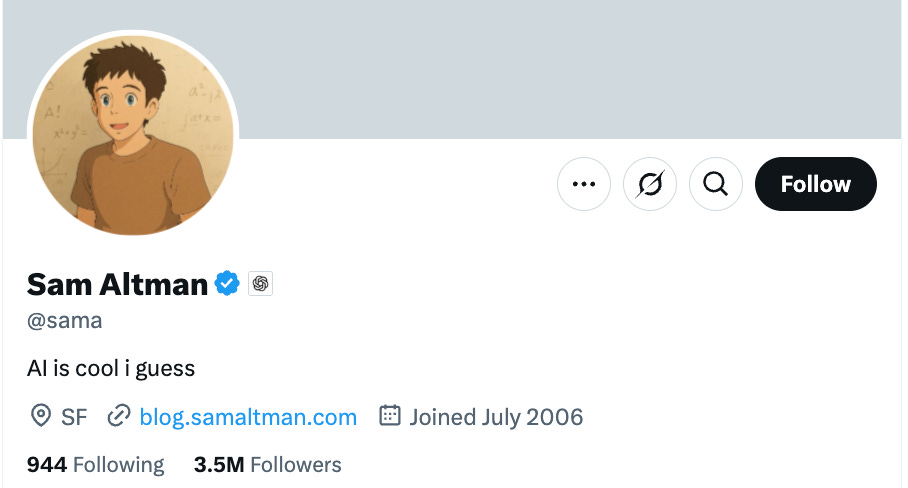
On Tuesday, OpenAI launched what it called its “most advanced image generator yet,” built into GPT‑4o. It features a “natively multimodal model capable of precise, accurate, photorealistic outputs,” which basically means that it’s an image generator, which happens to be extremely good at replicating the style of anime powerhouse Studio Ghibli. Studio Ghibli has produced animated hits like “Spirited Away,” “My Neighbor Totoro” and “The Boy and the Heron.”
By Wednesday, half the internet was replicating photos and generating images in Studio Ghibli style. Sam Altman weighed in on the trend in a post on Wednesday posting: “> be me > grind for a decade trying to help make superintelligence to cure cancer or whatever > mostly no one cares for first 7.5 years, then for 2.5 years everyone hates you for everything > wake up one day to hundreds of messages: ‘look i made you into a twink ghibli style haha.’” Altman also updated his own avatar to Studio Ghibli style.
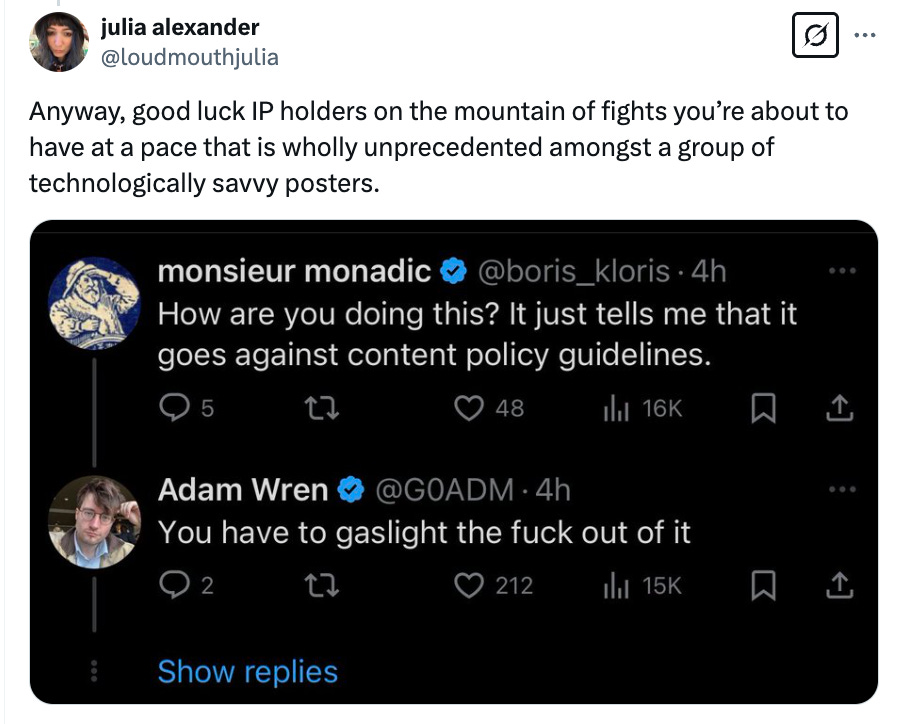
Journalist Julia Alexander posted, “It’s almost poetically sad that the first ‘major’ (??) genAI meme trend in a hot minute is mimicking the one studio absolutely dedicated to hand drawn artistry. Give the Studio Ghibli team some respect and stop pretending your little prompts are anywhere close… I do think it’s so fucking telling that the first major genAI trend is around Studio Ghibli. It’s like the epitome of everything genAI wants to recreate can only be taken from the most human expression of art even in a CGI age.”
An excellent podcast you should listen to
As I wrote last week, landmark internet law Section 230, a crucial law that protects the right to free speech and expression online, is under attack from both the left and the right. Democrats and Republicans are working together to dismantle crucial free speech protections on the internet. I think a lot of people aren’t paying attention to this stuff because it seems to wonky or hard to follow— which I totally get!
Otherwise Objectionable is a new podcast hosted by iconic tech journalist Mike Masnick. He tells the untold story of “the most misunderstood law on the internet.” It’s a legitimately great podcast and he did not pay or even ask me to promote it here. I’ve just been listening and recommending it to everyone I know because it’s that good!
You can listen to Otherwise Objectionable on Apple Podcasts, Spotify, YouTube, Pandora, iHeart, Deezer, Amazon Music and other podcast apps. The fight over Section 230 is going to be major over the next few years, and this podcast is a great primer. Take a listen!
Mike also joined me last week on Power User to break down how Trump’s new FCC Chair Brandon Carr, who has been trying to build a career as a free speech influencer online, is actually working overtime to dismantle free speech protections in America. Subscribe to my YouTube channel!
What I’m reading
The Man Who Went to Fake Prison Also Went to Real Jail
A crime that became a prank then became a crime. — NY Mag
The men disappeared to El Salvador because of their tattoos
The Trump administration sent Venezuelans to El Salvador’s most infamous prison. Their families are looking for answers. — Mother Jones
Michael Waltz’s Venmo Is Public, and It’s Full of Journalists
The figure who tagged a journalist into a Signal chat about the attack on Yemen also failed to set his Venmo to private, revealing his willingness to engage with reporters of all political stripes. — American Prospect
19 founders and VCs working with Elon Musk’s DOGE
Regardless of how you feel about DOGE, there’s no question that Silicon Valley’s influence on the federal government is stronger than ever. Here’s who is shaping that future. — TechCrunch

These Are the Dumbest Fences in New York?
New York University has erected a monument to American universities’ crackdown on speech. —
A Notorious Twitch Streamer Was Robbed. Why Didn’t Anyone Believe Her?
Amouranth said she had to defend herself when three people broke into her house demanding crypto — then, she had to defend herself from the internet. — Rolling Stone
How Denial of Airborne COVID Transmission Broke the World
As we mark five years since the emergence of SARS-COV-2, the most grievous error of the global pandemic response has become very clear. — Good Men Project
User Mag news rundown
Robinhood is launching bank accounts that will deliver physical cash ‘to your doorstep’
JoJo Siwa is selling VIP tour tickets for over $900 where fans can ‘help’ her crew set up for concerts.
A startup building ‘Twitch for sports’ just raised $22 million from investors like Alexis Ohanian’s Seven Seven Six.
The hottest use of AI right now? Dora the Explorer feet mukbang; Peppa the Pig Skibidi toilet explosion; Steph Curry and LeBron James Ahegao Drakedom threesome.
Erewhon reportedly sells 40,000 Hailey Bieber smoothies each month.
DOGE staffer ‘Big Balls’ provided tech support to a cybercrime ring.
If you’ve gotten this far in the newsletter, become a paid subscriber!
56% of Gen Zs and 43% of millennials surveyed find social media content “more relevant than traditional TV shows and movies”
Gen Z Twitch streamer IShowSpeed has been on a whirlwind trip around China, live streaming the whole thing. His trip has completely changed his young viewer’s perception of the country. Here’s a thread of the best moments.
Old-school metal braces are making a comeback among Gen Z hipsters and adults who don’t mind the look.
After years of providing advice about how to avoid getting hacked, Have I Been Pwned operator Troy Hunt’s personal blog mailing list was breached.
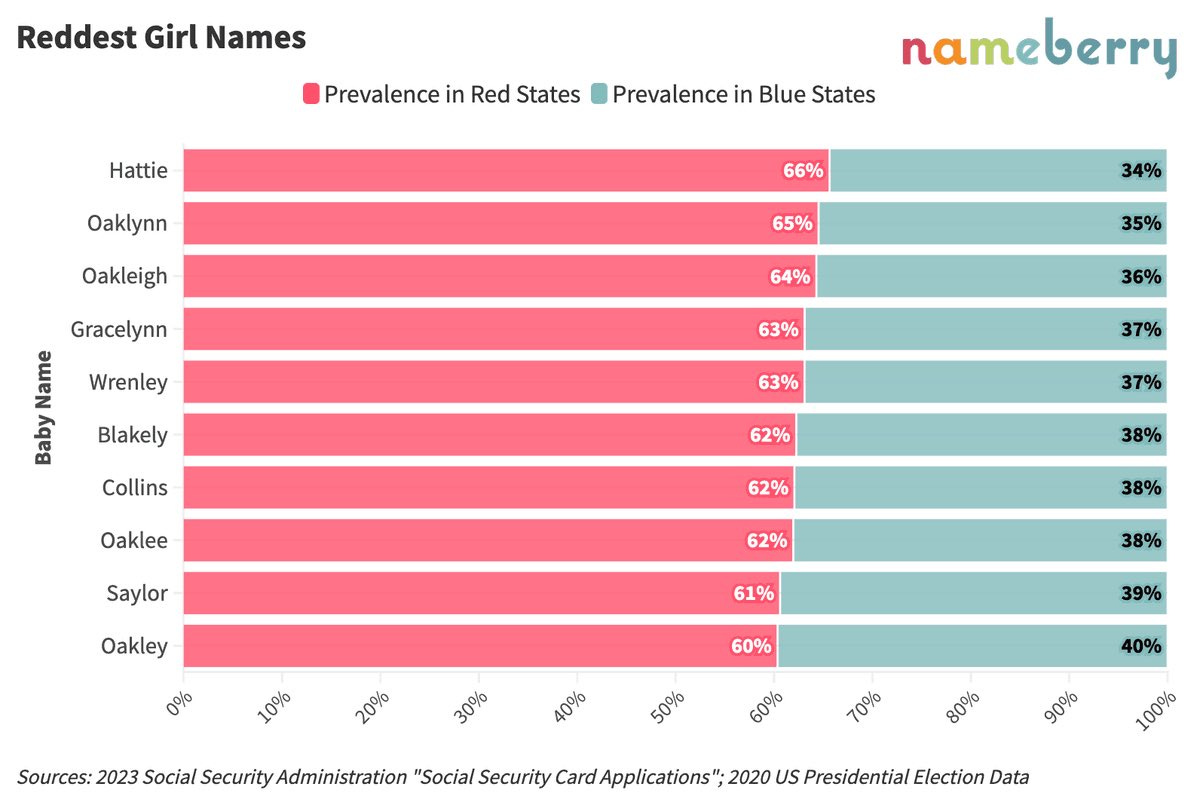
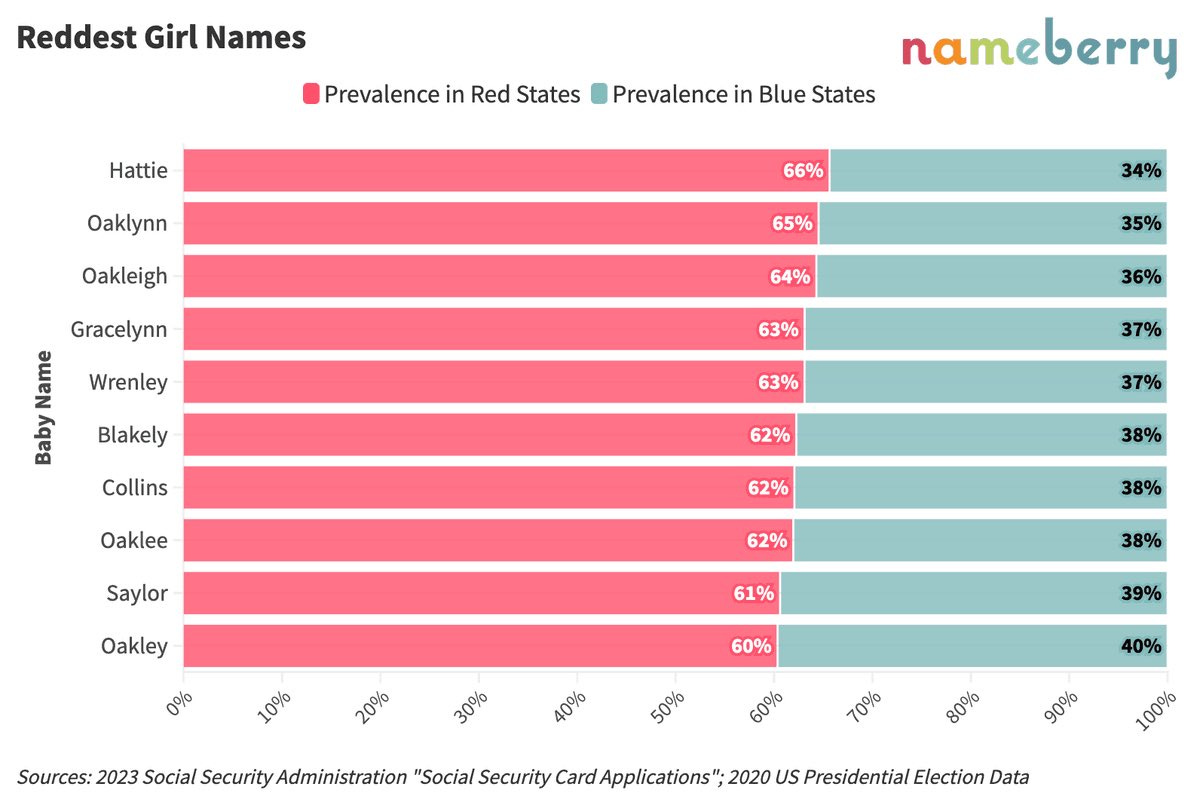
Obsessed with this list of red state baby names:
Bill Gates: Within 10 years, AI will replace many doctors and teachers—humans won’t be needed ‘for most things’
A Scooby-Doo live-action series is coming to Netflix.
This 2021 clip of Jeffrey Toobin’s first day back at CNN is a fever dream.
“Hawk Tuah Girl” Haliey Welch will be the focus of an upcoming documentary from Bungalow Media + Entertainment.
Influencer Alix Earle hit Gymshark with $1m lawsuit after firing over pro-Israel posts.
Tesla is launching in Saudi Arabia as Musk and the kingdom mend relations. (The Saudis are the second largest investors in Twitter after Musk’s takeover).
Stephen Curry is teaming up with Michelle Obama to launch a sports drink.
Jeff Bezos and Lauren Sanchez’s celebrity wedding list has been revealed.
Duolingo recreates Ashton Hall’s viral morning routine. Time to pack it up— the meme is done!
Ed Sheeran disguised as an emo boy singing Chappell Roan on a NYC subway platform.
Creators are all starting to adopt the same “influencer accent”
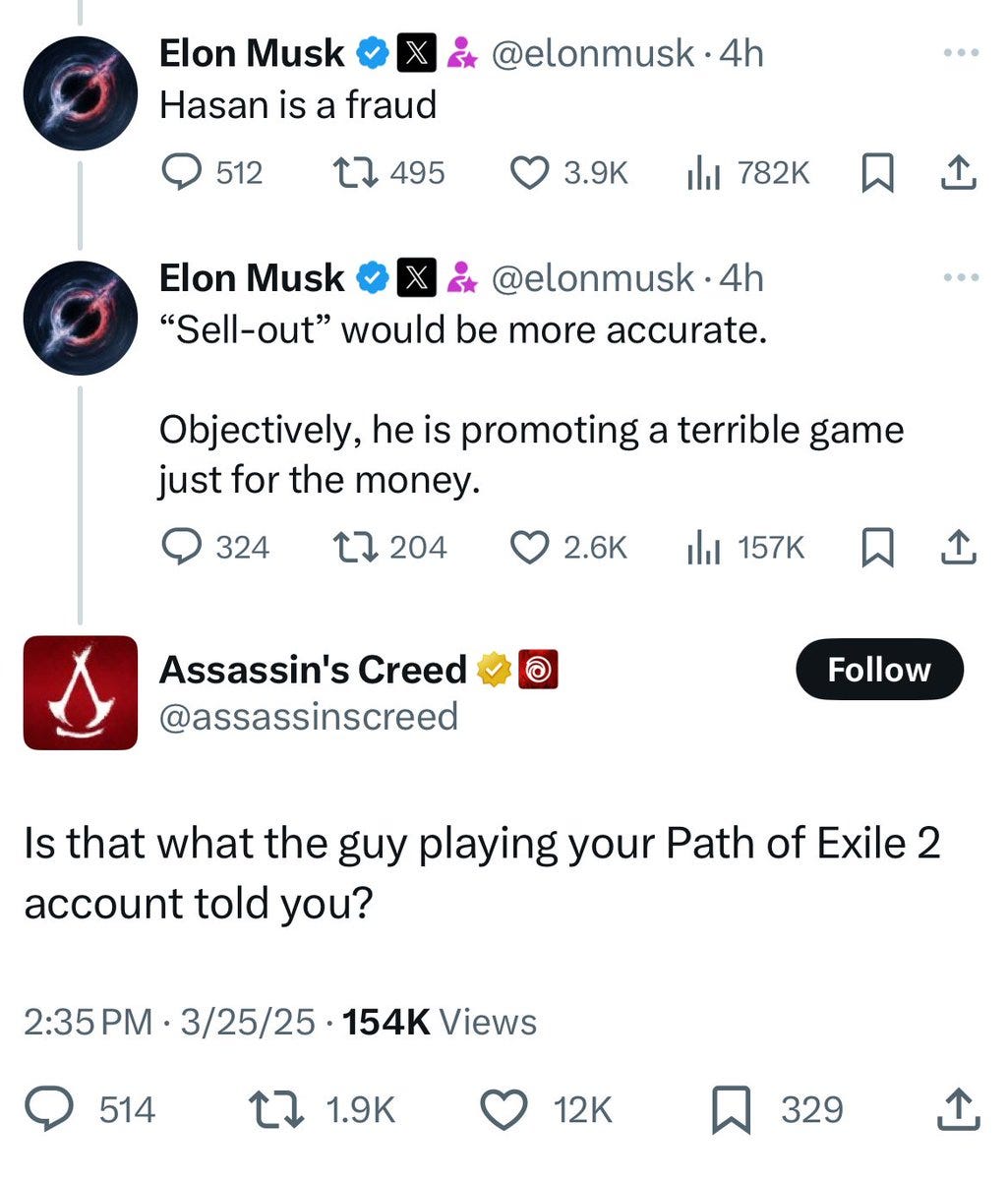
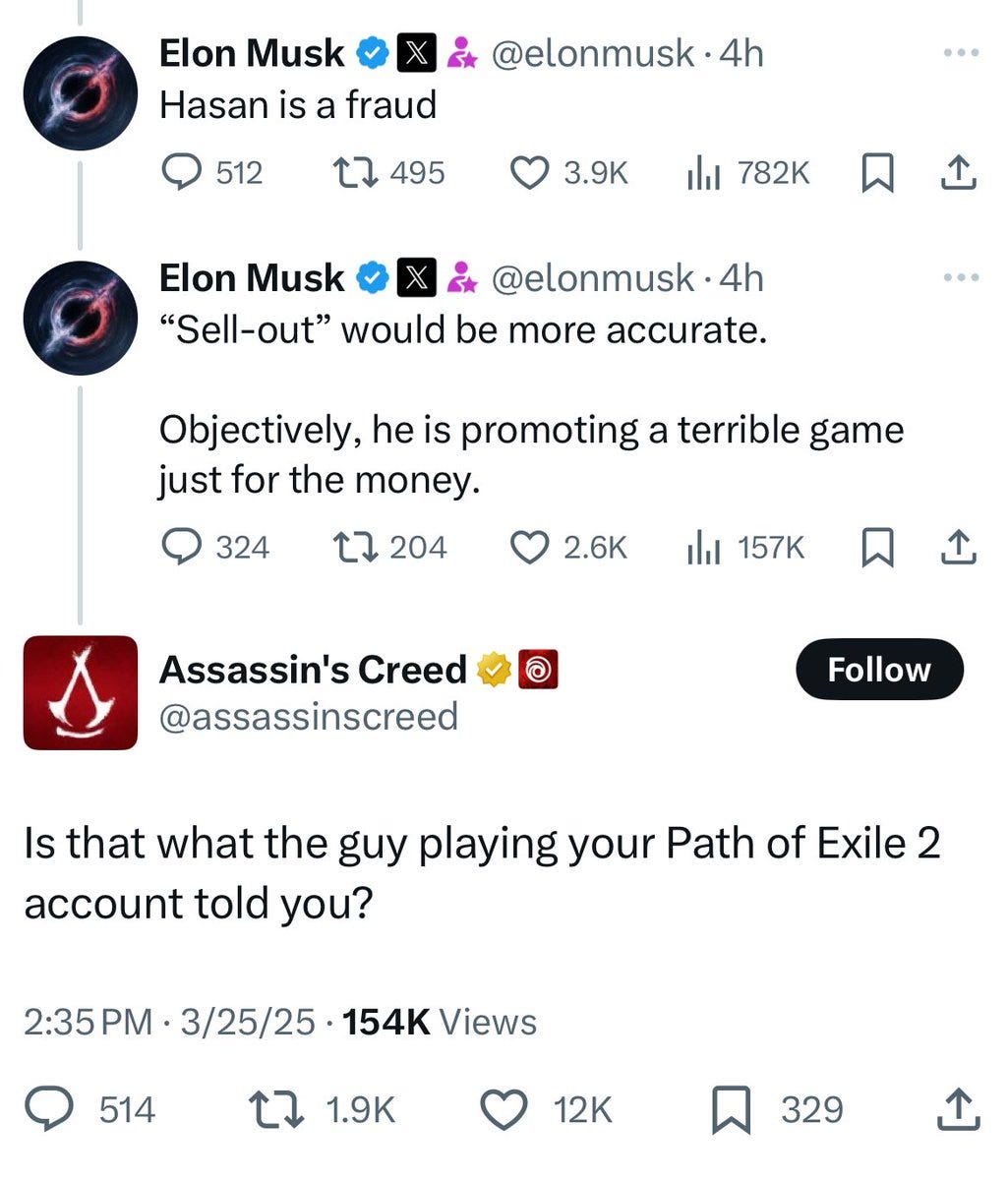
Elon Musk tried to come for leftist Twitch streamer Hasan’s choice of video game and got trounced
ChatGPT “power users,” or those who use it the most, are becoming dependent on the chatbot, while recent studies have revealed some interesting emotional patterns among the chatbot’s most dedicated users
People watch as much YouTube on TV as Netflix and Amazon combined.
Napster was bought this week for $207 million.
College kids are making viral TikToks about consent and positive masculinity to fight against the manosphere.
Brian Goldstone’s new book THERE IS NO PLACE FOR US, is finally out. It is based on a half-decade of reporting and examines the rise of America’s “working homeless,” following five Atlanta families desperate to secure housing in a gentrifying, increasingly unequal city. It’s very good.
AI-fueled fan fiction is booming with consumers generating wild storylines with IP icons from ‘Friends’ to Harry Potter.
A TikTok about the food at the Yale cafeteria? A YouTube post about your first day at Harvard? A new class of social media influencer is taking their followers inside the Ivy League.
Be careful about getting UTI’s at NYC’s bathhouses.
ICE is grabbing legal residents off the streets for criticizing U.S. foreign policy. This video should terrify you.
What I’m watching
User Mag is a 100% reader-supported publication. To receive new posts and support my work, become a free or paid subscriber.

For more User Mag follow my meme page and subscribe to my YouTube channel. You can buy me a coffee here.
Listen to my podcast Power User on Apple Podcasts:
Or follow Power User on Spotify:
Related Knowledge Center: Social media
Social media platforms are the source of news for millions of people — and they have a fraught and ever-shifting relationship with the enterprises that provide that news.
The TikTok ban | The Meta-FTC trial
Related Knowledge Center: State of the business model
The traditional journalism business model has long since collapsed, and news organizations have shrunk or disappeared entirely. While a number of promising experiments are under way, the public has not shown a willingness to buy what news organizations are selling.