
US and Japan agree deal on rare earths and nuclear power
Japan and the United States agreed to tie-ups on new-generation nuclear power reactors and rare earths, as Tokyo seeks a way back to export markets for its nuclear technology and both look to reduce China’s dominance over key electronic components.
US President Donald Trump and Japanese Prime Minister Sanae Takaichi signed a framework agreement today for securing the supply of rare earths used in everything from cars to fighter jets.
They signed the documents, which included critical minerals, at the neo-Baroque-style Akasaka Palace in Tokyo, as aides applauded.
They made no direct public mention of China, which processes more than 90% of the world’s rare earths, making it the source of each country’s concern about its mineral supply chain. Beijing has recently expanded export curbs.
Mr Trump and Chinese President Xi Jinping are set to meet on Thursday on the sidelines of the Asia-Pacific Economic Cooperation in South Korea to discuss a deal that would pause steeper US tariffs and Chinese rare earths export controls.
Japan and the United States would use economic policy tools and coordinated investment to speed “development of diversified, liquid, and fair markets for critical minerals and rare earths”, the White House said in a statement.
They aim to provide financial support to selected projects within the next six months, it added.
Both countries would consider a mutually complementary stockpiling arrangement and cooperate with international partners to ensure supply chain security, it said.
While China dominates global rare earth extraction, the United States and Myanmar control 12% and 8% respectively, says Eurasia Group, with Malaysia and Vietnam covering processing — where China is also the top player — of another 4% and 1% each.
Taiwan ties with US ‘very stable’, ahead of Trump-Xi meeting
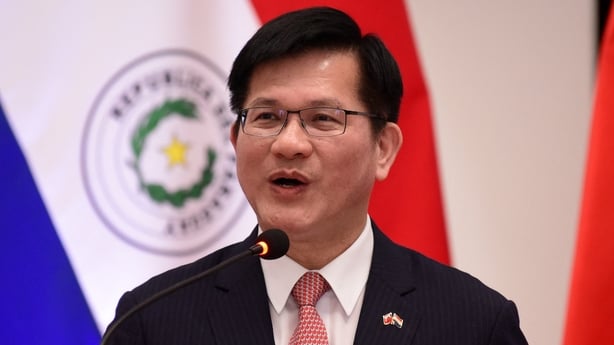
Meanwhile, Taiwan foreign minister Lin Chia-lung said that he was not worried that Mr Trump would “abandon” the island in his meeting this week with Mr Xi in South Korea.
Since taking office earlier this year, Mr Trump has vacillated on his position towards China-claimed Taiwan as he seeks to strike a trade deal with Beijing.
Mr Trump says Mr Xi has told him he will not invade while the Republican president is in office, but Mr Trump has yet to approve any new US arms sales to Taiwan.
The fear in Taiwan, which has long enjoyed strong unofficial support from Washington, is that the Trump-Xi meeting this week could see some sort of “selling out” of Taiwan’s interests by Mr Trump to Mr Xi.
Asked whether he was worried Mr Trump would “abandon” Taiwan at the Xi talks, Mr Lin told reporters in Taipei: “No, because our Taiwan-US relations are very stable”.
“No matter whether on security, trade and business and other areas, there is close cooperation,” he added.
The United States, like most countries, has no formal diplomatic ties with Taiwan, but is bound by law to provide the democratically governed island with the means to defend itself, and the issue is a frequent irritant in Sino-US relations.
APEC summit
The APEC forum is one of the few international groupings that Taiwan takes part in, though it does not send its president to avoid political problems with China.
Speaking at the airport before leaving for South Korea, Taiwan’s APEC representative, former economy minister Lin Hsin-i, said the summit was a good opportunity for “equal interactions” with other members attending.
Read: Trade, Taiwan and TikTok to dominate Trump-Xi meeting amid rising tensions
China has offered a “one country, two systems” model of autonomy to Taiwan, which all major parties in Taiwan have rejected.
In the past five years, China has ramped up military and diplomatic pressure against Taiwan, including regularly sending warplanes and warships into the skies and waters near the island.
In a commentary, China’s official Xinhua news agency lambasted “separatists” but said the “situation will only become increasingly favourable for the just cause of supporting reunification”.
Both sides can sit down and negotiate a “reasonable ‘one country, two systems’ solution” for Taiwan, which will respect Taiwan’s existing social system, it added.
Taiwan’s government says China has no right to claim or speak for the island internationally, and that only the Taiwanese people can decide their own future.