
Unmanned Solar Plane Crashes In Gulf Of Mexico
Plane Took Off From Stennis International Airport In Mississippi
The Solar Impulse 2, a long-range experimental aircraft, crashed in the Gulf of Mexico when it lost power during an unmanned test flight on May 4, a report from the National Transportation Safety Board (NTSB) said.

There were no fatalities or injuries.
The NTSB said the aircraft suffered a loss of power before crashing into the ocean. It was completely destroyed. No one was on board.
According to the NTSB’s preliminary findings, the aircraft took off at dawn on Monday, 4 May, from Stennis International Airport in Mississippi. It crashed in international waters in St Louis Bay, in the Gulf of Mexico. The investigation is ongoing, and a final report will be published at a later date.
“The Solar Impulse team is saddened by the loss of an important technological flagship,” the company said in a statement released on Friday. Solar Impulse said the plane had been taken over by Skydweller Aero, an Oklahoma company developing autonomous aircraft, which heavily modified the Solar Impulse 2. The plane was lost during one of these unmanned flights.
The accident comes nearly 10 years after the aircraft, developed by André Borschberg and Bertrand Piccard, completed a landmark round-the-world flight without fuel.
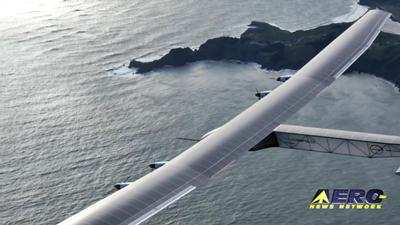
Developed by entrepreneur Borschberg and Piccard, a descendant of famous European explorers who pioneered scientific advancements both in the air and under the sea, the sun-powered plane has undertaken several successful test flights since it was developed in 2015. The solar-powered aircraft circumnavigated the world in 2015 and 2016.
The slender, fixed-wing single-engine aircraft is described by Piccard as symbolic — it’s not meant to carry passengers and instead represents a potential clea- energy solution to fossil fuels, according to his website. According to the BBC, the solar-powered aircraft’s wingspan measures 72 meters, making it wider than a Boeing 747.