
Ukrainians want honest government. Do we?
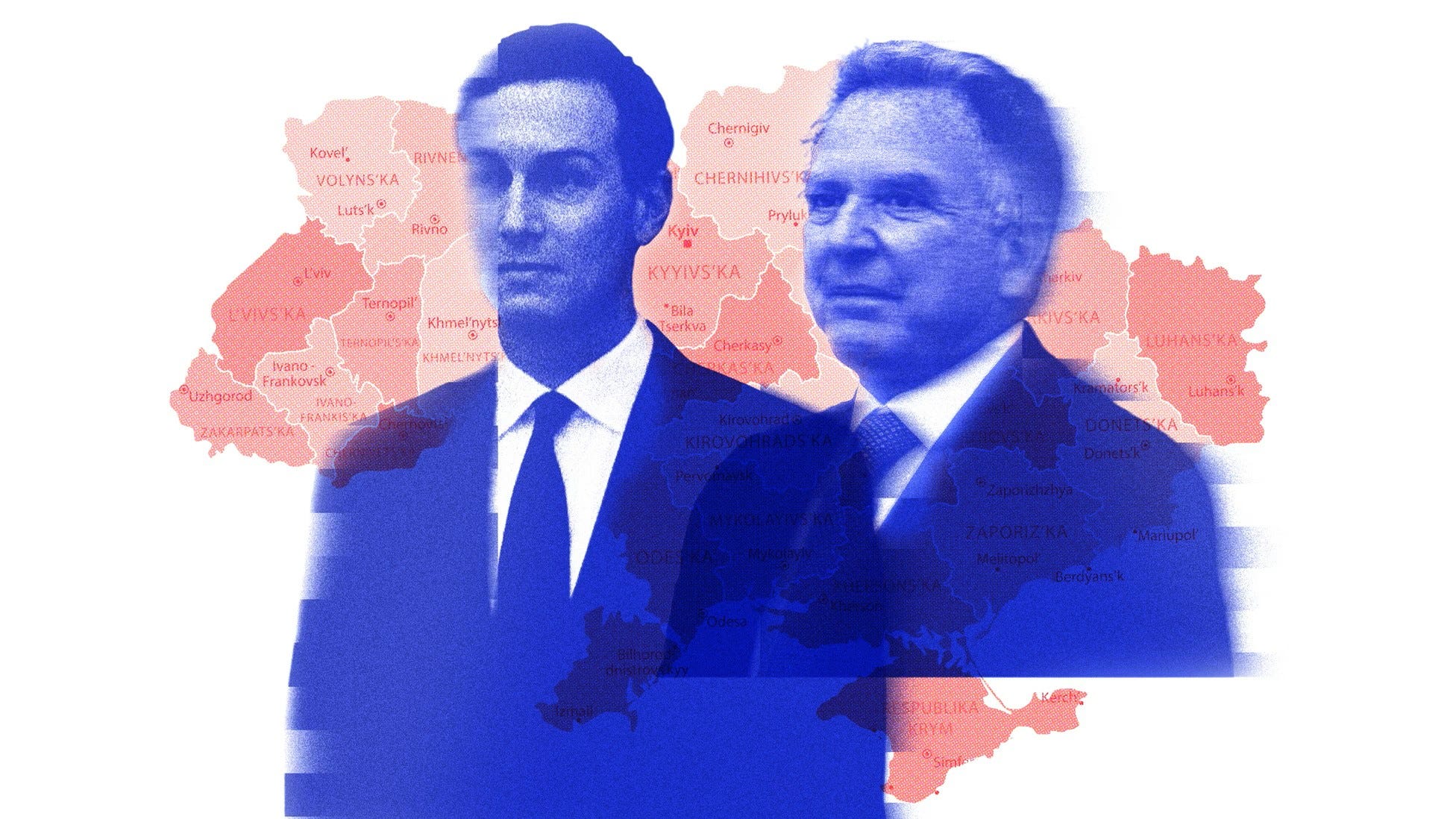
A few days ago, I called Oleksandr Abakumov, a senior detective at the National Anti-Corruption Bureau of Ukraine. I wanted to ask him about Operation Midas, his investigation into a kickback scheme in his country’s energy industry. I didn’t intend to write about him. But as we were speaking, I got interested in his background, and his motivations. As I eventually wrote in the Atlantic, I was struck by the surprising contrast between people like him—the Ukrainian civil servants and civil-society activists who have been demanding transparency from their leaders for two decades—and the American and Russian negotiators who met last week in Moscow, perhaps to decide Ukraine’s fate.
Remember, the civic reform movement in Ukraine, starting with the Orange Revolution in 2004-5, peaking during the Maidan revolution of 2014 and continuing into the present, has always had two goals: A sovereign Ukraine, independent from Russia, and a transparent Ukraine, free from Russian-style corruption. This same civic reform movement is now the backbone of the Ukrainian army and the drone industry, but still fights for influence in the civil service. Ukrainian reformers have always had plenty of opponents inside the country as well as in Russia. Nevertheless the Ukrainian state has slowly transformed itself.
Foreign coverage of “Operation Midas” often relies on the passive voice, as if the scandal has a will of its own (“Scandal Consumes Top Aide”). But people such as Abakumov, who is a part of the Ukrainian state, worked to make the scandal public. They have interrogated cabinet ministers, published surveillance recordings, searched apartments. The Ukrainian Parliament has dismissed two ministers. Tymur Mindich, a former business partner of Zelensky, has fled the country. Late last month, the president’s closest adviser, Andriy Yermak, resigned following a search of his apartment. All of this means that the political system is healthy, operating according to the law.
I asked Abakumov if he feared that his investigation could harm the war effort. On the contrary: “Corruption equals Russia,” he told me. If Ukraine tolerates corruption, “this is the way we lose, during the war, during negotiations, during rebuilding Ukraine.” Daria Kaleniuk, one of Ukraine’s most prominent anti-corruption activists, also told me that with this investigation, “we have the chance to save the country and make it stronger.”
Contrast their motivations with those of Steve Witkoff (a real estate developer), Jared Kushner (Trump’s son-in-law and the owner of an investment company that received $2 billion from Saudi Arabia) and their Russian counterpart, Kirill Dmitriev, the head of Russia’s sovereign-wealth fund:
Last month, The Wall Street Journal revealed that these three businessmen met in Miami Beach in October to discuss not just Ukraine but also future Russian-American business deals. Russian businessmen who are known to be close to Putin have been “dangling multibillion-dollar rare-earth and energy deals” in front of American companies, the Journal explained, to “reshape the economic map of Europe—while driving a wedge between America and its traditional allies.” Some of the companies have connections with Donald Trump’s family.
Witkoff and Kushner are not taking kickbacks on government contracts, as some Ukrainian officials are now accused of doing. The corruption they represent is more profound: They are using the tools of the American state in a manner that happens to benefit their friends and business partners, even while they do terrible damage to American allies, American alliances, and America’s reputation. This is a conflict of interest on a grand scale, with no real precedent in modern American foreign policy.
Right now, no civic activists are succesfully opposing corruption in either Russia or America. Putin crushed the anti-corruption movement in Russia and killed its leader, Alexi Navalny. In the US, the Trump administration has systematically dismantled the system of ombudsman and ethics monitors that are meant to check grand corruption in America. As I wrote, it is impossible to imagine Kash Patel’s FBI investigating anyone in Trump’s White House. Any Russian who investigates Putin goes to jail.
I talked about some of these issues, as well as the state of the Ukraine-Russia-America negotiation, with Scott Galloway on his Prof G podcast:
In the coming weeks, I will also write more about America’s new National Security Strategy, published Friday. It denounces Europe, favors Russia and constitutes a long suicide note, portending the end of American influence in the world. In the meantime, Tim Mak has written a good analysis on his Counteroffensive substack:

Read the Atlantic article (gift)
Kleptocracy Tracker
Continuing to monitor conflicts of interest, ostentatious emoluments, outright corruption and policy changes that will facilitate outright corruption. (Read my original article, Kleptocracy Inc and check out the SNF Agora Institute chart)
November 21
Trump—already hosting fundraising dinners at a far greater rate than any other second-term president—will host two more next year at Mar-a-Lago, charging $1 million per ticket, with proceeds going to his super PAC, MAGA Inc.
November 23
After receiving a three-year prison sentence for defrauding the government, Joseph Schwartz paid lobbyists and right-wing provocateurs Jack Burkman and Jacob Wohl nearly $1 million to successfully secure a presidential pardon.
November 24
FBI Director Kash Patel has continued to misuse FBI resources for personal purposes, including using a government jet for a golf vacation in Scotland and deploying a SWAT team as bodyguards for his girlfriend.
November 26
As acting director of the Consumer Financial Protection Bureau, Russ Vought has required financial reviewers to recite a “humility pledge” before evaluating companies under their jurisdiction, a move intended to discourage investigations.
Several donors to Trump’s presidential transition later received posts in his administration, including Steve Witkoff, Linda McMahon, and Howard Lutnick.
Cantor Fitzgerald—Howard Lutnick’s former Wall Street firm—has had its best year on record following his appointment as commerce secretary, thanks in part to a large early bet on cryptocurrency.
November 28
An extraordinary Wall Street Journal investigation described the business interests and secret commercial negotiations that lie behind Steven Witkoff and Jared Kushner’s negotiations with Russia, some of which could benefit contacts of the Trump family.
November 29
Trump commuted the 12-year sentence of convicted fraudster David Gentile just seven days into his prison term.
November 30
A major article in The Guardian shows how Donald Trump Jr. and Eric Trump have embarked on a global deal-making blitz that has placed the family’s business interests at the center of several pardons and commutations, sensitive technology-transfer arrangements, tariff agreements, and alliance negotiations.
December 1
Trump pardoned the former president of Honduras, Juan Orlando Hernández. He had been convicted of helping drug traffickers import more than 400 tons of cocaine into the United States, while protecting drug cartel leaders from prosecution.
December 3
A small rare-earth-minerals startup received a $620 million loan from the Department of Defense after Donald Trump Jr.’s venture-capital firm invested in it.
Trump pardoned Congressman Henry Cuellar and his wife following their bribery and money-laundering indictment.
The Kleptocracy Tracker, Pardon Annex
Last week, Donald Trump pardoned the former president of Honduras. Even for Trump, this was a strange decision. A U.S. judge sentened Juan Orlando Hernández last year to 45 years in prison for helping drug traffickers import more than 400 tons of cocaine into the U.S. Given that the Trump administration is now regularly murdering people who are alleged to be trafficking drugs, even without hard evidence, why would Trump pardon someone who had been legitimately convicted?
I don’t know the answer, but money might be part of the explanation. As Benjamin Wallace-Wells writes in The New Yorker, Trump has expanded the presidential pardon power dramatically. He has issued more than 1,500 pardons since returning to office less than a year ago, compared with 144 in his first term, Biden’s 80, and Obama’s 212, across two terms. He has created a “pardon economy,” in which pardon seekers or their relatives pay lobbyists and lawyers to grease the wheels. He replaced the career public servant who led the pardon office with a loyalist, Ed Martin. His whims and preferences, and maybe his financial interests, now the process. Sometimes he does not seem to know who he has pardoned or why. Read more here.
Trump’s pardon of Changpeng Zhao, the founder of Binance, a cryptocurrency company, is another strange story. As Angus Berwick, Patricia Kowsmann, and Rebecca Ballhaus report for The Wall Street Journal, Zhao received his pardon after a lobbying campaign that began before the 2024 election. Zhao played a role in building World Liberty Financial, the Trump cryptocurrency company, and helped to make the company a convenient avenue for other favor seekers to enrich the president and his family. Binance—the world’s largest cryptocurrency trading platform—may soon resume operations in the United States, positioning Zhao to earn a substantial return on his investment. Read more here (gift link).
In his New York Times column, Jamelle Bouie writes that the authors of the U.S. constitution always feared that the pardon power could become an instrument of presidential corruption.
“The unrestrained power of granting pardons,” Cato wrote in November 1787, “may be used to screen from punishment those whom he had secretly instigated to commit the crime, and thereby prevent a discovery of his own guilt.” A president possessed of enough ambition, Cato went on, “has power and time sufficient to ruin his country.”
That fear is no longer hypothetical. Among other things, Trump is using pardons to foster an administrative culture in which lawlessness thrives. What incentive do Trump administration officials have to follow the law if they know they will receive a pardon? Read more here (gift link).
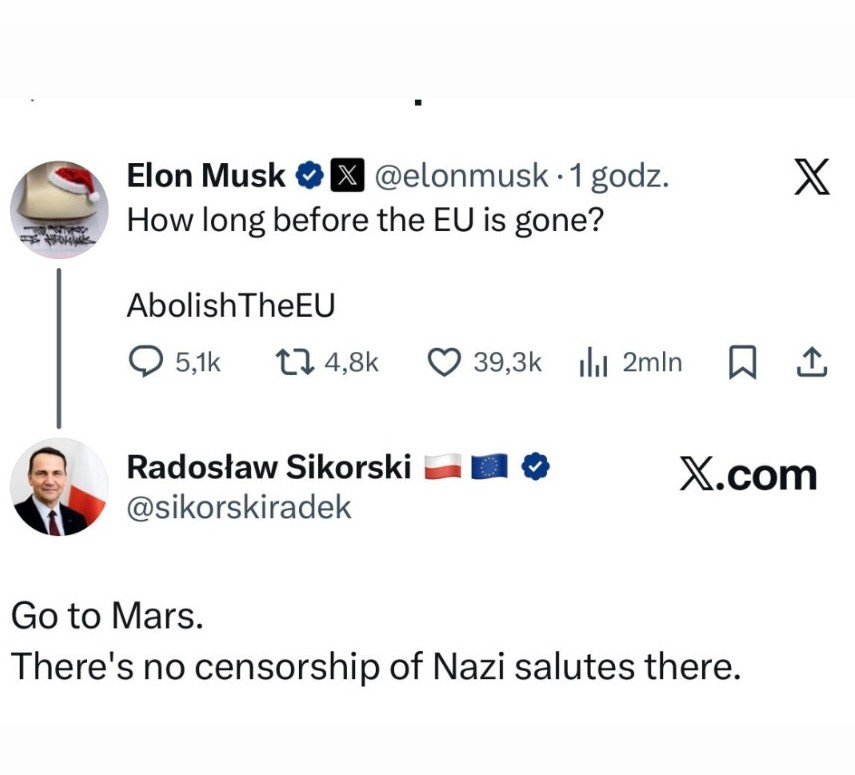
A final note from Poland’s Deputy Prime Minister
(to whom I am married…)
Buy Autocracy Inc for Christmas
Open Letters, from Anne Applebaum is a reader-supported publication. To receive new posts and support my work, consider becoming a free or paid subscriber.
Related Knowledge Center: Democracy and politics
News organizations are scrambling to find a coverage approach that adequately informs the American public about the country’s slide from democracy to authoritarian rule.