
The Ukraine War Grows Deadlier

Since Trump’s election in 2024, the Russian army has made very little progress on the battlefield. But airstrikes aimed at civilians have increased dramatically—doubling between Trump’s inauguration and August—and in recent months have aimed to destroy Ukraine’s energy infrastructure. The result has been nationwide blackouts during an especially frigid winter, a strategy aimed at breaking civilian morale.
Oleksandra Matviichuk, head of the Center for Civil Liberties and a Nobel Peace Prize laureate, has now drawn attention to the absurdity of the administration’s logic:
Why has Trump’s year of negotiations been the deadliest for civilians in Ukraine since the full-scale invasion? The number of deaths and injuries has increased by 31 percent compared to the previous year.
Why did Putin not allow himself such brutal strikes on civilian infrastructure under Biden, whom Trump calls “weak,” but totally destroys peaceful cities and disregards the “strong Trump”?
These are the right questions—and Matviichuk already knows the answers. Putin has expanded both the scope and intensity of his attacks on Ukrainian civilian life because the American president has repeatedly signaled that he will pay no price for doing so. Trump rolled out the red carpet for Putin in Alaska, and has now hung a photograph taken that day on a wall in the White House. While Putin is indulged, Zelensky is sidelined. The United States now openly threatens the sovereign territory of Denmark, while senior administration officials broadcast their animosity toward Europe. Deterrence collapses when contempt replaces commitment.
As I’ve written, Trump’s indulgence of the Russian president is prolonging the war. And in exchange for what? Steve Witkoff, his envoy, is known to be negotiating business deals with the Russians, perhaps for himself, or his family, or Trump’s family or their friends. This week, the Ukrainian president, Volodymyr Zelensky, said the deals on offer are worth $12 trillion. As the activist and writer Bill Browder points out, that’s five times Russia’s current GDP. The sums are ludicrous but the danger is real: Trump’s envoys are trying to sell out Ukraine for personal gain.
This is a historic betrayal of America and America’s allies. It’s also corruption on a scale we have never seen before in American history. Trump’s administration, and his party, are letting it happen, hardly speaking about it at all.
“I don’t back down when I get bullied. I fight harder”

The third season of my podcast series, Autocracy in America, was supposed to have ended. But in recent days, one of my podcast producers, Jocelyn Frank, was in Minneapolis, interviewing and recording reactions to ICE violence. We decided to add a bonus episode, making use of her recordings.
Here’s a sample:
I don’t know how other people react when they get bullied, but I don’t back down when I get bullied. I fight harder. Everyone I see out here is like, What do you think—we’re gonna quit? We live here. My name is Chad. I am a father of two from St. Paul. Yesterday, [an] ICE agent [was] sitting in a white car idling there on my block, four houses down. I go out and take a picture of his license plate and a picture of him. We’re not protesters. We’re protectors. I don’t wanna be out in my street yesterday blowing a goddamn whistle, because there’s an adopted brown kid down there. They hid her in the basement yesterday. That’s what I don’t think anyone that’s not living here right now understands, is that they wanna make it out to be like this bunch of lunatics in the street. It’s just fucking normal people that don’t want to see their neighbor get beat up. I’m protecting my neighbors.
To help explain what has been happening in the city, I also talked to Robert Worth, a war correspondent who went to cover the protests for the Atlantic. The tactics that protesters, or rather protectors, in Minnesota are using reminded both of us of those used by democracy movements elsewhere, in Hong Kong, Egypt or Ukraine. This is not accidental:
Everybody’s using pseudonyms for the reason you mentioned. They all fear that the government could come after them in unaccountable ways. I think the level of violence is shocking—just seeing these heavily armed people—but also the flagrant absence of what we think of as efforts by the police or any other uniformed group in the U.S., government officials, to avoid violence. I mean, the killing of Alex Pretti, I’ve seen people who’ve been in the military look at those videos and say, Those people are not trained properly at all. And I think that kind of information spreads very quickly. And there’s a feeling of not only that you’re vulnerable to state violence, but there’s a complete lack of accountability for it.
Listen or read the transcript here, on the Atlantic website. Or, again, find the audio on one of these platforms: Apple Podcasts | Spotify | YouTube | Overcast | Pocket Casts
Stay Tuned with Preet Bharara
Minnesota was also a part of my conversation with Preet Bharara, former US Attorney for the Southern District of New York, along with Greenland, Ukraine and more. Among other things, I told Preet why I thought the use of ICE had backfired:
“The Trump administration’s original idea was to use ICE as a kind of performative display of cruelty that would appeal to people or scare them…And then to have guys dressed for Fallujah…closing in on schools and daycare centers and threatening ordinary people who are committing the ‘crime’ of holding up their phones…I think it’s backfired in that it doesn’t look like a video game. It looks like thugs on an ordinary American street.”
Listen here:

Golden Gate Bridge
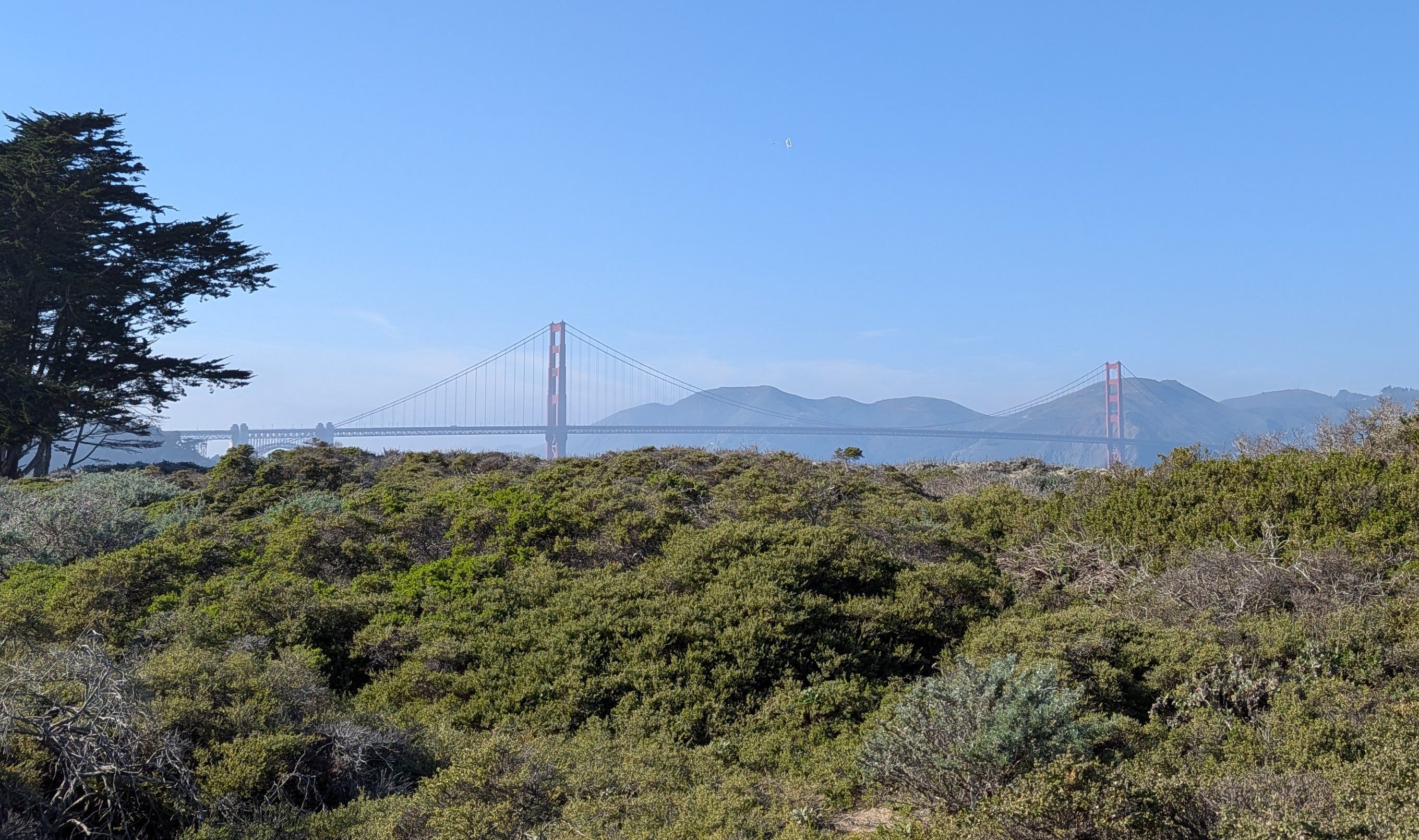
The transformation of the San Francisco waterfront is spectacular, from dirt and rubble into this gorgeous park. Don’t ever underestimated this city, one of America’s most beautiful.
I missed the Super Bowl, but am off to speak at UC Davis on Monday…
Listen to Autocracy in America
Open Letters, from Anne Applebaum is a reader-supported publication. To receive new posts and support my work, consider becoming a free or paid subscriber.