
Troubled local news outlets face a new risk: climate change
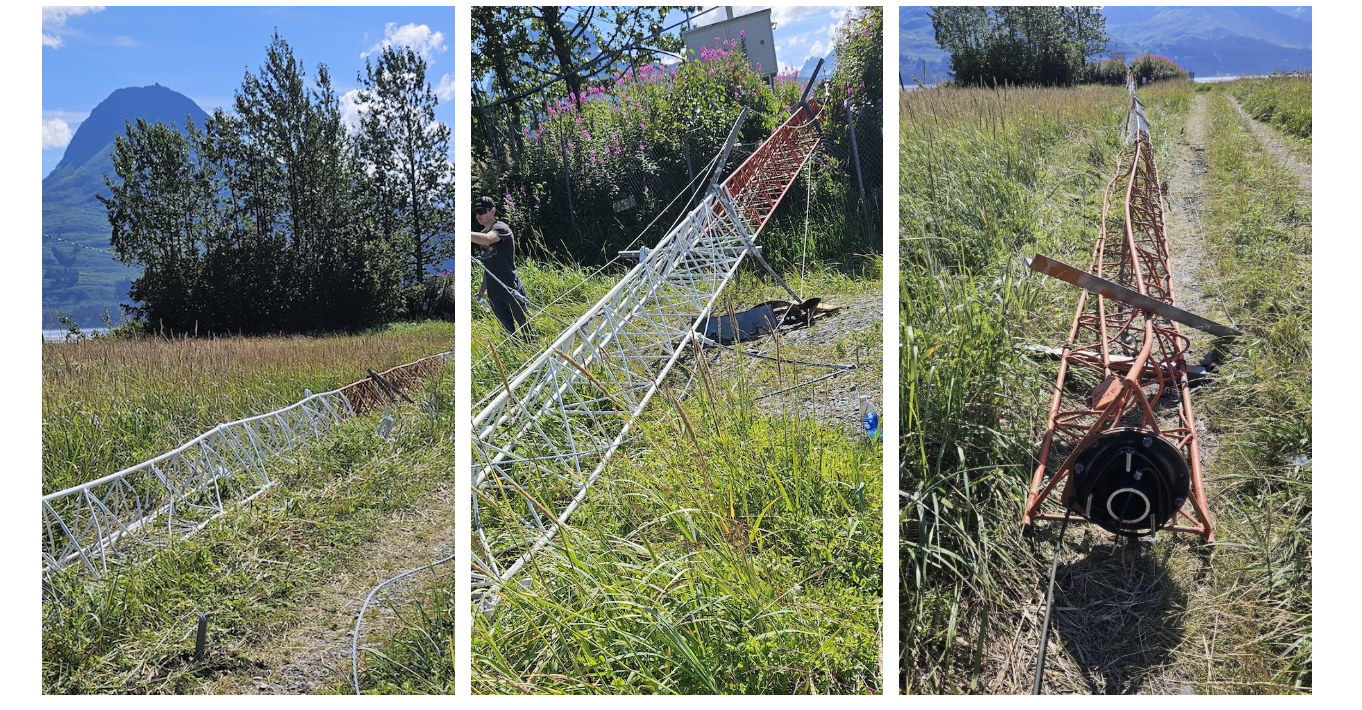
KCHU, the public radio station in Valdez, Alaska, is used to living on the edge. For two months, its AM transmitter leaned precariously over the Valdez Glacier Stream as seasonal flooding from melting glaciers, called “glacial outburst events,” caused unprecedented erosion on its banks. The transmitter was removed in August to prevent it from imminent collapse, ending KCHU’s AM transmission. To make matters worse, in July, KCHU also lost the bulk of its budget when Congress eliminated more than $1 billion in federal funding for public media. The twofold blow is “the most difficult set of circumstances that’s ever happened to KCHU,” station director James Devens said.
The station now transmits on a smaller FM tower near its studio. It serves its communities alongside a small weekly newspaper, The Cordova Times, and reaches approximately 10,000 listeners. KCHU remains the only public broadcasting source in the Chugach Census Area, a sparsely populated area on the Gulf of Alaska coast with breathtaking mountains, forests, glaciers, valleys, fjords and the terminus of the Trans-Alaska Pipeline. But it’s still struggling to stay aloft as the ground beneath it gives way. Even as community members have supported the station with the highest per-capita donations in public radio, averaging $15 per person in its primary broadcast area, they haven’t been able to make up KCHU’s $159,000 loss in federal funding, Devens noted. As a result, the station has downsized from a team of seven to just one employee.
Before its AM transmission ended, the station served 24 remote communities spanning roughly 40,000 square miles, including the Copper River Region, Prince William Sound and rural Matanuska-Susitna Borough. For the last 45 years, Valdez residents have depended on KCHU for emergency alerts, weather information, food drive updates and public meeting notices. The station’s AM signal reached mountaineers, boats, remote cabins, small villages, wilderness areas and long stretches of highways. Today, that reach has contracted considerably: KCHU estimates that its FM signal now covers approximately 10,000 square miles.
Since 2005, nearly 40% of all local newspapers in the U.S. have disappeared, and almost all of the news deserts are in rural counties with low-income populations. Factors like declining public engagement, shrinking ad revenue, limited subscriptions and low trust in media have contributed to the decline in local news. More recently, the emergence of AI has also taken a toll on web traffic overall, including to news sites (though it’s too early to tell if it’s contributing to news deserts). Most of the past year’s losses come from the collapse of small, independent outlets that were already operating on thin profit margins, according to Medill’s 2025 State of Local News report released in October.
In addition to the well-documented challenges of revenue and tech disruption that have contributed to a “steady, unrelenting decline” of the U.S. news industry over the last two decades, a growing number of local news outlets now face another mounting threat: climate change.
In January, wildfires engulfed vast stretches of Los Angeles’ forests and neighborhoods. In May, severe storms and flash floods claimed lives across parts of the South, Mid-Atlantic and Northeast U.S. In July, flash floods destroyed homes, crops and businesses in Texas, North Carolina and New Mexico. These are only a few of the catastrophic weather events that have cost a cumulative $14 billion – and claimed 174 lives – so far this year, according to the Climate Central database.
As climate disasters like storms, floods, fires and other hazards become more frequent and intense, an increasing number of local journalists aren’t just reporting on the crises devastating their communities; they are living them. “Climate change often feels distant — until it takes your home, your job, or someone you love. In the chaos of disaster, information becomes as vital as food or shelter,” said Professor Matthew Roling, executive director of the Abrams Climate Academy at the Kellogg School of Management. “Independent, local journalists are often the first — and sometimes only — trusted voices helping communities make sense of what’s happening and how to recover.” But when a local news outlet is already at risk of closing, a disaster can represent the final nail in its coffin.
A Tornado Shut Down the Paper
Take the Wynne Progress as an example. Just before a powerful tornado struck Wynne, Arkansas, in March 2023, the town’s only newspaper warned its community about the risks of severe weather. “I find it remarkably prescient that the Wynne Progress carried a front-page article entitled ‘Severe Weather, Weather Awareness’ in its March 24th issue,” wrote one reader, Richard C. Farr. “[T]he likelihood of this article appearing just a few days before the terrible tornado struck Wynne can only be explained by divine intervention.”
In the months that followed, editor David Owens updated the community on recovery efforts and food relief drives. But he had to do this on Facebook, without pay, because the tornado didn’t just destroy homes and infrastructure — it also shut down the paper. Founded in 1904, The Wynne Progress is Cross County’s sole news source. It stopped printing after its building was damaged and all of its staff, including Owens, was laid off.
In February 2024, nearly a year later, the Wynne Progress was able to relaunch as a digital publication under a new owner. But its 2023 closure nonetheless underscores the peril that local outlets can face from natural disasters even as they serve as their communities’ first and most trusted source of information during those disasters.
The Most Climate-vulnerable Counties
Researchers with Northwestern’s Local News Initiative compared their data on local news access with climate vulnerability data from investigative nonprofit ProPublica to identify counties where communities have the least access to local journalism to help prepare for climate disasters, respond to them and, if needed, hold officials accountable in the aftermath. This research could help us understand where journalism resources are most urgently needed to help communities respond to climate-related disasters.
Explore local news access / climate vulnerability data
While more than 1,700 U.S. counties have one or no local news outlets, a small number stand out as particularly vulnerable. In Texas alone, some 167,000 residents in three large news-desert counties – Fannin, Starr and Waller – face the highest level of climate risk from multiple factors, including extreme heat, threats to farm crop yields and economic losses. As ProPublica noted, “Taken together, some parts of the U.S. will see a number of issues stack on top of one another — heat and humidity may make it harder to work outside, while the ocean continues to claim more coastal land.”
The table/watchlist below highlights large counties (with populations above 15,435 residents each) facing the highest level of climate risk without local newsrooms to help navigate it.
Dispatches from News Deserts
While the data reveal where the risks are highest, numbers alone cannot capture what it means to lose both your newsroom and portions of your community to climate disasters. When disasters strike, community members turn to local news to understand what’s happening, how to stay safe as conditions change, when and where to evacuate, how to get help, and even to learn, tragically, who has died. What happens when disaster strikes in a county without local news? An example from Hemphill County, Texas, offers a glimpse into how precarious the information ecosystem can be in news deserts.
When The Canadian Record, a 130-year-old weekly paper in Canadian, Texas, closed in March 2023, Hemphill County turned into a news desert. “A lot of people were very concerned that they wouldn’t know who had died,” recounts Laurie Ezzell Brown, the paper’s former publisher. Like The Wynne Progress, the Record had long struggled financially, and – despite community support – didn’t survive.
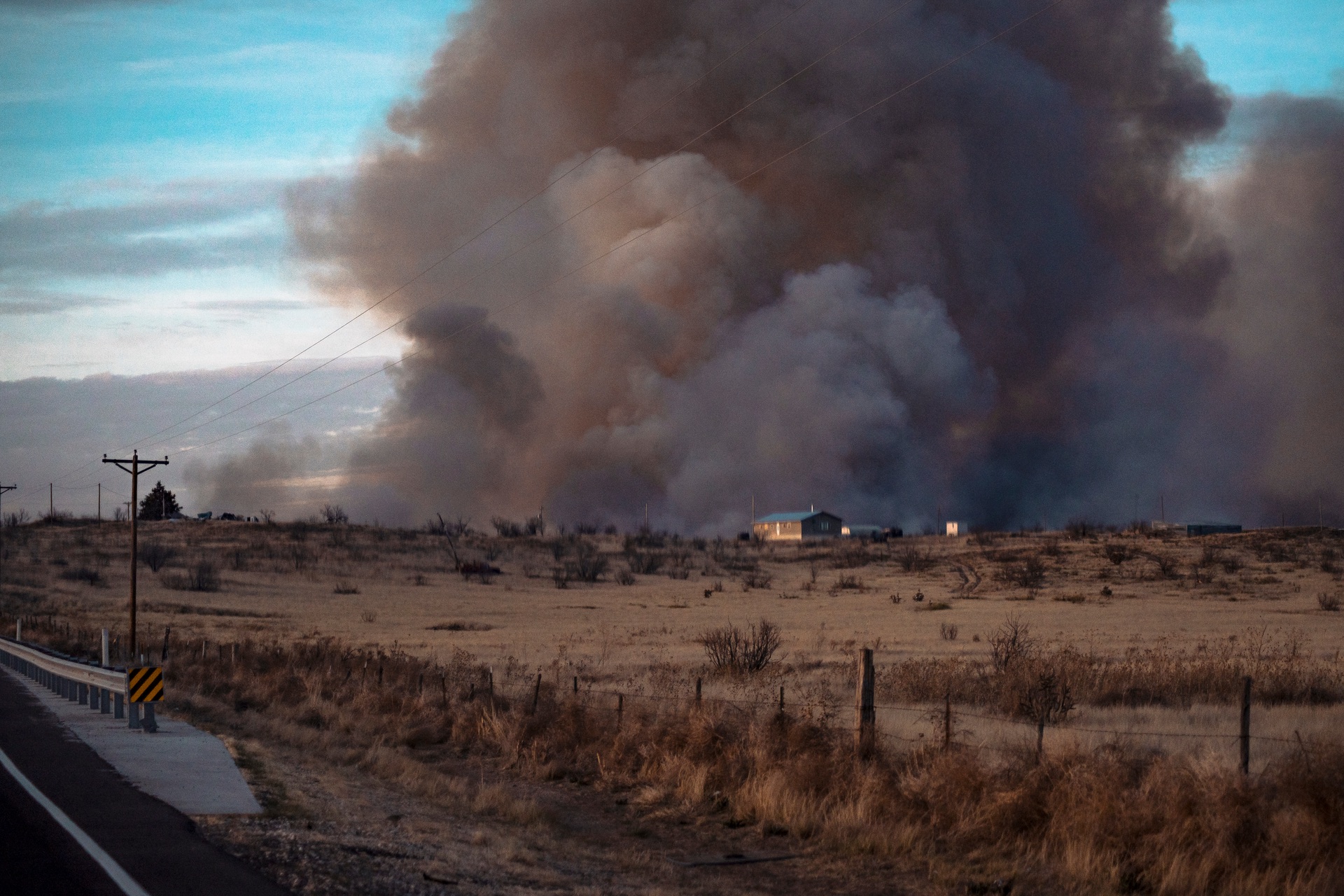
Eleven months later, the Texas Panhandle fires killed two people and destroyed 57 homes in Hemphill County, which includes Canadian. National news sources can’t fill the gaps created by local news. In a 2024 PBS documentary about the Canadian Record, a community member laments: “National news… you don’t know who to trust. We know [Brown]; we can trust that she’s gonna report the news to us.”
Trust is also important for helping communities understand why these disasters are becoming more frequent and more severe. Without that context, “those communities miss out on important nuance associated with the events they experience,” explains professor Daniel Horton of the Climate Change Research Group at Northwestern University. When climate change science goes unreported, “the residents of that community may chalk it up to bad luck, as opposed to a thumb on the scale. And that thumb on the scale is fossil fuels.”
Brown, who had retired and moved to Houston after the Record had closed, was inundated with calls from her former readers seeking information during the fires. She promptly returned to Canadian County and spent the next 24 hours posting updates on The Canadian Record’s Facebook page.
After the Canadian Record’s closure, Brown has continued reporting using Facebook and local web forums to keep residents informed with emergency updates, obituaries, and reports on public meetings, recovery efforts and how to apply for state and federal assistance. It’s a precarious situation in which just one person sustains the information ecosystem for an entire community.
In Madison County, North Carolina, Sarah Scully is another volunteer reporter. When Hurricane Helene hit the state in September 2024, it destroyed the 100-year-old Madison County News-Record & Sentinel office where she had worked as an intern and temporarily shut down the weekly Gannet-owned paper. It also wiped out a century’s worth of physical copies of the county’s newspaper archives, sending them to the county landfill and down the French Broad River.
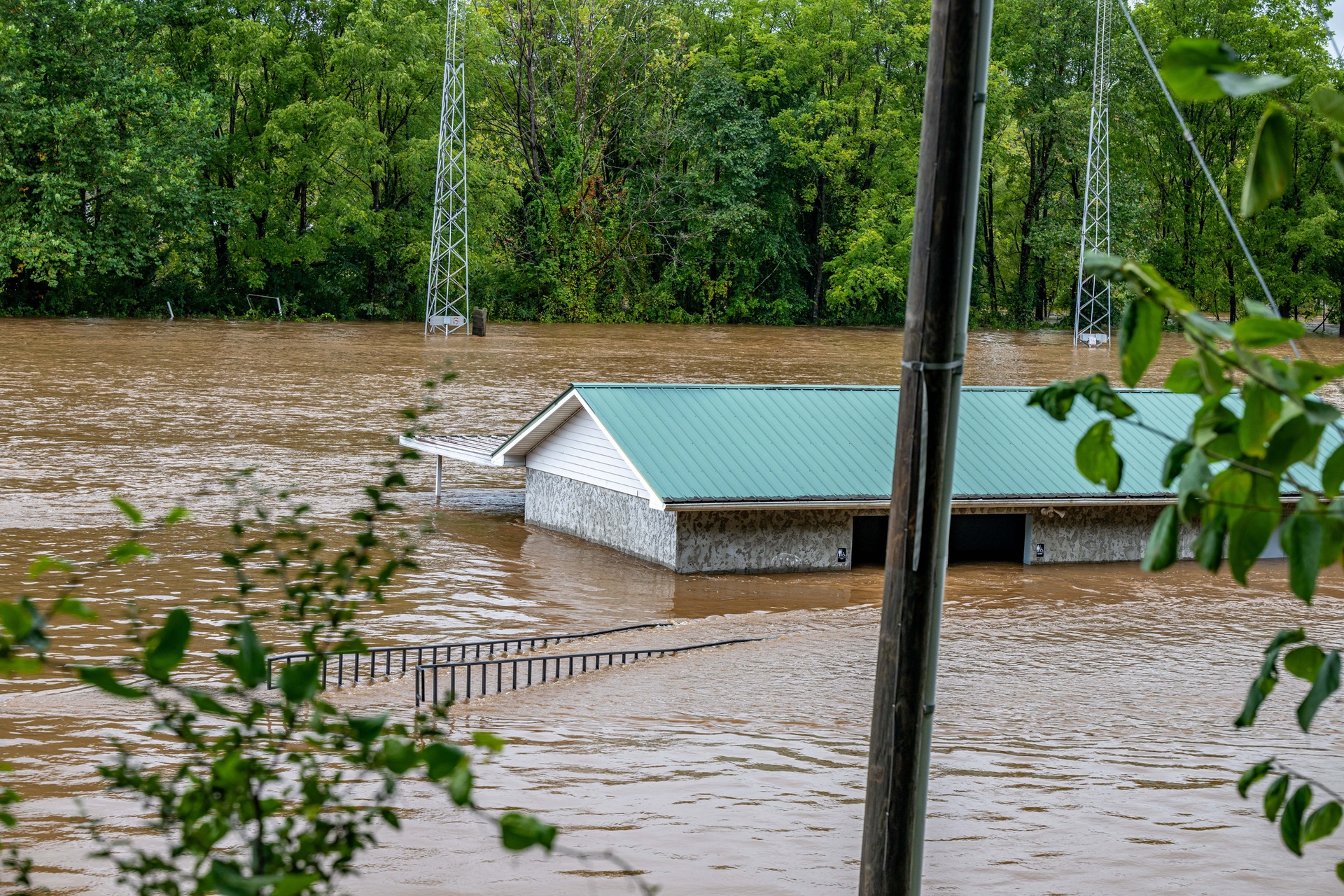
As she walked through downtown Marshall, phone in hand, Scully pointed to collapsed storefronts, buckled pavement and lingering mud. “Everywhere you looked, there was a story, and then another,” she said. “But how are you going to cover it all?”
Four days after the storm, Scully arrived at downtown Marshal with a notepad and a shovel – as a reporter and a resident – documenting stories that nobody else was telling. She is now a one-woman local TV newsroom operating primarily on Facebook, where she now has nearly 5,000 followers.A retired Army journalist, Scully sustains herself through her military pension, allowing her to report “purely for Madison County” without pay. She does not run ads, accept personal donations or receive reimbursement for her reporting, insisting on keeping the news free for the public. “What happens to local governments if they do not have those checks and balances?” Scully said.
These examples paint a picture of what the information infrastructure looks like in news deserts vulnerable to climate disasters, where Scully, Brown and Owens represent single points of failure. More research could help shed light on what happens in news deserts without journalists working for free, and more resources in these communities could help protect their residents when disaster strikes.
“But it’s not all darkness and gloom,” Sarah notes, recognizing that despite the absence of paid journalists, her volunteer initiative still offers residents something to rally around.
“Without that, what are we? A ghost town.”
This story was edited by Jennifer Kho.