
These Reliable Solar Generators Got Your Back(up) During Outages or Off-Grid Adventures
Is a Solar Generator Worth It?
What to Consider in a Solar Generator
Size and Capacity
Power stations use watts and watt-hours to express size and capacity. Watts (size) refer to how much power it can produce. For example, if you need to run a 900-watt microwave, you’ll need a station that can output at least that much power (ideally more, since factory specs are never perfect).
Meanwhile, watt-hours (capacity) gives you an idea of how long you can power your devices continuously, but how much time depends on the amount of power being drawn—watt-hours doesn’t dictate a set time frame. Higher-powered devices will drain the battery a lot faster than lower-powered ones.
That may seem confusing, but a simple equation gives you an approximate idea of how it works: total watt-hours (of the generator) ÷ watts (of the device) = hours the power station can run.
For example, if you had a power station with a 2,048-watt-hour capacity and wanted to run a 750-watt space heater consistently at its highest setting, it would probably run for around 2.5 hours, so long as nothing else is plugged in. But a refrigerator, whose power draw fluctuates between 10 and 300 watts (depending on how often the compressor turns on), you might be able to run it for nearly 24 hours.
Keep in mind, manufacturer specs are taken from perfect conditions; in the real world, you’ll likely see slightly less capacity from your power station. If you’re not sure how much power the different devices in your home draw, sometimes it’s written on a label, or you can use a device like a watt meter.
Solar Panel Capacity
Just as a power station has specifications on output size and capacity, solar panels are rated by how many watts they can produce for a device after they convert the sun’s rays into electrical current (e.g., 100 watts, 200 watts, etc.). Though, because real-world conditions are never perfect, it’s not uncommon for panels to only output 50 to 75 percent (or even lower) of their total potential.
Your panels must also be within the acceptable input range of the power station. For example, connecting a 400-watt solar panel array to a power station that can only accept 110 watts of solar input can cause an overload and damage the station.
Portability
While weight and size don’t directly correlate to the technicalities of power banks, they impact the convenience of each model. Many camping and overlanding setups have limited space, so the more compact models likely have a higher appeal as a result.
That said, most units weigh at least 10 pounds, and the weight and size increase quickly with greater capacities. Before purchasing, consider where you plan to store the power bank and the space in your vehicle or camper where it will live while you’re on the road. If you plan to use this power bank solely as a home backup option, portability will matter less, but consider how much effort it will take to move it around within your home or in your outdoor space.
FAQ With Backcountry Expert Maggie Slepian
What are your priorities when choosing a solar-powered generator?
I am a low-maintenance camper, and most of my background is in lightweight backcountry travel. That means I prioritize space-saving and ease-of-use, so my go-to power banks have between 250 and 600 watt hours, and weigh less than 15 pounds.
This is perfect for a weekend trip, with the on-the-go (car or solar) charging capabilities to put my mind at ease for longer trips. Mostly, I’m charging small items, so one charge lasts a long time. However, plenty of people in the van-life and remote-work world are powering their RVs and vans, and relying on multiple laptop charges. For that, I’d recommend one of the larger units.
What can a solar-powered generator charge and power?
A solar-powered generator can charge and run almost anything that requires power—it just depends on the capacity. These generators can charge power tools in the shop, laptops for remote work, and personal devices like bluetooth headphones and speakers.
A solar-powered generator with a higher power capacity can even power household appliances in the event of a power outage. And the fact that these are solar-compatible means you aren’t reliant on the electrical grid to recharge them.
What is the best way to charge a power station?
Every unit on our list has multiple charging options, including wall (AC outlet), car (12-volt), and solar. Each input method charges your unit at a different speed, and solar also depends on the conditions. AC power is the fastest, followed by 12-volt, and then by solar (though a larger solar array could potentially be faster than 12-volt).
I try to charge up my power banks whenever I can, so I’m never caught off guard trying to leave on a trip with a dying power bank. If this happens (which it has), I’ll charge it in my vehicle’s 12-volt port while I’m driving, though this is often slower than solar or a wall unit.
Solar power is the most sustainable and typically fastest way to power these— just be sure you have enough wattage in the solar panels to make it effective. I recommend keeping the generator stored with at least an 80 percent charge, and unplug them once they’re fully charged—keeping them plugged in longer than necessary can degrade the battery.
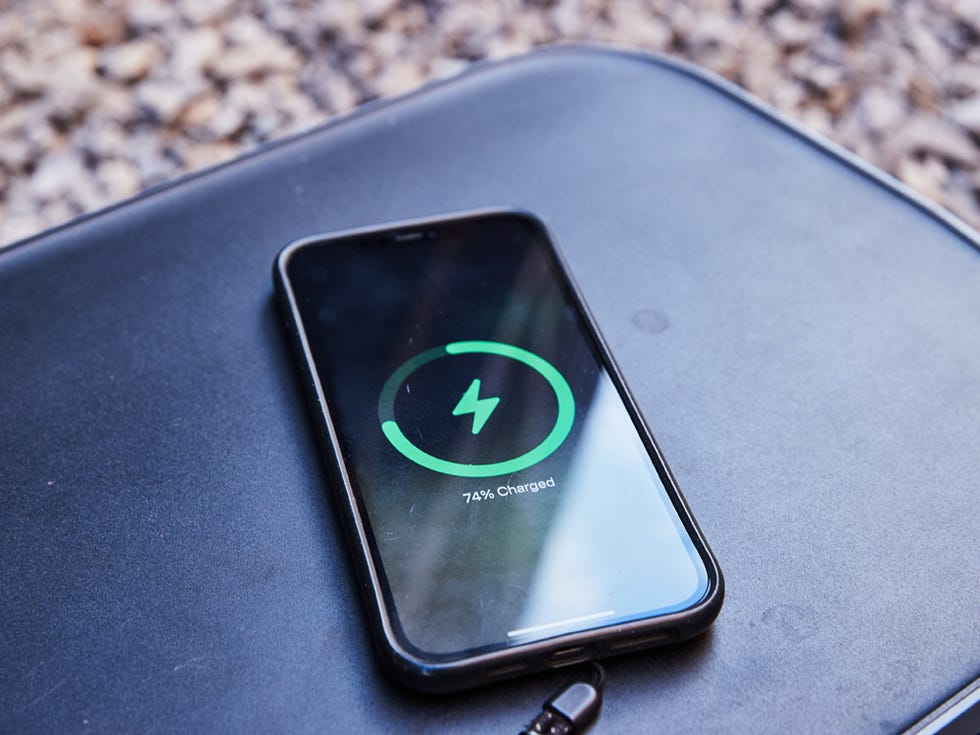
Most units will have a simple readout display showing the remaining battery charge, and it’s a good practice not to allow your battery pack to get below 20 percent.