
Solar PV Panels Market Projected to Reach USD 349.9 Billion by 2031 | Persistence Market Research
Solar PV Panels Market Projected to Reach USD 349.9 Billion by 2031 | Persistence Market Research
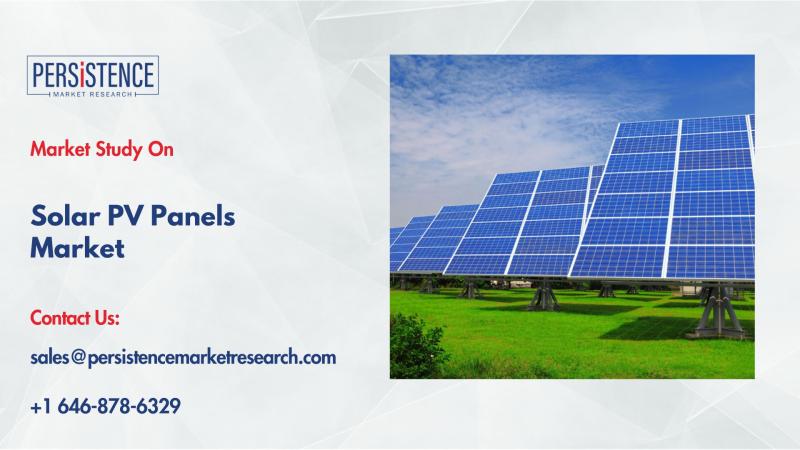
Solar PV Panels Market
Overview of the Solar PV Panels Market
The global Solar PV (photovoltaic) panels market is poised for remarkable growth, driven by the growing shift towards renewable energy sources. With the rising concerns over environmental pollution and climate change, solar energy is becoming an increasingly attractive solution to reduce reliance on conventional energy sources. From a market size of US$188.5 billion in 2024, the solar PV panels market is expected to expand to US$349.9 billion by 2031, growing at a compound annual growth rate (CAGR) of 9.2%. This robust growth is primarily driven by advancements in solar panel technologies, a focus on sustainability, and supportive government policies promoting renewable energy adoption. The industrial sector continues to dominate the market, with increasing global investments in solar energy infrastructure and manufacturing.
The growth of the Solar PV panels market is largely influenced by factors such as the rising need for sustainable energy, cost reductions in solar technologies, and governmental incentives like tax credits and net metering. Among the key geographical regions driving this growth are North America, Europe, and Asia Pacific, with Asia Pacific leading the market in terms of both manufacturing capacity and demand generation. China, in particular, has emerged as a global manufacturing hub, playing a significant role in lowering the cost of solar PV panels, which has further fueled adoption worldwide.
Get a Sample PDF Brochure of the Report (Use Corporate Email ID for a Quick Response):
https://www.persistencemarketresearch.com/samples/34658Key Highlights from the Report
• The market is projected to grow at a CAGR of 9.2% from 2024 to 2031.
• Solar PV panels market size is expected to reach US$349.9 billion by 2031.
• The industrial sector is the leading segment in demand generation.
• Government incentives like tax credits and clean energy goals are key drivers.
• China is the leader in global solar PV manufacturing capacity.
• Technological innovations in solar panel designs like thin-film and perovskites are enhancing affordability and efficiency.
Market Segmentation
The solar PV panels market can be segmented based on product type, end-users, and installation types. The most common product types include monocrystalline, polycrystalline, and thin-film solar panels. Among these, monocrystalline panels are highly favored for their superior efficiency and longevity. Thin-film panels, made from non-silicon materials like cadmium telluride and amorphous silicon, have seen growing popularity in applications requiring flexibility, such as building-integrated photovoltaics (BIPV) and large-scale installations.
End-user segmentation includes residential, commercial, and industrial sectors. The industrial sector currently holds the largest market share due to large-scale solar installations in energy-intensive industries. Meanwhile, the residential sector is expanding rapidly, driven by the falling costs of solar panels and the increasing adoption of residential solar energy systems, especially in regions with high electricity costs and abundant sunlight.
Regional Insights
Asia Pacific
The Asia Pacific region is the largest market for solar PV panels, accounting for a significant share of global demand and manufacturing. China, in particular, is the dominant player in this region, being a key manufacturer and consumer of solar energy solutions. The government’s ambitious clean energy goals, combined with a strong push for reducing carbon emissions, have positioned China as the driving force behind the regional growth in solar PV technology. Other notable markets in this region include India and Japan, where solar energy adoption is accelerating, supported by favorable government policies and incentives.
North America and Europe
North America, particularly the United States, is witnessing a surge in solar PV installations due to favorable tax incentives and a strong push toward clean energy by both federal and state governments. In Europe, countries like Germany, Spain, and the UK have made significant strides in integrating solar energy into their energy mix, driven by government subsidies and net metering policies. Both regions are projected to see steady growth in the coming years, although they will continue to rely heavily on innovations in energy storage and grid integration to optimize solar energy utilization.
Market Drivers
Technological Advancements in Solar Panels
Technological advancements have significantly impacted the efficiency, cost, and reliability of solar PV panels. For example, innovations in panel materials, such as the development of perovskite solar cells and the use of thin-film technology, are making solar energy more affordable and efficient. These developments contribute to lowering installation costs and improving the long-term performance of solar energy systems, which drives greater market adoption.
Government Policies and Incentives
Governments around the world have introduced various incentives to accelerate the adoption of solar PV panels. These include tax credits, subsidies, and favorable regulatory policies that aim to reduce carbon emissions and promote the use of renewable energy sources. For instance, the Investment Tax Credit (ITC) in the U.S. and the feed-in tariff (FiT) schemes in Europe have made solar PV systems more financially attractive for both residential and commercial users.
Energy Storage Technologies
Energy storage systems, such as lithium-ion batteries, are increasingly being integrated with solar PV panels to solve the intermittency issue associated with solar energy. These systems allow energy to be stored during peak solar generation times and used during periods of low sunlight or high demand. This combination of solar energy and storage enhances grid reliability, provides backup power, and improves the overall efficiency of solar PV systems.
Market Restraints
High Initial Investment Costs
Despite the decreasing cost of solar PV panels, the initial capital investment required for installing solar energy systems remains relatively high. While this is gradually becoming more affordable, the cost of inverters, battery storage, and installation services can be a barrier to adoption, particularly in developing economies where financial resources are limited.
Dependence on Weather Conditions
Solar energy is inherently dependent on weather and sunlight availability, which can vary by location and season. Cloudy weather, for instance, can drastically reduce the efficiency of solar panels. This intermittency issue presents a challenge for grid operators and can limit the widespread adoption of solar PV in areas with inconsistent sunlight.
Market Opportunities
Growth in Emerging Economies
Emerging economies in regions such as Africa, Southeast Asia, and Latin America present a significant opportunity for solar PV growth. With many of these regions lacking access to reliable grid infrastructure, solar energy offers a viable alternative. Furthermore, these countries are increasingly aware of the need to invest in renewable energy to combat climate change, presenting a strong growth opportunity for solar PV panels.
Integration with Smart Grids
As the world moves toward smarter, more efficient electricity grids, solar PV panels are playing a key role in this transition. The integration of solar PV with smart grid technology will allow for better management of energy generation and distribution, leading to improved grid stability and optimized energy use. This opportunity is particularly appealing for utilities seeking to reduce reliance on fossil fuels.
Reasons to Buy the Report
✔ In-depth market analysis and trends forecast through 2031
✔ Comprehensive insights into key growth drivers and market segments
✔ Detailed overview of the competitive landscape and key players
✔ Extensive analysis of technological innovations and their impact on the market
✔ Clear regional breakdown with insights into emerging and mature markets
Company Insights
Several key players are shaping the future of the solar PV panels market, including:
• First Solar Inc.
• Trina Solar Limited
• JinkoSolar Holding Co. Ltd.
• LONGi Green Energy Technology Co. Ltd.
• Canadian Solar Inc.
Recent Developments
1. First Solar has announced plans to expand its manufacturing capacity, increasing production of advanced thin-film solar panels to meet rising global demand.
2. JinkoSolar unveiled a new generation of high-efficiency monocrystalline panels that significantly reduce costs and enhance energy output.
The solar PV panels market is set to continue its strong growth trajectory, propelled by innovations, supportive policies, and global efforts to transition to cleaner energy sources.
About Persistence Market Research:
At Persistence Market Research, we specialize in creating research studies that serve as strategic tools for driving business growth. Established as a proprietary firm in 2012, we have evolved into a registered company in England and Wales in 2023 under the name Persistence Research & Consultancy Services Ltd. With a solid foundation, we have completed over 3600 custom and syndicate market research projects, and delivered more than 2700 projects for other leading market research companies’ clients.
Our approach combines traditional market research methods with modern tools to offer comprehensive research solutions. With a decade of experience, we pride ourselves on deriving actionable insights from data to help businesses stay ahead of the competition. Our client base spans multinational corporations, leading consulting firms, investment funds, and government departments. A significant portion of our sales comes from repeat clients, a testament to the value and trust we’ve built over the years.
Contact Us:
Persistence Market Research
G04 Golden Mile House, Clayponds Lane
Brentford, London, TW8 0GU UK
USA Phone: +1 646-878-6329
UK Phone: +44 203-837-5656
Email: sales@persistencemarketresearch.com
Web:
https://www.persistencemarketresearch.comThis release was published on openPR.