
Solar-Powered Boat Breaks Lake Titicaca Record
Solar-Powered Boat Traverses World’s Highest Lake
PlanetSolar II, a small, unassuming boat once used for tourism in Italy, has completed the very first solar-powered circumnavigation of Lake Titicaca, marking a milestone for renewable energy and scientific research on the world’s highest navigable lake.
Departing from Puno, Peru, the solar boat traveled more than 300 feet around the lake, collecting water samples and measuring solar panel performance at an altitude of around 15,000 feet.
“It’s one of the biggest lakes in the world,” said Raphaël Domjan, the ship’s captain and founder of the PlanetSolar Foundation. “It’s like a sea.”

Weather in your inbox
The expedition included a scientific survey of water quality at 40 locations, measuring chlorophyll and organic matter.
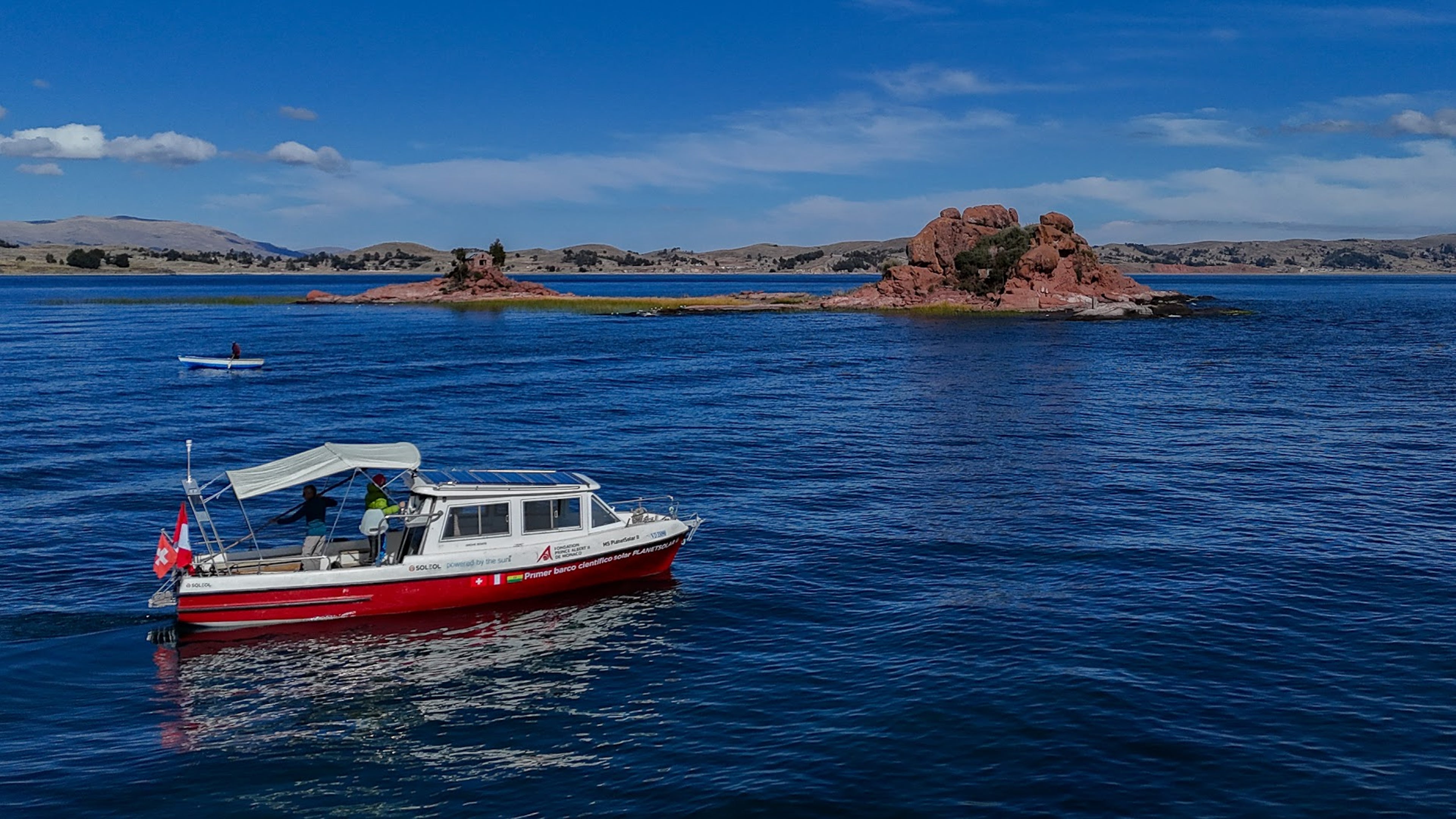
The boat journey proved that solar-powered technology is capable in high altitudes, offering a sustainable vision for the future of transportation.
(PlanetSolar)
Oceanographer Dr. Xavier Lazzaro led the water tests alongside specialists in satellite remote sensing and hydrology, providing a pollution-free, solar-powered alternative to traditional boat monitoring.
(MORE: Solar Powered Plane Shatters Altitude Barrier)
Domjan highlighted the solar energy achieved during the journey: “We have some sensors and a data logger, and we got a maximum of 1,900 watts per square meter. That’s a lot.”
The expedition faced significant challenges. Domjan explained, “You are in Peru and Bolivia and I can tell you in terms of paperwork it’s just a nightmare.”
“There is no map, there is no infrastructure of anything, there is no sign on the lake. You have some rocks. So it’s a big challenge to sail there because there is nobody sailing there,” he added.
(MORE: The Ozone Layer Is On Track For A Full Recovery)
The crew of four, accompanied by another boat carrying scientists, had to navigate unexpected weather, including one day where strong winds forced them to tow the boat to safety.
“We had about 50% of the days was raining. So it was not supposed to be like this, but with the climate change, I think everything has changed,” Domjan said.
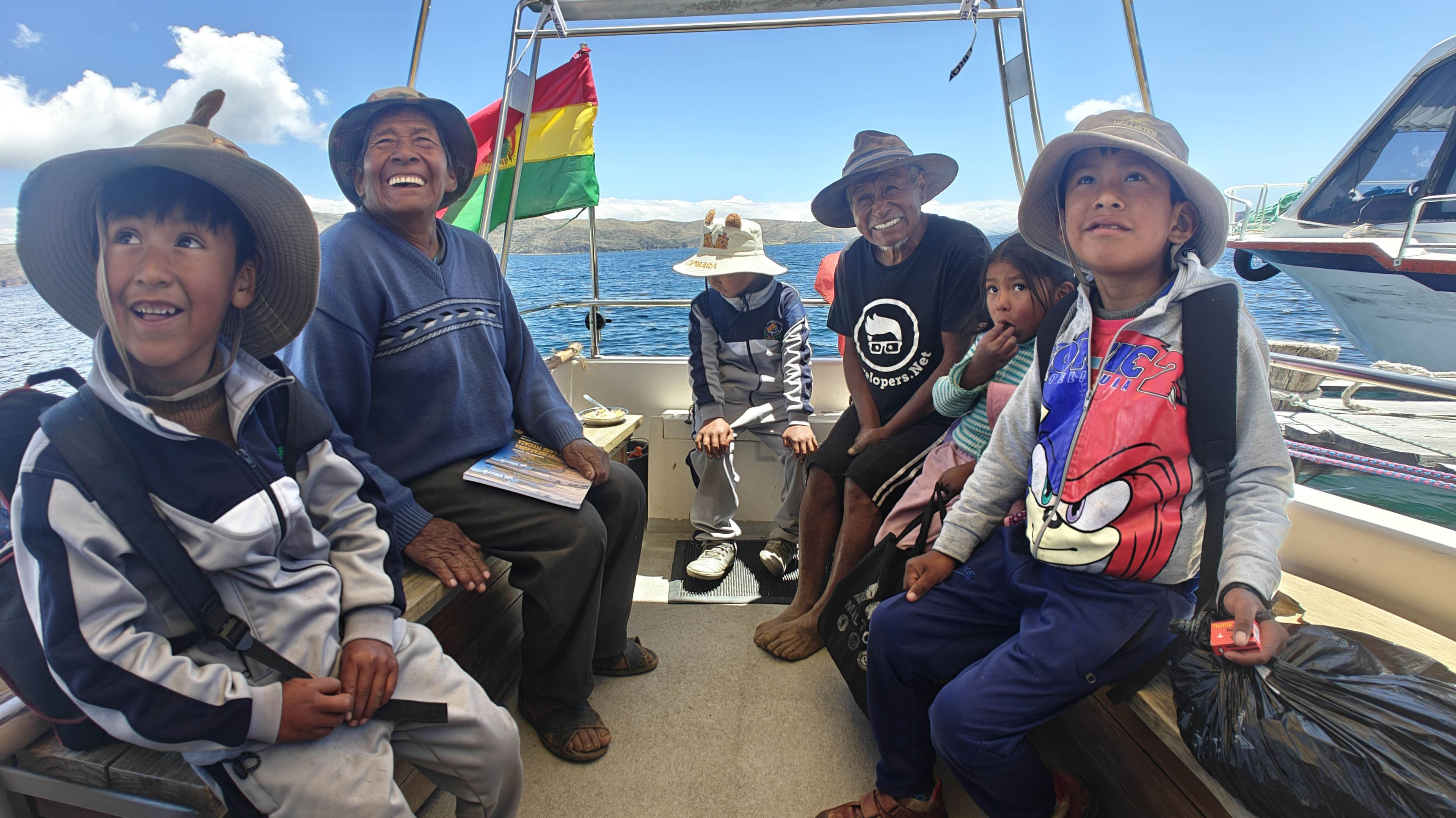
The crew of PlanetSolar II was greeted by villagers on their journey, some of whom shared a night of fishing and celebration on the boat.
(PlanetSolar)
One of the expedition’s highlights was stopping at Isla del Sol (aptly named), where local villagers joined the crew and caught fish for dinner.
“It was really amazing to be there. All the people of the village came on board of the boat.,” Domjan said.
The mission concluded with a festive celebration in Puno, receiving support from the Prince Albert II of Monaco Foundation, demonstrating both the power of renewable energy and the importance of protecting delicate ecosystems.
Weather.com lead editor Jenn Jordan explores how weather and climate weave through our daily lives, shape our routines and leave lasting impacts on our communities.