
Solar Energy: The Economics That Keep Solar Alive
Betting on Solar in the Age of AI
By Adam Edelen
I’m often asked, “Adam, has President Trump killed your solar business?” My standard answer is he’s tried but is certain to fail. My confidence in the future of renewables has nothing to do with politics and everything to do with math.
The simple truth is that in the age of artificial intelligence — in which we are plainly living — the country that produces the most electrons wins. Put another way, AI will determine which economy becomes the world’s strongest and relies completely on available energy to feed the required computing power. While it’s nowhere near the end of the game, at the end of the first quarter, China is running us off the field. It’s a good thing America has always been a second-half country.
The bottom-line is that the United States needs to DOUBLE our current energy production in the next handful of years to protect our status as the planet’s most powerful economy. There is simply no way to get there without solar power. A new data center — of which there will be thousands — that requires a new natural gas line will need at least five years to site, design, permit, finance and construct that pipeline.
Solar can be deployed twice as quickly and at half the cost. Edelen Renewables is currently developing large-scale solar projects in more than a dozen states to meet this critical demand. Although the Trump administration has scheduled the investment tax credit to expire for projects not under construction by next summer, corporate giants, utilities and energy purchasers are accelerating solar deployment, recognizing it as the most affordable form of new energy generation.
You don’t have to care about climate change as much as I do; you only need to care about your pocketbook to see the wisdom of adopting solar energy.
The end of cheap energy
Because our energy grid is so outdated and our regulatory burden for new energy production is so high, we are entering a period best described as the end of cheap energy. While Washington D.C. wants to limit your options as a consumer (and lock you into an inflationary spiral of ever-increasing power bills), I urge you to adopt the same strategy that the world’s biggest companies and deepest pockets are employing. Diversify your energy mix to include renewables and insulate yourself to the steep energy spikes that are already occurring.
Solar power isn’t the future, it’s the present and it’s here to stay. The central question, as with any economic and technological revolution, is how can these new forces be leveraged to leave people better off? Our founding mission at Edelen Renewables is to bring the promise of renewable energy to the forgotten places of America.
In that spirit, we’ve utilized our “Social Impact Solar” approach to leave legacy benefit where we develop. Workforce development, job-training and credentialing are all central to that mission, as is genuine local engagement to support grassroots initiatives driving meaningful impact.
From Appalachian coal country to the majority-minority communities of the deeper South to tribal lands in the American West, our firm is advancing projects that reflect a private capital investment of over $3 billion into forgotten America, utilizing the Green Energy Revolution to expand and diversify the winner’s circle. In doing so, we’ve found world-class partners in the form of global manufacturing giants to Big Tech to local utilities and even many coal companies.
The primary economic driver for at least the next 50 years is the “electrification of everything.” America is in an age-defining race to secure the electrons necessary to power AI and other cutting-edge technologies. This new economic reality will reward those who include renewables in a diversified energy portfolio and crush those who wish to preserve the past at the expense of the future.
Adam Edelen is founder and CEO of Lexington-based Edelen Renewables, a national solar development shop
advancing projects whose innovative work has been featured in The New York Times, Fast Company, CNN,
SkyTV and many other media outlets.
Why Solar Remains the Best Investment
By Jamie Clark
Is solar dead? Nope, not even close! Do you know what’s saving the solar industry? Capitalism! As much as my old hippy friends hate to hear it, capitalism is saving solar. Taking away the tax incentives is definitely a blow to the industry and, in my opinion, a step backwards for our country’s energy future at a time when China is outpacing us 30-to-1 in solar deployment. But even without the tax credits the math is still in our favor.
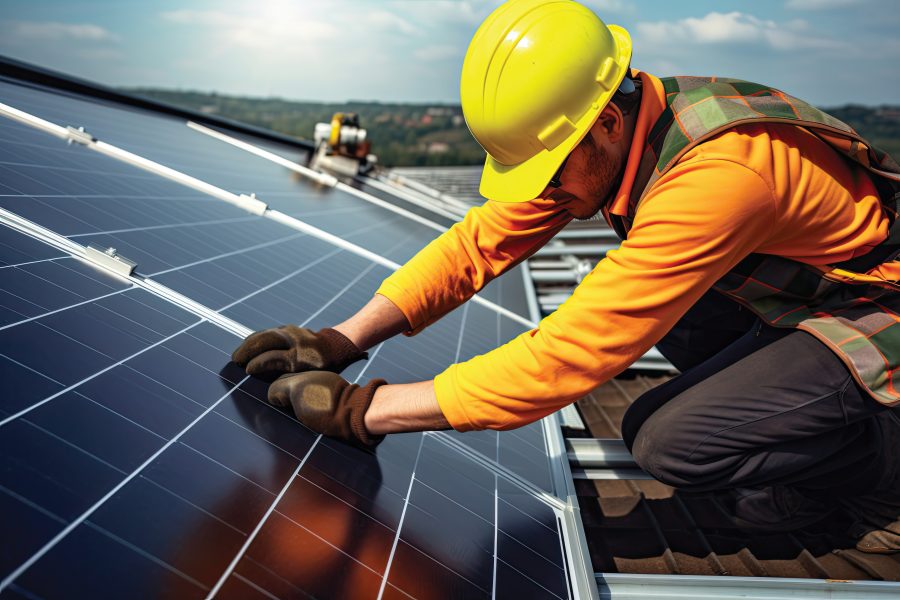
The reason banks and investors love solar power is there is no other energy produced with current technology that comes close to the return on solar investments for the 30-year business model. Solar panels are simple to install with next to zero maintenance. And with no moving parts, there’s nothing to break, so they have a lifespan of 30-plus years. Most even come with a 25-year warranty. What else in your life is warranted for 25 years?
There’s a reason utility companies are deploying solar faster than ever while at the same time lobbying politicians to make solar less attractive to consumers. The utility executives know the math and know solar is the best energy investment, but they need your homes and businesses addicted to their energy. Their business model depends on your having to buy energy from them and if too many of us invest in solar it derails their model.
It’s the horse and buggy lobby fighting the advancement of the automobile. (Can you believe that actually was a thing?) So even though the men in big buildings who make backroom deals know solar is a great entity, they want to keep it for themselves and make it less attractive to consumers. They are not anti-solar — they are anti-YOU getting solar and weakening their industry.
With the advancement of AI, electrification of homes, and the growing popularity of electric and hybrid vehicles, America’s appetite for power is surging — and is projected to double in the next few years. While it takes close to a decade to get a conventional power plant online, solar can be deployed and completed in months.
Ironically, residential and commercial solar are particularly good for the utility grid. Most residential and commercial solar power is installed on the location where the power is consumed. This means there is little to no energy loss compared to a power plant 40 miles away that loses more than a third of its power in transition.
What about the return on investment?
Rooftop solar is the best solar and in most cases will pay for itself in less than 10 years. With a life expectancy of 30 years, that means you will receive 20 years of dividends from the average solar investment. If you could go back 30 years and add solar to your home, you would have seen an 8%-10% return on your investment.
As we electrify everything in the next 30 years, our power rates are going to go up dramatically faster than rates have over the last 30 years; that means the return on investment will only get better — higher rates mean better returns. Solar customers feel better when electric rates go up and none of us believe rates will ever go down. The best time to convert to solar was yesterday, the second-best time is today and the third best is before December 31, 2025, when the 30% tax credit goes away.
But as they say, this too shall pass. The solar industry is resilient and the math is in our favor. Trump’s term is limited, and who knows who the next president will be. Hopefully whoever it is will see the math and not be beholden to the fossil fuel industry lobby.
Sooner rather than later, the political climate will change and the fact is, our electricity needs are going to force that change no matter who is in office or what big business interests they are collaborating with. The fastest way to see massive change in power on the grid is to incentivize residential homes and commercial businesses to add rooftop solar.
Germany had one of the most aggressive government incentive programs and in less than a decade, went from 50th to first in countries with solar as their primary energy source. The United States can see this kind of change, but it takes leadership with vision that cannot be bought — so Big Data will need to get to a place where it has deeper pockets than the fossil fuel lobby.
It is a shame this is the way it works in this day and age. We as American citizens are caught in the middle and get to play the game when the rules are written by people who don’t have our best interests at heart.
In the meantime, I’ll keep installing solar and doing my part to drive the industry forward.
Jamie Clark is the owner of Synergy Home, the largest family-owned solar company in Kentucky. Clark is a leading lobbyist for the solar industry in Kentucky. He can be reached at [email protected] or mysynergyhome.com.