
SNU Study Finds Yellow Sea Tide Range Shifts by Up to 20 cm in 30 Years
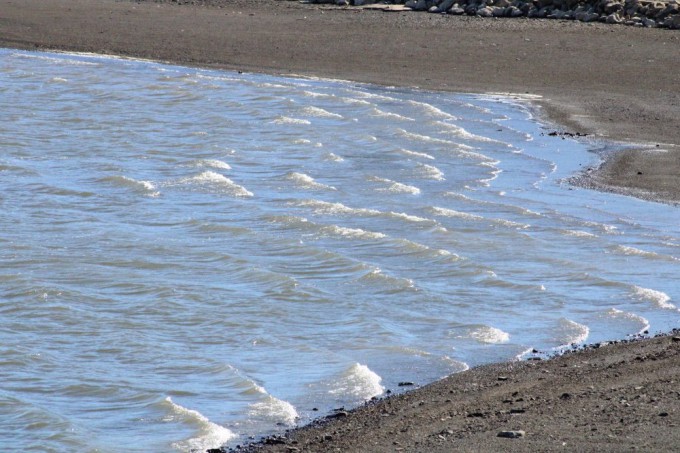
A new study suggests that climate change and coastal development can affect not only average sea level but also the height difference between high and low tides. Getty Images Bank
A study has found that, due to climate change and large-scale coastal reclamation, the height difference between high and low tides in waters around the Korean Peninsula is changing significantly. In the Yellow Sea and the East China Sea, tidal range has changed by up to about 20 cm over the past 30 years.
Analyses suggest that, in the future, overlapping sea level rise and tidal changes will increase inundation and flooding risks along the West Sea (Yellow Sea) coast and accelerate tidal flat loss along the South Sea coast.
Seoul National University announced on the 21st that a team led by Professor Yang-Ki Cho of the Department of Earth and Environmental Sciences, in collaboration with the Korea Hydrographic and Oceanographic Agency, Sorbonne University in France, and the U.S. National Aeronautics and Space Administration (NASA), has combined data from tide gauges, where tides are observed, with satellite observations to analyze tidal changes across global seas. The results were published online on the 15th in the international journal Environmental Research Letters.
Tides, which create high and low water levels, are generally regarded as a natural phenomenon driven mainly by the motion of celestial bodies such as the Moon and the Sun. However, in recent years, the possibility that tides themselves may change due to climate change has been raised. Around the Korean Peninsula, tidal changes may also occur as a result of climate change, but studies on the patterns and causes of these changes have been lacking.
When the research team analyzed tidal changes in global seas using tide gauge data and satellite observations, they found that tidal amplitude is changing most strongly in the Yellow Sea and the East China Sea.
In the Yellow Sea and the East China Sea, tidal amplitude has been increasing or decreasing by more than 3.0 mm per year at maximum—over ten times the changes observed in the open ocean. Converted into tidal range, the height difference between high and low tide, this corresponds to a maximum change of about 20 cm over 30 years.
Numerical model experiments conducted by the team to investigate the causes of tidal changes showed that climate change and coastal reclamation act together. According to the study, enhanced ocean stratification and sea level rise driven by climate change induce tidal changes, while large-scale coastal reclamation accelerates these changes. Ocean stratification refers to the formation of layers in seawater that inhibit vertical mixing, due to density differences arising from variations in temperature and salinity.
In a future where climate change intensifies, tidal range changes are expected to become even larger. Along the West Sea coast, where both sea level rise and increasing tidal range occur simultaneously, the risk of inundation and flooding at high tide is projected to grow. Along the South Sea coast, where tidal range is decreasing, tidal flat area is expected to shrink more severely.
The findings demonstrate that climate change and coastal development can affect not only average sea level but also the height difference between high and low tides.
The research team stated, “To accurately assess future coastal disaster risk, we need projections of future extreme sea levels that account for tidal changes driven by coastal development and climate change, in addition to sea level rise,” adding, “We expect this study to provide important scientific evidence for developing policies to respond to compound coastal disasters and reduce risk in the era of climate change.”
<Reference>
doi.org/10.1088/1748-9326/aea7b6
Copyright ⓒ DongA Science. All rights reserved.