
Short Term Energy Outlook, July 2025
The EIA Short Term Energy Outlook (STEO) was published recently. A summary in chart form.
Commercial OECD inventory is expected to rise to 66 days of supply by 2026Q4, since the pandemic stocks have been in the 57-62 day range. High stock levels lead to the low oil prices in the previous charts.
Lower completion rates and lower new well productivity lead to slower growth in US output in 2025 and 2026, Completion rates are expected to be even lower in 2026 due to very low oil prices (WTI=$55/b) leading to no increase in US average output in 2026 compared to 2025.
US GDP and distillate consumption are closely correlated and the outlook is less optimistic now than in January 2025. The rebound at the end of 2026 for US GDP looks like wishful thinking to me.
Higher natural gas storage levels in October 2025 lead to lower natural gas prices than in last month’s STEO. This is due to higher output than expected and lower demand for natural gas from power plants due higher natural gas prices.
Marketed natural gas output is 2.9 BCF/d higher in 2025 than in 2024, but in 2026 output decreases slightly by 0.2 BCF/d due to low natural gas prices.
Solar is expected to surpass wind in 2026 to become the largest source of renewable power in the US.
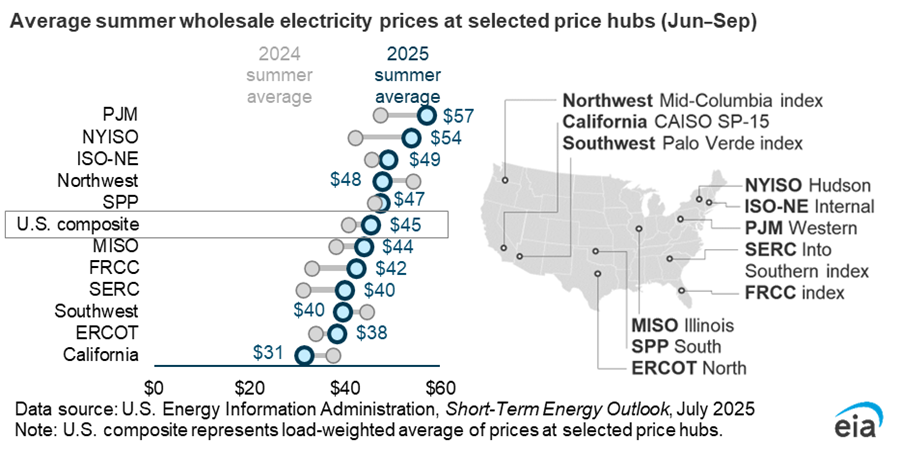
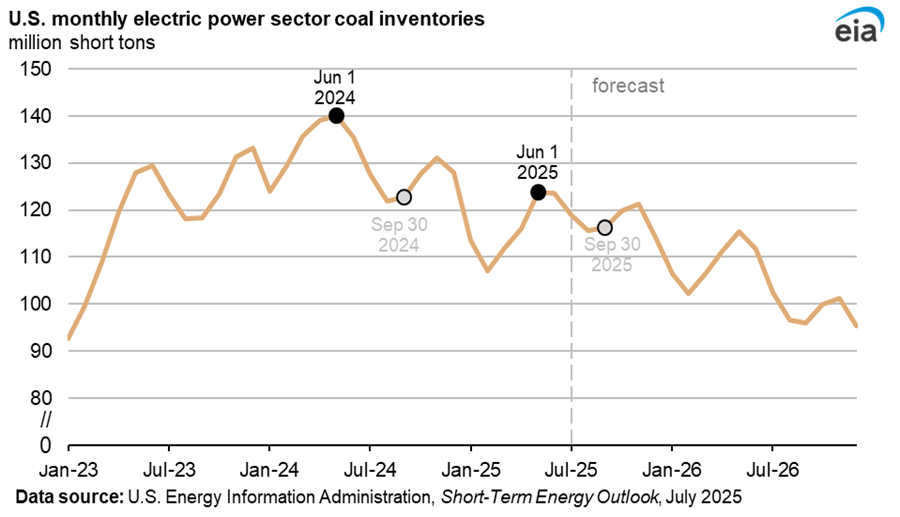
Inventories of coal at US power plants are expected to continue the decline that started in 2024 through 2026.
US tight oil output has not increased much since early 2024.
US Shale gas output has been relatively flat since 2023.
This updated tight oil scenario expects the peak to be in 2025 for US tight oil, a year earlier than last month’s scenario.
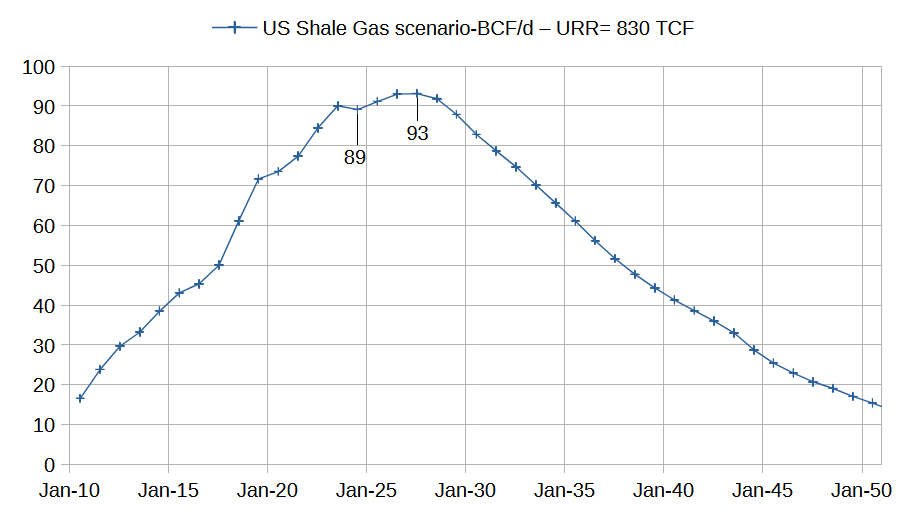
The scenario above attempts to model marketed shale gas production where it is assumed that dry shale gas is about 92% of marketed shale gas production.
Net exports of natural gas are expected to increase by 4.3 BCF/d from 2024 to 2026 and there are 24 BCF/d of LNG capacity under construction or approved which are expected to begin exports between 2024 and 2030. Assuming all of this is developed and net pipeline exports are unchanged the net exports would increase by 24 BCF/d from 2024 to 2026. It looks to me that unless natural gas consumption in the US drops by 20 BCF/d, there will not be enough natural gas produced in the US to meet the demand from LNG exporters. In the next few years we will see just how much natural gas can be produced in the US, it may be much less than many believe.