
She knew the fastest girl in Somalia — from her stratospheric beginnings, to her tragic end
On a bright morning in Beijing in 2008, 17-year-old Samia Yusuf Omar stepped onto the terracotta track of an Olympic stadium, uproarious with the voices of tens of thousands of spectators. It was the first women’s 200-meter race of the Games, and she was ready, if a bit underdressed: She wore borrowed shoes, black leggings that cut just below the knees, and an oversized white T-shirt that hadn’t been tucked in.
The runners readied themselves. The crack of a starter pistol ripped through the air, and off they went. Omar would finish dead last with an agonizing nine seconds behind the other runners. But this wasn’t nearly the end of her story.
She would return home to Mogadishu, Somalia, where a brutal civil war was intensifying and warring militant groups were tracking down and intimidating athletes like her. Yet her determination to run never waned. Omar chose to flee to a displacement camp and then cross into Ethiopia in hopes of competing in the 2012 London Olympics.
Omar was eventually trafficked north into Libya, where she was imprisoned. And in 2012, while attempting to cross the Mediterranean from Libya to Italy on a crowded boat with 70 other migrants, she drowned. She was 21.
Learn from top longform journalists and find the best in-depth reporting. Subscribe to Depth Perception:
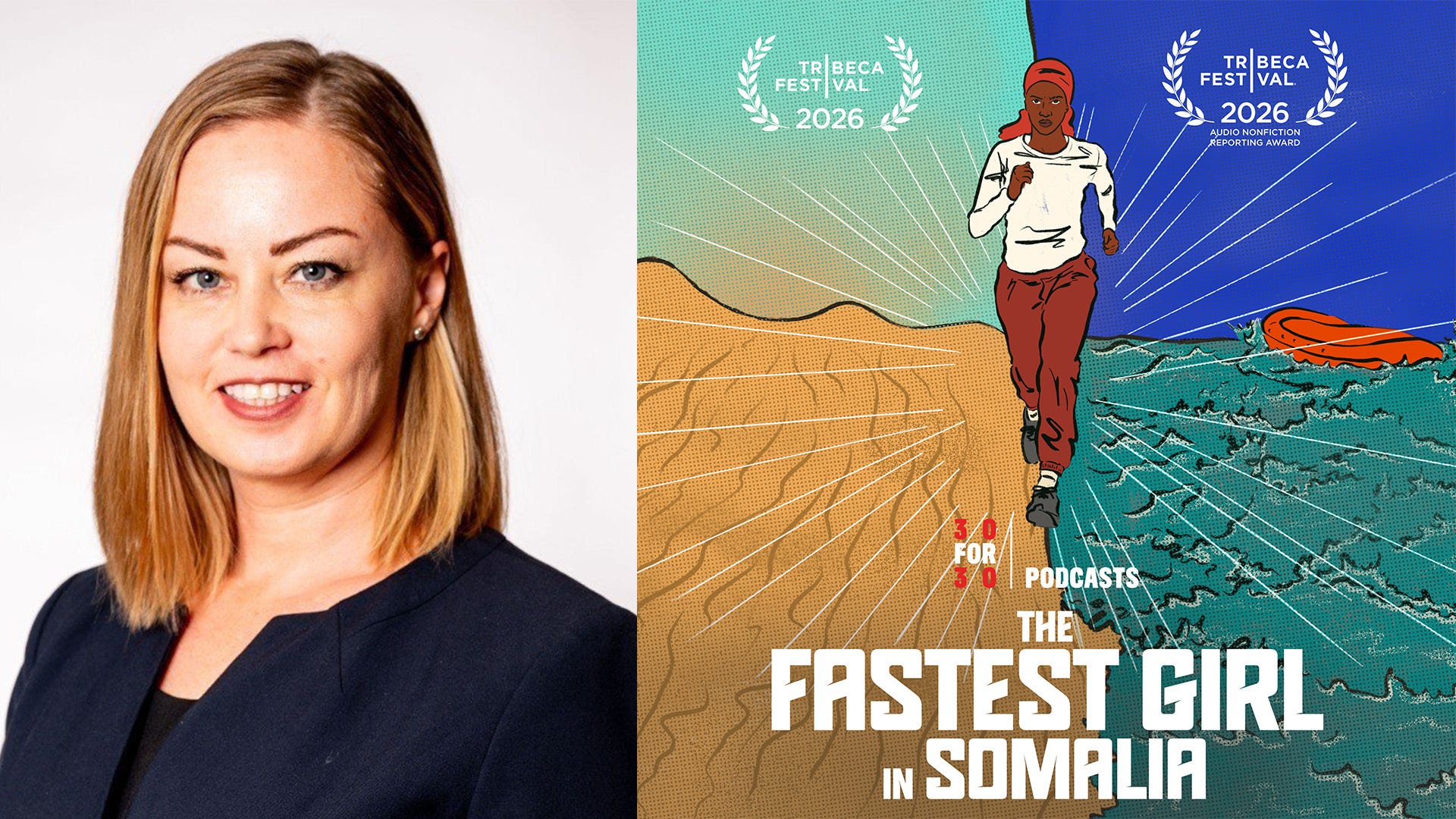
“The Fastest Girl in Somalia,” an ESPN podcast — and the “Official Selection” of the Tribeca Film Festival — was created by journalist Teresa Krug and traces Omar’s brief but extraordinary life that took her from a track in China to the Mediterranean Sea bound for Europe. Krug, a personal friend of Omar who spent two weeks with her in 2010 when she was a young journalist, knew she wanted to make Omar’s story as intimate and personal as possible.
“Turning it into a narrative podcast turned out to be the best form for this story,” Krug tells me. “We leaned in very close to her story. … [It’s] told through people who knew her directly.”
In this edition of Depth Perception, Krug unpacks the unexpected role sports plays in inspiring people, bringing whole communities together, and ultimately, moving them beyond borders. —Kelly Kimball
What inspired you to create a podcast about Omar? Was there a specific moment when you knew that there was a much deeper, unexplored story to tell about her?
I’ve always wanted to do something long-form. I’d written an article [about Omar] for the Guardian in 2016, and I’d written one or two articles for Al Jazeera before that. But, I don’t know if you’ve had stories like this, where you just find yourself still researching. You can’t let go. This was one of those stories where I just kept researching and I just kept reaching out to people to do interviews. I just couldn’t stop, and I really wanted to turn it into a book for several years.
I pitched the concept around to a bunch of American agents, but they didn’t really see a market for it. They didn’t know who would read it. Or, you know, [they didn’t think I was a] big enough name to attach any story to. So I kind of abandoned that idea after several years. I figured it was just one of those stories I wouldn’t get to tell in long-form, that I needed to move on with my life.
I hadn’t considered doing podcasts until [I found out] that ESPN was looking for pitches, and the prompt was very specific: an athlete profile, no fluff, and a definite period of time. All the bullet points hit. And I remembered that I had this audio with her, because I had done interviews with her in 2010 that no one had ever listened to before, and I had never thought about releasing that audio in any kind of creative way. So, I pitched it to them. People are more interested in women’s sports now, and podcasts have come a long way since 2010. A lot of other things had to happen for this moment to happen.
You were able to meet Omar back in 2010. What was that first meeting like? In knowing her personally, did that change how you reported her story?
You always hope that the person that you want to interview is going to be interesting. When I first met her, she was very quiet and she was very reserved, and I didn’t fully understand the full context of the environment that she was coming from. I knew that there was a lot of conflict, violence, that she was leading a very difficult life, but I didn’t understand — to the degree that I do now — how much athletes and sports journalists were being harassed and threatened at that time. She had agreed to do the interviews, but she was very reluctant to share very much information.
We spent a lot of time together, good and bad. We shared some really fun moments together, and, you know what happens when you’re spending a lot of time with someone, especially someone that you’re getting to know, you kind of irritate each other. But she was real. She’s a very fierce person, and she’s extremely loyal, deeply passionate about her family, a patriot of Somalia in the very best way.
Anthem Awards: Support journalism that champions inclusion
Crushing waves, changing temperatures, whipping wind. This is no day at the beach — it’s where a Hawaiian high school’s girls’ water polo team had to practice after its school failed to ensure them pool access, something the boys’ teams never had to endure.
Ashley Badis was a junior at James Campbell — Honolulu’s largest public high school — when she experienced the inequalities between the treatment of the boys and girls sports teams. The school’s female athletes didn’t have locker rooms and some had to walk to the nearest Burger King for a restroom break during practices. Badis eventually became lead plaintiff in the civil action lawsuit, A.B. v. Hawaii DOE, suing her school over its violation of Title IX.
While her case’s landmark settlement will impact generations to come, girls must continue to stay vigilant, ensuring Title IX enforcement is happening.
Title Waves, a Long Lead feature written by Kim Cross, braids the story of Title IX’s early days with Ashley Badis’s fight to even the playing field for high school girls today. The piece was recently selected as a finalist for the Anthem Awards.
Show you value journalism that platforms belonging, inclusion, and impact. Vote for Title Waves to win the Anthem Award for Special Projects and News & Journalism. Voting closes October 28, so please vote today.
In knowing Omar over such a long period of time, what did you come to know about the environment she was coming from and how it made her want to leave to go to Europe?
When I met her in 2010, I was living in Somaliland, which is an autonomously functioning region. It has its own president, it has its own currency, its own military, and is quite safe — in contrast to Somalia and Mogadishu, which [was experiencing some of its worst] violence in its history. You had a very weak and ineffective central government. You had a lot of foreign powers coming in and helping and hurting, and then you had Al-Shabaab, which is this militant group, and Hizbul Islam [a Somali Islamist group].
At the time, I understood that it was dangerous. Through my interviews with Samia, she talked about having to hide her identity. She told me a story once about living in a displacement camp outside Mogadishu, where she was hiding her sports jerseys and [denying to others that she had run in the Olympics].
In the process of doing the interviews, I’d known [Somali sports journalist Mohamed Abdi Mudey] for a few years — I call him Mudey, actually. He and I had small talks over the years, then we interviewed him at length for this podcast. That’s when he told me the full story of what it was like to be a sports journalist, about people who had been killed, people who — not just athletes, but sports journalists — had to flee Somalia for safety just because they were [involved in athletics].
He talked about how at one point a militant group had banned music. He was running a sports radio program, and radio programs have music. The director of his station said that he can no longer play music in the sports segment, and so then he was playing, like, horse noises, because he was like, “Does that count as music?”
Just hearing him talk about the way that he was trying to creatively get around these bans and protect himself and protect his colleagues and still be able to continue reporting on something that he’s quite passionate about — that was very eye-opening for me. I did not understand what it was like in those few years to be associated with sports.
You interviewed her friends and family as well. What was it like talking about Omar with them? Have they been able to listen to the podcast?
Yeah, I’ve sent it around to her family. They’re happy that the podcast is out, but also it’s a very sad topic, so it’s not something that they enjoy talking about at length. We’ve been on good terms ever since I met Samia.
I also interviewed so many of her teammates over the years and other athletes, and it still hurts them to see how Samia was treated and how Samia died. I’ve heard from them [that] they’re so glad that this story is out. Her story has been told in numerous ways now, in a way that I could never imagine when I met her so many years ago.
But they want accountability. They want more resources, they want more opportunities. They take sports very seriously and they want leadership that takes sports very seriously, too.
So they’ve been super supportive of … sports journalists who couldn’t talk about these things at the time because they would be risking their life, like Mudey, for example. He is also very happy that this is now getting more attention.
“It was very important for me that people learn about detention centers in Libya; that people learn about the risks that people are taking to cross the Mediterranean on these really flimsy, dangerous boats; that people understand just what a violent environment it was in Mogadishu.” —Teresa Krug
Was there a specific person that revealed more about Omar or her reality than was unexpected?
The fourth episode is really great. I had heard about this friend of hers for years, and I hadn’t reached out until this podcast. She talked to us for two hours. I asked her one question and then she just told all these stories, and it was amazing for me to hear.
They were very close friends, and they met in Libya [during] a time period when I didn’t really hear from Samia. … We use an alias name for her, [Aisha], and Aisha [is] basically the main character the whole episode. She tells so many stories of them escaping and running, and also the light-hearted moments that felt like I got to know Samia all over again.
You interviewed Omar at a time when Somalia was reaching a historic peak of unrest, as you’ve said. Had she started her sports career now, would she still experience the same pressure points?
The violence [today] is not as bad as it was. It’s been several years since I’ve been there, so I can’t speak with my own eyewitness accounts. But there’s more grassroots sports that are going on now. Club sports are coming back. People are able to watch soccer games in stadiums. The level of extremism and daily violence has gone down, so in a lot of ways, it’s so much better than when she was there. But it sounds like the infrastructure is still lacking.
You know, there was this champion boxer named Ramla Ali, and she visited Somalia this past year or two, and she received a ton of applause and cheering when she arrived. It sounded like a very happy moment, but there were also death threats against her from Al-Shabaab. One or more of [the individuals who threatened Ali] was sentenced to 10 years in prison. So there’s this dual thing where the death threats still exist, but then there seems to be some accountability, at least on paper. It’s still very far away from what it should be.
What are you hoping listeners can get out of this story, once they listen to it all the way through?
When I pitched the podcast originally, I wanted to tell Samia’s story, and I wanted to interview all these people. But I also imagined putting in all these experts … because I wanted people to learn. It was very important for me that people learn about detention centers in Libya; that people learn about the risks that people are taking to cross the Mediterranean on these really flimsy, dangerous boats; that people understand just what a violent environment it was in Mogadishu. I wanted people to really understand these things.
My background is in hard news … and I don’t like getting mushy. That’s not my style of writing. [But] we ended up taking out all those experts. I think we have one expert in the whole series where the person didn’t know Samia. Every person that we interviewed in the first four episodes knew Samia. We leaned in very close to her story.
I want people to have a better understanding of things that are happening that are not in the news, or certainly not in American news. We cover a lot of themes. We cover migration and sports and gender. There’s a lot packed in there.
I’ve had other Somalilanders, other Somalis, listen to the podcast, and I was very worried that they wouldn’t like it. I’ve gotten feedback from them where they’re like, “I’m learning something,” you know? Like, “I knew a lot, but I didn’t realize that this is a part of the experience that Samia went through.”
And Samia went through an experience that so many other people went through.
Further reading, watching, and listening from Teresa Krug:
- “The story of Samia Omar, the Olympic runner who drowned in the Med” (The Guardian, Aug. 3, 2026)
- “Grieving for Somali Olympian Samia Omar” (Al Jazeera, Aug. 27, 2012)
- “Lambrook’s Only Post Office” (Bloomberg News, Sept. 23, 2020)
- “Very Opinionated with Soledad O’Brien” (Quake Media, 2020-2021)
- “U.S. Amazon workers’ union push draws global attention” (Al Jazeera, March 26, 2021)
- “South Sudanese Refugees Transform a Camp Into a City in Uganda” (Voice of America, September 17, 2019)