
Schoolgirls killed in Iran by American missiles: Facing the cruel truth of children caught in war
Shortly after 8 a.m. on Sunday, we heard the tell-tale thumps on the stairs up to our second-floor apartment. We share a two-family with our daughter and son-in-law and their three children. Their sons, 10 and four years old, share a paper route delivering The New York Times and Boston Globe. The route isn’t too demanding. They pick the papers off our front walk and haul them upstairs to their only customer.
On Sunday, I removed the blue wrapper from The Times and went immediately to a story on Page One.
The headline, “At Synagogue, Race to Shield Young Targets,” riveted my attention partly because we spent about 15 years living in Detroit and its suburbs, not all that far from the scene of Thursday’s attack on Temple Israel in West Bloomfield.
HOW TRUE: Stories & Strategies of Nailing Stuff Down is a reader-supported publication. To receive new posts and support my work, consider becoming a free or paid subscriber.
Reading about the terror experienced by the parents of the 106 children inside the Temple building, I of course thought of our own children and grandchildren. Two of them went to preschool at Temple Ohabei Shalom in Brookline. I shuddered at the thought of any of them facing the sort of danger that crashed through the doors at Temple Israel.
The attacker, a naturalized American citizen named Ayman Mohamad Ghazali who lost four family members in the March 5 Israeli bombing in Lebanon, killed himself when he was pinned down in his truck.
Fortunately, none of the children at Temple Israel were physically hurt.
Not so with the children at a school 6,500 miles northeast of West Bloomfield, the Shajareh Tayyebeh Primary School in Minab, Iran.
American missiles hit the school on Saturday, Feb. 28 and killed 175 people, most of them girls between the ages of seven and 12. Saturday is the first day of the school week in Iran.
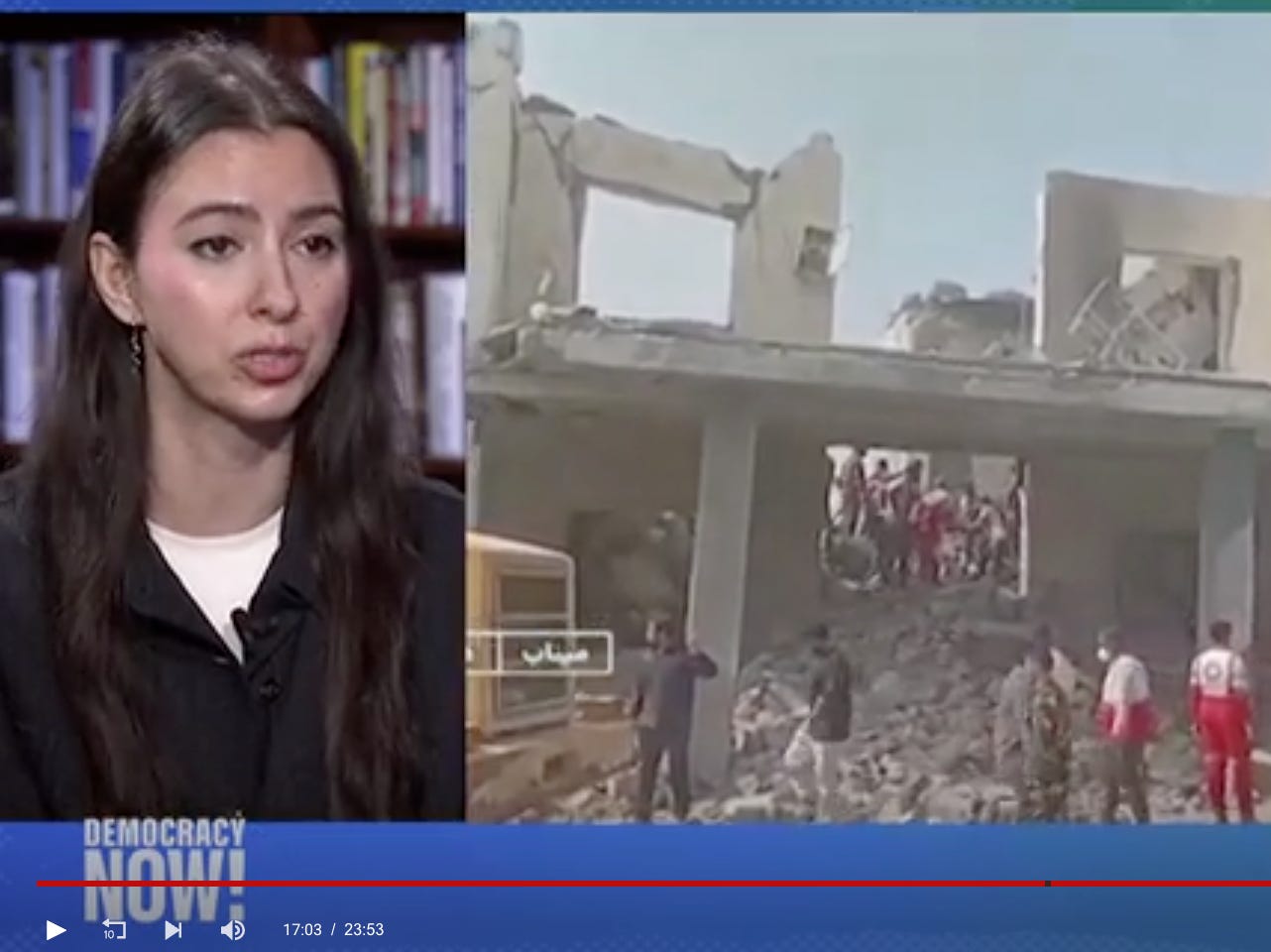
Eye-witness accounts of the attack have been hard to come by, partly the result of how few foreign correspondents are in the country and partly because the Iranian government has shut down the internet.
But journalists like Nilo Tabrizy, who specializes in geolocation and open-source investigations, have debunked President Trump’s claims that the missiles were fired by Iran. And they have confirmed some of the details of what happened during the attack and its aftermath.
Tabrizy, who worked as a video journalist at The New York Times and more recently as a reporter on the Washington Post’s visual forensics team, was among the 350 journalists laid off by The Post last month.
Verifying and documenting what actually happened
But she went to work documenting what happened when alerted to the school bombing by a 6 a.m. text from a friend. It read: “I’m thinking of you. I hope your friends and family in Iran are ok.”
She described the process she followed to get to the truth of the bombing in a March 2 article for New Lines Magazine. Her findings have been corroborated by The Guardian and other news organizations.
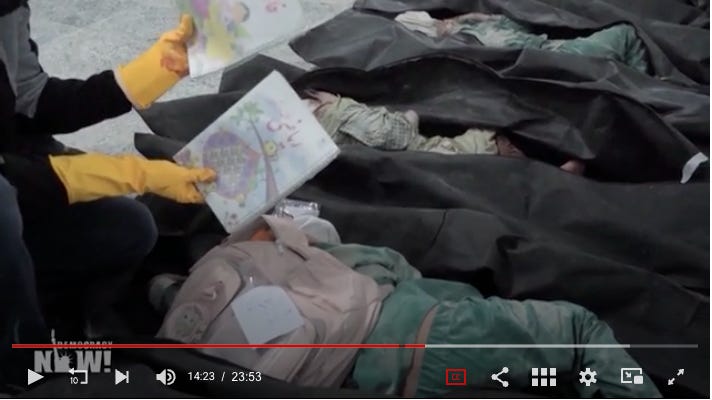
Two days later, Tabrizy detailed her findings for Amy Goodman on Democracy Now, including video of the aftermath of the bombing that she verified as actual footage from the scene.
She concluded her New Lines piece like this:
Seeing images after the strike, such as a bloodstained backpack, a small hand in the rubble and more gruesome scenes that I have to compartmentalize, affirms that the most vulnerable are always casualties in war. On Saturday, the opening day of Operation Epic Fury, it was schoolchildren in Minab.
Various news outlets have reported that the Pentagon’s preliminary assessment found that the U.S. was “likely” responsible for the bombing. Officials have told reporters that the U.S. military relied on satellite imagery that was as much as a decade old, showing the school when it was still part of a neighboring Iranian naval base.
The failure to update and confirm information that led to the murderous bombing has prompted several experts on international law governing warfare to describe the U.S. attack as a war crime.
Parents reported getting texts from the school principal, Maryam Sadeghi, letting them know that an attack was underway and informing them that she was taking the girls to the school’s prayer hall, where she thought they would be safe.
Following the so-called “double-tap” routine of a pause between strikes, the attackers bombed the prayer hall, killing the principal and most of the girls who followed her there.
Human Rights Watch and others confirm that a “triple-tap” bombed the nearby Shaheed Absalan clinic and killed more of the girls as well as rescue workers who had taken them there for emergency treatment.
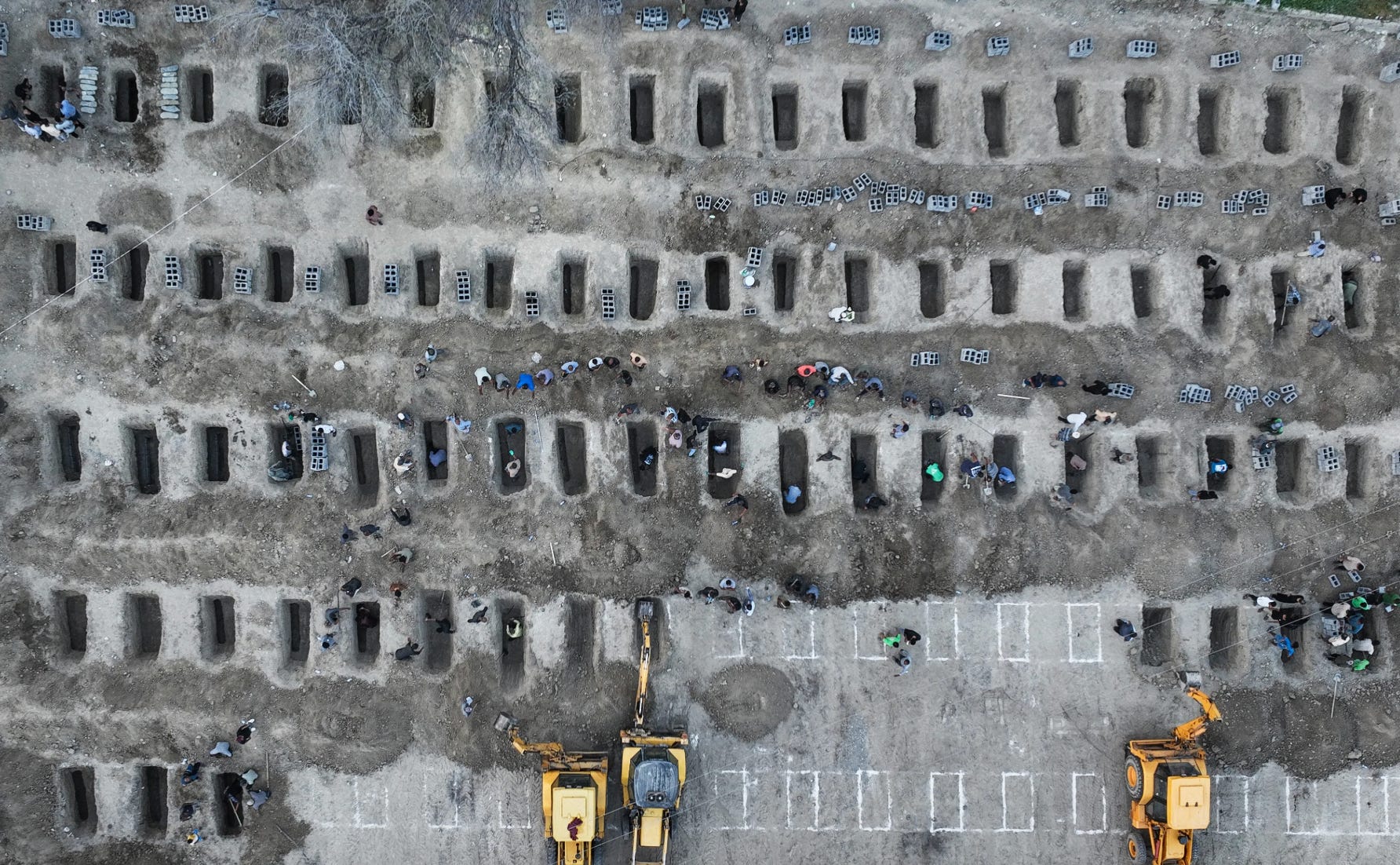
In his Sunday New York Times column, Nicholas Kristof argues that Trump’s conduct of the war on Iran — and his support for Israel’s war on Gaza — has cast aside fundamental principles aimed at protecting civilians in war.
Defense Secretary Pete Hegseth describes the Trump approach as “maximum lethality, not tepid legality.” With harm reduction no longer a priority, Hegseth last year eliminated the Pentagon’s Civilian Protection Center of Excellence.
Kristof says it well:
In short, long after this war is behind us, we may remember it as part of a repudiation of the noble historical effort that we once led to limit the horrors of war. If so, all humanity is the loser.
Including the children that we, just like Iranians, hold dear.