
Rolls-Royce turns to aseismic bearings to de-risk small nuclear reactor during earthquakes
Rolls-Royce SMR, the company tasked with building the next generation of nuclear reactors in the UK, has decided to incorporate aseismic bearings into its small modular reactor design to enhance safety. To this effect, it has signed a contract with Skanska to deliver a demonstrator for its SMR design, a press release said.
As the world seeks carbon-free ways to meet its energy needs, nuclear energy is making a major comeback. Instead of spending time and effort on large-scale nuclear power plants that are plagued by construction and cost overruns, companies are working on building small modular reactors (SMRs) that can be built at scale at a single location and then shipped to the point of operation.
While the reactor is much smaller, it still carries the same risks as a larger nuclear plant. The SMR design includes safety provisions to prevent a meltdown, but earthquake risks remain a major concern. This is why Rolls-Royce SMR is turning to aseismic bearings to increase the safety of its design.
What do aseismic bearings do?
Aseismic bearings are specialized bearings made out of layers of rubber pads or other sliding surfaces that can decouple a building from ground motion during an earthquake. This layer, located between the building foundation and the superstructure, absorbs the high seismic energy generated during a quake.
When the building’s foundation and superstructure are connected, the building becomes rigid and begins resisting seismic movements during an earthquake. With aseismic bearings installed, the building begins to absorb these movements, reducing accelerations within the structure and preventing collapse.
This technology has proven useful in protecting critical structures such as schools, hospitals, and large nuclear plants during earthquakes, and Rolls-Royce SMR intends to use it for its reactor as well.
Earthquake-proof SMR
For its SMR design, Rolls-Royce has partnered with the Swedish firm Skanska’s fabrication facility in Doncaster, UK, to build a prototype aseismic bearing pedestal. This is aimed at helping Rolls Royce SMR team standardize the design across a wide range of geotechnical and seismic conditions.
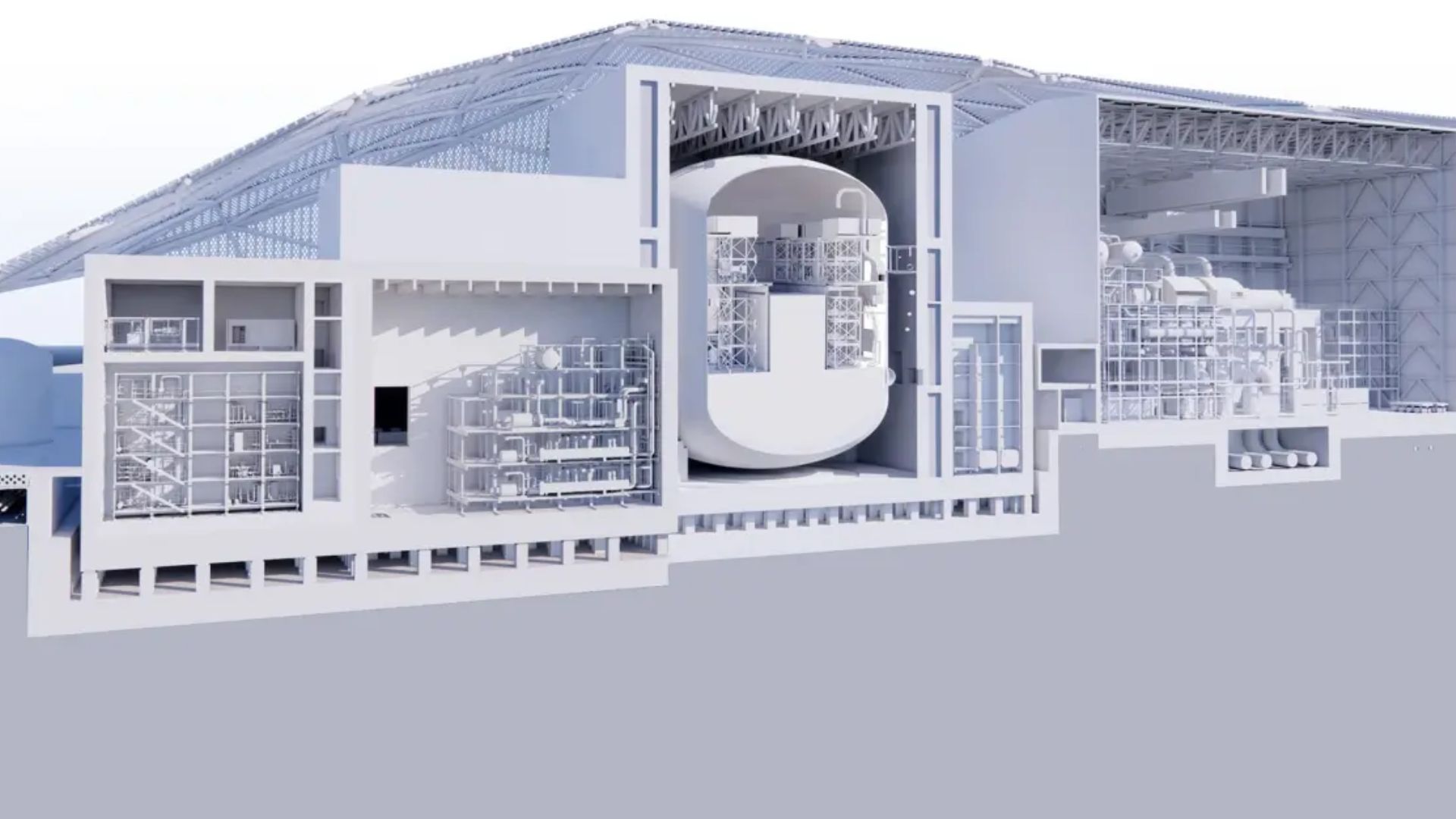
Skanska, a project development and construction company, is renowned for delivering complex building and infrastructure projects.
“Working with Skanska is a significant step forward in proving the capability of our aseismic bearing technology and demonstrating our modular approach to construction,” said Ruth Todd, Rolls-Royce SMR Operations and Supply Chain Director.
“By working with a trusted delivery partner, we are de-risking our ‘fleet-based’ approach and creating opportunities for more British and Czech suppliers to play a key role in the Rolls-Royce SMR mission.”
Rolls-Royce SMR is the preferred bidder in the Great British Energy – Nuclear (GBE-N) SMR competition and will build 3 GW of nuclear power facilities in the Czech Republic. GBE-N also plans to build the UK’s first SMR at Anglesey, Wales.
“We’ll be bringing our civil engineering, design, and fabrication expertise to build and test a first-of-its-kind pre-cast bearing pedestal – a critical component for Rolls-Royce SMR in building new nuclear power generation,” added Adam McDonald, Executive Vice President at Skanska UK, in a press release.
“Over the coming months, we’ll develop the prototype and run various technical trials at our Bentley Works facility in Doncaster. We are looking forward to playing our part in developing the next generation of nuclear energy.”