
Rest in Power: Gloria Steinem, Ms. Cofounder and Feminist Visionary
Gloria Steinem, the journalist, organizer and cofounder of Ms. whose name became inseparable from the modern movement for women’s equality, died Wednesday, Sept. 2, at her home in New York City. She was 92.
A statement posted by Steinem and Gloria’s Foundation said she died peacefully, surrounded by people who loved her, after working for equality until the end.
Those of us fortunate enough to know her will recognize another truth in that announcement: Her greatest gift was not simply the power of her own voice. It was her capacity to listen, to make another person feel seen, heard and capable of changing the world.
That is how Gloria Steinem led. She did not enter a room looking for followers. She looked for connections.
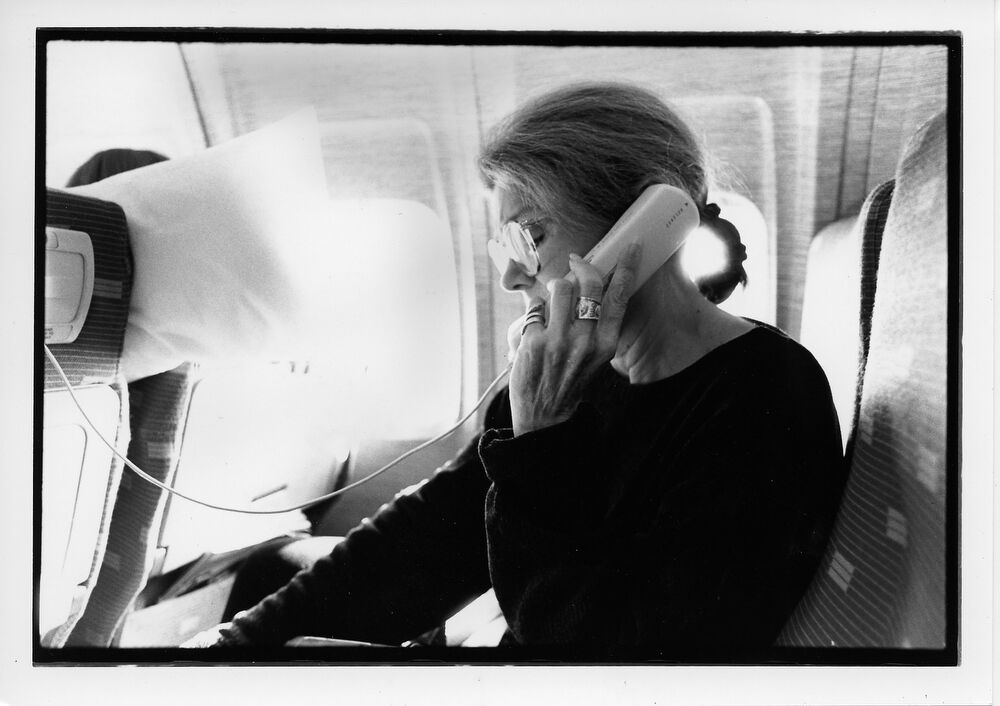
For more than half a century, the public knew her as one of feminism’s most recognizable figures: the writer with the center-parted hair and aviator glasses; the assured speaker at rallies, campuses and conventions; the tireless traveler who carried the movement’s ideas into living rooms and union halls, onto television screens and into the corridors of political power.
But Steinem understood something the culture surrounding her often did not: Movements are never made by one person.
She insisted that feminism’s history include the Black women, labor organizers, Indigenous women, lesbians, civil rights leaders and community activists whose work had too often been erased. She frequently credited women such as Florynce Kennedy, Dorothy Pitman Hughes, Fannie Lou Hamer, Pauli Murray and Shirley Chisholm with teaching and inspiring her. When the media attempted to anoint her the leader of a leaderless movement, she redirected attention toward the organizers, coalitions and collective action that made change possible.

Gloria Marie Steinem was born March 25, 1934, in Toledo, Ohio, to Ruth Nuneviller Steinem and Leo Steinem. Her father was an antiques dealer whose work kept the family moving for much of Gloria’s early childhood.
After her parents separated, she remained with her mother, a former journalist who struggled with serious mental illness and with the economic and social penalties imposed on women who lacked financial independence.
Those experiences helped Gloria see early what American society preferred not to acknowledge: The circumstances of women’s lives were not merely personal. They were political, economic and structural.

After graduating Phi Beta Kappa from Smith College in 1956, Steinem spent two years in India on a Chester Bowles Fellowship. There, she encountered Gandhian organizing and learned lessons she would carry throughout her life about listening, traveling and building change from the ground up.
Returning to the United States, she struggled to find serious journalism assignments in an industry that routinely confined women to service articles and so-called women’s pages.
In 1962, Esquire published her examination of the impossible choice society imposed on women between career and family.
The following year, she went undercover as a Playboy bunny for Show magazine. Her two-part exposé revealed the exhausting labor, surveillance, sexual demands and degrading conditions concealed behind the Playboy Club’s glamorous image.
[Her Playboy] experience taught Steinem … about the cost women pay when men control the institutions that assign, edit, finance and distribute those stories.
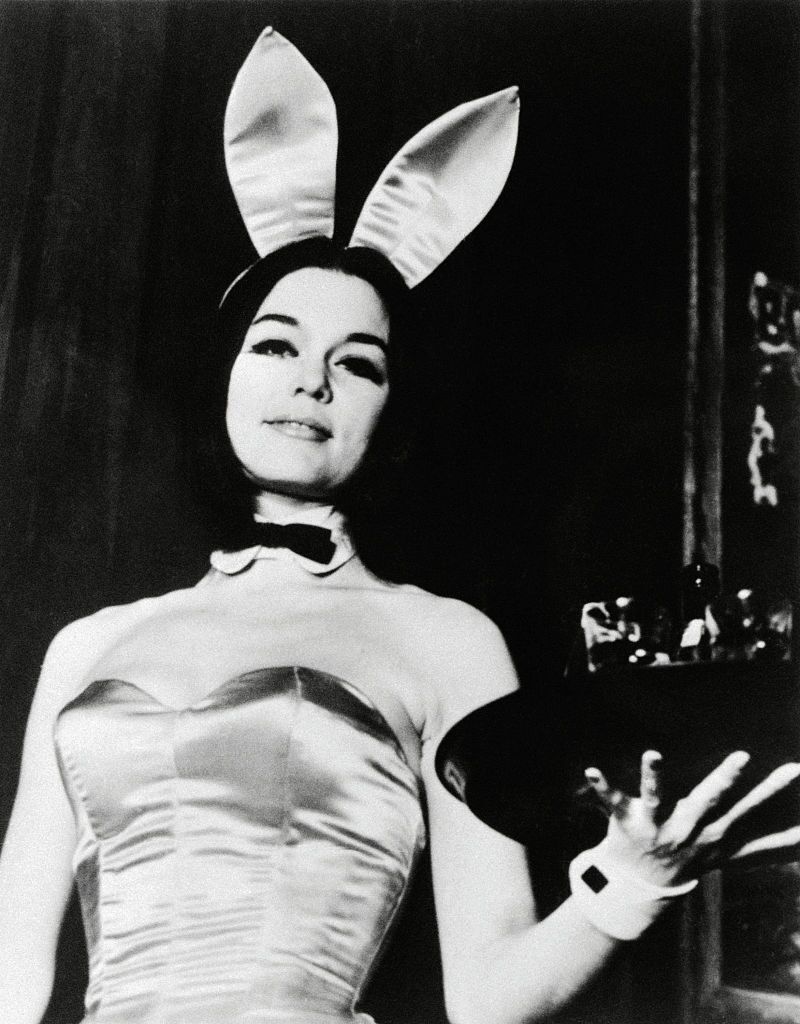
The investigation made her famous, but it also temporarily made editors less willing to take her seriously. That experience taught Steinem a lasting lesson about who determines which stories count as news, and about the cost women pay when men control the institutions that assign, edit, finance and distribute those stories.
In 1968, she helped found New York magazine and became one of its political columnists.
A year later, she attended an abortion speak-out in Greenwich Village. Listening to women publicly describe abortions they had been forced to obtain in secrecy, Gloria recognized her own experience among theirs.
At 22, she had obtained an abortion in London at a time when the procedure was largely illegal in the United States. She later described that gathering as the beginning of her life as an active feminist. It deepened her conviction that democracy is impossible without control over one’s own body—a conviction made even more urgent by the reversal of Roe v. Wade and the continuing campaign to criminalize abortion, contraception and those who provide or seek reproductive healthcare.
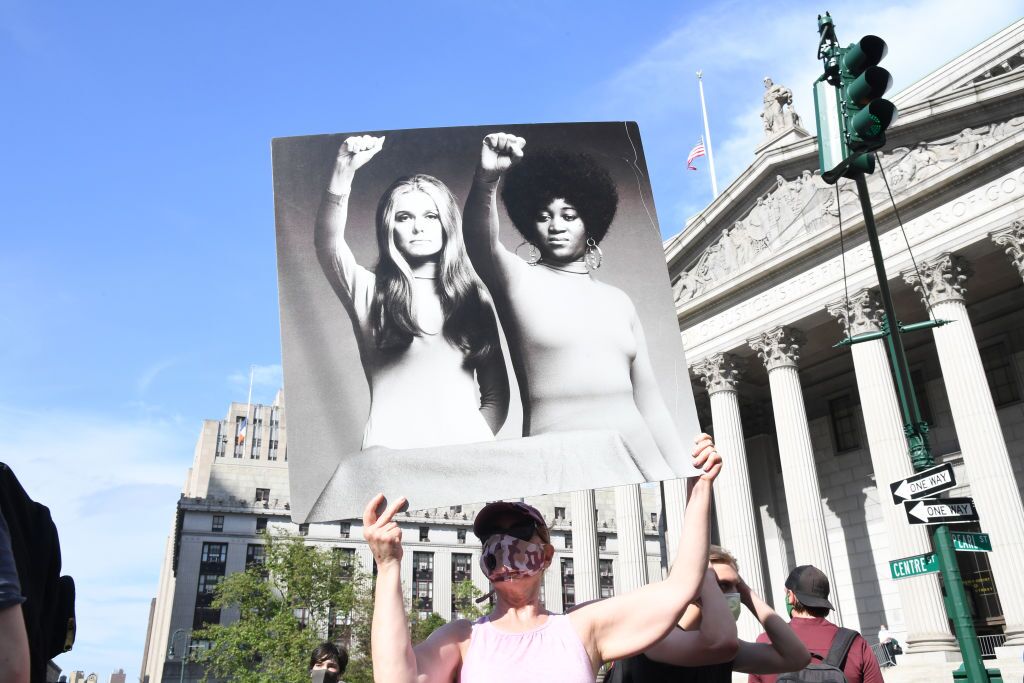
In 1969, her essay “After Black Power, Women’s Liberation” helped bring her national attention. Soon she was traveling and speaking with Dorothy Pitman Hughes, the pioneering Black feminist and community organizer. Their partnership offered a public demonstration of a truth Gloria emphasized throughout her life: Racism and sexism are interlocking systems, and neither can be defeated in isolation.
Gloria Steinem helped establish organizations that translated feminist ideas into durable political power. She was among the founders of the National Women’s Political Caucus, the Women’s Action Alliance, the Ms. Foundation for Women, Voters for Choice and, later, the Women’s Media Center. She supported international organizations including Equality Now and worked across generations, movements and national borders.
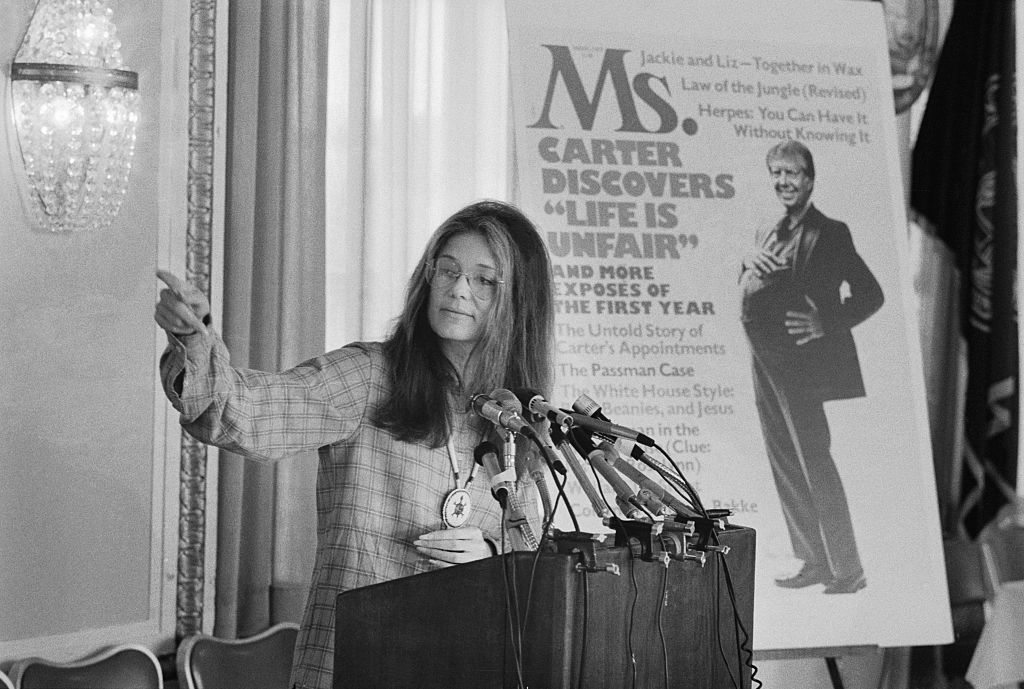
In 1971, Steinem and a collective of feminist journalists began the audacious project that became Ms. The preview issue appeared as an insert in New York magazine late that year. Its 300,000 test copies sold out nationwide in eight days, generating approximately 26,000 subscription orders and more than 20,000 reader letters. The first regular issue followed in July 1972.
The response revealed an enormous community of women who had been told that their experiences were isolated, shameful or too insignificant to be news. In the pages of Ms., they discovered that what they had been experiencing alone was being experienced by millions.
The magazine’s founding editors and contributors did not simply add women to the existing news agenda. They changed the definition of news.

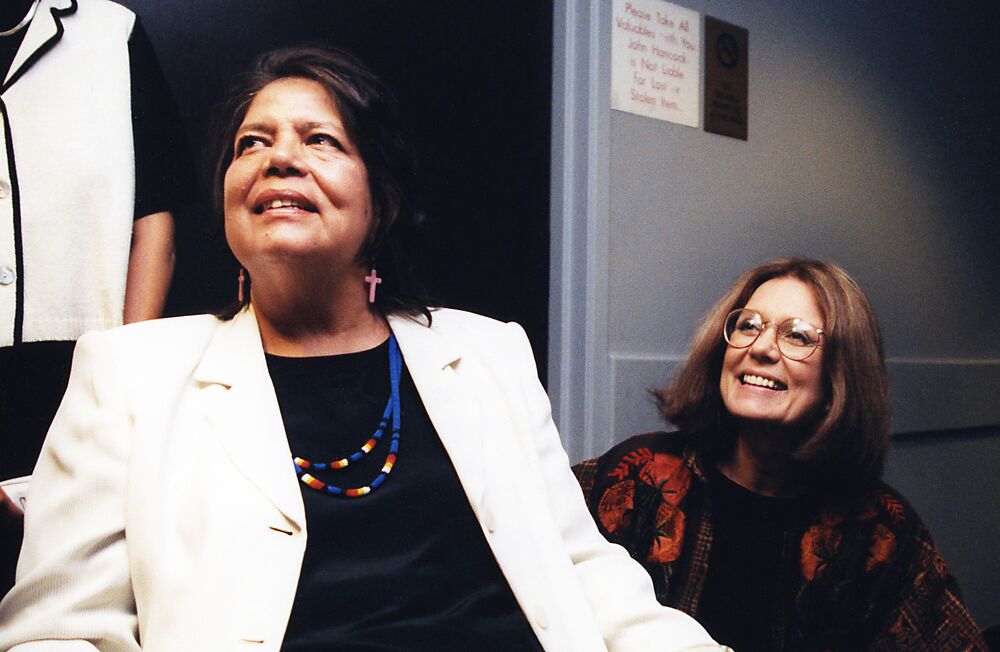

Ms. put abortion, sexual harassment and domestic violence on its cover when mainstream publications barely had language for them. It explained and championed the Equal Rights Amendment, evaluated presidential candidates on issues affecting women, published a groundbreaking national study of date rape and documented the pressure advertisers exerted over editorial decisions. It brought feminist analysis to politics, work, health, family, sexuality, culture, race and economic power.
It also opened its pages to argument and disagreement. Feminism was never a finished doctrine to Steinem. It was a living, self-questioning movement—a method of seeing connections that established power would rather keep hidden.
Like any public figure whose work spanned more than six decades, Gloria Steinem faced criticism and controversy. Some feminists objected to the media’s elevation of a white, conventionally attractive woman as the movement’s representative. Her 1998 defense of President Bill Clinton against allegations of sexual misconduct was heavily criticized; years later, she acknowledged she would not write the same piece again.
A truthful appreciation of Gloria Steinem should not turn a radical human being into a flawless monument. She evolved. She listened. She sometimes reconsidered. She understood that feminism requires the courage to confront not only the world’s failings, but our own.
Her books included Outrageous Acts and Everyday Rebellions, Revolution From Within, Moving Beyond Words, My Life on the Road and The Truth Will Set You Free, but First It Will Piss You Off!
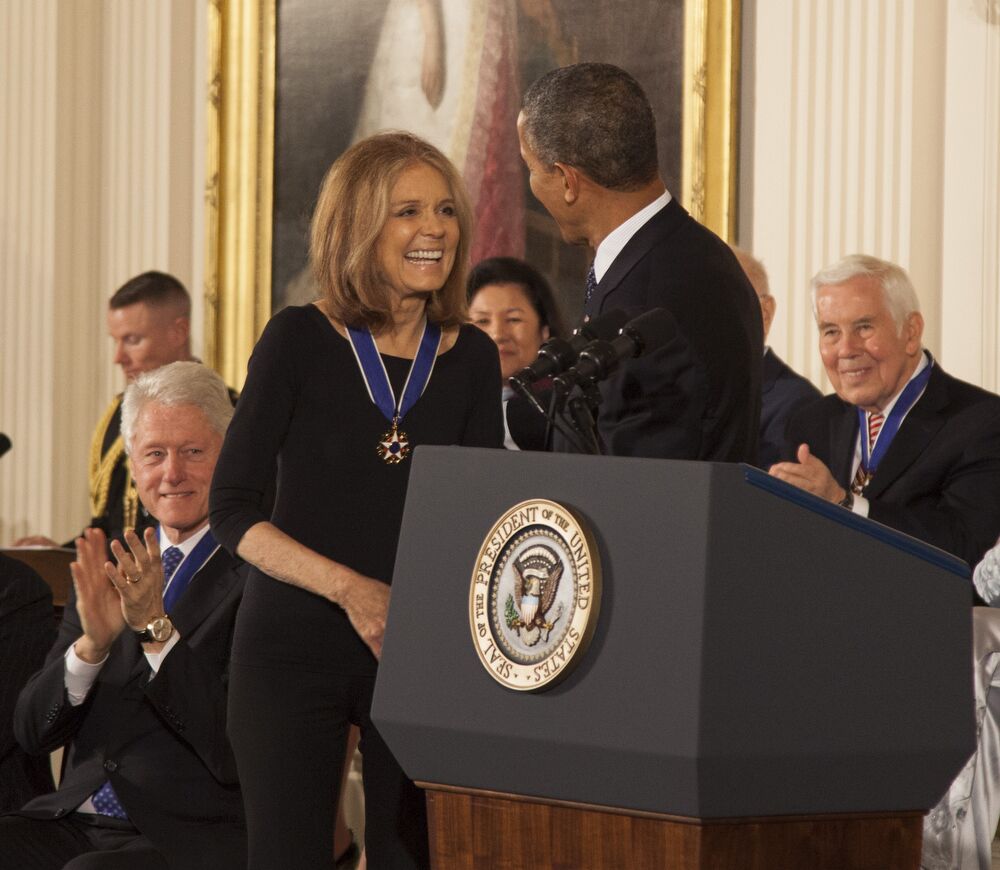
Her journalism and activism earned numerous honors, including the Presidential Medal of Freedom, presented by President Barack Obama in 2013, and Spain’s Princess of Asturias Award for Communication and Humanities in 2021.

She married environmental and animal-rights activist David Bale in 2000. He died in 2003. Gloria did not have children and understood family expansively. Her life was filled with friends, fellow organizers, colleagues and generations of people whom she encouraged, connected and welcomed into the movement.
Her New York home became a meeting place where activists gathered in circles to talk, listen and plan. That image feels especially fitting. Even after becoming an icon, Gloria kept creating circles.
In 2001, Gloria came to Ellie Smeal and me to discuss the possibility of the Feminist Majority Foundation taking on the publication of Ms. She had rescued Ms. from a series of commercial publishers that had nearly killed the magazine, and it was now facing the headwinds of a rapidly changing media landscape.
I remember Gloria telling us that she had always believed Ms. should be published by a nonprofit within the feminist movement—free from corporate pressures and fiercely independent. We knew the important role Ms. had played in connecting feminists to one another and strengthening the movement, and we decided to rise to the challenge.

When Steinem and the other owners of Ms. entrusted the magazine to the Feminist Majority Foundation, we understood that we were being entrusted with far more than a publication. We were being asked to preserve an independent feminist institution, and to keep it alive, questioning and relevant for generations. We would face battles we could not yet foresee.
That responsibility is more urgent today than at any time in recent memory.
We are living through a sustained assault on bodily autonomy. Books and curricula that tell the truth about race, gender and sexuality are being censored. Transgender people are being turned into political targets. Women’s rights defenders around the world face imprisonment and violence. Authoritarian movements understand that controlling women—and controlling the stories a society tells about women—is central to controlling democracy itself.
At the same time, the economic foundations of journalism are collapsing. Local newsrooms have disappeared. Corporate consolidation has narrowed the range of stories the public encounters. Social-media algorithms reward outrage, distortion and abuse, while technology billionaires can determine which journalism reaches an audience and which truths remain comfortably out of sight.
This is why Ms. still matters.
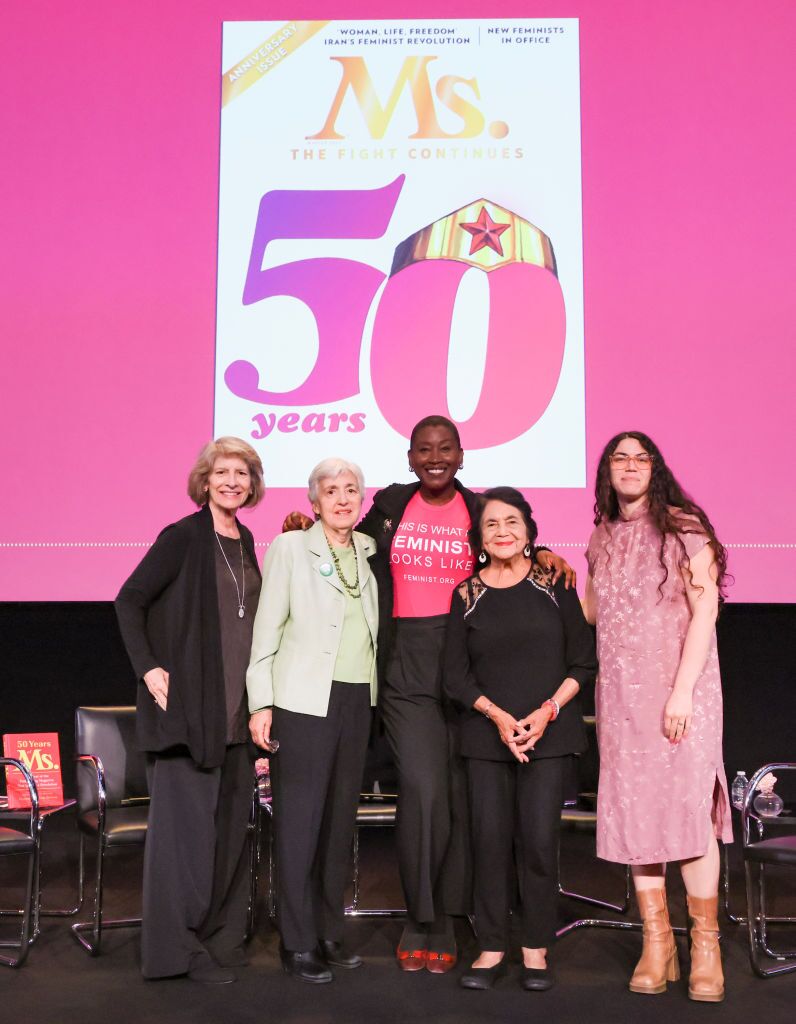
Ms. is not owned by a billionaire or beholden to commercial advertisers. It is an independent, nonprofit feminist newsroom sustained by Ms. partners, readers and donors. That model allows us to investigate stories advertisers may find inconvenient, to center people commercial media consider insufficiently profitable and to report on women not as a demographic niche but as full human beings whose freedom is inseparable from democracy.
Gloria understood from the beginning that feminism needed its own media—not because feminists should withdraw from the larger public conversation, but because independent media can introduce truths the mainstream has not yet learned to recognize. The need for that work did not die with Gloria. It has multiplied.
Gloria’s forthcoming memoir, An Unexpected Life, will be published posthumously on Sept. 22. Its title captures something essential about her. She resisted the narrow scripts written for women and helped millions of others imagine lives beyond them.
But the most important monument to Gloria will not be a statue, an award or even a shelf of remarkable books. It will be the work we—working together—do next. It will be every person who organizes instead of surrendering to isolation. Every journalist who asks whose voice is missing. Every reader who supports independent media. Every young person who discovers that an injustice bearing down on their life is neither natural nor inevitable. That’s how the circle grows wider.
Gloria Steinem changed the story women were permitted to tell about themselves. Now it is our responsibility to keep telling the truth—and to make certain that no billionaire, advertiser, government or algorithm can silence it.