COP30 climate negotiations in the Brazilian city of Belém, in the heart of the Amazon rainforest, concluded Sunday with an agreement that calls for renewed commitments to tackle rising temperatures but omits any mention of planet-warming fossil fuels.
—
Reactions to the COP30 agreement are pouring in from around the world. The two-week summit in Brazil concluded with what many have called “weak” commitments to scaling up climate finance for developing countries and lacked any mention of the primary cause of climate change: fossil fuels.
Follow Earth.Org as we gather reactions from around the world.
Climate Action Network
Tasneem Essop, Executive Director, CAN International
We came here to get the Belém Action Mechanism – for families, for workers, for communities. The adoption of a Just Transition mechanism was a win shaped by years of pressure from civil society. This outcome didn’t fall from the sky; it was carved out through struggle, persistence, and the moral clarity of those living on the frontlines of climate breakdown. Governments must now honour this Just Transition mechanism with real action. Anything less is a betrayal of people – and of the Paris promise.
Civil society held steady at this COP – together with frontline countries and movements who refused to let justice be pushed aside, even as some developed countries dug in their heels and tried to block agreement.
We will continue to fight for Adaptation – that is essential for protecting people by investing in their resilience to climate impacts, securing the resources they need to withstand rising risks, and ensuring no community is left exposed. Without Adaptation finance and a just, equitable, and fully funded plan to transition away from fossil fuels, governments are not confronting the root cause of the crisis. We have a win for justice from COP30, but we keep fighting.
Chiara Martinelli, Director at CAN Europe
Delivering BAM was a major civil society win, it creates a coordinated institutional home to drive forward progress on the Just Transition. Beyond this success though, COP30 leaves us with a grim picture when it comes to the whole justice package we came here for. Adaptation was sidelined, and fossil fuels were erased from the outcome. Ten years after Paris, we expected courage. Instead, world leaders delivered the bare, bare minimum.
COP30 Closing Plenary. Photo: UN Climate Change/Kiara Worth via Flickr. Photo: UN Climate Change/Kiara Worth via Flickr.
Center for Energy, Ecology, and Development (CEED)
Avril De Torres, Deputy Executive Director, CEED
It took decades for the need to transition away from fossil fuels to be named at COP28. It’s a grave injustice that two years later, historical polluters are still blocking progress in ending the era of fossil fuels by withholding commitment to pay up their climate debt to the Global South on all fronts. While we welcome the acknowledgement of the need to address the interlinked crises of climate, biodiversity loss, and degradation of ecosystems, as well as the inclusion of a new mechanism for a just transition, these are gravely undermined by a failure to stop continued destruction caused by coal, gas, and oil.
We Mean Business Coalition
Maria Mendiluce, CEO, We Mean Business Coalition
The formal outcomes of COP30 fell way short of what is needed and do not match the speed of transition in the real economy. This is a missed opportunity to further accelerate the transition and its benefits. The support shown in Belém for stronger outcomes from many countries and the private sector – based on the clear evidence that clean electrification is already lowering costs, strengthening resilience and driving competitiveness – were not reflected sufficiently in the final text. While there is recognition of the urgency and gap in ambition, the signal of how countries will collectively respond to that remains weaker than what markets and technology demand.
We welcome Brazil’s announcement in the final plenary that it will drive new Presidency-led roadmaps on fossil fuels and deforestation – with multistakeholder input – as potential next steps in shaping clearer direction for implementation. If these roadmaps provide practical guidance, engage ambitious businesses, and provide a platform for coordinated action, they can help countries and businesses navigate the transition with greater confidence.
This goes some way to responding to the call from more than 80 countries, representing one third of global fossil fuel imports, who showed their leadership in backing a roadmap away from oil, gas and coal because they see the transition makes economic sense. Nonetheless, those who put their line in the sand against a formal roadmap because of vested fossil fuel interests need to understand that blocking does not stop the transition, it simply lessens the chance to manage it in an orderly, equitable and fair way through the Paris Agreement. But business does not wait for perfect politics and will continue to scale clean solutions because it’s economically sound; and investment into renewables, clean electrification, EVs, grids and storage will continue to surge.
Global Climate and Health Alliance
Howard Catton, CEO, International Council of Nurses (GHCA member organization)
Nurses carry the memories of patients whose suffering is tied to fossil fuels. We see the child gasping for air, the family grieving after climate disasters, and Indigenous communities losing health, land, and safety. These harms are not abstract. They deepen inequities and push health systems beyond their limits. Nurses are the ones who sit beside the patient, witnessing their pain and knowing these harms are not random, but driven by human choices. They are preventable if leaders listen to those on the frontlines. We are calling for urgent investment in resilient health systems and a strong health workforce, and we are calling for a rapid and just phase out of fossil fuels to protect the health of people and the planet.
Emily Bancroft, Emily Bancroft, Health Care Without Harm US (GHCA member organization)
The lesson from COP30 is clear: you cannot have healthy people without a healthy planet. COP30 highlighted real progress—from the launch of the Belém Health Action Plan to healthcare’s strengthened commitments to Race to Zero. Yet it also exposed the gaps we must confront: the political will to accelerate a just transition away from fossil fuels and inadequate financing to protect the most vulnerable. Without closing these gaps, people’s lives and the planet on which we depend remain at risk. The health community will continue to lead by example, driving the action, evidence, and accountability needed to move the world toward a climate-resilient, equitable future.
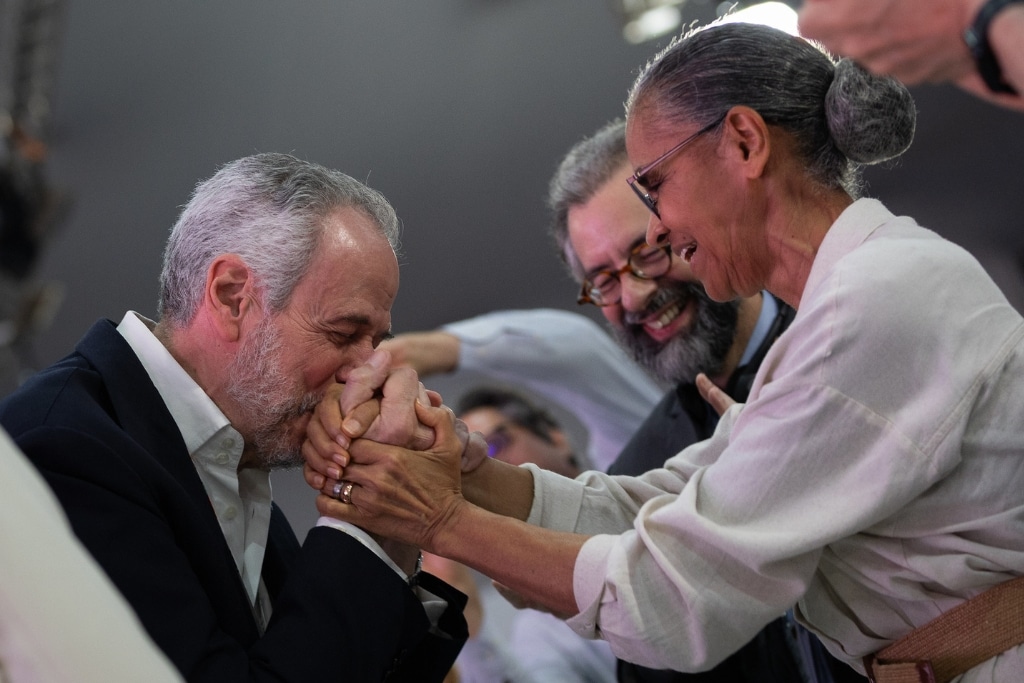
Marina Silva, Brazil’s Minister of Environment and Climate Change, and André Corrêa do Lago, COP30 President, at the COP30 Closing Plenary. Photo: UN Climate Change/Kiara Worth via Flickr.
Transparency International
Brice Böhmer, Climate & Environment Lead, Transparency International
As COP30 concluded, we must reckon with both its modest gains and its shortcomings. Branded the “COP of Truth”, the summit often fell short of that promise. It did little to restore confidence in global climate negotiations, and the final hours underscored the urgent need for reforms to strengthen this crucial multilateral process.
Civil society, especially Indigenous and frontline communities, reminded negotiators what is truly at stake. Stories from communities such as the Garifuna, whose lands were seized for palm oil expansion, highlighted how climate justice is inseparable from human rights, land sovereignty, and transparency. Some safeguards were reflected in the just transition work programme.
But these steps were overshadowed by the overwhelming presence of polluting industries. Once again, fossil fuel lobbyists outnumbered many delegations from the countries most affected by the climate crisis. Industrial agriculture and carbon capture and storage lobbyists further expanded corporate influence, pushing narratives that risk delaying the real transition the world urgently needs and attempting to weaken essential rules for carbon markets. Meanwhile, no progress was made on fossil fuels or deforestation, with negotiators leaving only with a commitment from the COP President that Brazil will develop two roadmaps.
While industry actors enjoyed unprecedented access, many Indigenous and frontline representatives struggled to be heard. Although the COP30 President and CEO engaged with demonstrators, the heavy security presence, including militarised zones, reinforced a sense of exclusion. When those most affected are sidelined while those most responsible shape the agenda, the credibility of the COP process is fundamentally undermined.
World Animal Protection
Kelly Dent, Director of External Engagement for World Animal Protection
COP30 has been dubbed the ‘COP of truth’, yet a truth not being acknowledged is we cannot tackle the climate crisis while turning our back on the destruction and suffering caused by industrial animal agriculture.
For a COP hosted in the Amazon, it’s shattering that deforestation took a back seat. The wildlife, indigenous people and traditional communities who call the forest their home deserved better than this.
We are pleased to see an emerging recognition of food systems in the negotiations as well as in in the Belem Declaration on Hunger, Poverty and Human-Centred Climate Action. It’s positive to see recognition in the text of the role of small-scale farmers, however it’s concerning there is no mention of animal welfare, when the health of animals and our environment are so importantly intertwined.
Although closed door negotiations provided little room for civil society, COP30 gave the opportunity for movements supporting animals to have their voices heard, from outside protests directly calling out big agribusiness, to official events where we demonstrated the power of food systems that reduce emissions, are kinder to animals and support small scale farmers.
The Belem Political Package falls short of what animals, people and planet need to thrive. It fails to acknowledge that agriculture is the major driver of deforestation, and that cutting down our forests is supercharging emissions.
Climate Crisis Advisory Group
Sir David King, Chair of the Climate Crisis Advisory Group
The science could not be clearer. Fossil fuels are driving the overshoot we are living through today, with devastating impacts already unfolding. But progress on a phase out remains blocked because the historical fossil-fuel producing countries have still not committed to a strategy for deep and rapid emissions reduction or to a concessional finance that developing countries need for a fair transition. These gaps feed one another, and they explain why COP30 ends without the decisive outcome the world needs.
What does give hope is the new coalition of more than 80 countries that have, for the first time, united behind a roadmap to phase out fossil fuels, from Africa to Latin America to the Pacific and Europe. Outside the COP process, momentum must now become delivery. This governments must turn this political signal into real finance, real emissions cuts and credible just transition pathways. That is how we shorten overshoot, protect the most vulnerable and rebuild trust in the global response.
Dr Arunabha Ghosh, CCAG Member and CEO, CEEW, and Special Envoy to COP30 representing South Asia
Climate negotiations risked being disconnected from climate reality and the action that is already happening. At COP30 in Brazil, the real world finally came back into the room.
In a year where climate multilateralism has been challenged, getting a good deal was better than failing to get any deal in pursuit of the best deal. The simple truth is that the world is not binary. Real transitions happen amid complex and hard development choices.
We saw important steps calling for at least tripling adaptation finance (even though by 2035); recognising diverse national pathways for a just transition; deciding to establish a two-year work programme on climate finance, including on Article 9.1 in the context of Article 9 as a whole; reaffirming that measures taken to combat climate change, including unilateral ones, should not constitute a means of arbitrary or unjustifiable discrimination; and finally, deciding to launch a Global Implementation Accelerator, including a high-level dialogue next year.
We need genuine investment pathways, honest recognition of the scale of loss & damage, adequate concessional finance, and a system that judges COPs the way company boards judge annual performance — not on plans, but on delivery.
The developing world is injecting real-world clarity—and real solutions—into a debate long stuck in abstraction. Delivery is the only currency of trust. The negotiations have delivered. Now action must.
Power Shift Africa
Mohamed Adow, Director, Power Shift Africa
With an increasingly fractured geopolitical backdrop, COP30 gave us some baby steps in the right direction, but considering the scale of the climate crisis, it has failed to rise to the occasion.
Among the green shoots to emerge was the creation of a Just Transition Action Mechanism — a recognition that the global move away from fossil fuels will not abandon workers and frontline communities.
COP30 kept the process alive — but process alone will not cool the planet. Roadmaps and workplans will mean nothing unless they now translate into real finance and real action for the countries bearing the brunt of the crisis.
Despite calling themselves climate leaders, developed countries have betrayed vulnerable nations by both failing to deliver science-aligned national emission reduction plans and also blocked talks on finance to help poor countries adapt to climate change caused by the global north.
Rich countries cannot make a genuine call for a roadmap if they continue to drive in the opposite direction themselves and refuse to pay up for the vehicles they stole from the rest of the convoy.
Christian Aid
Mariana Paoli, Christian Aid’s Global Advocacy Lead
Brazil said this would be the ‘COP of truth’ – but the truth is, this was a disappointing outcome with only mild gains made in tackling the climate crisis.
The elephant in the room was the lack of finance from rich countries to fund the energy transition away from fossil fuels and help vulnerable communities adapt to a climate crisis they have done nothing to create. This is why there is an increasing lack of trust in the process from poor countries.“If rich nations had been willing to meet their finance obligations, a roadmap to phase out fossil fuels would have been on the cards. But without the money that became an impossible task.
While there was a positive outcome at COP31 in the form of the Just Transition Action Mechanism to ensure the global shift from dirty to clean energy doesn’t hurt workers in the fossil fuel industry, meaningful outcomes on helping vulnerable countries adapt to climate change were missing.
Overall it feels like this year’s summit was a missed opportunity for a COP taking place in the Amazon to step up meet the climate challenge head on. Without a better vision for what is required, poor and vulnerable people will continue to suffer from a problem they didn’t create.
Featured image: UN Climate Change/Kiara Worth via Flickr.
News
Explainers
Opinion
Pre-COP30
This story is funded by readers like you
Our non-profit newsroom provides climate coverage free of charge and advertising. Your one-off or monthly donations play a crucial role in supporting our operations, expanding our reach, and maintaining our editorial independence.
We’ve launched briefing.center with a focus on the press and media.
And we’ve added Citizen Cartwright, a daily quick-read news summary by veteran Washington journalist Linda Cartwright. We’ve also created a new voting rights knowledge center for Citizen Cartwright subscribers. (You can sign up for a dedicated morning email at citizencartwright.com.)
You can sign up here for full access to press and media and Citizen Cartwright on briefing.center.
You can use briefing.center as the center of your information management, or just one of your tools. We’re happy to discuss your information needs.