
A rare plant multiplies eight times at a solar power plant in the Nevada desert, proving that ecovoltaics work: the panels generate energy, create shade, maintain humidity, and preserve the seed bank.
Published 09/02/2026 às 22:28
Updated 09/02/2026 às 22:29
Solar panels in the Nevada desert generate energy while simultaneously creating shade, retaining moisture, preserving seed banks, and helping rare native species thrive.
A new study has shown that a rare native plant multiplies eightfold after solar panels were installed in the Nevada desert. Instead of treating the area as “empty,” the case reinforces the idea that an entire ecosystem is functioning, with dormant seeds and species that only appear when conditions become favorable.
The result is noteworthy for a simple reason: Solar energy did not need to destroy the ground to function.With an approach associated with ecovoltaics, the panels also began to act as microclimate generators, helping to maintain the life that was already there, including a seed bank that preserves the biological memory of the environment.
A living desert, not an empty one: what lies hidden beneath the soil.
The Mojave Desert is often described as hostile and almost arid, but the surface makes it clear that the reality is more complex. Beneath the rugged appearance lies a network of dormant plants, animals, and seeds, waiting for the right combination of rain and temperature to germinate.
-
A stunning discovery in Canada has unearthed a marine animal without eyes, with a soft body and a spider-like appearance, preserved in the oceans 450 million years ago.

-
A Texas startup is attempting to register elephants with mammoth genes, using gene editing, building giant laboratories, attracting hundreds of millions of dollars, promising climate impact, and opening an unprecedented dispute over who can own an extinct species.

-
How Cazé TV broke Globo’s 54-year monopoly, earned R$ 2 billion, and became the only Brazilian broadcaster to transmit all 104 matches of the 2026 World Cup.

-
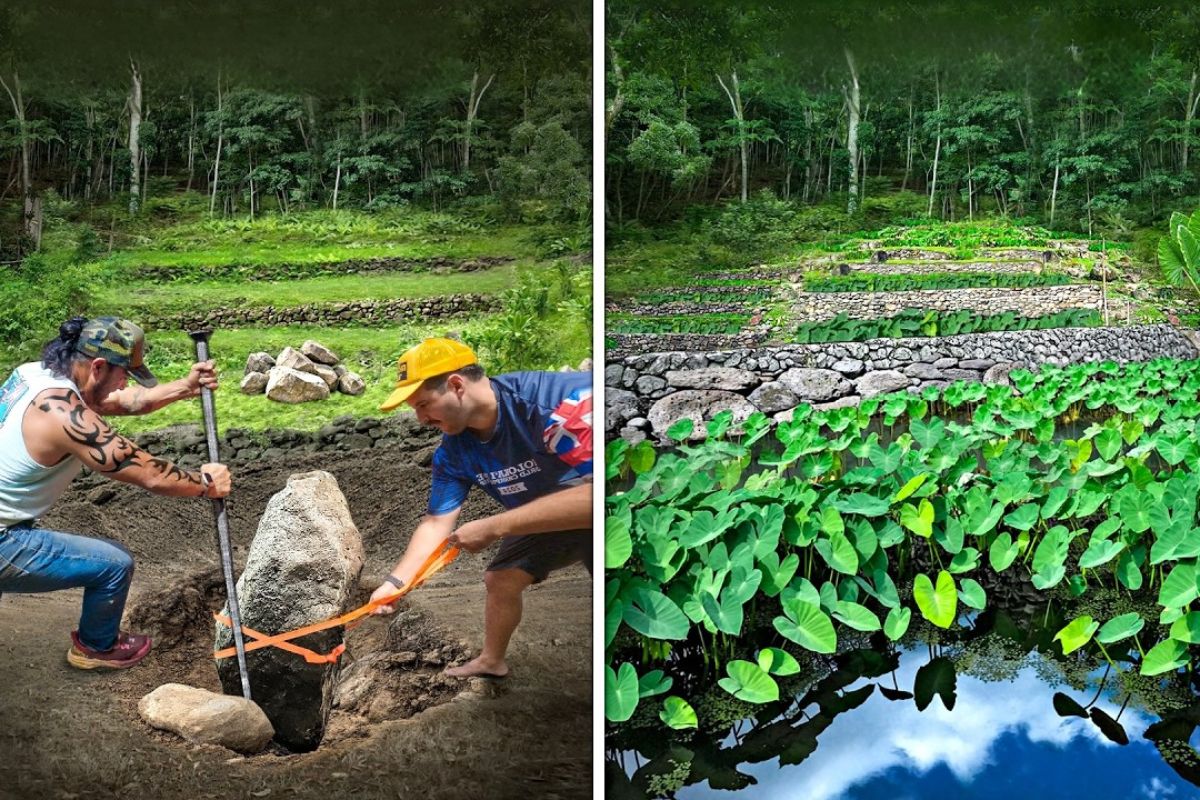
Beneath an encroaching forest, Hawaiians are rediscovering an ancient food system that sustained thousands of people and could restore self-sufficiency to islands now dependent on imported food.
Among the species mentioned is the three-cornered astragalus, a rare legume that grows close to the ground and relies on a strategy typical of dry areas: wait.
It can remain “invisible” underground until conditions allow it to flower, bear fruit, and reproduce, which makes the environment highly sensitive to interventions that remove vegetation and disturb the soil.
The problem of “leveling and plowing” in solar projects.
For decades, many solar energy projects in arid regions have adopted the technique known as “leveling and plowing.” The logic is quick and efficient for construction, but ecologically, the cost can be high.
When the vegetation is removed and the ground is leveled, It’s not just the visible plants that disappear.The seed bank, which holds the ecosystem’s capacity for regeneration, can also be destroyed. And without this seed bank, the life that would be “on pause” loses the chance to return when the rain comes.
The Gemini Case: What has changed in the Nevada desert?
In the outskirts of Las Vegas, Nevada, the Gemini solar project took a different approach. Instead of erasing the landscape, the project claims it was adapted to the local fauna, avoiding total habitat destruction and preserving the soil’s potential for recovery.
The impact was evident in the count of the rare species. Before construction, scientists located 12 specimens of the three-cornered astragalus.
After the project began operations in 2024, the number rose to 93. Nevada desertThis is not a minor detail: it’s a change of scale for a rare plant.
The data indicates that the plants under and between the panels not only became more numerous, but also larger, taller, and more productive, with more flowers and fruits than plants in nearby areas without solar installations.
The explanation is straightforward: The partial shade provided by the panels reduces evaporation.It conserves soil moisture and creates a less extreme microclimate.
No Nevada desertIn places where water is scarce and rainfall dictates the rhythm of everything, reducing moisture loss changes the rules of the game.
Ecologist Tiffany Pereira, from the Desert Research Institute, highlights a crucial point: the seed bank survived the construction.
And this applies not only to the three-cornered astragalus, but to other native plants that are also germinating, with the soil remaining intact.
Ecovoltaics in practice: solar energy without destroying the soil.
This case reinforces a growing idea described in the foundation: solar power plants don’t have to be dead spaces. Ecovoltaics proposes designing photovoltaic installations that coexist with local ecosystems, integrating native species and supporting pollinators, birds, and small vertebrates.
The logic isn’t about “landscaping” or decoration. It’s about functionality. By considering the ecosystem as part of the project, the infrastructure generates energy and, at the same time, It acts as life support in an extreme environment..
Ecologist Lee Walston of Argonne National Laboratory sums up the point with a question that guides the entire discussion: if we build with nature in mind, does it respond? The evidence in this case suggests that it does.
What impact could this have on the environment in arid zones?
The study points to very concrete potential impacts for ecovoltaic systems in arid environments. They can reduce soil degradation, contain erosion, and maintain biological cycles that support biodiversity.
By preserving seed banks and promoting more stable microclimates, such facilities can function as climate refuges against rising temperatures and irregular rainfall.
Furthermore, greater vegetation cover tends to improve carbon retention in the soil, increase microbial activity, and strengthen a more complete food chain. It’s not pure restoration.But it’s a smart way to prevent an already fragile ecosystem from getting worse.
Do you think solar energy projects in Nevada desert And in other arid areas, should they adopt ecovoltaics as the norm, or would that increase costs and hinder projects too much?