
Portland Museum of Art’s new approach to climate control could be a model for the industry

PORTLAND — If things felt a little hotter in the Portland Museum of Art this summer, don’t worry. That’s on purpose.
Since late spring, museum staff have allowed temperature and humidity levels to stray from the decades-old industry standard — 70 degrees and 50% relative humidity at all times. Broadening those limits, in line with recommendations from an international group of museum leaders and conservators, is meant to reduce energy consumption without damaging fragile art and artifacts.
The PMA is among the first museums in the country to formally adopt the new range of acceptable indoor climates developed by the Bizot Group, which includes directors of high-profile galleries such as the Louvre in Paris, the Metropolitan Museum of Art in New York and the National Gallery in London.
“There was a commitment and a desire to become more of a leader,” said Mike Brown, head of campus sustainability.
Other museums, including the Museum of Modern Art in New York, are exploring the change and may follow suit, industry experts say.
So far, the change has cut the PMA’s energy usage by about 20%, freeing up tens of thousands of dollars for other uses like programming and exhibitions, he said. With the old ranges, the museum’s annual cost of heat and electricity had hovered around $250,000 in recent years.
The museum expects energy usage to drop even further “as savings are reinvested into these systems to improve efficiency,” according to a draft report on the shift expected to be published this month. The report will cap its participation in an 18-month program organized by a sustainability group based in Amsterdam that helps museums evaluate climate-control practices.
And despite concerns that the new ranges could damage fragile works, the PMA managed to shift its climate conditions “without any discernible impact to the collection,” it said in the report.
WHAT’S THE WORRY?
Quick changes in humidity can cause certain materials to expand and contract, cracking and warping precious works.
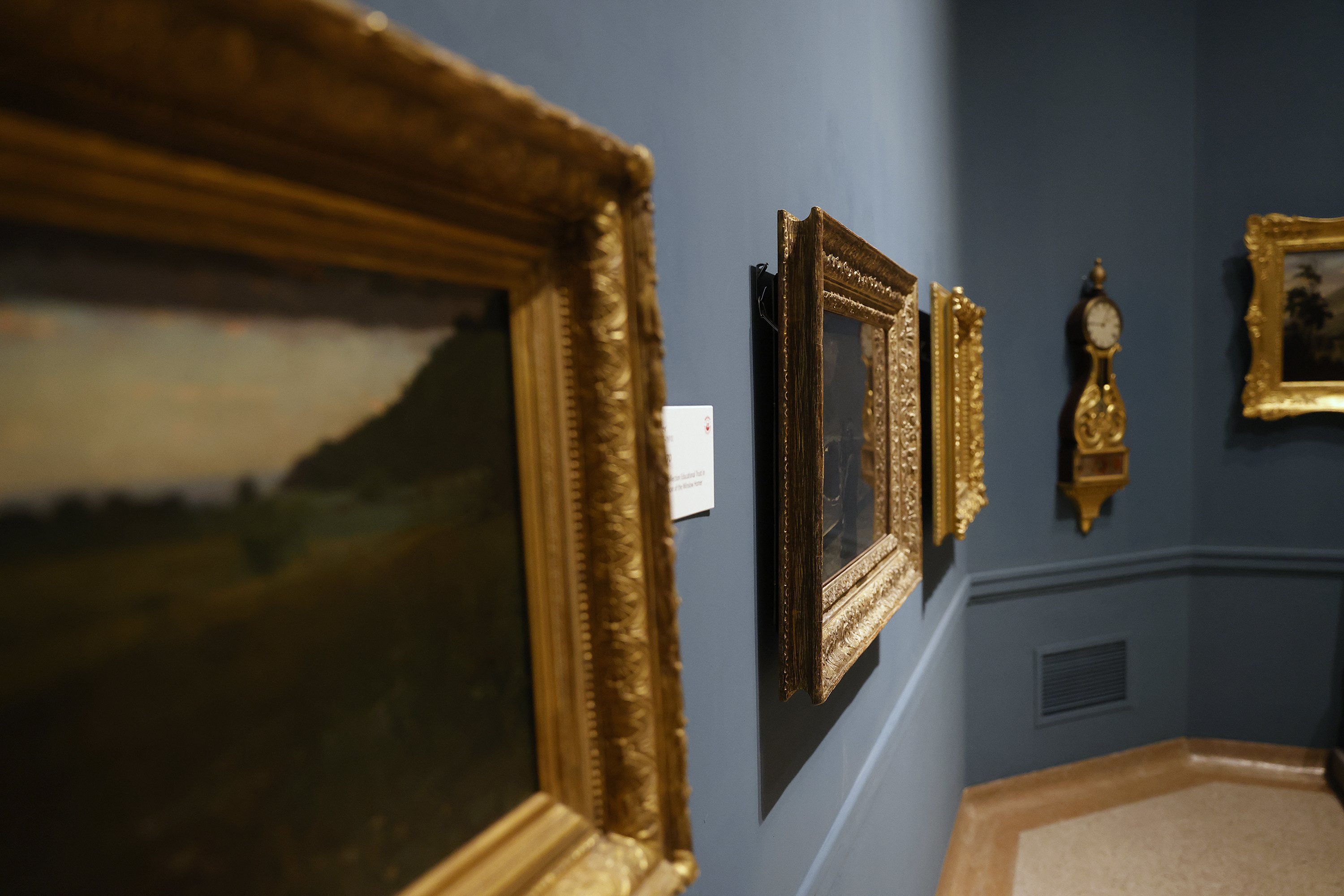
To prevent collections from deteriorating, museums around the world adopted a strict set of climate standards, based largely on research published in the 1970s by conservator Garry Thomson: aiming for 70 degrees plus or minus 2 degrees, and 50% relative humidity, plus or minus 5%, at all times. At the PMA, alarms used to go off if humidity reached 47% or 53%, Brown said.
The new guidelines recommend museums keep temperatures between about 60.8 and 77 degrees. Relative humidity should range from 40%-60% and should not fluctuate more than 10% in a 24-hour period. Tighter ranges can be implemented for particularly sensitive works.
First established in 2014, the Bizot Green Protocol was updated in late 2023 to include new evidence and tips to help museums implement the changes.
Despite growing support from a number of industry groups — including the Association of Art Museum Directors, which endorsed the protocol in October 2024 — implementation has been slow, according to Caitlin Southwick, founder of Ki Futures, the climate organization PMA partnered with. She said that while some high-profile museums have signed on, whether, and to what extent, they have actually changed their practices remains unclear.
“We really need more advocacy around this,” Southwick said. “It’s one thing to sign up for it, but it’s another thing completely to say ‘We’ve implemented it, we are using it and it’s safe.’ “

Erin Damon, PMA’s head of registrations and collections, said she was initially concerned that the wider ranges could hurt items in the collection or undermine other institutions’ willingness to lend items and exhibitions.
“You don’t want to be the one who breaks your collection,” she said.
While the wider ranges have spurred some new conversations between PMA and its lenders, no lenders have backed out of agreements, said spokesperson Marcie Parker Griswold.
Al Carver-Kubik, of the nonprofit Environment and Culture Partners, is currently working with eight American museums, from MoMA to the New Orleans Museum of Art, to measure the impacts and feasibility of expanded climate ranges.
He said museum professionals are “trained to be conservative,” so even if the new ranges are safe on paper, conservators may hesitate to try them out in real life.
“It’s a culture shift, a shift in mindset. It takes a lot of educating yourself and educating your staff in terms of how changing your environmental set points will or will not impact the long-term care of collections,” Carver-Kubik said. “It’s not as easy as just changing a thermostat.”
Many museums’ heating, ventilation and air-conditioning systems were designed and built to serve the traditional standards, so any attempts to shift the ambient conditions requires gradual testing to see what the system can effectively maintain, Carver-Kubik said.
SPATIAL REASONING
From a desk in the sub-basement, Brown, the sustainability head, can see the whole campus’ climate control systems. On a recent tour of the space, he stood before a screen that flickered with animated fans and filters, showing the flow of air and water from one wing to the next.
With the old standards, “you’d start living and dying over every tenth of a degree or percentage of humidity,” he said, speaking over the hum of fans and whoosh of air through ducts. “Now, all of the sudden, there’s a little bit of a swing (allowed).”
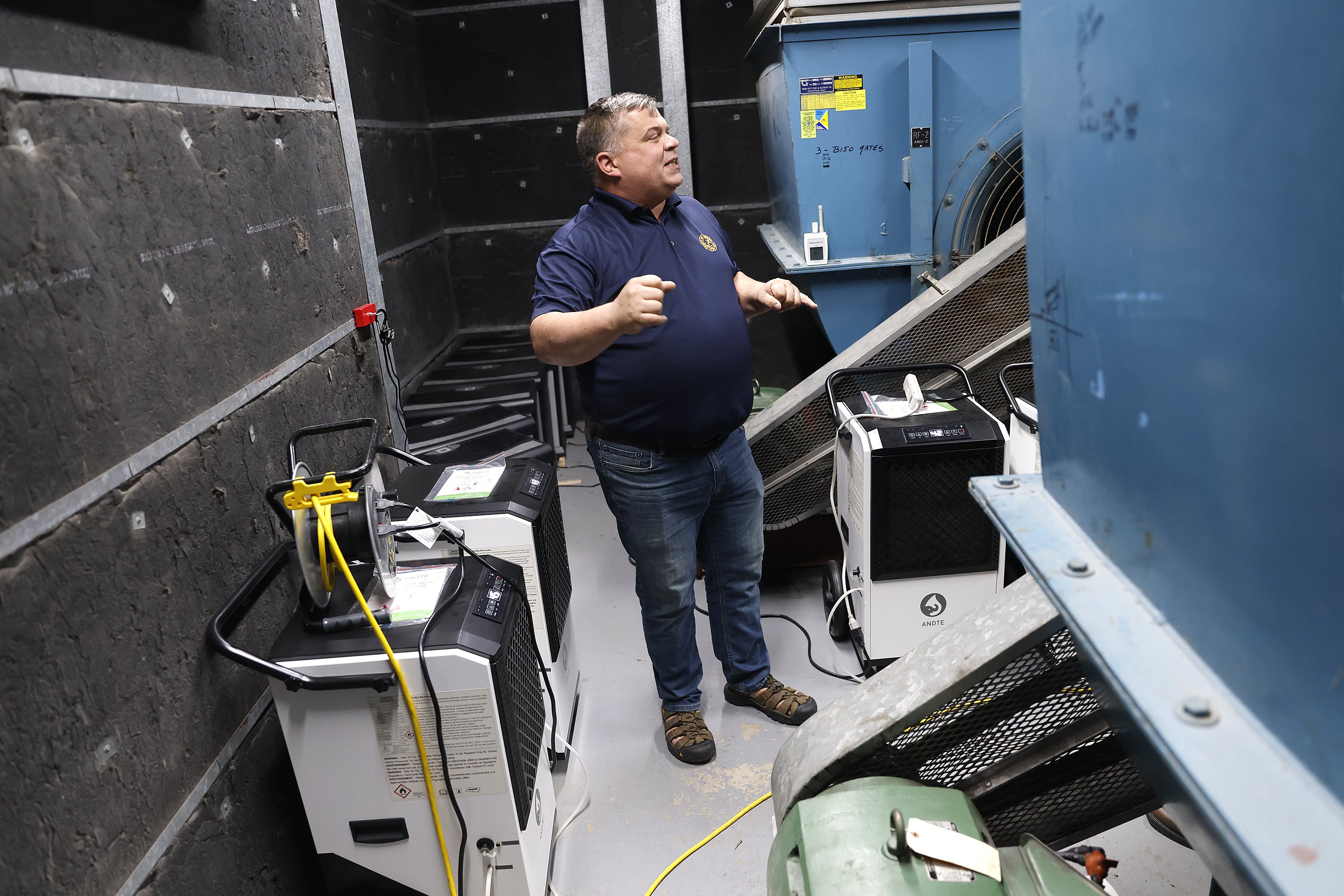
That room to swing is particularly beneficial for the PMA because of its mixture of buildings and its position near the Atlantic coast, he said.
The museum hosts more than 20,000 objects, including sculpture, decorative arts and works on paper, the latter of which makes up the largest component of the collection. Many of those works are held in the Charles Shipman Payson Building, where visitors enter from Free Street, which has “open pass-throughs all the way through” from the basement to the top floor.
That layout can mean having to humidify or heat one gallery while dehumidifying or cooling another — all while trying to ensure the areas in between remain in-range. The wider ranges reduce that need to run opposing systems, greatly reducing energy demand, Brown said.
In the winter, the PMA can now program its climate control system to kick on when temperatures fall below 67 degrees or humidity falls out of a 44%-46% range, Brown said. In the summer, those set points are 73 degrees and humidity between 54% and 56%.
“Everything is (built) around the ability of the space to preserve the art,” Brown said.