
Photos show Swiss glaciers' uncertain future as 'ambassadors of climate change'
RHONE GLACIER, Switzerland (AP) — Drip, drip. Trickle, trickle.
That’s the sound of water seeping from a sunbaked and slushy Swiss glacier that geoscientists are monitoring for signs of continued retreat by the majestic masses of ice under the heat of global warming.
Click to Gallery
The aftermath of the Birch Glacier collapse is visible in Blatten, Switzerland, June 11, 2025. (AP Photo/Matthias Schrader)
The aftermath of the Birch Glacier collapse is visible in Blatten, Switzerland, June 11, 2025. (AP Photo/Matthias Schrader)
The aftermath of the Birch Glacier collapse is visible in Blatten, Switzerland, June 11, 2025. (AP Photo/Matthias Schrader)
The sun shines over the melting Rhone Glacier near Goms, Switzerland, June 10, 2025. (AP Photo/Matthias Schrader)
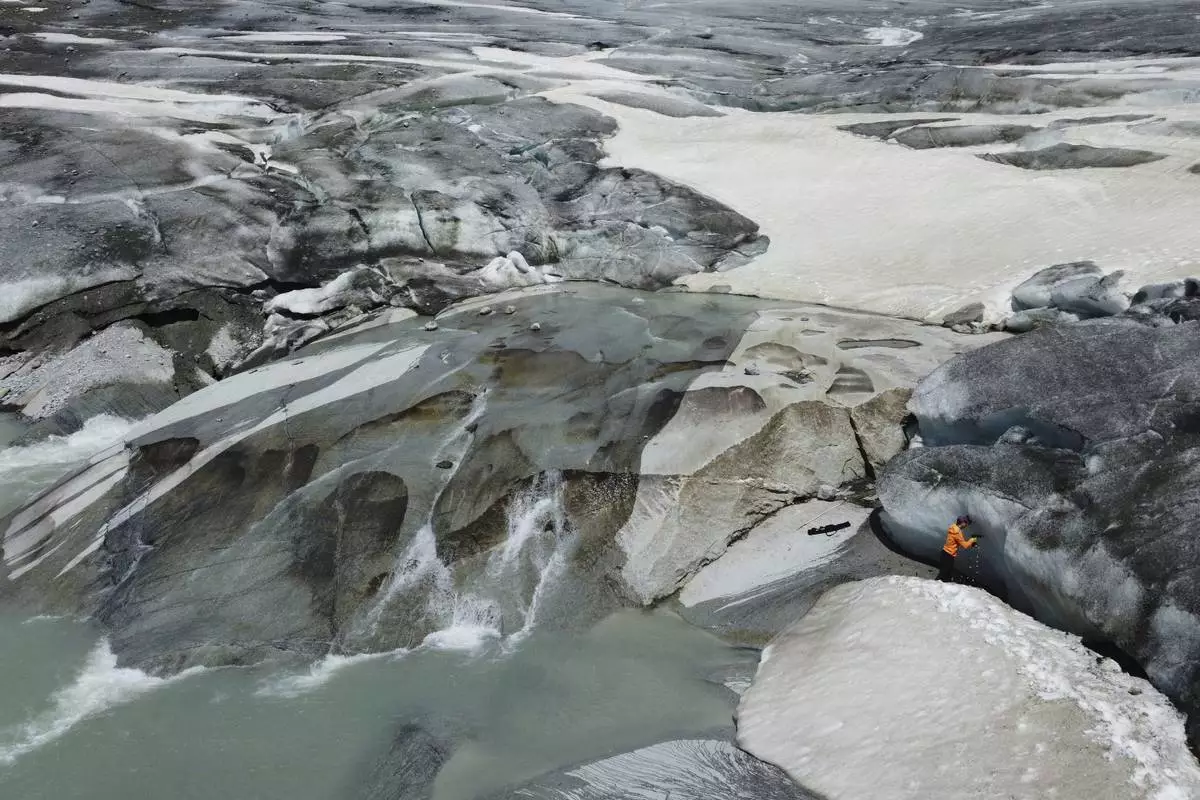
Water flows from the melting Rhone Glacier near Goms, Switzerland, June 10, 2025. (AP Photo/Matthias Schrader)
Workers prepare sheets to cover the Rhone Glacier near Goms, Switzerland, June 10, 2025. (AP Photo/Matthias Schrader)
Water drips from a melting chunk of ice that originated from the Rhone Glacier near Goms, Switzerland, June 10, 2025. (AP Photo/Matthias Schrader)
Matthias Huss, of the Federal Institute of Technology in Zurich and glacier monitoring group GLAMOS, and Monica Ursina Jaeger prepare a camera at the Rhone Glacier near Goms, Switzerland, June 10, 2025. (AP Photo/Matthias Schrader)
Matthias Huss, of the Federal Institute of Technology in Zurich and glacier monitoring group GLAMOS, drills holes into the Rhone Glacier near Goms, Switzerland, June 10, 2025. (AP Photo/Matthias Schrader)
Matthias Huss, of the Federal Institute of Technology in Zurich and glacier monitoring group GLAMOS, right, drills holes into the Rhone Glacier near Goms, Switzerland, June 10, 2025. (AP Photo/Matthias Schrader)
Matthias Huss, of the Federal Institute of Technology in Zurich and glacier monitoring group GLAMOS, drills holes into the Rhone Glacier near Goms, Switzerland, June 10, 2025. (AP Photo/Matthias Schrader)
Matthias Huss, of the Federal Institute of Technology in Zurich and glacier monitoring group GLAMOS, arrives at the Rhone Glacier near Goms, Switzerland, June 10, 2025. (AP Photo/Matthias Schrader)
Matthias Huss, of the Federal Institute of Technology in Zurich and glacier monitoring group GLAMOS, and Monica Ursina Jaeger arrive at the Rhone Glacier near Goms, Switzerland, June 10, 2025. (AP Photo/Matthias Schrader)
Matthias Huss, of the Federal Institute of Technology in Zurich and glacier monitoring group GLAMOS, arrives at the Rhone Glacier near Goms, Switzerland, June 10, 2025. (AP Photo/Matthias Schrader)
Matthias Huss, of the Federal Institute of Technology in Zurich and glacier monitoring group GLAMOS, and Monica Ursina Jaeger take measurements at the Rhone Glacier near Goms, Switzerland, June 10, 2025. (AP Photo/Matthias Schrader)
Matthias Huss, of the Federal Institute of Technology in Zurich and glacier monitoring group GLAMOS, stands at the Rhone Glacier that is partially covered with sheets near Goms, Switzerland, June 10, 2025. (AP Photo/Matthias Schrader)
In recent years, glaciologists like Matthias Huss of the Federal Institute of Technology in Zurich, known as ETHZ, and others have turned to dramatic measures to help protect glaciers like the Rhone Glacier, which feeds into the river of the same name that runs through Switzerland and France.
One of those desperate steps involves using giant sheets to cover the ice like blankets to slow the melt.
Switzerland is continental Europe’s glacier capital, with some 1,400 that provide drinking water, irrigation for farmland in many parts of Europe including French wine country, and hydropower that generates most of the country’s electricity.
The number has been dwindling. The Alpine country has already lost up to 1,000 small glaciers, and the bigger ones are increasingly at risk.
Huss hosted The Associated Press for a visit to the sprawling glacier this month, as he carried out his first monitoring mission as summer temperatures accelerate the thaw. Under normal conditions, glaciers can regenerate in the winter, but climate change is threatening that.
“I always say glaciers are the ambassadors of climate change because they can spread this message in a very understandable way,” Huss said. “They also cause good feelings because glaciers are beautiful. We know them from our holidays.”
The vast expanse of blue, gray and white ice is riddled with cracks and grooves, and Huss says his teams at the Swiss GLAMOS glacier monitoring group have spotted a new phenomenon in Switzerland: holes appearing beneath the surface that at times widen so much that the ice above collapses.
Huss uses an auger to bore into the ice, sending frosty chips upward as if from a gushing fountain. It’s part of a process that involves using stakes and poles to track ice loss from melting.
Huss monitors melting not just at the top but also from the base of glaciers.
“Normally glaciers melt from the top because of the warm air, because of their radiation from the sun. But in recent years we realized at several sites that there is a substantive melt from the bottom,” Huss said. “If there are some channels in the ice through which air is circulating, this can excavate big holes under the ice.”
The Alps were covered with ice 20,000 years ago, but no more. It’s the same story elsewhere. Experts have warned that some two-thirds of the world’s glaciers are set to disappear by the end of this century
Huss says only humans can help save them.
“It’s difficult to save this very glacier because it could only be saved — or at least made to retreat slower — by bringing down CO2 emissions,” he said. ‘But everybody can contribute on their own to reduce CO2 emissions as far as possible.”
“This will not help this glacier immediately, but it will help all glaciers in the long range,” he added. “This is the important thing that we should think of if we see this melting ice and this big retreat — that it’s time to act now.”
The concerns about Switzerland’s glaciers intensified recently after the southwestern village of Blatten, tucked near the Birch Glacier, was largely destroyed by a slide of rock and glacier ice in May. The village had been evacuated ahead of the slide, which covered dozens of homes and buildings and left just a few rooftops visible.
A review of data showed that the Birch Glacier was a rarity in that it has been advancing while most glaciers have been receding. And its advance had been increasing in recent years, to the point that it was flowing at about 10 meters (about 30 feet) per day shortly before the collapse — a rate Huss called “completely unsustainable.”
Huss said the landslide was triggered by rocks piling onto the glacier, though he also called Birch’s advance a “precursor.”
The main takeaway from the Birch Glacier collapse, Huss says, is that “unexpected things happen.”
“If you ask me, like three weeks ago, nobody would have guessed that the whole village is going to be destroyed,” he said. “I think this is the main lesson to be learned, that we need to be prepared.”
AP journalist Jamey Keaten in Geneva contributed to this report.
The Associated Press’ climate and environmental coverage receives financial support from multiple private foundations. AP is solely responsible for all content. Find AP’s standards for working with philanthropies, a list of supporters and funded coverage areas at AP.org.

The aftermath of the Birch Glacier collapse is visible in Blatten, Switzerland, June 11, 2025. (AP Photo/Matthias Schrader)
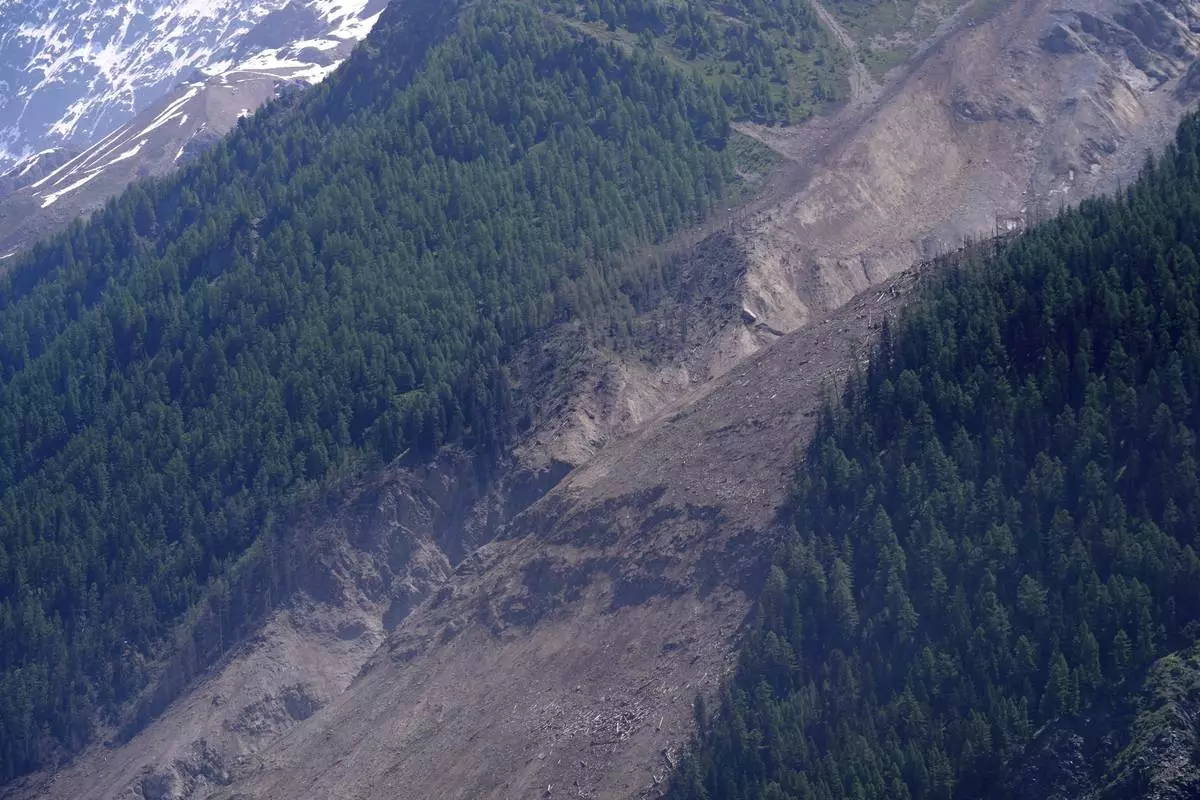
The aftermath of the Birch Glacier collapse is visible in Blatten, Switzerland, June 11, 2025. (AP Photo/Matthias Schrader)
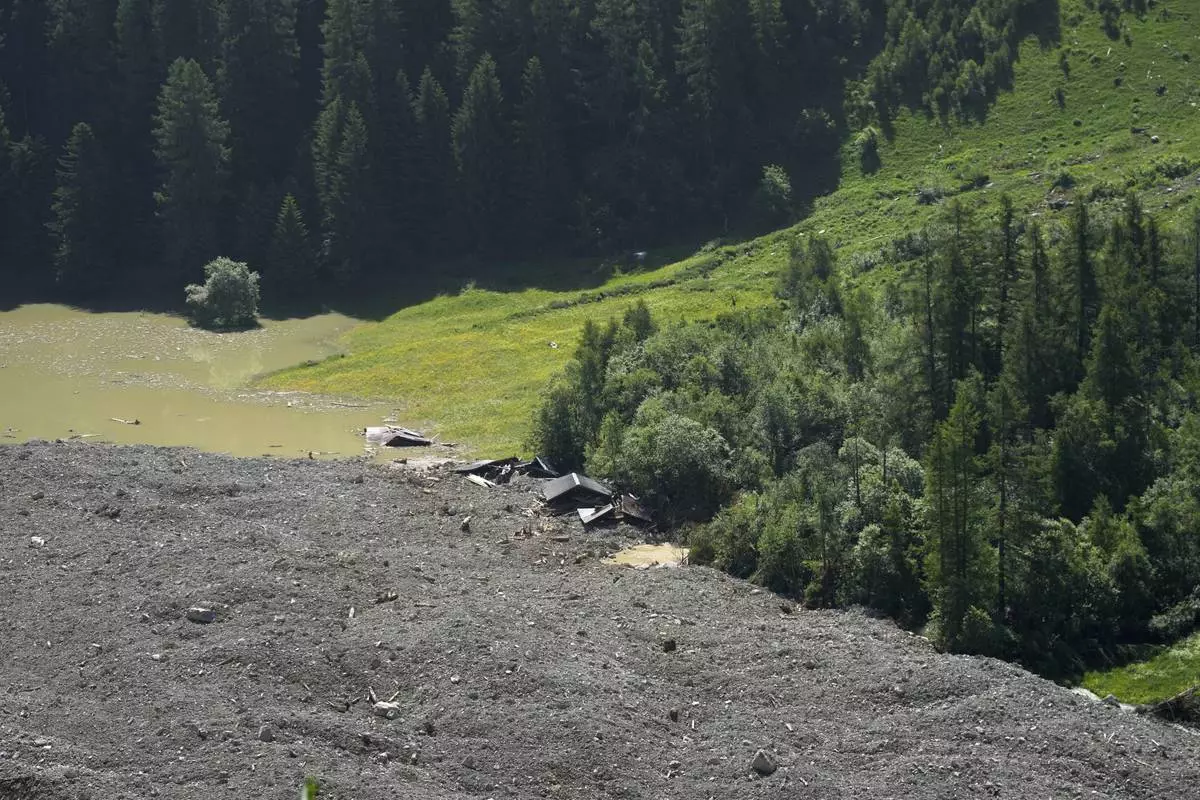
The aftermath of the Birch Glacier collapse is visible in Blatten, Switzerland, June 11, 2025. (AP Photo/Matthias Schrader)
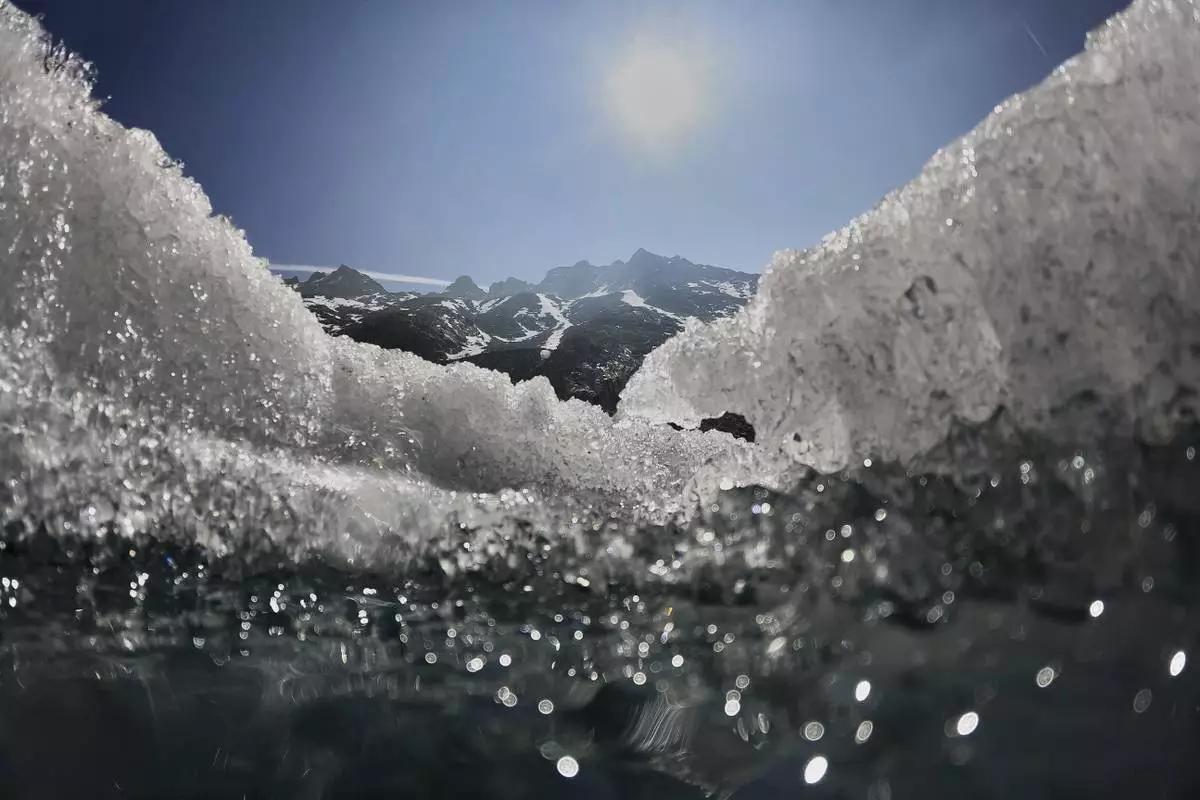
The sun shines over the melting Rhone Glacier near Goms, Switzerland, June 10, 2025. (AP Photo/Matthias Schrader)
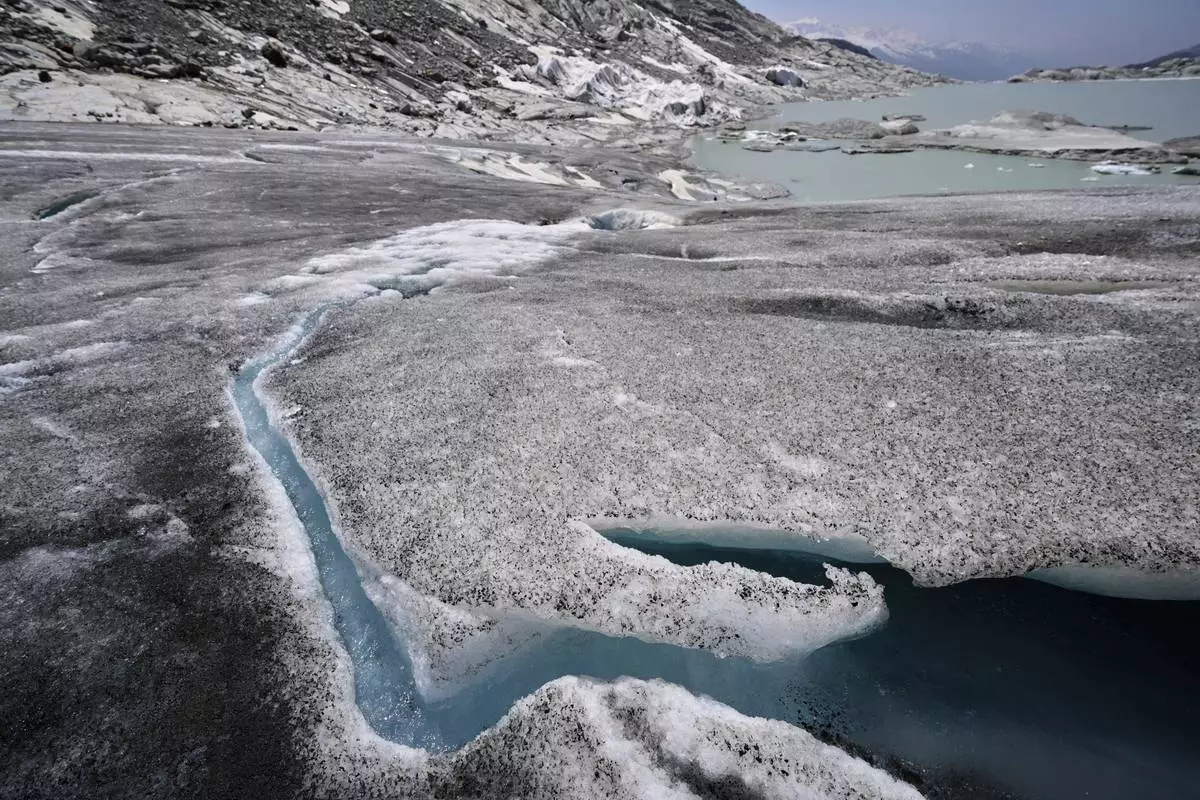
Water flows from the melting Rhone Glacier near Goms, Switzerland, June 10, 2025. (AP Photo/Matthias Schrader)
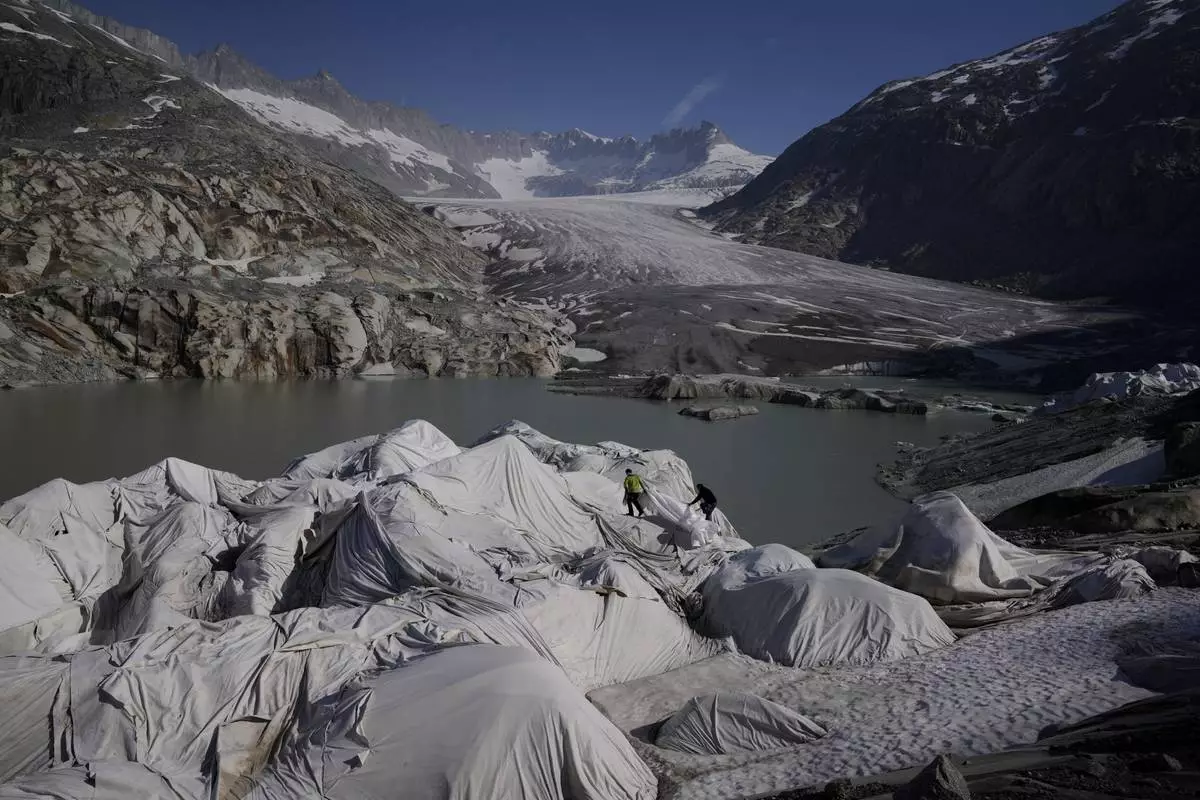
Workers prepare sheets to cover the Rhone Glacier near Goms, Switzerland, June 10, 2025. (AP Photo/Matthias Schrader)
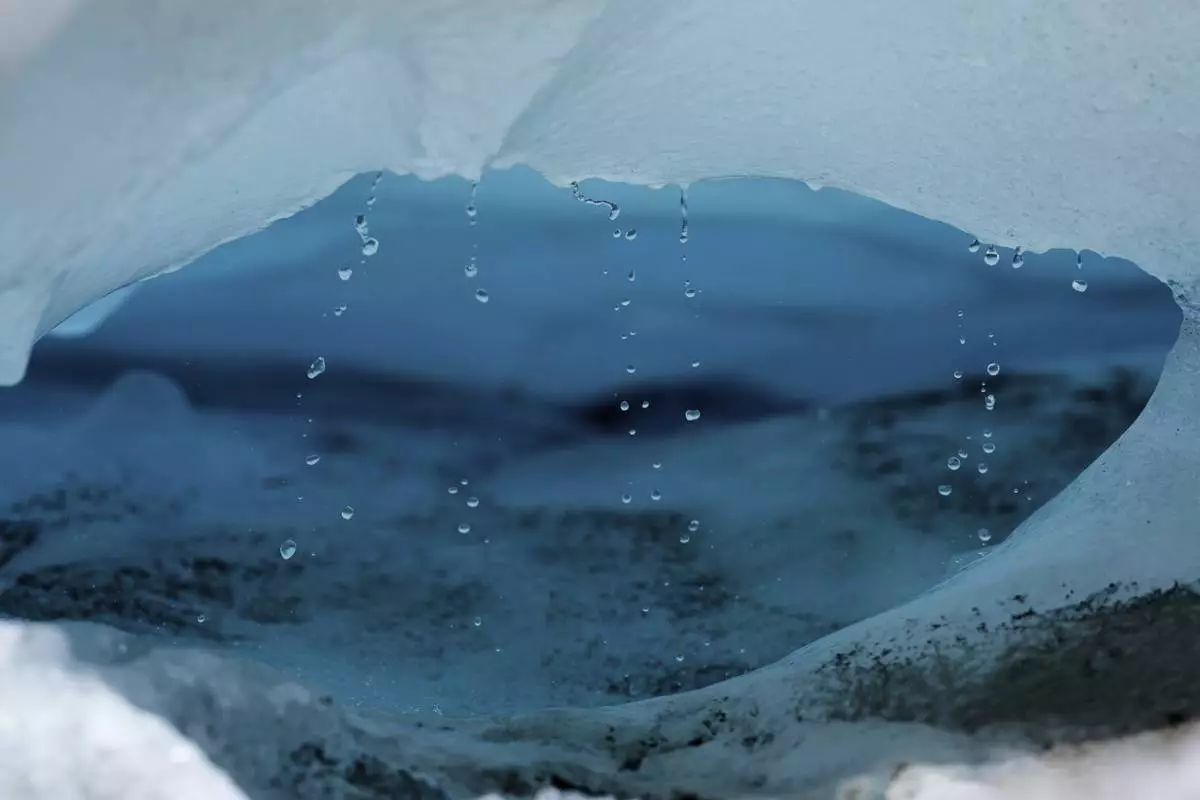
Water drips from a melting chunk of ice that originated from the Rhone Glacier near Goms, Switzerland, June 10, 2025. (AP Photo/Matthias Schrader)
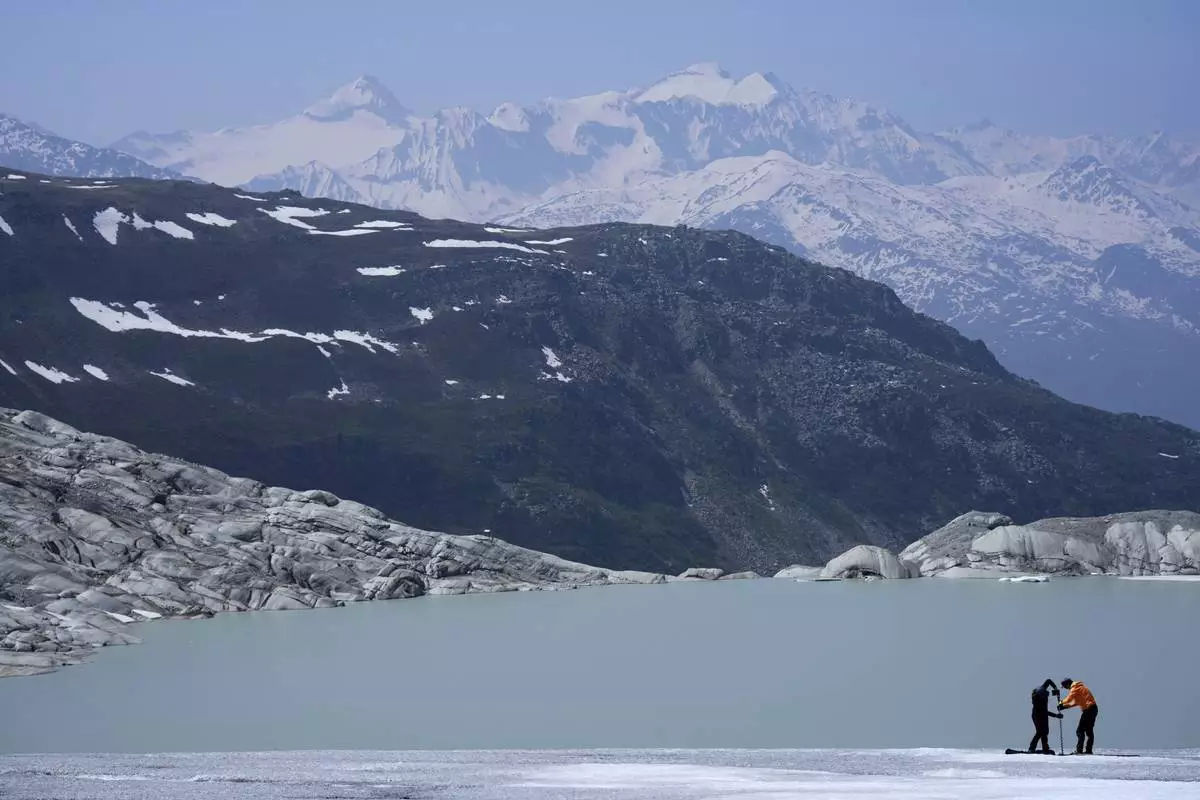
Matthias Huss, of the Federal Institute of Technology in Zurich and glacier monitoring group GLAMOS, and Monica Ursina Jaeger prepare a camera at the Rhone Glacier near Goms, Switzerland, June 10, 2025. (AP Photo/Matthias Schrader)
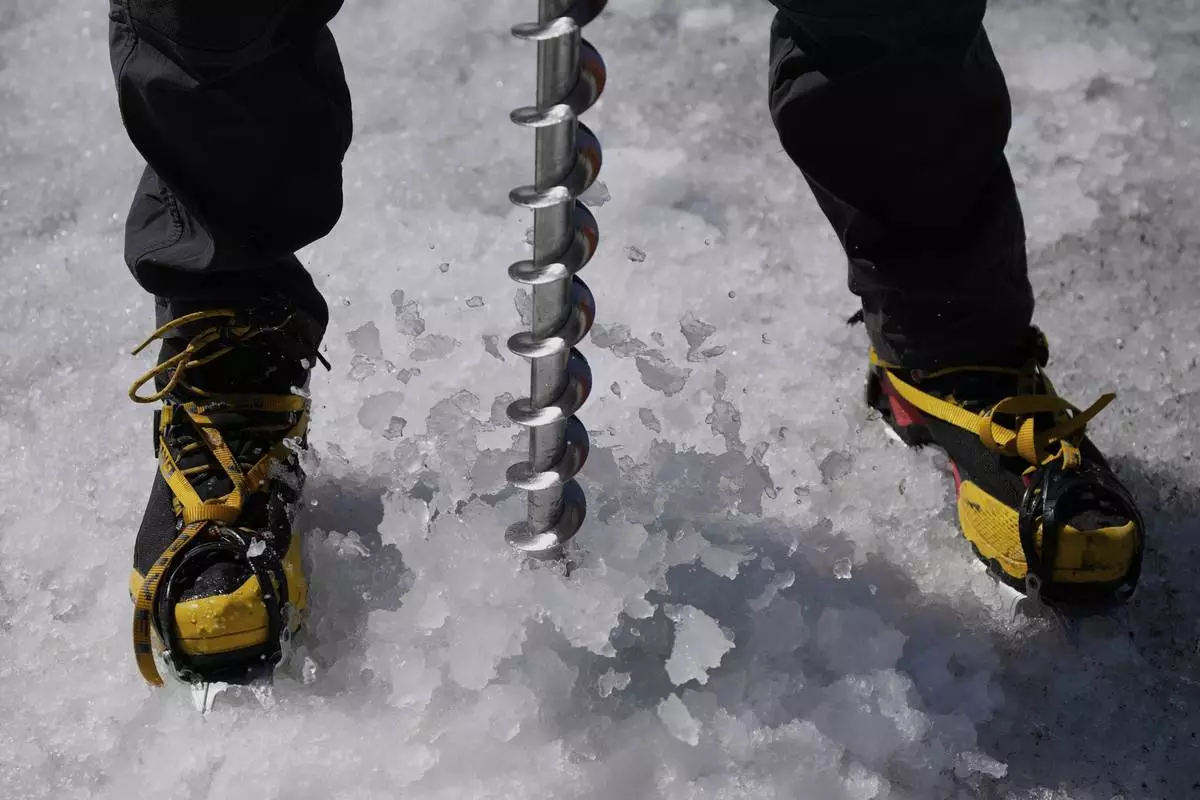
Matthias Huss, of the Federal Institute of Technology in Zurich and glacier monitoring group GLAMOS, drills holes into the Rhone Glacier near Goms, Switzerland, June 10, 2025. (AP Photo/Matthias Schrader)
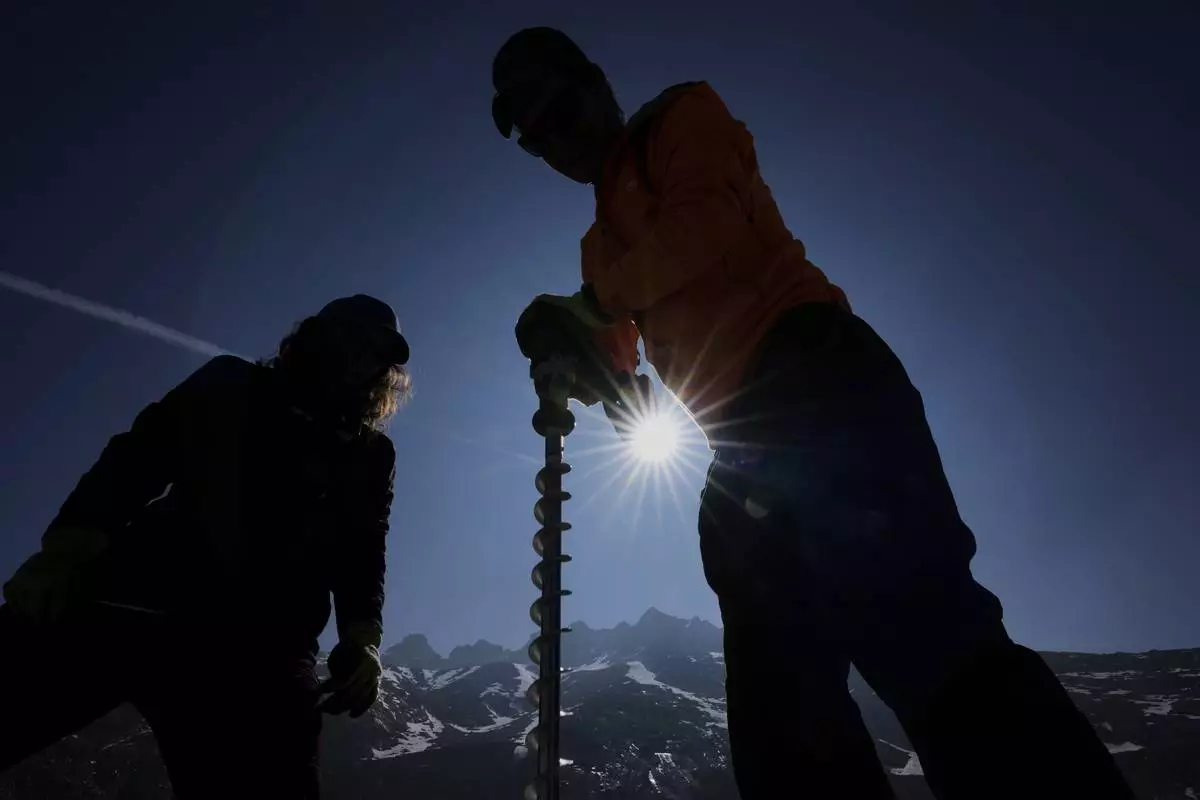
Matthias Huss, of the Federal Institute of Technology in Zurich and glacier monitoring group GLAMOS, right, drills holes into the Rhone Glacier near Goms, Switzerland, June 10, 2025. (AP Photo/Matthias Schrader)
Matthias Huss, of the Federal Institute of Technology in Zurich and glacier monitoring group GLAMOS, drills holes into the Rhone Glacier near Goms, Switzerland, June 10, 2025. (AP Photo/Matthias Schrader)
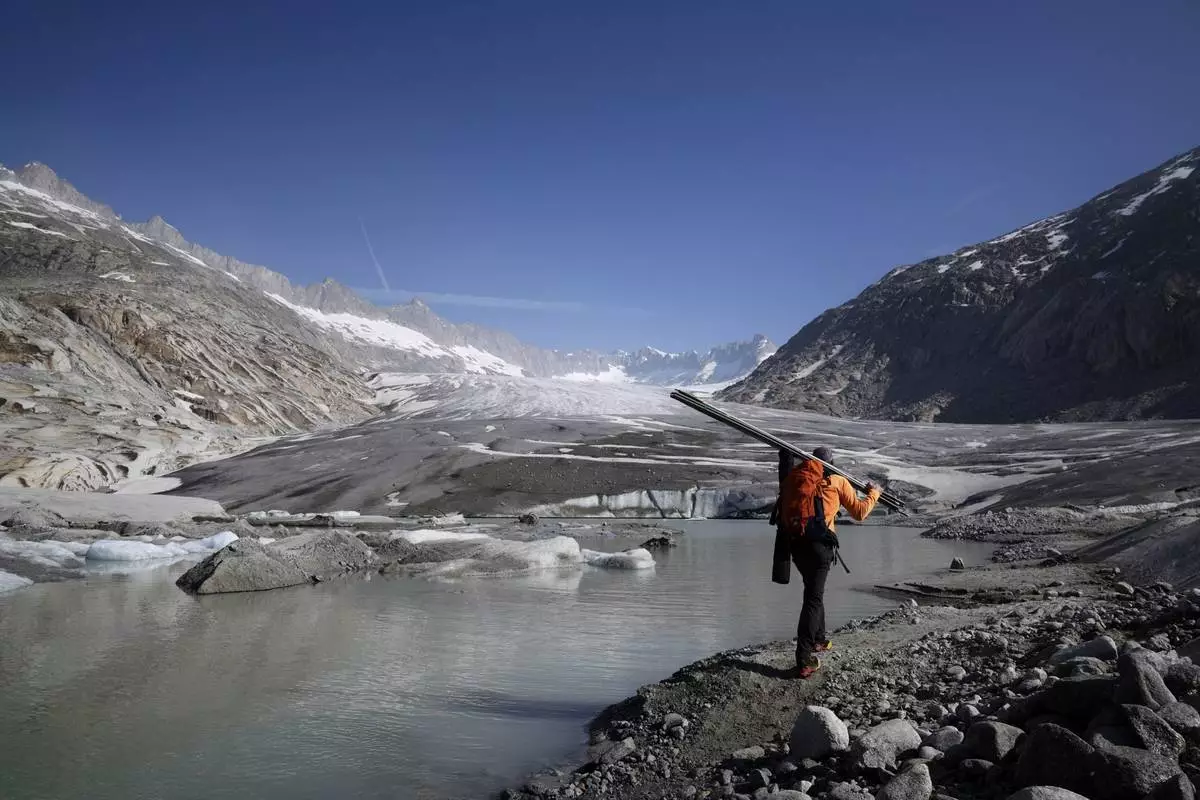
Matthias Huss, of the Federal Institute of Technology in Zurich and glacier monitoring group GLAMOS, arrives at the Rhone Glacier near Goms, Switzerland, June 10, 2025. (AP Photo/Matthias Schrader)
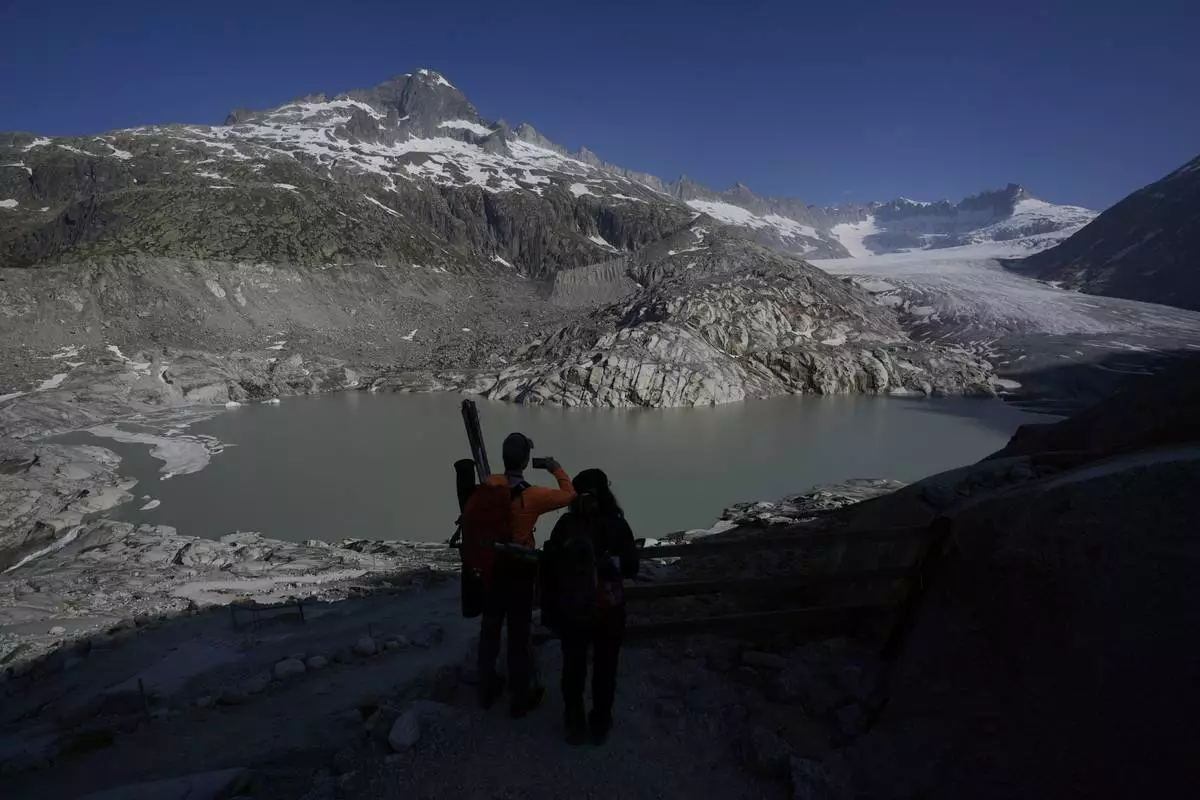
Matthias Huss, of the Federal Institute of Technology in Zurich and glacier monitoring group GLAMOS, and Monica Ursina Jaeger arrive at the Rhone Glacier near Goms, Switzerland, June 10, 2025. (AP Photo/Matthias Schrader)
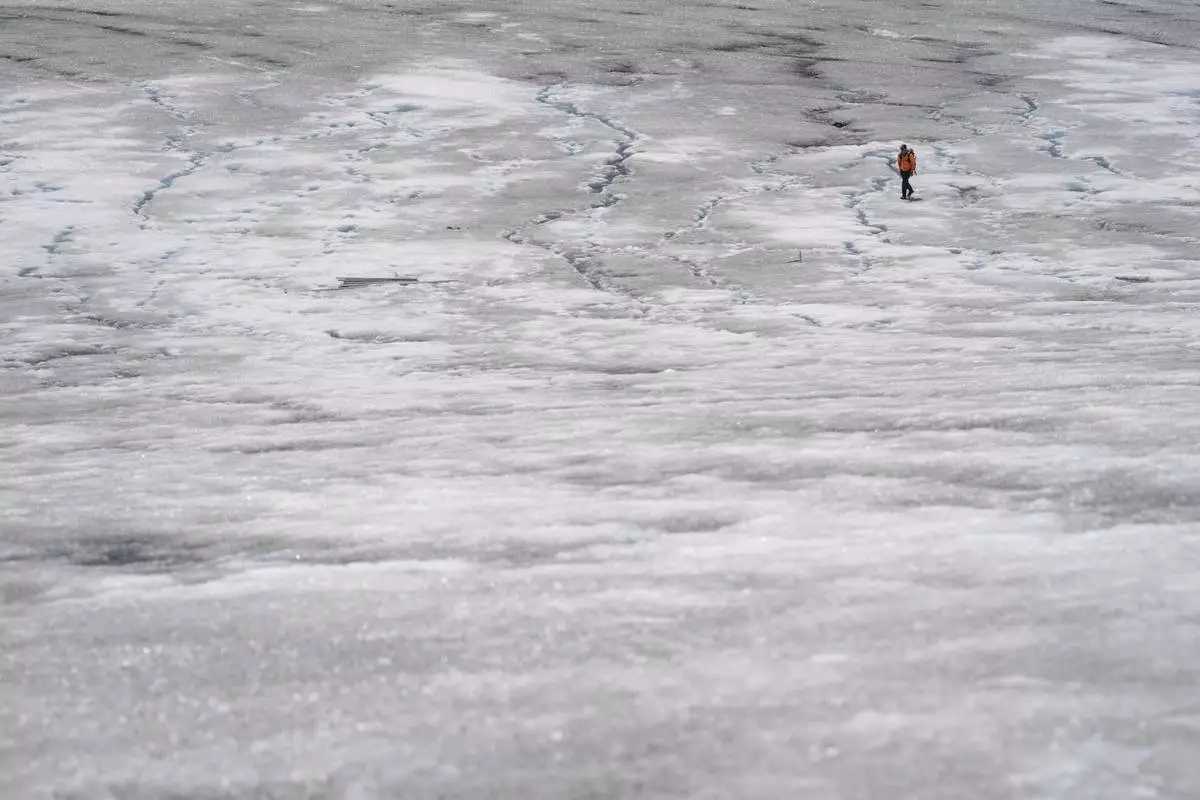
Matthias Huss, of the Federal Institute of Technology in Zurich and glacier monitoring group GLAMOS, arrives at the Rhone Glacier near Goms, Switzerland, June 10, 2025. (AP Photo/Matthias Schrader)
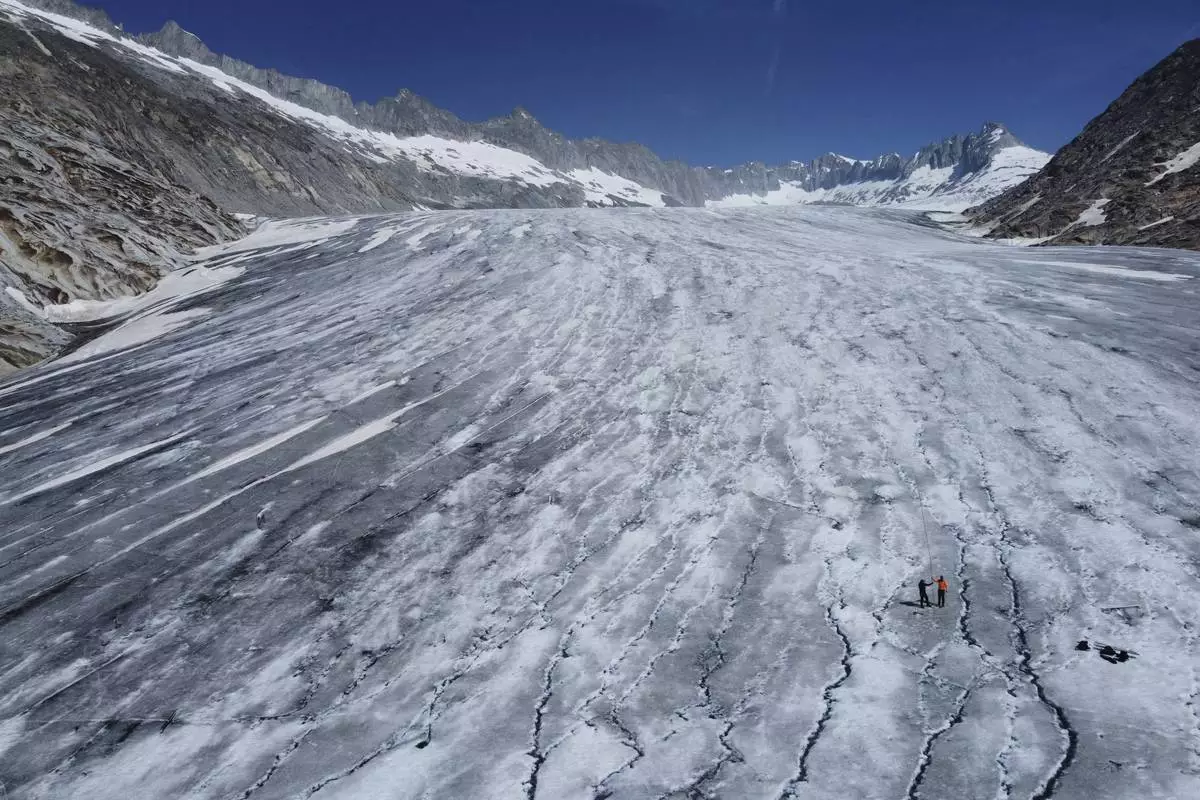
Matthias Huss, of the Federal Institute of Technology in Zurich and glacier monitoring group GLAMOS, and Monica Ursina Jaeger take measurements at the Rhone Glacier near Goms, Switzerland, June 10, 2025. (AP Photo/Matthias Schrader)

Matthias Huss, of the Federal Institute of Technology in Zurich and glacier monitoring group GLAMOS, stands at the Rhone Glacier that is partially covered with sheets near Goms, Switzerland, June 10, 2025. (AP Photo/Matthias Schrader)
WELLINGTON, New Zealand (AP) — It might not have been the shot heard around the world but it was a goal that reverbrated 13,000 kilometers (8,000 miles) away when Auckland City FC scored Tuesday to draw 1-1 with Boca Juniors at the FIFA Club World Cup.
Christian Gray, a trainee teacher at Mt. Roskill Intermediate School in Auckland, rose to meet the corner of Jerson Lagos, a barber, and headed in the equalizer as the mostly-amateur team from New Zealand held Diego Maradona’s fasmous old Argentine club to a draw.
Auckland lost 10-0 to Bayern Munich and 6-0 to Benfica in its first two matches, leading to questions over FIFA’s decision to allow a team of part-timers from Oceania, it’s smallest confederation, to compete with the professional superstars of world soccer.
Even Auckland City’s local paper, the New Zealand Herald, joined the critics, suggesting the team had “damaged Auckland City FC’s proud 20-year legacy” in FIFA events.
“It’s been a trying few weeks,” the Herald reported after two defeats. “In the past, Auckland City have been renowned for punching above their weight on the global stage, while usually having a couple of outstanding individuals. That hasn’t quite been the case here.”
But Auckland City left its best to last, producing an outstanding performance to the satisfaction of FIFA president Gianni Infantino, who was among the crowd at the match in Nashville.
“It’s been a tough trip, you know, we’ve had some tough results but just happy for the team,” Gray said. “I think we deserve it. We got a little bit of respect back I hope.
“We rely on volunteers, we don’t have a lot of money so I’m just happy that they’re happy.”
The New Zealand media hasn’t paid close attention to the Club World Cup, mostly focused on the end of the Super Rugby competition. Soccer takes a back seat in rugby-mad New Zealand. But this result got prominant coverage.
Radio New Zealand described the draw with Boca Juniors as “stunning.”
“Thanks to Gray’s heroics and some incredibly committed defense, Auckland City managed to pull off a result that will reverberate strongly around the football world,” RNZ said.
The New Zealand Herald branded it “remarkable” and “famous.”
“The squad of real estate agents, teachers, sales reps, tradesmen and students would have hoped they could make a mark on the world stage while knowing it was probably impossible,” the newspaper wrote. “But they have done it — against massive odds.
“Anyone around the football world coming across this result will be rubbing their eyes in disbelief. But it’s true. It’s all true.”
The Herald said Auckland City “will leave the tournament on a bit of a high, knowing that the painful journey has been worthwhile.”
A leading local news website, Stuff, said Auckland City “were rank outsiders against one of South America’s most famous institutions.”
“Most of their team is comprised of amateur players who will be returning to their regular jobs at home. But they went toe to toe against one of South America’s largest professional clubs that was home to Argentine icon Diego Maradona.”
Television New Zealand said Auckland City had been “humiliated” in its first two matches at the World Cup but their performance on Tuesday was “heroic.”
It’s unlikely a story of the same magnitude will be written in future. From now on Oceania — which includes the likes of New Zealand, Fiji and the Solomon Islands — will be represented by a professional team.
AP soccer: https://apnews.com/hub/soccer

Auckland City’s Christian Gray, center, celebrates after scoring his side’s opening goal with teammates during the Club World Cup Group C soccer match between Auckland City and Boca Juniors in Nashville, Tenn., Tuesday, June 24, 2025. (AP Photo/Johnnie Izquierdo)

Auckland City’s Nathan Garrow, right, and Auckland City’s Jerson Lagos celebrate after the Club World Cup Group C soccer match between Auckland City and Boca Juniors in Nashville, Tenn., Tuesday, June 24, 2025. (AP Photo/George Walker IV)

Auckland City’s Christian Gray, second right, celebrates after scoring his side’s opening goal with teammates during the Club World Cup Group C soccer match between Auckland City and Boca Juniors in Nashville, Tenn., Tuesday, June 24, 2025. (AP Photo/Johnnie Izquierdo)

Auckland City’s Adam Mitchell, left, and Jerson Lagos celebrate after the Club World Cup Group C soccer match between Auckland City and Boca Juniors in Nashville, Tenn., Tuesday, June 24, 2025. (AP Photo/George Walker IV)

Auckland City’s Christian Gray, center left, celebrates after scoring his side’s opening goal during the Club World Cup Group C soccer match between Auckland City and Boca Juniors in Nashville, Tenn., Tuesday, June 24, 2025. (AP Photo/George Walker IV)