
“Peace”
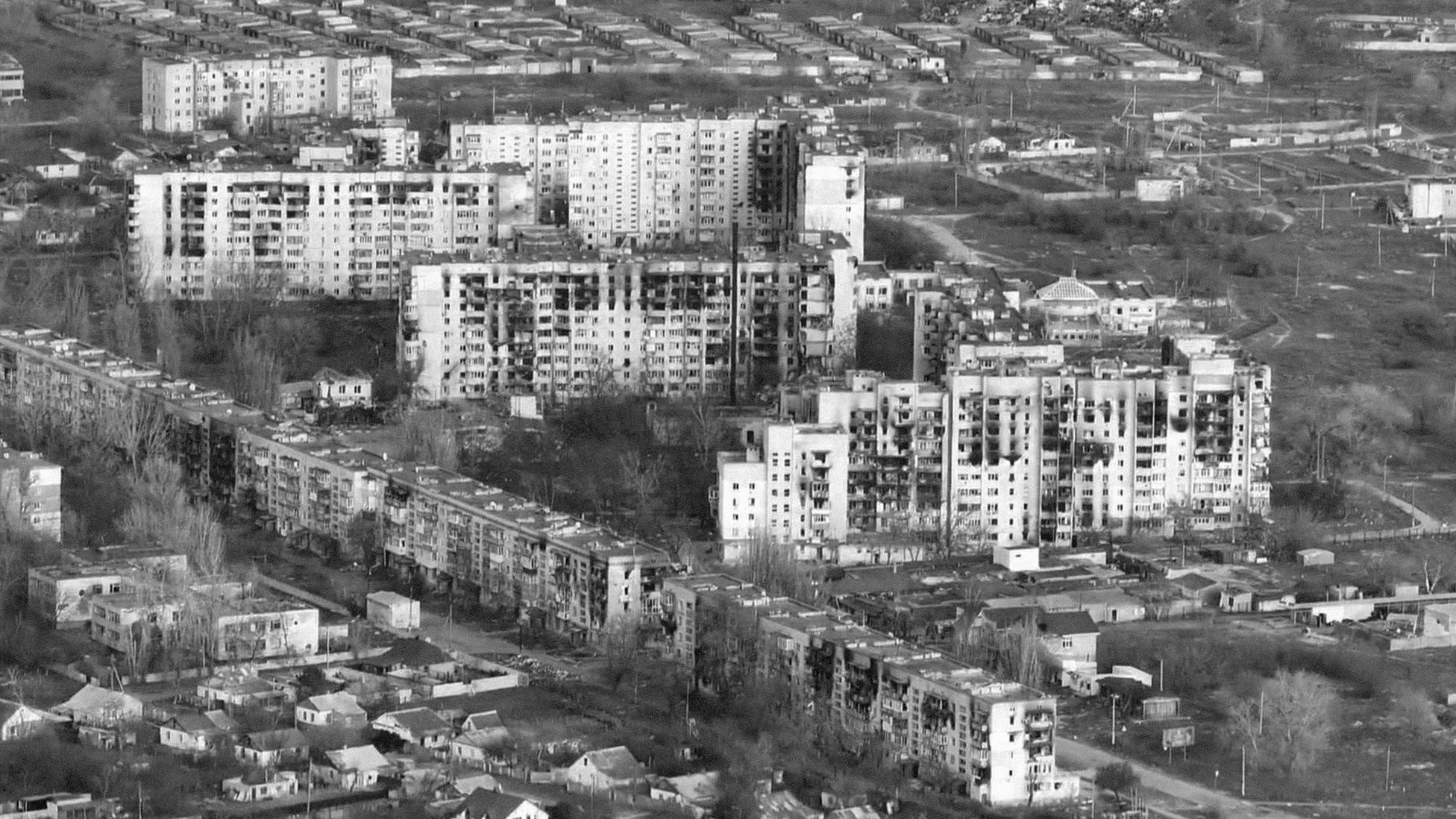
Young demonstrators across Europe, many with legitimate grievances about jobs and housing, have unexepectedly begun talking about “peace” in the past few weeks. Protestors in Italy seemed to lump together wars in the Middle East and Ukraine, and are calling on their government to stop spending money on weapons, including in Ukraine. Politicians have used the same narrative. In Bulgaria, the prime minister has also called for a halt in aid to Ukraine; the issue has become part of the Bulgarian presidential campaign. Both Alice Weidel, leader of the far-right Alliance fur Deutschland (AfD) and Marine LePen, leader of the French far-right, have made similar arguments: stop sending weapons so that there will be “peace.”
I understand why this simple formula is appealing. But it is also misleading. Those using those slogans are not asking what would happen if Europeans really did stop sending money and weapons to Ukraine. Since January of 2025, the US has not made any new material contribution to the war. Thanks entirely to support from Europe and others, including Canada, Australia and Japan, Ukraine has defended itself anyway. Ukrainians are incredibly innovative, and have they built the world’s highest-tech drone industry. But without funding, sooner or later, the Ukrainian frontline would break. And then what?
One thing is certain: the fighting would not end, and violence might grow worse. Ukraine would collapse into guerilla war. Europe would have a lawless zone, an Afghanistan, on its borders. Russia would inflict the same kind of repression on Kyiv and central Ukraine that it has applied in occupied western Ukraine, murdering leaders, setting up concentration camps, building a police state, kidnapping children. Millions of refugees would stream into Europe to escape the moden equivalent of a Nazi occupation. The Russian army, after capturing Ukrainian resources and maybe even the Ukrainian defense industry, would be reinvigorated, and ready to move farther into more countries that Putin considers to be part of his empire.
Would this be “peace”? Would Europeans be able to stop spending money on weapons? No. We would face an uglier, more frightening war, one that would require Europeans to double or triple their military spending. Instead of spending budgets on health care or education, Europeans would have to completely re-imagine their security. Without the Ukrainian army protecting Europe from Russia, Europeans would have to change their way of life entirely.
Peace will come someday, but not from cutting support for Ukraine. The war will end when Putin gives up his dream of absorbing Ukraine into Russia, when he understands that he cannot win. Tragically, the Trump administration has fed his dream, and prolonged the war by negotiating business deals that encourage Putin to keep fighting. But there are limits to what Russia can absorb, and how many lives they can throw away.
Oleshky
Over the past few days, the Russians agreed to a humanitarian ceasefire in the area around the occupied town of Oleshky, where people have been cut off from food and medicine for many months. Ukrainians had asked for this ceasefire many times; the Russians only agreed after the intervention of the Pope and, apparently, Melania Trump. Zarina Zabrisky wrote an excellent article for the Atlantic about the politics of the ceasefire, pointing out that only Russian-approved journalists (from the US, only the American organization Newsmax) were being allowed to tell the story. The Russians appeared to be preparing a propaganda campaign, falsely blaming Ukraine for the tragedy the town has suffered. This story is not over yet, but the Russian propaganda effort seems to have been undermined by incredible photographs of the inhabitants of Oleshky being warmly welcomed back to Ukraine. The story is not over; right now we can only hope that everyone who wants to come back to Ukraine arrives safely.
With Bill Kristol
Discussing Ukraine, Venezuela, the midterms and “Empire of Grift,” my Atlantic cover story
Also, with Preet Bharara
No, I cannot predict the results of the midterms! But we discussed some scenarios…
The Kleptocracy Tracker
Continuing to monitor conflicts of interest, ostentatious emoluments, outright corruption and policy changes that will facilitate outright corruption. (Read my original article, Kleptocracy Inc and check out the SNF Agora Institute chart)
October 16
Joe Popolo, the U.S. ambassador to the Netherlands, donated $1 million toward the White House ballroom about two months after Trump appointed him to the post.
October 19
Ric Grenell, a Trump adviser and former head of the Kennedy Center, offered Turkish billionaire Turhan Mildon (the husband of fellow Trump adviser Alina Habba) access to the president in exchange for a $6 million donation to the center. Mildon transferred the funds, but the money never reached the center.
October 22
The Department of Commerce will invest $175 million from a research and development fund it administers in Helion, a speculative fusion energy company. Helion’s backers include Sam Altman, Peter Thiel, and Josh Kushner, the brother of Trump’s son-in-law, Jared Kushner.
Venezuelan billionaire banker Julio Herrera Velutini was pardoned for his 2025 campaign finance conviction after he donated $3.5 million to a pro-Trump super PAC and hired Alina Habba on a four-year, $50 million contract.
Nearly 200 people pardoned for charges stemming from January 6 have filed civil lawsuits seeking millions of dollars from the federal government, alleging unfair prosecution. The suits offer a possible new path for rioters to receive taxpayer money after the Trump administration’s $1.8 billion weaponization slush fund failed.
October 24
The Trump administration has rolled back pollution standards and environmental regulations, including by exempting 202 facilities from new Clean Air Act rules, benefiting industries that donated to Trump’s causes including AdvaMed—a medical-device trade group that gave $125,000 to Trump’s inauguration fund and $1 million to MAGA Inc. before the administration exempted 40 sterilizer facilities from rules the group had lobbied against.
October 26
Republican campaigns and political groups have spent nearly $3 million at Trump businesses since the start of the president’s second term, primarily at Mar-a-Lago and Trump National Doral.
Trump’s personal holdings in oil and gas stocks have nearly doubled in value over the past year and are now worth between $22.5 million and $81.6 million. The increase follows millions of dollars in new purchases this year as the war in Iran sent energy prices soaring.
October 27
After attending Donald Trump Jr.’s wedding and paying for its afterparty, Russian businessman and Putin ally Umar Kremlev joined the president’s son on a hunting trip in Mongolia. He brought along Arthur Martirosov, another Russian businessman and a partner in Voskhod, a US-sanctioned venture capital fund.
In recent meetings with senior Russian officials, Steve Witkoff has discussed a range of business deals contingent on ending the war in Ukraine. These include a revived Sakhalin oil joint venture, US oil majors joining Russian oil sales to Europe, US airline access to Russian airspace, renewed titanium cooperation, an Alaska LNG project with Novatek, and eased sanctions on potash fertilizer exports.
As part of negotiations over US-Russian business deals, the Trump administration is also exploring lifting sanctions on Russia’s flagship government investment fund, which US officials have long viewed as one of the Kremlin’s most powerful tools of international influence.
October 28
A Financial Times investigation found that since the start of the president’s second term, Donald Trump Jr. and Eric Trump have held at least 18 meetings with foreign officials, often being treated as White House emissaries despite holding no government roles. During that time, they have also expanded overseas Trump-branded projects and investments in crypto, defense, and prediction markets.
Sofia
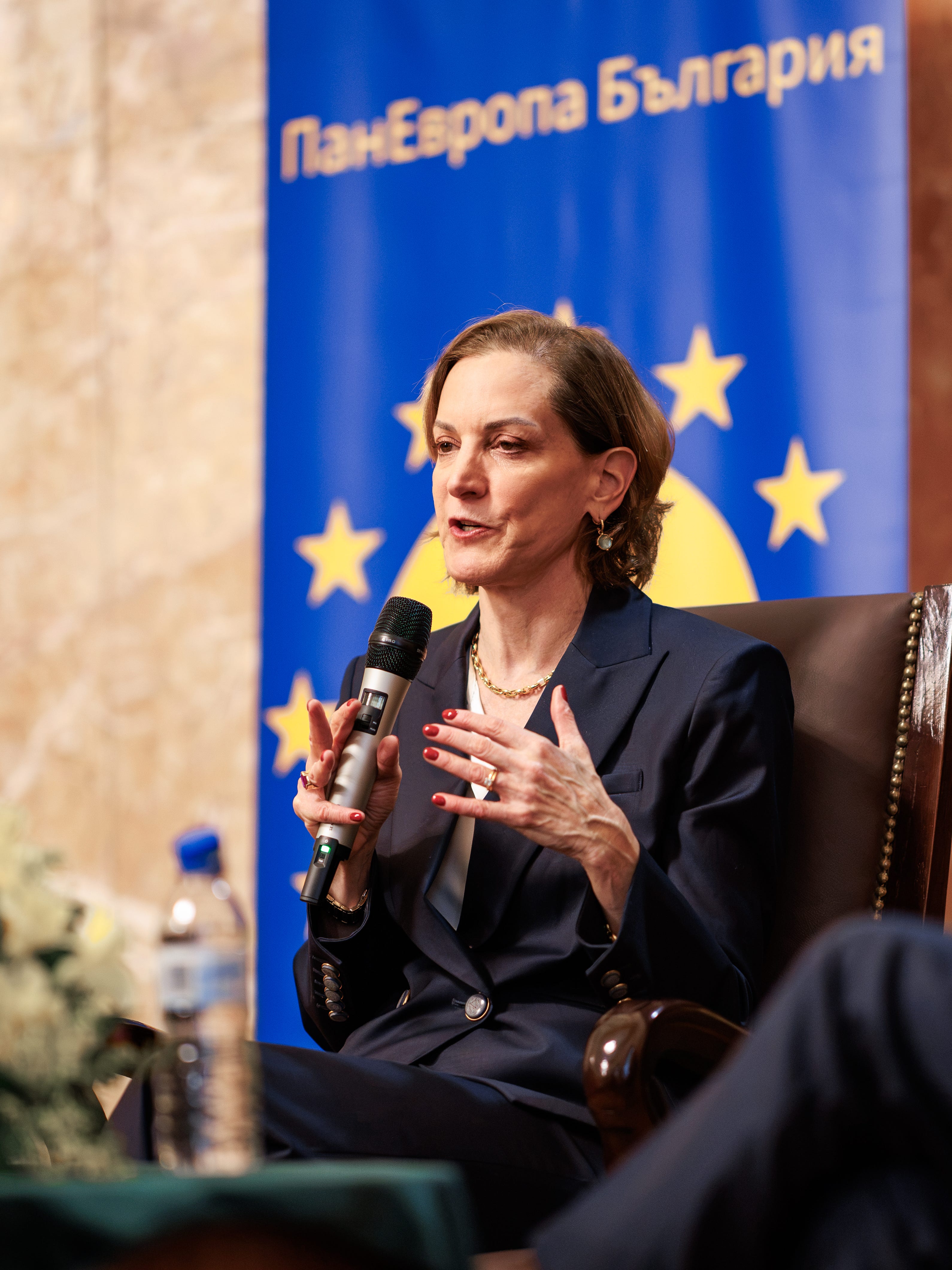
I spoke at Sofia University and at an event organized by my Bulgarian book publishers. Although the current Bulgarian prime minister is softly pro-Russian, and although many people are afraid of Putin (there have been multiple acts of Russian sabotage in Bulgaria) I spent two days surrounded by people from the pro-Ukrainian, pro-European part of the society and felt optimistic about what Bulgaria could be. Also, it was a beautiful day.
Open Letters, from Anne Applebaum is a reader-supported publication. To receive new posts and support my work, consider becoming a free or paid subscriber.