
Pakistani climate minister calls for joint action on clean energy, glacier protection
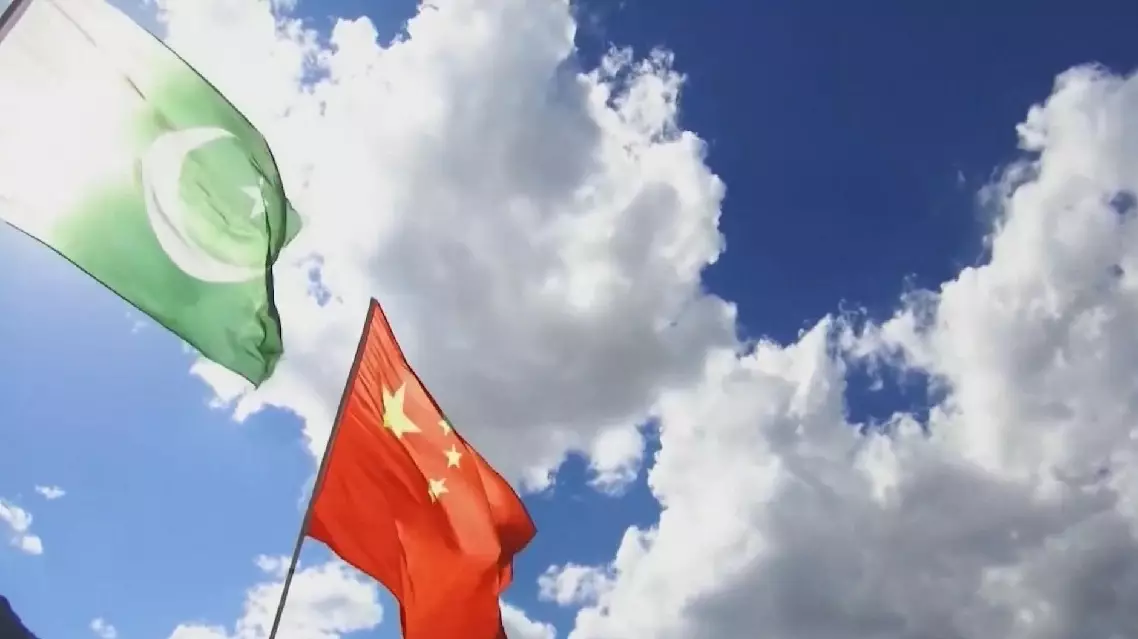
Pakistan’s climate minister has called for joint action with China on glaciers, clean energy, and pollution control, stating that climate collaboration is among the most urgent priorities in bilateral ties between the countries.
Ahead of Pakistani Prime Minister Shehbaz Sharif’s official visit to China, Shezra Mansab Ali Khan Kharal, Minister of State for Climate Change and Environmental Coordination, sat for an interview with China Global Television Network (CGTN). She emphasized that China-Pakistan ties, established 75 years ago, have shown great resilience.
While areas like infrastructure, trade and security previously defined the two countries’ tight bond, the minister said that as relations mature, both sides have eyed collaboration on key environmental issues.
“Now we are entering a new phase, and in this phase, I think the most important thing in which we can collaborate is climate change, because we have already collaborated on other forms of security, in defense we have collaborated. Pakistan and China have stood with each other through all the ups and downs that they have faced historically. But now the most important and urgent issue that the world is facing is one of climate, because we have seen the devastating effects that climate can have. Pakistan and China not only share borders, we also share glaciers, so we need a glacier policy for the region that China can be a leader in,” she said.
The climate minster also outlined potential areas of China-Pakistan climate collaboration and called for a joint working group to develop a regional glacier management policy in this regard.
“We can collaborate on energy security, we can collaborate on waste management systems, we can collaborate on pollution-free — air pollution and water pollution, which is a very urgent need that needs to be fulfilled. Also, we need to have a policy, a regional policy for glacier management. All these things are there in the making, and I have already had meetings with the Ministry of Environment and Ecology at the highest level, and we are hoping that we can have a joint working group to work on all these things,” said the minister.
Sharif arrived in Hangzhou on Saturday for an official visit to China that will run through Tuesday, at the invitation of Premier Li Qiang.
During his stay in Hangzhou, Sharif is expected to attend signing ceremonies, meet local officials, and visit Chinese technology companies.
Pakistani climate minister calls for joint action on clean energy, glacier protection
Discussions between Pakistani Army Chief Asim Munir and the Iranian leadership during Munir’s official visit to Iran over the past 24 hours have resulted in encouraging progress towards a final understanding, the Pakistani military said in a statement on Saturday.
Munir has concluded a short but “highly productive” visit to Iran, during which he held high-level meetings with Iranian leadership, the military’s media wing Inter-Services Public Relations (ISPR) said in a statement.
The meetings were part of ongoing mediation efforts aimed at promoting de-escalation and constructive engagement amid regional tensions, the statement added.
Munir met the Iranian president, parliament speaker, foreign minister and interior minister during the visit, the statement added.
The discussions focused on expediting the consultative process aimed at supporting regional peace and stability and reaching a conclusive agreement, the military statement said.
The Iranian leadership appreciated Pakistan’s role in facilitating dialogue and promoting a peaceful settlement of regional issues, according to the ISPR.
Iranian media reported Saturday that Munir held separate meetings with Iranian President Masoud Pezeshkian, Parliament Speaker Mohammad Bagher Ghalibaf, and Foreign Minister Abbas Araghchi.
According to a presidency statement, Pezeshkian said that his country seeks to safeguard national interests and remains highly cautious in negotiations with the United States.
Pezeshkian cited Washington’s repeated breach of commitments, attacks on Iran amid talks, and targeted killings of its officials as the basis for widespread public mistrust.
Under such circumstances, Iran has pursued negotiations relying on its “brotherly relations” with friendly countries, including Pakistan, “but our main goal is to solely safeguard the Iranian nation’s interests through appropriate solutions,” Pezeshkian said. War has never been in anyone’s interest and will only bring losses to the region and the world, he added.
According to Iran’s state television, Ghalibaf and Munir discussed the latest developments in ongoing negotiations during their meeting on Saturday.
The parliamentary speaker emphasized that Iran would not compromise on matters concerning national sovereignty and the rights of its people. He added that Iran’s armed forces have undergone reorganization and restructuring during the ceasefire period, warning that any U.S. attempt to reignite conflict would face even heavier consequences.
Araghchi and Munir held two rounds of talks, focusing on measures to prevent further deterioration of regional security. Following their second meeting, Munir departed Tehran, concluding his diplomatic visit.
Pakistani army chief’s meetings with Iran make encouraging progress to promote de-escalation