
Oysters, Snails and a Wall That Protects Against Climate Change — 1 Tile at a Time
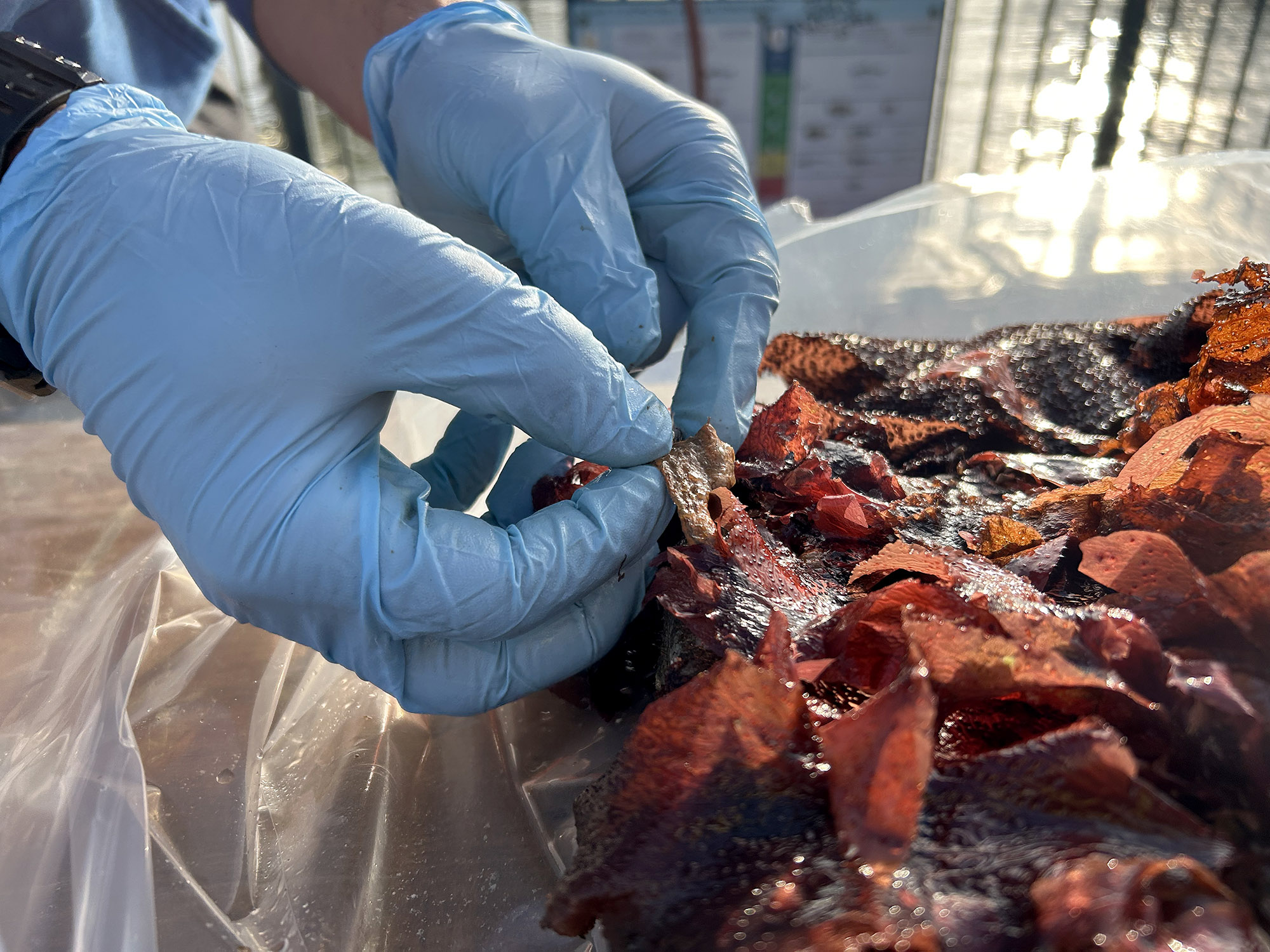
Skittering in the seaweed were hermit crabs, juvenile crabs of many native species, native limpets, chitons and angular unicorn snails. As well as gunnel, a small, lithe fish species. So far, they’ve discovered more than 100 creatures at each of the three test locations.
“We’re going to need a new seawall eventually,” said Kelley Capone, the flood study project manager in the Waterfront Resilience Program at the Port of San Francisco. “We’re looking at how texture affects the growth of species.”
The scientists installed hundreds of football-sized tiles with three different formats: a smooth surface meant to replicate a traditional sea wall, a flat exterior made with a “special sauce” of marine-friendly materials to promote growth, and a textured tile with nooks and crannies that’s also constructed using the proprietary goop.
The tiles were placed at different tidal elevations to see which attracts more native marine life. San Francisco modeled this approach on similar efforts in Seattle and Sydney.