
Officials set to consider increasing solar purchases
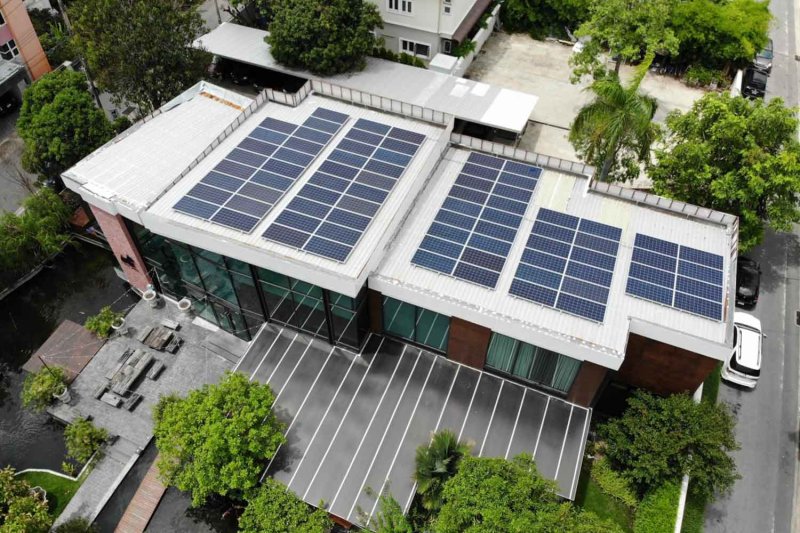
The National Energy Policy Council (NEPC) will meet on Wednesday to consider a plan to buy more solar power from households and businesses, with the intention of encouraging people to generate their own electricity.
According to an energy official who requested anonymity, the proposal builds on the government’s 2024 initiative that allowed the purchase of up to 90 megawatts of electricity from rooftop solar producers.
The Energy Ministry is expected to present the scheme at the meeting on April 29, focusing on expanding opportunities for registered participants to sell surplus electricity under a net metering system, he said.
The programme is designed to strengthen Thailand’s renewable energy portfolio while empowering citizens to become active contributors to the national grid.
Currently, the Metropolitan Electricity Authority (MEA) and the Provincial Electricity Authority (PEA) purchase excess solar power at a rate of 2.20 baht per unit, with contracts lasting 10 years.
Officials said the tariff rate and total capacity for the new round of purchases will be finalised during the NEPC session.
Both MEA and PEA are preparing to revise grid codes and upgrade infrastructure to accommodate the increased supply. Grid codes establish technical standards for voltage, frequency and safety, ensuring reliability across the network.
The scheme is part of an effort to promote clean energy. Another initiative is a measure offering tax reductions of up to 200,000 baht for households that install rooftop solar panels.
Interest in the solar power trade has been strong: in 2024, more than 10,000 applicants joined, with approved capacity reaching 89.8MW. Demand quickly exceeded the quota, prompting authorities to close applications in September that year.
Despite the enthusiasm, the official cautioned that solar power’s intermittent nature, dependent on weather and daylight, requires careful management. Overreliance on solar without sufficient backup from fossil-fuel plants could risk localised blackouts.
As a result, the NEPC is expected to amend regulations governing participation in the programme to balance supply stability with renewable expansion.
In addition to solar policy, the NEPC may also revisit last month’s ban on refined oil exports, introduced to safeguard domestic reserves during the Middle East energy crisis.
With reserves now expanded from 60 days of consumption to more than 100 days, officials indicated that surplus refined oil could be allowed to be exported.