
Observer sale to Tortoise: Press freedom groups seeks answers from Scott Trust
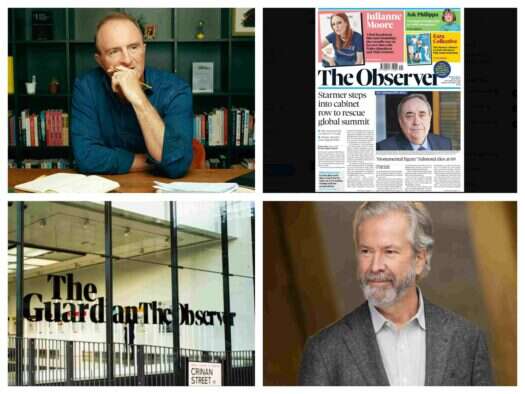
The chair of the Scott Trust has offered to meet representatives of a consortium of press freedom groups who have raised concerns raised over the sale of The Observer.
The board of the Trust, a limited company which owns Guardian Media Group, was expected to meet on Monday 25 November, to discuss proposals to sell The Observer to Tortoise Media.
With Guardian and Observer journalists set to hold a 48-hour strike on 4 December in protest at the deal, the Trust is under pressure to make a decision.
The Scott Trust has received a letter co-signed by the European Centre for Press and Media Freedom, the European Federation of Journalists, Index on Censorship, International Press Institute and OBC Transeuropa demanding answers to six key questions about the sale of The Observer.
Tortoise Media is believed to have funding of £20m to invest in turning The Observer into a stand-alone newspaper and paywalled website. According to the FT, The Scott Trust may also provide additional investment in the deal and the body has already said it plans to retain a stake in The Observer.
The letter sent by the press freedom groups to the Trust and Tortoise Media asks the following questions:
“The Observer is the leading liberal, progressive Sunday newspaper in the UK. Given the Scott Trust’s commitment to safeguarding freedom of the press and liberal journalism, what protections will be included in any deal to protect its editorial independence?
“What safeguards regarding future ownership will be written into the sale?”
The groups also asked a question about whether the Trust has properly vetted all the potential investors, including looking at foreign business links.
The letter says: “Individuals we spoke to described Tortoise’s business plan as ‘unconvincing’ and ‘seriously under-financed’. What is the Scott Trust’s responsibility if this plan fails? Are
any safeguards being included in the deal?
“Why is the sale of The Observer being discussed only with one preferred bidder instead of through an open, transparent and fair process?
“Will you allow Observer and Guardian staff to speak out freely about the impact of the deal on press freedom and UK media plurality without fear of sanction or recrimination? At present, they report being unable to voice their opinions freely or have been warned against doing so.”
Scott Trust chair Ole Jacob Sunde has written back to the groups saying: “Thank you for your letter and the questions that you raise. We will happily respond to your points. Perhaps, in the first instance, we could arrange a call so I can better understand your concerns.
“As you will know, The Guardian has been a partner to your organisations on various vital journalistic endeavours – including the anti-SLAPPS coalition. We hope you know us to share values on many areas in the media landscape.
“We take our obligations to safeguarding the future of liberal journalism very seriously and would welcome you sharing more about where you believe there’s misalignment.”
Observer journalist Carole Cadwalladr has been told by Guardian management that her public statements about the proposed Observer deal may be in breach of her contract and has been ask to “desist” from saying anything publicly which brings Guardian News and Media “into disrepute”.
Cadwalladr was the keynote speaker on Friday 23 November at a Malta conference on media freedom run by the Organisation for Security and Co-operation in Europe during which she denounced the sale of The Observer to Tortoise as an “existential threat to our journalism”.
A spokesperson for Tortoise Media said: “We want to save The Observer, both for today’s readers and the generation to come. We have heard from a lot of Observer journalists who are excited about our ambition for the paper – and the people we bring with digital skills in podcasts, data journalism and newsletters, the investment that means new staff jobs, a much bigger editorial budget and a real plan for growth.
“We believe we can strengthen liberal journalism, adding to the range and reach of progressive voices; we can enable The Observer to reach new readers, as a Sunday newspaper with a digital life of its own; and we can renew the paper as a powerful voice in the world.”
The post Observer sale to Tortoise: Press freedom groups seeks answers from Scott Trust appeared first on Press Gazette.
Related Knowledge Center: Climate economics
Climate change is now a driver of the world’s economy. The impact is profound:
- Catastrophic weather events — hurricanes, floods, droughts, high temperatures — are more frequent and more extreme. The cost can be measured in both the initial damage caused and the longer-term impact on the economy.
- Vulnerable communities are increasing climate-related investments, hardening infrastructure and taking other protective measures.
- Investment in carbon capture and storage technologies is increasingly rapidly.
- Governments are making investments and crafting regulations to reduce emissions of carbon dioxide and other greenhouse gases.
On top of all of this is the cost of uncertainty. As the Fourth National Climate Assessment, released in 2018 by the U.S. Global Change Research Program, says, “The assumption that current and future climate conditions will resemble the recent past is no longer valid.”