
The newsroom isn’t dead, and new graduates can find jobs — but thriving in this unstable market requires a new perspective
Whenever I meet people outside the media industry and tell them I’m a journalist, I’m usually met with the same reaction: “Wow, that’s so cool!” Some tell me journalism was once their dream career. Others compare me to a Lois Lane type, imagining a glamorous life of breaking news, press conferences, celebrity interviews and undercover reporting.
I typically laugh it off and nod, managing to let out a tight-lipped “Mhm!” while internally thinking about unpaid freelance invoices, precarious contract work, constant performance anxiety and the increasingly unstable reality of the media industry that young journalists are entering today.
In a constantly shifting industry, traditional pathways into stable newsroom jobs are all but gone. Public trust in the media wanes, and for many early-career journalists, freelancing can make it difficult to earn a sustainable income.
I graduated with a communications degree in 2024 into an unstable landscape where my early opportunities came in the form of three-month contracts rather than permanent positions. I quickly realized a clear roadmap to a stable job in this industry no longer existed. Now in post-grad life, the overly-simplified “report for the local paper and work your way up” guidance I heard from professors felt out of reach and, frankly, out of touch.
That doesn’t mean there isn’t room for young journalists in this unstable industry. Rather, my first year as a journalist taught me that it takes a fresh outlook — on the industry and on yourself — to make it work out. Through trial and error, this year taught me about imposter syndrome, the gig economy, applying to opportunities before I felt ready and learning that a non-linear path isn’t necessarily the wrong path.
The absence of a permanent job doesn’t mean you’ve failed
Like many recent J-school grads, my debut into the field was marked by a series of fellowships, short-term contracts and summer internships. I was met with anxiety that hit like clockwork every time a contract came to an end with no mention of an extension.
I often joke that the early pursuit of a journalistic career feels like staying attached to a non-committal boyfriend who keeps breadcrumbing you. No labels and definitely no asking “what are we?”
In my first year, I continued to wonder why newsrooms would hire me but wouldn’t keep me around long-term.
I saw each contract end as evidence of a lack of talent. But the proof of work contradicted the narrative I told myself. My resume and bylines grew and senior producers continued inviting me back to work on their shows.
To be clear, I’m not excusing precarious short term contract work – as I’m a huge proponent for job stability and liveable wages – but once I stopped equating temporary work as a reflection of my ability, these cycles became a lot easier mentally and I was able to faithfully steward each summer internship without being glued to the outcome.
Legacy media spaces can feel intimidating, but don’t lose yourself in them
Moving from Edmonton to Toronto to begin my career, I had every reason to feel behind. Not only was I navigating the fast pace at which Torontonians move through the sidewalks and in the workplace, but I also had to acquaint myself with the legacy media institutions I used to idolize as a student.
Being in these rooms made me feel small and big at the same time and I became desperate to stay. That’s when performance anxiety reared its ugly head and I made it my sole mission to become as “hireable” as possible.
Within my first week at The Globe and Mail as a summer staffer, because of the pressure I placed on myself, I cried chunky ugly tears during a one-on-one meeting with my editor. I’d convinced myself that if I wasn’t exceptional off the bat, I wouldn’t be invited back. But I was forgetting one indisputable fact: I was already impressive enough to be there.
I would be lying if I said I’ve graduated from feeling performance anxiety. I believe it’s one of the many psychological symptoms of participating in the gig economy, which requires constantly auditioning your worth for a full time role. Instead of focusing on sharpening my news sense and becoming a better reporter, I found myself daily trying to prove why I deserved to stay. This mindset eroded my curiosity and I became less confident for fear of making a mistake.
Making each internship about “staying” pulled me away from the simple reason I pursued journalism in the first place: I like people, I like talking with people and I want to tell their stories in a meaningful way. In order to re-centre why I’d wanted to enter the field to begin with, , I decided to practice self-compassion.
In my professional and personal life, much of my early twenties has been shaped by learning how to separate my productivity from my competence. It sounds elementary, but I’ve also had to remind myself multiple times that editors and senior producers are just people, too. Most importantly, continually reminding myself of my “why” has made the voice that tells me I have something to prove a lot quieter.
Apply before you think you’re ready and don’t wait for permission
In retrospect, some of the opportunities that changed the course of my career were the opportunities I almost didn’t apply for. Imposter syndrome told me there was someone else out there more qualified and experienced who surely deserved it more.
Despite these thoughts, I moved through my final semester of university with what I like to call “delusional gusto,” a stubborn optimism that drove me to apply anyway. After all, what was the worst that could happen? Rejection?
Journalism, in my opinion, is one of the greatest forms of rejection therapy. You pitch stories that don’t get greenlit. You send emails out into the void while chasing a source you may never hear back from. But every so often, someone says yes, and that one yes may open a door you never thought you’d get to walk through.
It was the same delusional gusto that led me to CBC, The Globe and Mail and, most recently, the Toronto Star. My university professors would send me job postings and I would apply unflinchingly. Looking back, I’m glad I let somebody else decide that I was qualified instead of succumbing to self-sabbotage.
The same mindset shapes how I approach building experience. I stopped waiting for permission to step into roles I wanted someday and began creating those opportunities for myself instead.
I’ve observed that editors are more likely to trust you when they can see you’ve already done the work. If your dream is to be a podcast host, don’t wait for a legacy radio network to hand you a microphone. Hit record. If you aspire to write for a magazine, start with Substack or newsletter. Over the past year or so, I began my own Substack publication, contributed to a newsletter and launched a YouTube Channel so I could practice the kind of journalism I hoped to do professionally.
I’ve found in doing these things a new confidence. In some newsrooms, creative freedom comes with years of seniority. Starting small reminded me that I don’t have to wait decades to begin building those skills.
Resist the pressure to pick a lane right away
Interestingly, I found that newsrooms value both journalists who are skilled in multiple mediums and reporters who are experts in one lane. So, I simultaneously felt pressure to become “known” for a specific beat early during my string of internships, while also wanting to become a jack of all trades so I could be hireable long-term. But I felt I lacked the depth of knowledge and devotion required to accomplish either of those things.
The industry tends to favour multimedia journalists – a byproduct of shrinking newsrooms – but don’t burn yourself out so early trying to be a human Swiss Army knife when, as a recent graduate, you’re still learning what kind of person you are, let alone what kind of journalist you want to become.
I believe that impact is more important than optics. Spending weeks to months immersed in a community or refining a specific reporting skill increases the likelihood of your work truly reaching people, affecting audiences and generating change rather than wanting to be seen as an expert or knowledgeable in all areas.
Remain curious about your values, open to taking on different kinds of stories, and committed to expanding your skillset. But don’t force yourself just to maintain the image of being someone who can “do it all.” Stay open to writing stories that don’t necessarily pique your fancy. Just because it’s not a topic you would ramble about over dinner, it doesn’t mean you can’t dedicate time and care to the story and the people it affects. After all, journalism is a public service.
My takeaway
As I write this, I am just beginning my career; I haven’t yet landed a permanent position, and I have no idea where I’ll live or work in the next few months. What I do have is an arsenal of growing bylines, mentors who continuously vouch for me, and a will to strain toward an uncertain path ahead.
Many young journalists are being asked to be nimble, entrepreneurial, and resilient in ways J-school didn’t prepare them for. There are moments when everything feels frustrating all at once and I question why I didn’t just become a dental hygienist for stability’s sake, but what keeps me in the game is allowing myself to wonder just how good it could get if I keep trudging on.
I’m still figuring out how I’d like to move through this world, how I’d like my work to generate change, and I’m assessing my relationship to success with a more critical eye. These reflections run parallel to the big self discovery questions I’ve been asking myself as I grow through my twenties.
So far, what I’ve learned is there’s a strength in admitting what you don’t know, and remaining committed to finding out. It’s this innocent curiosity held with an open hand that makes me certain I’m meant to be a journalist—and that’s more than enough to start with.
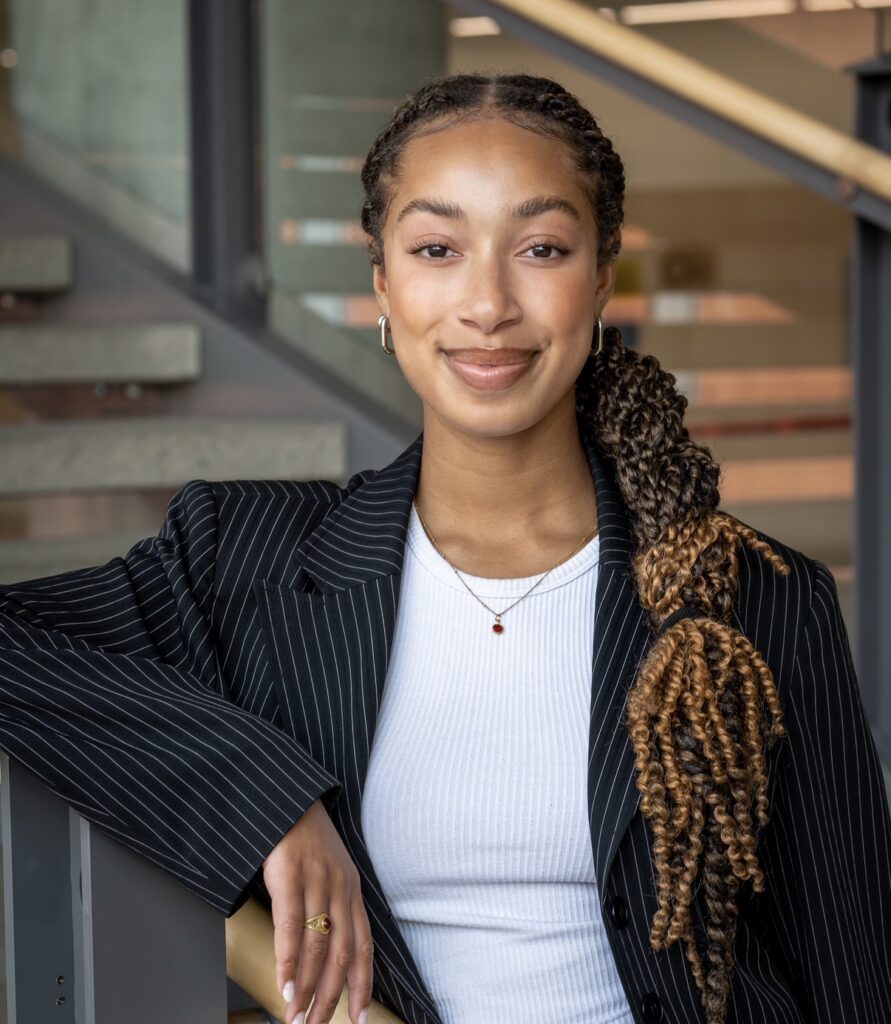
Aajah Sauter is an Edmonton-born multimedia journalist based in Toronto. She is currently interning as a digital producer for the Toronto Star. Aajah has written for The Globe and Mail, CBC Arts, and produced for several flagship CBC Radio shows, including Q with Tom Power and Commotion with Elamin Abdelmahmoud. Aajah holds a bachelor’s degree in Communications from MacEwan University.
The post The newsroom isn’t dead, and new graduates can find jobs — but thriving in this unstable market requires a new perspective first appeared on J-Source.