
Nature Climate Change study links heat waves and tropical nights to faster aging in Taiwan and Korea
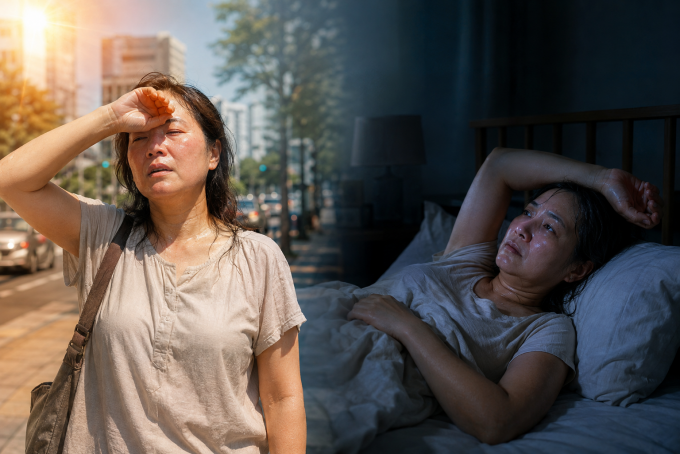
Repeated exposure to heat waves and lack of sleep were each found to be associated with biological aging and with aging of the brain and organs. Generated by generative AI.
Research has found that repeated exposure to heat waves can accelerate a person’s biological aging. The impact of heat waves on aging was analyzed to be at a similar level to unhealthy lifestyle factors such as smoking, drinking alcohol, and lack of exercise.
Not only the daytime heat, but also the sweltering heat at night threatens health. “Tropical nights” interfere with normal sleep, and sleep deprivation may accelerate brain aging. Studies also suggest that when people sleep too little or too much, the aging of not only the brain but also major organs such as the heart, lungs, and immune system can speed up.
• Four more heat-wave days raised biological age by nine days
A research team led by Professor Chui Kuo at the University of Hong Kong tracked about 25,000 adults in Taiwan for 15 years to analyze the relationship between heat-wave exposure and biological aging. The findings were published in the international journal Nature Climate Change in August 2025.
Unlike the chronological age recorded in official documents, biological age reflects the actual health status of the body. The researchers calculated participants’ biological age using indicators such as blood pressure, inflammatory markers, cholesterol levels, and lung, liver, and kidney function.
They found that for every increase of four heat-wave days over a two-year period, biological age increased by an average of nine days. For workers who spend long hours outdoors, biological age advanced by 33 days under the same conditions.
The team concluded that the impact of heat waves on biological aging is comparable to that of smoking, drinking, unbalanced diet, and lack of exercise on health.
The exact mechanisms by which heat waves accelerate aging have not yet been identified. DNA damage has been raised as a possible cause. The researchers noted that if exposure to heat waves accumulates over decades, the health impact could be greater than what has been observed so far.
• Heat waves arrive earlier, tropical nights end later
As the health burden from heat waves grows, the period during which high-temperature events occur in Korea is steadily getting longer.
According to an analysis by the Korea Meteorological Administration of weather data from 66 locations nationwide between 1973 and 2025, the average temperature from June to August in Korea has risen by 0.28 degrees Celsius every 10 years.
The number of heat-wave and tropical-night days has also increased. Nationwide, the number of heat-wave days grew by 1.8 days per decade and tropical-night days by 1.6 days. From 1973 to 1982, the annual average number of heat-wave days was 8.3 and tropical-night days 4.1, but in the most recent decade, 2016 to 2025, they rose to 18.3 and 12.2 days, respectively. Heat-wave days increased by about 2.2 times and tropical-night days by about three times.
The timing of when the heat sets in has also changed. Over the past 10 years, the onset of heat waves has moved up by 10 to 30 days in most regions of the country. In eastern regions, heat waves now begin appearing from early to mid-June.
Tropical nights now start earlier and end later. Their onset is 5 to 15 days earlier than in the past, while their end comes 10 to 20 days later. In Gangneung, the period during which tropical nights can occur has lengthened by about 40 days. Along the southern coast and in Jeju, tropical nights now often continue into September.
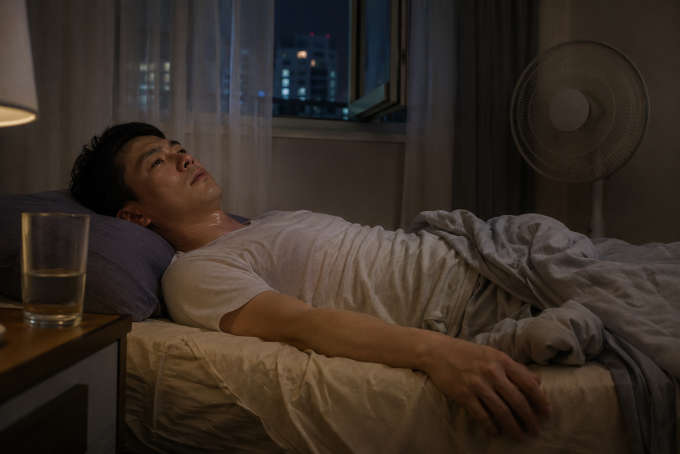
During tropical nights, high temperature and humidity prevent body temperature from dropping sufficiently, making it hard to fall asleep and causing frequent awakenings, which lowers sleep quality. Generated by generative AI.
• Hot nights keep body temperature high and disrupt sleep
If high temperatures persist into the night, when the body worn out by daytime heat should be recovering, sleep can be affected.
To fall asleep, the body’s core temperature needs to go through a process of decreasing. On hot and humid tropical nights, it’s hard for body temperature to drop sufficiently, and this can also affect the secretion of melatonin, the hormone that induces sleep.
Professor Kim Sun-young of the Department of Psychiatry at Ewha Womans University Seoul Hospital explained that hot and humid tropical nights suppress melatonin secretion and interfere with thermoregulation, making deep sleep difficult.
When high indoor temperatures keep the thermoregulatory center in a state of arousal, it can take a long time to fall asleep, and sleep architecture can be disrupted by frequent awakenings. This reduces not only the quantity but also the quality of sleep.
Poor sleep quality leads to fatigue and decreased concentration the next day. If insomnia caused by tropical nights persists, the risk of mood disorders and accidents may also increase.
Experts advise maintaining a consistent wake-up time even during tropical nights and reducing the intake of caffeine, alcohol, and nicotine. Light exercise in the early evening and appropriate use of cooling devices can also help. During summer, it is recommended to keep indoor temperatures at 25–28 degrees Celsius and humidity at 50–60%.
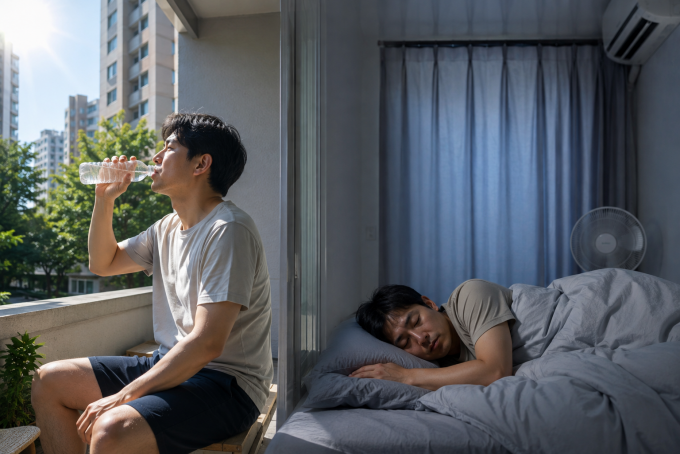
During daytime heat waves, it is important to prevent body temperature from rising, and at night to maintain proper cooling and a regular sleep environment, making all-day heat management crucial. Generated by generative AI.
In Korea, the start of heat waves is coming earlier while tropical nights are lasting longer, extending the overall period of exposure to high temperatures.
During daytime heat waves, it is important to avoid excessive rises in body temperature and prolonged outdoor activities, and at night to maintain sleep quality through appropriate cooling and regular habits. This means we need to consider not only the impact of intense midday heat but also of nighttime heat that continues through the night.
∗ Reference
doi.org/10.1038/s41558-025-02407-w
doi.org/10.1016/j.ebiom.2025.105941
doi.org/10.1038/s41586-026-10524-5
Copyright ⓒ DongA Science. All rights reserved.