
It's great that the NYT is thriving. But I have a worry.
A New York Times journalist posted on social media over the weekend that she was happy to be covering the Academy Awards for the sixth time. She noted that she was part of a 60-person Times team assigned to that coverage.
Sixty. That’s bigger than a lot of entire regional newsrooms these days.
Commenting on that post, Jada Yuan, a former Washington Post features writer, drew quite a comparison.
The Post, after deep layoffs a few weeks ago, had sent no one this year, she wrote.
During my four years at the Times as public editor and my six years at the Post as media columnist, the two newspapers were arch rivals — competing for scoops, awards, and top journalists for their staffs. The Times was bigger, more global, and perhaps more influential, but the Post was feisty and nimble and packed with talent.
But that has changed. The Times has been on a sharp upward trajectory. As just one measure of its success, it now has 2,300 newsroom employees, up dramatically in recent years.
The Post, once at about 1,110 (not long ago), is down to around 400 newsroom staff. In many ways, it is the victim of its own owner’s poor judgment and of poor business management. One of the worst instances of that was Jeff Bezos’s decision, late in the 2024 presidential campaign, to spike the Post’s planned editorial endorsing Kamala Harris. Hundreds of thousands of subscribers canceled. And Bezos’ newfound chumminess with Donald Trump is a familiar story now.
But the Times, the beneficiary of savvier business decisions and steady leadership, will be the worse not to have the Post nipping at its heels. That kind of competition is healthy.
It also — in my view — is worse off for no longer having an independent journalist to represent the readers as I did as public editor from 2012 to 2016. That role was abolished in 2017, the year after I left. Part of the rationale was that there are plenty of outside critics, so no real need for an internal one.
The Times, undoubtedly, is increasingly powerful and influential. Of course, there is some competition — still from the Post, occasionally, and also from the Wall Street Journal, the Associated Press, and other media outlets.
But mostly, it stands alone atop the media pyramid. Recently, it hired a Post reporter who had been covering the Middle East before the layoffs; and its sports site, The Athletic, has scooped up several of the Post’s best sports journalists.
I worry about an aspect of all of this. Journalism is meant to hold power to account, but who holds the Times to account? It has its critics, of course — people like James Fallows, Mark Jacob, Dan Froomkin, and sometimes me. And certainly lots of people on social media. But those voices are pretty easy to ignore.
I’ve noticed that the Times has become more forthright and public in addressing criticism. In my post here last week, I quoted assistant managing editor Patrick Healy at length about an earlier criticism of mine. Healy, in various ways and on various platforms, has explained how the Times makes its decisions.
In addition, the Times’s communications department has been responding to criticism by issuing statements that are posted on social media and distributed elsewhere. Corbin Bolies wrote about this for The Wrap, quoting Healy saying “Letting the journalism speak for itself is an approach from a bygone era.”
That’s good. But I don’t recall seeing such a post that does anything other than say, “we were right, and here’s why.” Maybe I missed something that suggested a need for improvement. The Times does frequently publish corrections of errors, and that’s important, but these often concern minor details — the misspelling of a name or a wrong date, for example. Every once in a while, an editor’s note goes further.
But when it comes to really grappling with the tone of coverage or framing of issues, I’m not seeing a substitute for what the public editor used to do.
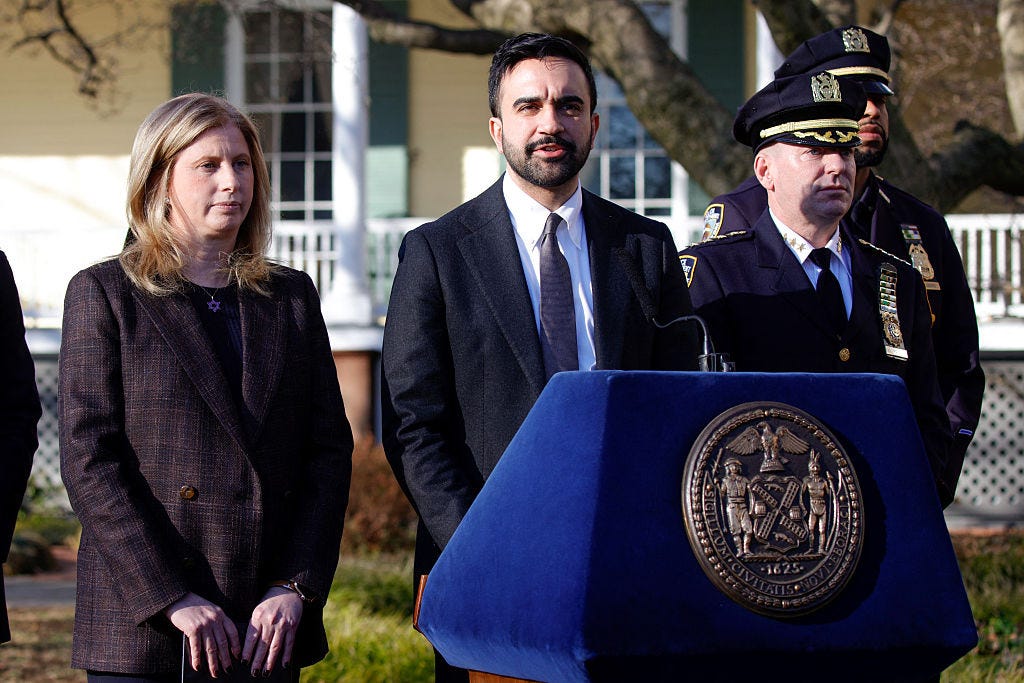
For example, the paper’s coverage of Zohran Mamdani has come under broad criticism for being unduly negative, almost as if there is a low-level hope his mayoralty might fail. I wrote about that during the campaign.
One recent Times story pondered why the mayor hadn’t put out a TikTok video, or anything similar, to criticize the terrorist attack outside the mayor’s residence.
“Mandani Chooses His Words Carefully After Alleged Terror Attack,” read the headline and the sub-headline characterized his remarks as “spare.”
Here are the first four paragraphs:
In the days after a homemade bomb laced with metal was hurled into a highly charged protest near his official residence in Manhattan, Mayor Zohran Mamdani did not turn to his typical means of communication.
There were no short-form videos posted to social media about the attack in front of Gracie Mansion, where Mr. Mamdani lives with his wife, Rama Duwaji. There were no impassioned speeches.
Mr. Mamdani chose an alternative path: two deliberative written statements, and one 14-minute joint appearance with his police commissioner, Jessica S. Tisch, a political moderate, during which they took only four questions.
Mr. Mamdani may have risen to power on the strength of his strong communication skills, but in moments that cut close to some of the city’s deepest fault lines and his own religious identity as the city’s first Muslim mayor, he has come to favor a more cautious and stiffer approach.
Journalist Ryan Grim, co-founder of Drop Site News, blasted the whole approach: “NYT is arguably the most out of touch institution in America.”
Jameel Jaffer, who runs the Knight First Amendment Institute at Columbia University, posted on Bluesky: “One day the NYT’s editors will read these stories again and be ashamed of themselves. Mamdani called the attack ‘heinous,’ ‘criminal’ ‘reprehensible’ ‘terrorism’ and the antithesis of who we are. The insinuation that he’s conflicted about this is disgraceful.”
To these criticisms, the Times communications staff replied: “The Times’s reporting covered the Mayor’s comments — and their careful, measured nature — fairly and accurately, including the departure from his more direct and engaged messaging strategy during his election campaign.”
But guess what? A terror attack and an against-the-odds mayoral campaign are two very different things, and require different responses. A high-energy TikTok video would have been grossly inappropriate here.
In other words, the Times responses often seem to say: We did it right. We will acknowledge your criticism but will not admit we could have done it better.
I’m not sure what the answer is here, short of reestablishing the public editor’s role, which is hard to imagine. (And please know, I left that role voluntarily, a few months before my term was up, to join the Post — and although it was a good experience overall, I have no interest in doing it again.)
It’s a positive development that the Times has all these talented journalists, often doing great work. But I do worry about an increasing self-importance and sense of self-congratulation, never in short supply there anyway.
Readers, what are your thoughts? Do you think this more assertive approach of responding to criticism is adequate? What would you prefer to see?
American Crisis is a community-supported project where I explore how journalism can help save democracy. Please consider joining us!
Separately, I’ve been thinking about AI a lot lately. I’ve researched its role in newsrooms, written about that (with my then-colleague Julie Gerstein) for Columbia Journalism Review, and wrote a recent column about it for the GuardianUS.
I’ve also experienced its misuses personally, as the writing-assistance site known as Grammarly used my name and image without permission or notice to offer writing advice to its premium customers. They did the same with many other journalists or academics, including Jay Rosen, Emily Bell and Marty Baron. They’ve discontinued that now, and a class action suit is underway.
Certainly, AI is pervasive and hugely consequential. According to one survey I ran across, 45 percent of Substack writers and publishers use AI — some in the actual writing of their posts.
I want you to know that that won’t happen here. I have never used AI to write a column or a post. I don’t converse with a chatbot about subject matter or approaches; I write my own stuff.
The whole point (and satisfaction for me) of what I’m doing here is to communicate honestly and personally with actual human beings. Readers. Commenters. The notion of asking Claude or ChatGPT to do it for me seems bizarre.
Whatever I get wrong will be my own mistakes, and I will do my best to correct them in a transparent way. And if I manage an incisive thought from time to time, or a pithy phrase, those too will be my own.
Readers, what is your reaction to the reportedly high usage of AI in published writing, including on Substack? Aren’t you here for the individual voice of a real person, whether it’s Ron Charles, the book critic, or Wayne Robbins, the pop music writer, or one of the many who write about politics? I know that I am.
So you can count what appears under my name being my own work.
Finally, two renowned former editors, Lionel Barber (Financial Times, 2005-2020) and Alan Rusbridger (The Guardian, 1995-2015) had me on their podcast to talk about Iran war coverage and, yes, the public editor role. We certainly didn’t agree on everything, as you’ll see, and the conversation was lively.
Thanks for being here. Thanks to the many who have joined this community as subscribers in recent weeks. There is no paywall; I removed it more than a year ago, as I explain below. I hope to keep it that way, so if you are able to subscribe for $50 a year, please do. But you’re welcome and appreciated, either way.
My background: I am a Lackawanna, NY native who started my career as a summer intern at the Buffalo News, my hometown daily. After years as a reporter and editor, I was named the paper’s first woman editor in chief in 1999, and ran the 200-person newsroom for almost 13 years. Starting in 2012, I served as the first woman “public editor” of the New York Times — an internal media critic and reader representative — and later was the media columnist for the Washington Post. These days, I write here on Substack, as well as for the Guardian US. I’ve also written two books, taught journalism ethics, and won a few awards, including three for defending First Amendment principles.
The purpose of ‘American Crisis’: My aim is to use this newsletter (it started as a podcast in 2023) to push for the kind of journalism we need for our democracy to function — journalism that is accurate, fair, mission-driven and public-spirited. That means that I point out the media’s flaws and failures when necessary.
What I ask of you: Shortly after Trump’s election in November of 2024, I removed the paywall so that everyone could read and comment. I thought it was important in this dire moment and might be helpful. If you are able to subscribe at $50 a year or $8 a month, or upgrade your unpaid subscription, that will help to support this venture — and keep it going for all. Thank you!