
News
An Interview: Andrew Edgecliffe-Johnson, Semafor
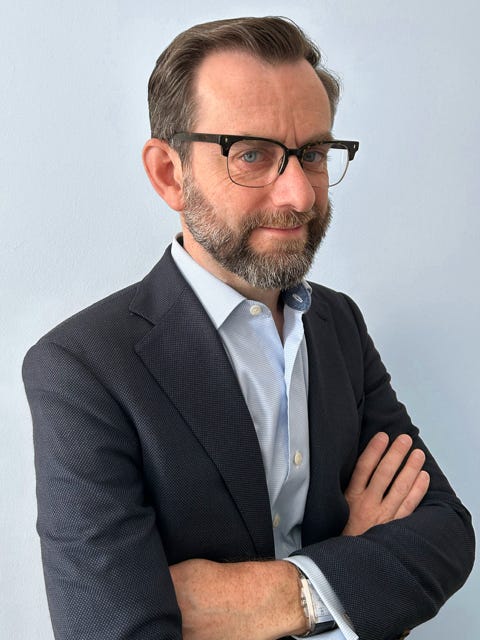
This week, I sat down with Andrew Edgecliffe-Johnson, Semafor’s CEO editor, author of The CEO Signal, and co-host of The CEO Signal show.
- Did you always want to be a journalist? If not, what was the turning point or experience that made you choose the path of journalism?
- I wanted to be a journalist from before I was in high school. I was hooked watching the BBC’s coverage of the Falklands War back in 1982–-though none of my journalism since then has required a fraction of the courage that war correspondents bring to the job.
- I did a lot of student journalism in university, but I never studied journalism itself; I studied French and Italian in college. It was total chance that took me into business journalism, but when I got there, I learned that the corporate and financial worlds have their own languages, which most people don’t speak, so journalists who can translate those languages can serve a real purpose.
- I still find it a privilege to get to find out each day what’s really happening in the world and how people in positions of power think, and then try to explain it as clearly as I can.
- You’ve been a journalist for three decades, cutting your teeth at The Daily Telegraph in London, then spending the majority of your career at the Financial Times, where you rose through the ranks to U.S. business and U.S. news editor, respectively. At the FT, you covered the themes and concerns running through boardrooms in every industry, and the people leading the debate about how business should intersect with consumers, employees, investors, policymakers, the economy, and society at large. With such a storied and long-term career at the FT, what were some of the stories or milestones you’re most proud of and why?
- I’m mostly just proud that I managed to work alongside such a talented group of people for so long. So many of my best stories at the FT were co-productions, including deeply reported pieces on WeWork, on Peloton and on Universal Music’s CEO Lucian Grainge. One of the things I loved about the FT and love about Semafor is the collaborative culture, where you can pull in expertise from different beats and different time zones.
- Four periods of my time at the FT stand out as milestones. First, I was lucky to come to New York in 1999 and be part of a team whose scoops helped put the FT on the map in this country. Second, I was media editor from 2005 through 2013, which let me cover that industry’s outsized characters while they were going through enormous disruption. The insight that gave me into the business models that failed and the ones that worked continues to inform my coverage in this very disruptive period we’re going through now.
- The third phase was helping to build and steer a brilliant U.S. reporting, editing, and multimedia team as the FT’s U.S. news editor. And then finally, as U.S. business editor, I had a front-row seat to a once-in-a-generation debate about what role business should play in our lives. I think we’re still working through that debate, but I hope that some of the pieces I wrote helped shape it.
- I’d add that I felt very lucky to get to interview a wonderfully eclectic range of people: Vanessa Redgrave, Ethan Hawke, Mariah Carey, Tim Berners-Lee, and the former Prince Andrew. With interviews like that, you’re trying to get under the skin of a person and reveal a little more about them than the reader may have learned elsewhere. Whether that’s a CEO or an actor, that’s a skill I’ve enjoyed trying to hone over the years.
- For the past year-and-a-half, you’ve been at Semafor as the CEO editor. You profile CEOs weekly on the site, as well as write The CEO Signal newsletter, which is a weekly guide to the ideas, leaders, and companies redefining global business. What’s driving your coverage of CEOs, and what are the prerequisites for a brand’s CEO to be covered?
- We’re prioritizing the people who run the world’s leading companies, but also executives who have handled some of the vast array of challenges that CEOs face unusually well.
- Our core audience for The CEO Signal is CEOs themselves. This is the big differentiator: my weekly email bulletin is an invitation-only product, so I spend every day thinking about: What can I provide to CEOs themselves that’s going to be valuable to them in that specific role?
- I’m looking for the people who have case studies to share that are going to travel to that wide CEO audience. That could be anything from how people are dealing with the latest geopolitical volatility, to how they’re handling AI disruption, to the perennial questions of how do you work with your board, build a great senior leadership team, or inspire your employees to grow and innovate.
- Our coverage cuts across all industries and all time zones, and it includes both public and private companies. I typically run one full Signal Interview per week, usually with a large company CEO, and then one shorter Q&A, the Signal Insight. That gives me the chance to balance the profiles of those large company CEOs with the voices of people who might be running a slightly smaller business but still have a really sharp insight. They’re doing one thing exceptionally well, and if I can explain that thing, it will be of value to the wider CEO audience.
- The weekly bulletin goes to a select audience of the world’s top CEOs, but we publish the interviews online for our wider audience.
- The newsletter is invitation-only. What type of readers are you looking to attract with the newsletter, and what prerequisites do readers need to be accepted? Must they be a CEO or in the C-suite?
- We have a highly engaged readership of CEOs, including the leaders of more than 75% of the Fortune 500, which is extraordinary after just over one year. We accept applications from executives running companies with annual revenues over $500 million (that is our cutoff point). That can include group CEOs and divisional and regional CEOs. And we include private companies, public companies, and private equity portfolio companies.
- We have some board chairs, but we haven’t broadened our circulation to the wider C-suite. This is not The CFO Signal or The CMO Signal, because we want to stay focused on serving CEOs in their very specific roles. A unique set of challenges lands on the CEO’s desk every day and, as many of them have told me, it’s a lonely role.
- One thing that I should mention for your audience: If your CEO signs up, you as the chief communications officer or equivalent external advisor can also sign up as a plus one. We understand that people in communications roles want to know what they’re recommending their CEO speak to me for, so we will sign up a member of the comms team if the CEO is also signing up.
- How long does it take for a CEO to be vetted and approved?
- CEOs are vetted daily, Monday through Friday, with all applications reviewed within one working day of submission. We get a lot more applications than we approve, and we conduct due diligence on each of them to be sure the applicants are who they claim to be.
- In April of last year, you interviewed the CEOs of companies including General Motors, FedEx, and Mastercard on stage at the Semafor World Economy Summit in Washington, D.C. With the 2026 event coming up April 13 through 17 also in Washington, what topics will you be most focused on, and what can you share about your panels and the CEOs you’ll be interviewing?
- We’ll be revealing the full agenda imminently, but we’re expecting more than 400 CEOs at this year’s Semafor World Economy event, with speakers including the CEOs of Barclays, Bayer, Cisco, Hilton, HSBC, Levi Strauss, Lilly, Qualcomm, Ralph Lauren, SAP, and Verizon. This is the largest CEO convening in the US, bringing together the world’s most influential business leaders.
- We also have finance ministers from around the world, cabinet secretaries, governors, and members of Congress, so it’s going to be a pretty exceptional event.
- My colleagues have built this from nothing in just over three years. Last year’s event, which had roughly 200 CEOs, was extraordinarily well-received by the people who came to it. These are events that make news and deliver a level of insight that is rare. There’s a lot of value for the people who attend in seeing that number of people of that caliber all in one place at one time.
- On the themes: First, navigating geopolitical risk. What’s happening in the Middle East is obviously top of mind right now, but there are plenty of other unresolved geopolitical risk factors, from Ukraine to Venezuela.
- No. 2, AI—both the growth strategies that are working, but also the disruptions. This is a fundamentally disruptive technology that is blowing up old business models. How are people getting on the right side of that? And how are they leading their companies through this seismic a change?
- Third, we call this event the World Economy Summit for a reason. We think a new world economic order is taking shape, and we really want the CEOs’ read on it. That’s going to be a very big part of what I’m asking about on stage, as well.
- Semafor just announced a new show called Compound Interest, featuring Liz Hoffman and Rohan Goswami. With the changing media landscape and importance of reaching readers where they are, how are you as CEO editor and the team staying on top of the latest trends? Any new news (e.g. features, columns, podcasts, tools) at Semafor or for The CEO Signal that you’d like to highlight for Meredith & The Media readers?
- On March 19, we published the first episode of The CEO Signal show. This is a series of high-level CEO conversations that I’m co-hosting with Penny Pritzker, founder of PSP Partners and former U.S. Secretary of Commerce, and we’re differentiating it from Compound Interest and from a lot of other CEO interview shows out there. Compound Interest is focused on the changing business models that are pointing to what the future of global business, markets, and finance is going to be. The CEO Signal show is focusing on the practical realities of strategy and leadership. A lot of CEO interviews out there skim the surface, or focus heavily on the latest headlines. Penny and I are going after deeper conversations that dig into the great business case studies of our time.
- We are trying to capture candid insights from very senior leaders that illuminate the thinking behind their biggest, most consequential decisions. In the process, we’re highlighting practical, valuable insights for other leaders who are facing the same sort of challenges. Our early guests include Brian Niccol of Starbucks, Dame Emma Walmsley, who just stepped down from GSK, and Arvind Krishna of IBM, and we’ve got a strong lineup of bookings after them. So that is taking The CEO Signal idea and finding a new expression in video and in audio.
- But, beyond The CEO Signal, Semafor is growing fast. We recently launched a new afternoon edition of our Semafor Washington DC newsletter with our expanded team in Washington. We’ve added a senior new hire in South Africa to strengthen our Africa team. And we’re recruiting in London and in the Gulf. One big recent launch you should know about is Semafor China, which is anchored by two veteran Asia experts. There’s Andy Browne, who’s a Pulitzer Prize-winning former WSJ China editor, and Clay Chandler, who led Fortune’s Asia coverage. This is a weekly briefing that’s focused on China’s massive financial, economic, and technological impact on the wider world. And Clay’s also contributing commentary and interviews of Asia-based CEOs to The CEO Signal.
- In terms of staying on top of the trends, between us in the Semafor global newsroom, we are talking to a remarkable number of CEOs in the course of a typical week, from San Francisco to Nigeria, Dubai to Hong Kong. That gives us a true global perspective that’s quite rare in journalism today, and hugely valuable for our audience.
- Personally, it allows me to draw on all my colleagues’ reporting when I’m pulling together each edition of The CEO Signal. This morning, I was discussing interviews colleagues have done with the CEOs of companies that are based in Johannesburg, Tokyo, and Qingdao. That’s an incredibly rich resource for me to mine.
- How often will The CEO Signal Show Go Out?
- We’re putting out a new episode every two weeks on Thursday mornings, on Semafor’s own site, on YouTube, and wherever you get your podcasts. I also feature the highlights of each interview in my CEO Signal email briefing, which goes out on Friday mornings every week.
- I will be doing a full written-through version of those interviews for semafor.com, as well as the video and audio versions, which are beautifully produced, really thoughtful, deeper-dive interviews.
- How, in your opinion, has the role of journalism changed over the past few decades? What are some trends in journalism that you’re seeing, and which do you think are here to stay?
- The multimedia capacity we have now is an important change. The rise of data journalism has made our reporting more grounded in evidence, which I think is an important way of building trust with audiences. The fundamentals of the role haven’t changed too much. We still have to try to find out what’s actually happening without fear or favor, and with an understanding that there’s more than one side to every story.
- I think the pressures on the industry have forced journalists to think harder about what is actually valuable for their audiences. The definition of value will change depending on who that audience is, but I think people are thinking more about: Who is the particular, specific audience that they are writing for, and what will they find most valuable?
- There’s understandable concern about the shrinking of some traditional newsrooms, but sitting in a place like Semafor, you also see the huge amount of growth and innovation that’s possible in this industry. We’re a prime example of that ability to come from nowhere with a good idea and a great team and find a large, loyal, and influential audience. One reason for that is another trend that I’d mentioned: Audiences are craving more transparency in how journalism is done, and we’re very clear in our story structures at Semafor about where the lines are drawn between facts, opinion, narratives, and diverse global perspectives. We try to present all of those things to the reader.
- Semafor has also understood from day one that audiences are increasingly navigating toward the voices they trust. People used to talk about objective journalism as the “Voice of God,” this sort of anonymous thing. Increasingly, I think we organize our media diets around the individual voices that we trust. That might be through podcasts or Substacks or newsletters, but that’s one reason why Semafor’s newsletters are anchored by senior, very experienced journalists. These are people whose judgment readers have learned to have confidence in over time, and they’ll follow the voice as much as the subject matter.
- For years, traditional newsrooms looked a little sniffly on the live events that their commercial colleagues organized—conferences, seminars, etc. But our audiences expect the same journalistic standards on stage as they do in a newsletter or in one of our articles. For Semafor, live journalism is not a sideshow. It is absolutely integral to our coverage. We’re getting very newsworthy people on our stages, and their insights are immensely valuable to our audiences around the world. We’re very committed to covering our own events. That is still quite unusual, to have that level of ambition to make news on stage by getting newsworthy speakers together with journalists who can ask them the right questions.
- What is the best way to pitch you and get on your radar as a source? Do you accept coffees and on-background meetings?
- I prefer pitches to be emailed, brief, and relevant.
- I understand that not everybody can read The CEO Signal, but if anybody ever needs to see a recent edition, they should drop me a note, and I’ll forward it. But generally, if you’re trying to figure out whether this is the right story for me, ask yourself: Would a Fortune 500 CEO find it valuable, and why? And explain that in the pitch.
- Sometimes it’s obvious. If you are offering me an interview with Satya Nadella on where AI is going next, I’m probably going to take that phone call. But if it isn’t a household-name company CEO who’s obviously done something we’ve all been watching, and done it well, I need to understand what the value is in their insight.
- Regarding coffees and background meetings, I try to spend as much of my time as possible with CEOs themselves, and some of the more candid insights that inform what I write in The CEO Signal come from on-background meetings with those CEOs. For every on-the-record interview, I’m having a number of on-background conversations with CEOs about whatever the news of the moment is, or the big themes.
- Time is pretty limited, so I have to be selective about the coffees I have with the people who advise CEOs. But I will take meetings if it looks like they’re likely to lead to a story that my readership would find valuable. That’s kind of the bar.
- I get a lot of pitches, and far too many of them show no understanding of what I write or what my audience wants to read. Journalists can get pretty irritated with badly targeted pitches, and we will tune out the repeat offenders. I think there is a mutual interest in thinking about the relevance to the journalist you’re pitching to before you press ‘send’ on that email. Oh, and we can spot the pitches that are written by AI a mile off. Those go straight in the trash.
Related Knowledge Center: Inside the newsroom
State of Play
As newsrooms struggle with rickety business models and precarious finances — as well as new technologies — they are deploying an array of editorial responses.
The Times and its critics | Washington Post mortem