
How Scott Pelley, Geoff Bennett and Poynter’s Diverse Voices taught me hope for journalism’s future
Look at recent media news, and you see a landscape that looks awfully depressing.
Thousands of layoffs expected at Skydance and Disney. Cutbacks this year everywhere from the Washington Post and Scripps News to McClatchy, the Associated Press and more. Turmoil at CBS News thanks to the heavy hand of newly-installed Editor In Chief Bari Weiss which has bought historically low ratings for all its news products and the ouster of key figures like 60 Minutes correspondent Scott Pelley.
In an atmosphere like this, it’s easy to get cynical and think quality journalism is on its last legs. Which is why I so needed the experience I’ve had over the past two weeks, where I was lucky enough to take part in several journalism-centered events that reminded me how special the craft is and how many good people are working hard to deliver quality work to the public.
The cherry on top of this journalism sundae came Saturday, when I saw former CBS News icon Scott Pelley accept the 2026 Poynter Medal for Lifetime Achievement in Journalism during the Institute’s famous fundraiser, the Bowtie Ball.
The former correspondent for 60 Minutes and former anchor of the CBS Evening News was passionate in his defense of journalism and its importance. “There is no democracy without journalism,” he intoned in that famous baritone.
Asked about how he would compare today’s White House Press Corps with the group from his time — when he covered then-President Bill Clinton for CBS News — Pelley said the biggest difference was in how the White House treated journalists.
“When I was covering the White House, the reporters were not the enemy of the people,” he said, drawing applause. “When the President says that, he’s not criticizing a mistake that we’ve made. He’s not criticizing an omission that we made. He is giving us a new classification in society – a class that must be eliminated.”
Pelley mesmerized the crowd by recounting his firing from CBS News this past summer, which came after a staff meeting for 60 Minutes, where he pushed back against changes made by Weiss which included firing the top leadership at the newsmagazine — including Executive Producer and Showrunner Tanya Simon.
According to Pelley, new EP Nick Bilton began the meeting by reading prepared text from his smartphone, responding to questions about the firings by saying he didn’t fire anyone. Weiss, the woman who had fired Simon and hired Bilton, didn’t attend the meeting at all.
Pelley said he looked around the room and realized, since his fellow correspondents weren’t there and the show’s top leaders had been fired, he was the most senior person present. “Somebody had to stand up for the values of the broadcast,” he said, adding that Bilton left the meeting amid sharp questions about why the changes had been made.
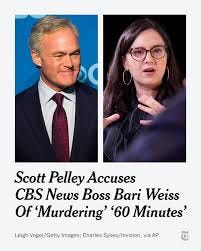
In another portion of the talk, Pelley said Weiss and the executive who hired her, Skydance CEO David Ellison, have compromised the independence of the newsroom at CBS. “We had corporate imperatives and political bias reaching right into our scripts,” he said. “Once that’s started, the broadcast loses its independence, it loses its credibility and, at that point, it loses its audience.”
This was an event designed to honor Pelley, so of course the room greeted his words with applause and support. But he was also articulating something media critics like me have been writing about for years – the importance of keeping journalism work separate from the needs and concerns of the businesses which own news platforms.
Some may point to high-quality work still underway at 60 Minutes, including Ross Douthat’s surprisingly masterful interview recently of President Trump. But, as Fox News Channel has proven over its 30 years in the game, quality news coverage at an outlet which has shown it is willing to alter its reports to serve political and commercial agendas produces material which can’t be trusted – good journalism work becomes part of a smokescreen designed to camouflage when the outlet acts to serve its ideological agendas.
Seeing a star of Pelley’s magnitude willing to walk away from a high status job to make that point was inspiring. And it came at the end of a week filled with inspiring moments, courtesy of my time co-teaching Poynter’s Diverse Voices program, a seminar aimed at helping journalists of color learn to bring their culture, identity and personal perspective to their work.

This is a seminar led by Tom Huang, an Assistant Managing Editor at the Dallas Morning News, and a longtime mentor/educator helping other journalists learn the craft. Ten years ago, he asked me to join in as guest faculty for a revamped program called Diverse Voices, a free seminar which brings a number of journalists of color to the Poynter Institute for Media Studies in St. Petersburg, Fla., for a session aimed at helping them learn to bring their culture and unique perspective to their work – working to flesh out an idea that reveals something important about themselves and how they see the world.
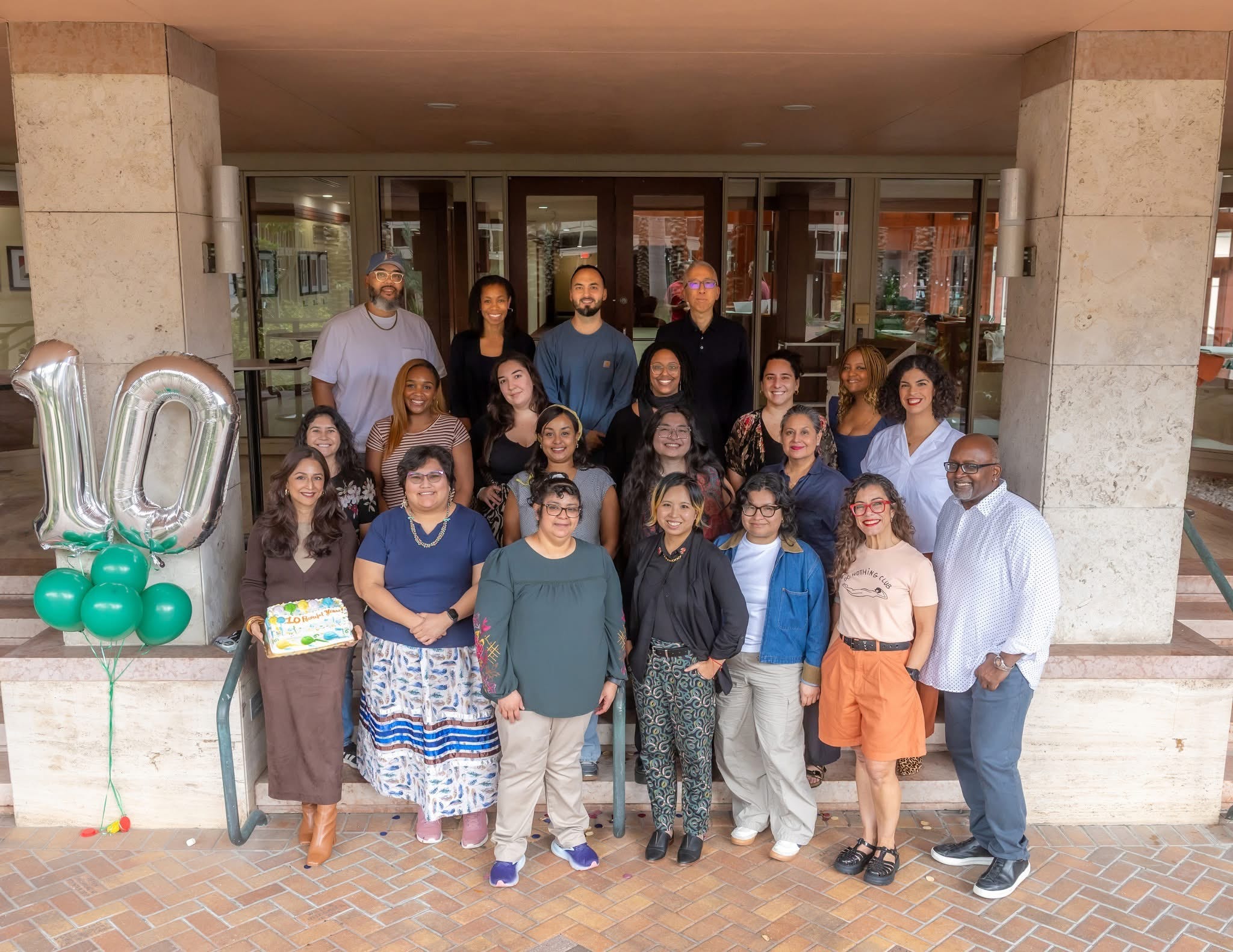
The sessions are always intense, with participants digging deep to explore how they connect to the craft and their lives. In past seminars, we’ve heard how participants were affected by prejudice and stereotypes in the world, in their workplace and even in their families. We’ve talked through incisive ideas requiring emotional honesty, alongside hard work at writing and storytelling.
Huang calls each cohort the Powerful Ones, emphasizing how their storytelling skill and unique perspectives are a superpower in journalism. I was blown away by how much progress our participants made last week on their projects and awed by how they came together as a collective, providing support and advice to each other as they moved through an increasingly difficult media universe.
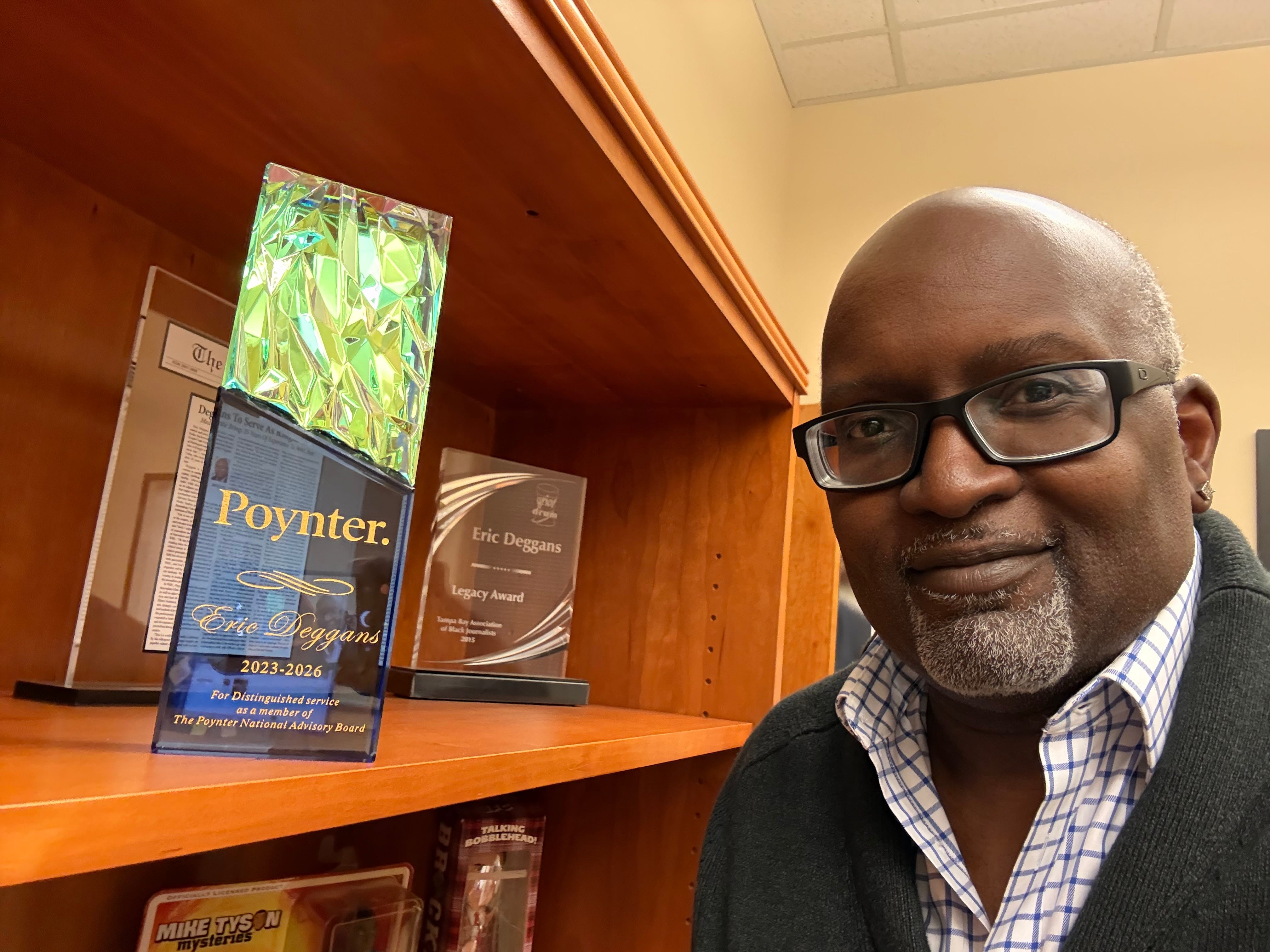
I had come to Poynter less than a week after presiding over a similarly inspiring meeting of journalism minds, the 82nd Ethics Institute at Washington and Lee University.
Part of my job at the university is bringing professional journalists to campus for a two-day discussion on ethics with students at the school, with practitioners talking about challenges they have faced on the job to explore how decisions are made in the real world. This year, we welcomed journalists with experience at ProPublica, MSNOW, CBS News and NPR, exploring a wide range of ethical challenges across many mediums.
Our keynote speaker for the Institute – the one public element of the event open to everyone – was PBS NewsHour co-anchor Geoff Bennett, who has a wide range of experiences in journalsm and remarkable new book, Black Out Loud: The Revolutionary History of Black Comedy from Vaudeville to ‘90s Sitcoms.
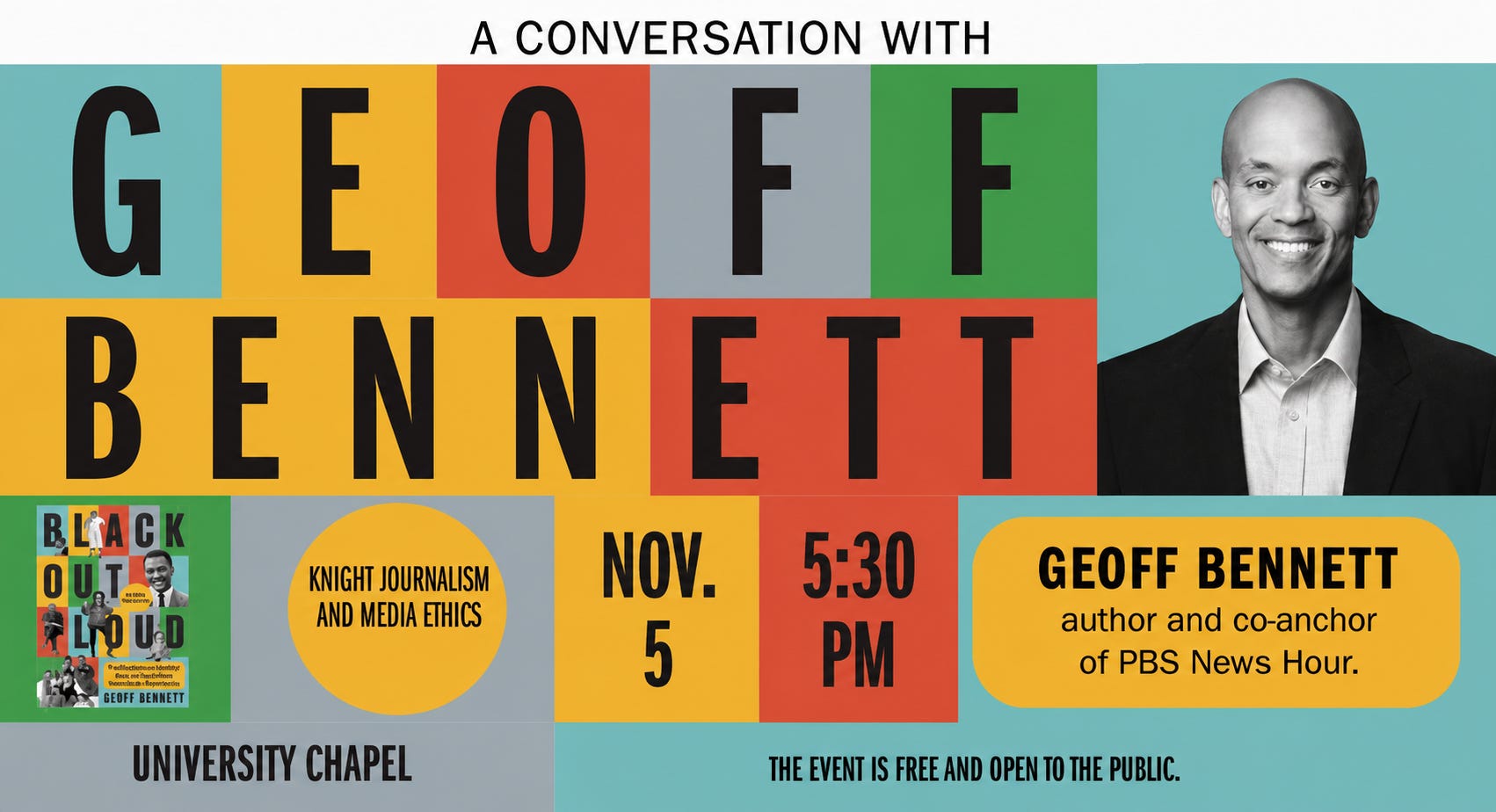
During a Q&A session I moderated with him, Bennett offered a simple answer for why reporters covering the White House rarely seem to react when President Trump insults them after they ask particularly tough questions.
“The instinct of a White House correspondent is not the instinct of a regular person, hearing a colleague or a friend get insulted,” he said, remembering his days covering the White House for NBC News. “When you’re in the room and you have access to the president, you’re there as a conduit for the American people. You’re not there to engage him in a back and forth.”
Bennett spoke candidly and passionately about journalism, media, politics and history of comedy created by Black people in America for more than an hour. And for me, the discussion was mesmerizing – a wonderful way to bring together commentary on the modern state of journalism, the current political tsunami and the evolving nature of Black-centered comedy and pop culture in America.
We talked about how the 1990s offered a high water mark in the number of Black-led TV comedies, and how networks like Fox, UPN and The WB walked away from those shows, once they had established themselves as major broadcasters. He talked about working in PBS’ newsroom on election night and how quickly the unexpected success of the Democrats presented itself. And we speculated on how media and journalism might change as the power dynamics shift in Washington.
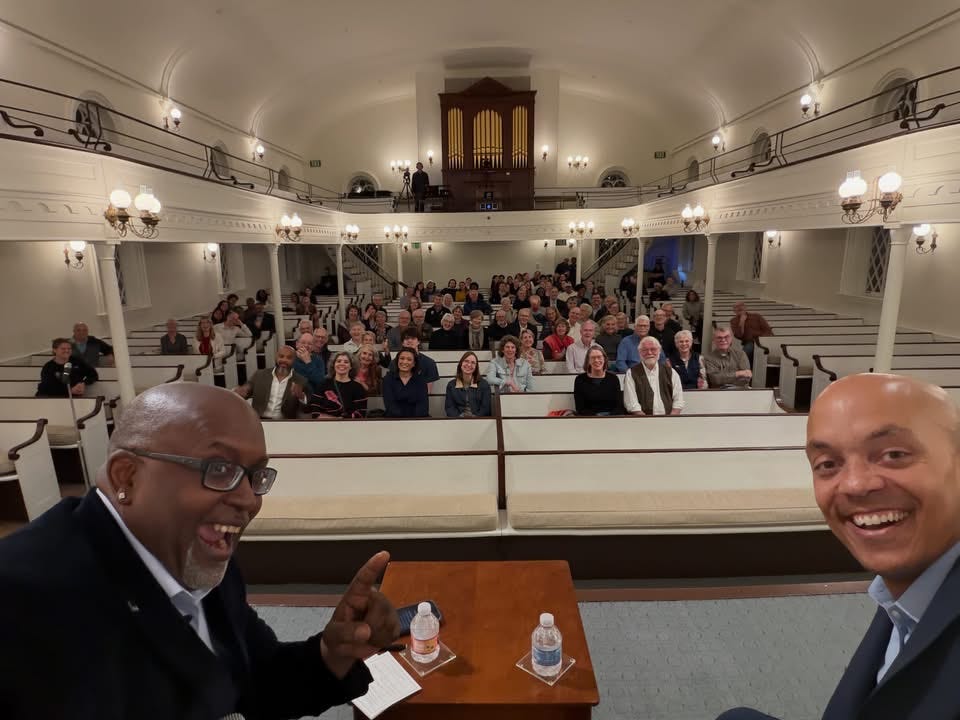
Best of all, I saw a room filled with folks from the general public who genuinely cared about the future of journalism and supported reporters trying hard to offer fair, incisive, comprehensive coverage. And I saw dedicated journalists working hard every day to deliver for them.
What a privilege it has been to spend two weeks helping uphold these values and spread crucial discussions about journalism an democracy.