
How One Rural Couple Is Keeping Their Business Alive Despite PG&E's Rate Hike - KQED
How One Rural Couple Is Keeping Their Business Alive Despite PG&E's Rate Hike | KQED
Seated at the table, from right to left, Dean Bartlett, Gary Fensler, Tim Babcock and Brian Hutchinson gather for lunch at the Big Valley Market in Bieber on Jan. 30, 2024. (Miguel Gutierrez Jr./CalMatters)
Twelve years ago, when Tammy and Tim Babcock saw businesses closing in rural northeast California and families moving to bigger cities, they purchased the Big Valley Market in Bieber to revitalize the dying town.
Since then, their grocery store has become crucial to the day-to-day lives of residents in the surrounding communities, especially to the 200 or so people living in Bieber, about 250 miles north of Sacramento.
But the store is struggling to survive. Tammy and Tim Babcock blame recent rate increases in their electric bill.
In 2023, the Babcocks paid Pacific Gas & Electric nearly $40,000 for electricity — about two-thirds of the store’s annual profit, Tammy Babcock said. This year, rates for businesses their size will grow by 17%, the utility said.
“I called PG&E, and I said, ‘Are you trying to put us out of business? Are you trying to kill small-town America?’” said Tammy Babcock, 62, as she stood in the store she works outside jobs to sustain.
A view down Bridge St. in Bieber, Lassen County, on Jan. 30. 2024. (Miguel Gutierrez Jr./CalMatters)
As major California utilities like PG&E seek higher energy rates this year — in part to pay for upgrades and safety improvements — business owners like the Babcocks said that it’s pushing already struggling businesses toward closure. If that happens to the Babcocks’ market, the surrounding neighborhoods and towns would suffer.
More Related Stories
The California Public Utilities Commission, which regulates utilities, approved the latest rate hike in November. At the time, the commission said it was to ensure that PG&E maintains a “safe and reliable energy system.” The rate hike, which took effect on Jan. 1, affected tens of thousands of residential and business customers.
For PG&E’s more than 764,000 business owner accounts, rates will rise this year by 17%–21%, depending on the size and type of business.
In Bieber, which has very little industry, the median annual household income is about $46,000, according to the U.S. census.
The Babcocks’ market sits below the verdant Big Valley Mountains, which overlook four small towns: Nubieber, Bieber, Lookout and Adin. Fewer than 2,000 people live in this flat farmland.
The store is the main place to buy water, rice, bread and other necessities. The closest Walmart is in Susanville, more than 67 minutes away, and the closest Safeway is in Burney, about 44 minutes away.
Tammy Babcock is co-owner of the Big Valley Market in Bieber. The store serves as the main grocer, restaurant and community space for the unincorporated town of Bieber in Lassen County. (Miguel Gutierrez Jr./CalMatters)
In addition to selling groceries, the Babcocks also serve ready-made meals at two tables.
Just before noon in January, six people walked into the Big Valley store and Tim Babcock seated them as his wife went back and forth to the kitchen, serving them tacos.
The regulars, who have known each other for years, watched Fox News on the store TV and discussed community issues.
One of the customers said that if the Big Valley Market were to close, he would have to drive 52 miles east to get milk and other necessities in Alturas. Another customer said she’d have to drive at least 19 miles to get fresh fruit in Fall River Mills.
They said that the Babcocks operate a hay business to generate outside income and cater weddings, funerals and hospital events.
“We are trying to sustain our business and make a place for the people in the valley so they don’t have to drive back and forth long distances,” Tim Babcock said. “They can’t even afford gas.”
Kathlin Meyer, 73, said she visits the Big Valley Market at least three times a week. It’s the place where she feels most like part of a community, she said, after her move from Fortuna in 2006.
Like Tammy Babcock, Meyer is a cancer survivor. Last year, during Meyer’s chemotherapy, the Big Valley Market delivered food to her house.
The Big Valley Wellness Center off of Lassen State Highway in Lassen County on Jan. 30, 2024. (Photo by Miguel Gutierrez Jr./CalMatters)
“If we close, people have to cross over a mountain, and in the winter, the road is covered with ice and snow,” Tammy Babcock said. “We have to help take care of our people, our senior citizens.”
Tim Babcock added that the Big Valley Market would have to close if the electric bills continue to increase. Tammy Babcock then recited how much they have paid in recent months, holding a list of the store’s electric payments.
In January, they paid nearly $3,000 toward the store’s PG&E bill. They made two payments because they couldn’t afford the entire amount immediately. In December, the Babcocks paid nearly $3,000. In November, it was nearly $4,000.
With the approved rate hike this year, the Babcocks expect to pay more than $40,000.
Getting regulators’ permission
Republican state Sen. Brian Dahle, who is from Bieber, told CalMatters recently his office receives many calls from people complaining about electric bills and that the state should hold utilities accountable.
PG&E would not make an official available to answer CalMatters’ other questions about the rate hikes but sent a written statement.
“Energy rates were adjusted for all customers to fund investments in the coming years,” the utility said, “to pay for permanent wildfire risk reduction, critical gas and electric safety and reliability work and capacity upgrades to support new business connections and California’s bold clean energy goals.”
Like the Big Valley Market, medium-sized business customers will pay an average of 17% more this year, PG&E said, while small businesses will pay 21% more, agricultural businesses will pay 19% more and large businesses will have a 3.5% increase.
“PG&E is committed to providing ways for its business customers to save energy and money and has a variety of programs and tools available to find the best rate and to save money on their energy bills,” PG&E said. It listed a dozen programs, including monthly “budget billing,” loans to replace equipment, and “economic development rates” for some businesses that are 12% to 25% less.
But PG&E also is seeking another overall rate increase for this year. In June, PG&E requested rate hikes to reimburse the utility $688 million for wildfire safety work it had completed.
Earlier this month, state regulators issued a counter-proposal allowing the utility giant to collect $516 million from customers. A typical residential customer’s bill would go up $4 to $6 a month during the first year, although the lowest-income customers would pay $3 or $4, according to the commission’s proposal.
A small group gathers for lunch at Big Valley Market on Jan. 30. 2024. The market serves as the main grocer, restaurant and community gathering space for the town of Bieber. (Miguel Gutierrez Jr./CalMatters)
Mark Toney, executive director of the consumer group the Utility Reform Network (TURN), noted that if this relief is approved, the utilities would immediately start collecting it.
“PG&E shouldn’t automatically be getting this money without a field inspection to make sure they did the right work in the right locations with the right result, and they certainly should not be getting advance payment,” he said.
The commission is scheduled to vote on that on March 7.
California lawmakers’ objections
Gov. Gavin Newsom appoints, and the state Senate confirms all five members of the Public Utilities Commission, where they sit for staggered six-year terms.
Earlier this month, Republican lawmakers introduced a bill that would force state regulators to cut electricity rates across the board by at least 30%.
Assemblymember Joe Patterson, the Republican from Rocklin who introduced the bill, noted existing law gives state regulators authority to fix utility rates and charges at a “just and reasonable” price.
“I went to the CPUC website, and I looked at what their mission statement said, and, honestly, they don’t even list affordability as their goal,” he said. “How is that possible? I am not saying they don’t think of it when discussing issues, but it should be their priority.”
Lawmakers from both parties, meanwhile, are contesting a separate proposal from the state’s three major investor-owned utilities that would levy fixed rates on residential customers based on their income.
The California Public Utilities Commission offices at the Edmund G. Pat Brown building in San Francisco on Jan. 28, 2022. (Martin do Nascimento)
A monthly fixed charge for PG&E’s low-income customers, for instance, would be as low as $15, the utility said, and no more than $30, while moderate-income customers would pay about $51 and customers in the top 25% of earners would pay a fixed $92.
Sen. Scott Wiener, a Democrat from San Francisco, said the utilities’ proposal would place an unacceptable burden on middle-class Californians while removing incentives to conserve energy.
“Californians already pay some of the highest electric bills in the nation and should not be forced to arbitrarily pay more to cover for a private utility’s poor business decisions,” Wiener said in an email.
Justin Ong, chief policy advisor at the commission’s Public Advocate’s office, said the average monthly rate for PG&E customers is higher than all other utilities in the state due to the rate hike approved in November.
“We’re still really strong supporters of the fixed charge because it’s one of the only ways to reduce rates,” Ong told CalMatters.
The commissioners who approved the PG&E rate hikes in November will decide on the fixed charge proposal in July. If that plan is authorized, it would be implemented in 2026, Ong said.
‘We want to keep rural America alive’
A few blocks away from the Big Valley Market, Williams Wells, 55, picked up restaurant food for his mother, whose heart problems prevent her from taking care of herself. Wells said he moved to Beiber from Sacramento to help his 78-year-old mother, but that has become extraordinarily expensive. The breathing machine she needs has been plugged in 24 hours a day for the past six years, he said.
“My mom only receives $400 from Social Security, and I work three jobs to be able to take care of her,” Wells said. “I sleep with no heat, and we still pay over $300, and we have seen it go over $700. If it keeps going up, we’d probably be homeless.”
William Wells at the Old Mill Grill in Bieber on Jan. 30, 2024. (Miguel Gutierrez Jr./CalMatters)
Besides him, the streets in Bieber were empty. Many storefront windows were broken or boarded up. The town of 146 homes was quiet.
Except inside the Big Valley Market, Tammy Babcock was cutting pork into chops while her husband unpacked boxes and filled shelves.
They were preparing for a busy evening. A basketball game was scheduled at the Big Valley High School, a few blocks away. Whatever the Babcocks earned that night would likely go toward the next electricity bill, Tim Babcock said.
“We don’t want to move into the city; we are not that kind of people. But these energy rates ain’t helping, right?” said Tim Babcock.
“It’s a struggle, but we want to keep rural America alive.”
Sponsored
lower waypoint
Stay in touch. Sign up for our daily newsletter.
To learn more about how we use your information, please read our privacy policy.
window.__IS_SSR__=true window.__INITIAL_STATE__={"attachmentsReducer":{"audio_0":{"type":"attachments","id":"audio_0","imgSizes":{"kqedFullSize":{"file":"https://ww2.kqed.org/news/wp-content/themes/KQED-unified/img/audio_bgs/…;}}},"audio_1":{"type":"attachments","id":"audio_1","imgSizes":{"kqedFullSize":{"file":"https://ww2.kqed.org/news/wp-content/themes/KQED-unified/img/audio_bgs/…;}}},"audio_2":{"type":"attachments","id":"audio_2","imgSizes":{"kqedFullSize":{"file":"https://ww2.kqed.org/news/wp-content/themes/KQED-unified/img/audio_bgs/…;}}},"audio_3":{"type":"attachments","id":"audio_3","imgSizes":{"kqedFullSize":{"file":"https://ww2.kqed.org/news/wp-content/themes/KQED-unified/img/audio_bgs/…;}}},"audio_4":{"type":"attachments","id":"audio_4","imgSizes":{"kqedFullSize":{"file":"https://ww2.kqed.org/news/wp-content/themes/KQED-unified/img/audio_bgs/…;}}},"placeholder":{"type":"attachments","id":"placeholder","imgSizes":{"thumbnail":{"file":"https://ww2.kqed.org/wp-content/uploads/sites/10/2018/01/GettyImages-89…;},"medium":{"file":"https://ww2.kqed.org/wp-content/uploads/sites/10/2018/01/GettyImages-89…;},"large":{"file":"https://ww2.kqed.org/wp-content/uploads/sites/10/2018/01/GettyImages-89…;},"fd-lrg":{"file":"https://ww2.kqed.org/wp-content/uploads/sites/10/2018/01/GettyImages-89…;},"fd-med":{"file":"https://ww2.kqed.org/wp-content/uploads/sites/10/2018/01/GettyImages-89…;},"fd-sm":{"file":"https://ww2.kqed.org/wp-content/uploads/sites/10/2018/01/GettyImages-89…;},"post-thumbnail":{"file":"https://ww2.kqed.org/wp-content/uploads/sites/10/2018/01/GettyImages-89…;},"twentyfourteen-full-width":{"file":"https://ww2.kqed.org/wp-content/uploads/sites/10/2018/01/GettyImages-89…;},"xxsmall":{"file":"https://ww2.kqed.org/wp-content/uploads/sites/10/2018/01/GettyImages-89…;},"xsmall":{"file":"https://ww2.kqed.org/wp-content/uploads/sites/10/2018/01/GettyImages-89…;},"small":{"file":"https://ww2.kqed.org/wp-content/uploads/sites/10/2018/01/GettyImages-89…;},"xlarge":{"file":"https://ww2.kqed.org/wp-content/uploads/sites/10/2018/01/GettyImages-89…;},"full-width":{"file":"https://ww2.kqed.org/wp-content/uploads/sites/10/2018/01/GettyImages-89…;},"guest-author-32":{"file":"https://ww2.kqed.org/wp-content/uploads/sites/10/2018/01/GettyImages-89…;},"guest-author-50":{"file":"https://ww2.kqed.org/wp-content/uploads/sites/10/2018/01/GettyImages-89…;},"guest-author-64":{"file":"https://ww2.kqed.org/wp-content/uploads/sites/10/2018/01/GettyImages-89…;},"guest-author-96":{"file":"https://ww2.kqed.org/wp-content/uploads/sites/10/2018/01/GettyImages-89…;},"guest-author-128":{"file":"https://ww2.kqed.org/wp-content/uploads/sites/10/2018/01/GettyImages-89…;},"detail":{"file":"https://ww2.kqed.org/wp-content/uploads/sites/10/2018/01/GettyImages-89…;},"kqedFullSize":{"file":"https://ww2.kqed.org/wp-content/uploads/sites/10/2018/01/GettyImages-89…}}},"news_11952793":{"type":"attachments","id":"news_11952793","meta":{"index":"attachments_1591205162","site":"news","id":"11952793","found":true},"title":"California Reparations Task Force meets to hear public input on reparations at the California Science Center in Los Angeles on Sept. 22, 2022.","publishDate":1686590644,"status":"inherit","parent":0,"modified":1686590678,"caption":"Long-time Los Angeles resident Walter Foster, 80, holds up a sign as the Reparations Task Force listens to public input at the California Science Center in Los Angeles on Sept. 22, 2022.","credit":"Carolyn Cole/Los Angeles Times via Getty Images","altTag":"A man wearing a face mask holds a sign that reads \"World Leaders! Reparations for Slavery Now!\" in a crowd of people.","description":null,"imgSizes":{"medium":{"file":"https://ww2.kqed.org/app/uploads/sites/10/2023/06/230612-Reparations-Ge…;},"large":{"file":"https://ww2.kqed.org/app/uploads/sites/10/2023/06/230612-Reparations-Ge…;},"thumbnail":{"file":"https://ww2.kqed.org/app/uploads/sites/10/2023/06/230612-Reparations-Ge…;},"1536x1536":{"file":"https://ww2.kqed.org/app/uploads/sites/10/2023/06/230612-Reparations-Ge…;},"post-thumbnail":{"file":"https://ww2.kqed.org/app/uploads/sites/10/2023/06/230612-Reparations-Ge…;},"twentyfourteen-full-width":{"file":"https://ww2.kqed.org/app/uploads/sites/10/2023/06/230612-Reparations-Ge…;},"kqedFullSize":{"file":"https://ww2.kqed.org/app/uploads/sites/10/2023/06/230612-Reparations-Ge…}},"fetchFailed":false,"isLoading":false},"forum_2010101904682":{"type":"attachments","id":"forum_2010101904682","meta":{"index":"attachments_1591205162","site":"forum","id":"2010101904682","found":true},"title":"1920 x 1080 forum web page (2)","publishDate":1707775948,"status":"inherit","parent":2010101904681,"modified":1707776049,"caption":"Sheila Heti's new book is called “Alphabetical Diaries.”","credit":"Photo credit Sylvia Plachy","altTag":null,"description":null,"imgSizes":{"medium":{"file":"https://cdn.kqed.org/wp-content/uploads/sites/43/2024/02/1920-x-1080-fo…;},"large":{"file":"https://cdn.kqed.org/wp-content/uploads/sites/43/2024/02/1920-x-1080-fo…;},"thumbnail":{"file":"https://cdn.kqed.org/wp-content/uploads/sites/43/2024/02/1920-x-1080-fo…;},"medium_large":{"file":"https://cdn.kqed.org/wp-content/uploads/sites/43/2024/02/1920-x-1080-fo…;},"1536x1536":{"file":"https://cdn.kqed.org/wp-content/uploads/sites/43/2024/02/1920-x-1080-fo…;},"post-thumbnail":{"file":"https://cdn.kqed.org/wp-content/uploads/sites/43/2024/02/1920-x-1080-fo…;},"twentyfourteen-full-width":{"file":"https://cdn.kqed.org/wp-content/uploads/sites/43/2024/02/1920-x-1080-fo…;},"kqedFullSize":{"file":"https://cdn.kqed.org/wp-content/uploads/sites/43/2024/02/1920-x-1080-fo…}},"fetchFailed":false,"isLoading":false},"news_11975333":{"type":"attachments","id":"news_11975333","meta":{"index":"attachments_1591205162","site":"news","id":"11975333","found":true},"title":"image (1)","publishDate":1707528792,"status":"inherit","parent":11975319,"modified":1707530102,"caption":"San José Mayor Matt Mahan (left) joined Governor Gavin Newsom at Cal Expo in Sacramento on March 16, 2023, for the announcement of a program gifting small homes to California jurisdictions to house people experiencing homelessness.","credit":"Courtesy of the Governor's Office","altTag":"Two men in suits, including Gov. Newsom, consult with a group of people in a tent.","description":null,"imgSizes":{"medium":{"file":"https://cdn.kqed.org/wp-content/uploads/sites/10/2024/02/image-1-800x53…;},"large":{"file":"https://cdn.kqed.org/wp-content/uploads/sites/10/2024/02/image-1-1020x6…;},"thumbnail":{"file":"https://cdn.kqed.org/wp-content/uploads/sites/10/2024/02/image-1-160x10…;},"post-thumbnail":{"file":"https://cdn.kqed.org/wp-content/uploads/sites/10/2024/02/image-1-672x37…;},"twentyfourteen-full-width":{"file":"https://cdn.kqed.org/wp-content/uploads/sites/10/2024/02/image-1-1038x5…;},"kqedFullSize":{"file":"https://cdn.kqed.org/wp-content/uploads/sites/10/2024/02/image-1.png","…}},"fetchFailed":false,"isLoading":false},"news_11975577":{"type":"attachments","id":"news_11975577","meta":{"index":"attachments_1591205162","site":"news","id":"11975577","found":true},"title":"Edsource_IMG_0002-1-1024x768","publishDate":1707765729,"status":"inherit","parent":11975553,"modified":1707765962,"caption":"Aleka Jackson-Jarrell is the coordinator of the Heritage Program at Adelanto High in California's High Desert. She regularly meets with Black students at the school to make sure they stay on track to graduate and meet A-G requirements that enable them to apply to a public university.","credit":"Emma Gallegos/EdSource","altTag":"A classroom of students.","description":null,"imgSizes":{"medium":{"file":"https://cdn.kqed.org/wp-content/uploads/sites/10/2024/02/Edsource_IMG_0…;},"large":{"file":"https://cdn.kqed.org/wp-content/uploads/sites/10/2024/02/Edsource_IMG_0…;},"thumbnail":{"file":"https://cdn.kqed.org/wp-content/uploads/sites/10/2024/02/Edsource_IMG_0…;},"post-thumbnail":{"file":"https://cdn.kqed.org/wp-content/uploads/sites/10/2024/02/Edsource_IMG_0…;},"twentyfourteen-full-width":{"file":"https://cdn.kqed.org/wp-content/uploads/sites/10/2024/02/Edsource_IMG_0…;},"kqedFullSize":{"file":"https://cdn.kqed.org/wp-content/uploads/sites/10/2024/02/Edsource_IMG_0…}},"fetchFailed":false,"isLoading":false},"news_11975267":{"type":"attachments","id":"news_11975267","meta":{"index":"attachments_1591205162","site":"news","id":"11975267","found":true},"title":"RS45759__MG_0162-qut-800x533","publishDate":1707508999,"status":"inherit","parent":11975246,"modified":1707517874,"caption":"Layers of security fencing at Otay Mesa immigration Detention Facility just east of San Diego, in a photo from 2020.","credit":"Erin Siegal McIntyre/KQED","altTag":"A chain-link fence with barbed wire at the top of a detention facility. An American flag waves in the distance.","description":null,"imgSizes":{"thumbnail":{"file":"https://cdn.kqed.org/wp-content/uploads/sites/10/2024/02/RS45759__MG_01…;},"post-thumbnail":{"file":"https://cdn.kqed.org/wp-content/uploads/sites/10/2024/02/RS45759__MG_01…;},"kqedFullSize":{"file":"https://cdn.kqed.org/wp-content/uploads/sites/10/2024/02/RS45759__MG_01…}},"fetchFailed":false,"isLoading":false},"forum_2010101892563":{"type":"attachments","id":"forum_2010101892563","meta":{"index":"attachments_1591205162","site":"forum","id":"2010101892563","found":true},"title":"Federal Reserve","publishDate":1679355903,"status":"inherit","parent":2010101892562,"modified":1679355943,"caption":"Federal Reserve - Central Banking","credit":"Douglas Rissing via Getty Images","altTag":null,"description":null,"imgSizes":{"medium":{"file":"https://ww2.kqed.org/app/uploads/sites/43/2023/03/GettyImages-139881262…;},"large":{"file":"https://ww2.kqed.org/app/uploads/sites/43/2023/03/GettyImages-139881262…;},"thumbnail":{"file":"https://ww2.kqed.org/app/uploads/sites/43/2023/03/GettyImages-139881262…;},"medium_large":{"file":"https://ww2.kqed.org/app/uploads/sites/43/2023/03/GettyImages-139881262…;},"1536x1536":{"file":"https://ww2.kqed.org/app/uploads/sites/43/2023/03/GettyImages-139881262…;},"2048x2048":{"file":"https://ww2.kqed.org/app/uploads/sites/43/2023/03/GettyImages-139881262…;},"post-thumbnail":{"file":"https://ww2.kqed.org/app/uploads/sites/43/2023/03/GettyImages-139881262…;},"twentyfourteen-full-width":{"file":"https://ww2.kqed.org/app/uploads/sites/43/2023/03/GettyImages-139881262…;},"full-width":{"file":"https://ww2.kqed.org/app/uploads/sites/43/2023/03/GettyImages-139881262…;},"kqedFullSize":{"file":"https://ww2.kqed.org/app/uploads/sites/43/2023/03/GettyImages-139881262…}},"fetchFailed":false,"isLoading":false},"forum_2010101904660":{"type":"attachments","id":"forum_2010101904660","meta":{"index":"attachments_1591205162","site":"forum","id":"2010101904660","found":true},"title":"Document","publishDate":1707436162,"status":"inherit","parent":2010101904648,"modified":1707436227,"caption":"New York Times investigative reporter Nicholas Confessore gained access to thousands of documents and emails shedding light on the national anti-D.E.I. campaign orchestrated by the Claremont Institute’s leaders.","credit":"Anthony Devlin / Stringer via Getty Images","altTag":null,"description":null,"imgSizes":{"medium":{"file":"https://cdn.kqed.org/wp-content/uploads/sites/43/2024/02/Document-800x4…;},"large":{"file":"https://cdn.kqed.org/wp-content/uploads/sites/43/2024/02/Document-1020x…;},"thumbnail":{"file":"https://cdn.kqed.org/wp-content/uploads/sites/43/2024/02/Document-160x9…;},"medium_large":{"file":"https://cdn.kqed.org/wp-content/uploads/sites/43/2024/02/Document-768x4…;},"1536x1536":{"file":"https://cdn.kqed.org/wp-content/uploads/sites/43/2024/02/Document-1536x…;},"post-thumbnail":{"file":"https://cdn.kqed.org/wp-content/uploads/sites/43/2024/02/Document-672x3…;},"twentyfourteen-full-width":{"file":"https://cdn.kqed.org/wp-content/uploads/sites/43/2024/02/Document-1038x…;},"kqedFullSize":{"file":"https://cdn.kqed.org/wp-content/uploads/sites/43/2024/02/Document.jpg",…}},"fetchFailed":false,"isLoading":false},"forum_2010101904685":{"type":"attachments","id":"forum_2010101904685","meta":{"index":"attachments_1591205162","site":"forum","id":"2010101904685","found":true},"title":"GettyImages-1298811571 (1)","publishDate":1707781675,"status":"inherit","parent":2010101904684,"modified":1707840570,"caption":"Brontez Purnell's new book is called \"Ten Bridges I've Burnt: A Memoir in Verse\"","credit":"San Francisco Chronicle/Hearst Newspapers via Getty Images","altTag":null,"description":null,"imgSizes":{"medium":{"file":"https://cdn.kqed.org/wp-content/uploads/sites/43/2024/02/GettyImages-12…;},"large":{"file":"https://cdn.kqed.org/wp-content/uploads/sites/43/2024/02/GettyImages-12…;},"thumbnail":{"file":"https://cdn.kqed.org/wp-content/uploads/sites/43/2024/02/GettyImages-12…;},"medium_large":{"file":"https://cdn.kqed.org/wp-content/uploads/sites/43/2024/02/GettyImages-12…;},"1536x1536":{"file":"https://cdn.kqed.org/wp-content/uploads/sites/43/2024/02/GettyImages-12…;},"post-thumbnail":{"file":"https://cdn.kqed.org/wp-content/uploads/sites/43/2024/02/GettyImages-12…;},"twentyfourteen-full-width":{"file":"https://cdn.kqed.org/wp-content/uploads/sites/43/2024/02/GettyImages-12…;},"kqedFullSize":{"file":"https://cdn.kqed.org/wp-content/uploads/sites/43/2024/02/GettyImages-12…}},"fetchFailed":false,"isLoading":false},"forum_2010101891357":{"type":"attachments","id":"forum_2010101891357","meta":{"index":"attachments_1591205162","site":"forum","id":"2010101891357","found":true},"title":"GettyImages-170955886","publishDate":1669071126,"status":"inherit","parent":2010101891354,"modified":1669071176,"caption":null,"credit":"Dimitri Otis via Getty Images","altTag":null,"description":null,"imgSizes":{"medium":{"file":"https://ww2.kqed.org/app/uploads/sites/43/2022/11/GettyImages-170955886…;},"large":{"file":"https://ww2.kqed.org/app/uploads/sites/43/2022/11/GettyImages-170955886…;},"thumbnail":{"file":"https://ww2.kqed.org/app/uploads/sites/43/2022/11/GettyImages-170955886…;},"medium_large":{"file":"https://ww2.kqed.org/app/uploads/sites/43/2022/11/GettyImages-170955886…;},"1536x1536":{"file":"https://ww2.kqed.org/app/uploads/sites/43/2022/11/GettyImages-170955886…;},"2048x2048":{"file":"https://ww2.kqed.org/app/uploads/sites/43/2022/11/GettyImages-170955886…;},"post-thumbnail":{"file":"https://ww2.kqed.org/app/uploads/sites/43/2022/11/GettyImages-170955886…;},"twentyfourteen-full-width":{"file":"https://ww2.kqed.org/app/uploads/sites/43/2022/11/GettyImages-170955886…;},"full-width":{"file":"https://ww2.kqed.org/app/uploads/sites/43/2022/11/GettyImages-170955886…;},"kqedFullSize":{"file":"https://ww2.kqed.org/app/uploads/sites/43/2022/11/GettyImages-170955886…}},"fetchFailed":false,"isLoading":false},"news_10582145":{"type":"attachments","id":"news_10582145","meta":{"index":"attachments_1591205162","site":"news","id":"10582145","found":true},"title":"sashafleischman-e1383777809115-400x225","publishDate":1435622806,"status":"inherit","parent":10582017,"modified":1435622861,"caption":"Sasha Fleischman has fully recovered and is attending MIT.","credit":"fundly","description":"Sasha Fleischman has fully recovered and is attending MIT.","imgSizes":{"thumbnail":{"file":"https://ww2.kqed.org/app/uploads/sites/10/2015/06/sashafleischman-e1383…;},"guest-author-32":{"file":"https://ww2.kqed.org/app/uploads/sites/10/2015/06/sashafleischman-e1383…;},"guest-author-64":{"file":"https://ww2.kqed.org/app/uploads/sites/10/2015/06/sashafleischman-e1383…;},"guest-author-96":{"file":"https://ww2.kqed.org/app/uploads/sites/10/2015/06/sashafleischman-e1383…;},"guest-author-128":{"file":"https://ww2.kqed.org/app/uploads/sites/10/2015/06/sashafleischman-e1383…;},"detail":{"file":"https://ww2.kqed.org/app/uploads/sites/10/2015/06/sashafleischman-e1383…;},"jmtc-small-thumb":{"file":"https://ww2.kqed.org/app/uploads/sites/10/2015/06/sashafleischman-e1383…;},"kqedFullSize":{"file":"https://ww2.kqed.org/app/uploads/sites/10/2015/06/sashafleischman-e1383…}},"fetchFailed":false,"isLoading":false},"news_11975729":{"type":"attachments","id":"news_11975729","meta":{"index":"attachments_1591205162","site":"news","id":"11975729","found":true},"title":"013024-Bieber-Electric-Rates-MG-CM-21","publishDate":1707858981,"status":"inherit","parent":11975688,"modified":1707859035,"caption":"Seated at the table, from right to left, Dean Bartlett, Gary Fensler, Tim Babcock and Brian Hutchinson gather for lunch at the Big Valley Market in Bieber on Jan. 30, 2024.","credit":"Miguel Gutierrez Jr./CalMatters","altTag":"Five men sit at a table in a store with yellow walls.","description":null,"imgSizes":{"medium":{"file":"https://cdn.kqed.org/wp-content/uploads/sites/10/2024/02/013024-Bieber-…;},"large":{"file":"https://cdn.kqed.org/wp-content/uploads/sites/10/2024/02/013024-Bieber-…;},"thumbnail":{"file":"https://cdn.kqed.org/wp-content/uploads/sites/10/2024/02/013024-Bieber-…;},"1536x1536":{"file":"https://cdn.kqed.org/wp-content/uploads/sites/10/2024/02/013024-Bieber-…;},"post-thumbnail":{"file":"https://cdn.kqed.org/wp-content/uploads/sites/10/2024/02/013024-Bieber-…;},"twentyfourteen-full-width":{"file":"https://cdn.kqed.org/wp-content/uploads/sites/10/2024/02/013024-Bieber-…;},"full-width":{"file":"https://cdn.kqed.org/wp-content/uploads/sites/10/2024/02/013024-Bieber-…;},"kqedFullSize":{"file":"https://cdn.kqed.org/wp-content/uploads/sites/10/2024/02/013024-Bieber-…}},"fetchFailed":false,"isLoading":false}},"audioPlayerReducer":{"postId":"stream_live"},"authorsReducer":{"byline_news_11975553":{"type":"authors","id":"byline_news_11975553","meta":{"override":true},"slug":"byline_news_11975553","name":"\u003ca href=\"https://edsource.org/author/egallegos\">Emma Gallegos \u003c/a> and \u003ca href=\"https://edsource.org/author/dwillis\">Daniel J. Willis \u003c/a>","isLoading":false},"gmarzorati":{"type":"authors","id":"227","meta":{"index":"authors_1591205172","id":"227","found":true},"name":"Guy Marzorati","firstName":"Guy","lastName":"Marzorati","slug":"gmarzorati","email":"gmarzorati@KQED.org","display_author_email":true,"staff_mastheads":["news"],"title":"Correspondent","bio":"Guy Marzorati is a correspondent on KQED's California Politics and Government Desk, based in San Jose. Guy joined KQED in 2013, and reports on state and local politics. He produces KQED's weekly radio show and podcast \u003cem>Political Breakdown \u003c/em>and KQED's digital voter guide. Guy is a graduate of Santa Clara University.","avatar":"https://secure.gravatar.com/avatar/e7038b8dbfd55b104369b76b1cd0b9de?s=6…;:[{"site":"","roles":["editor"]},{"site":"news","roles":["editor"]},{"site":"forum","roles":["editor"]},{"site":"elections","roles":["editor"]},{"site":"liveblog","roles":["editor"]}],"headData":{"title":"Guy Marzorati | KQED","description":"Correspondent","ogImgSrc":"https://secure.gravatar.com/avatar/e7038b8dbfd55b104369b76b1cd0b9de?s=6…;},"isLoading":false,"link":"/author/gmarzorati"},"minakim":{"type":"authors","id":"243","meta":{"index":"authors_1591205172","id":"243","found":true},"name":"Mina Kim","firstName":"Mina","lastName":"Kim","slug":"minakim","email":"mkim@kqed.org","display_author_email":false,"staff_mastheads":["news"],"title":"Host, Forum","bio":"Mina Kim is host of the 10 a.m. statewide hour of Forum; a live daily talk show for curious Californians on issues that matter to the state and nation, with a particular emphasis on race and equity.\r\n\r\nBefore joining the Forum team, Mina was KQED’s evening news anchor, and health reporter for The California Report. Her award-winning work has included natural disasters in Napa and gun violence in Oakland. Mina grew up in St. John’s, Newfoundland.","avatar":"https://secure.gravatar.com/avatar/145ce657a2d08cb86d93686beb958982?s=6…;:[{"site":"news","roles":["contributor"]},{"site":"stateofhealth","roles":["author"]},{"site":"forum","roles":["editor"]}],"headData":{"title":"Mina Kim | KQED","description":"Host, Forum","ogImgSrc":"https://secure.gravatar.com/avatar/145ce657a2d08cb86d93686beb958982?s=6…;},"isLoading":false,"link":"/author/minakim"},"scottshafer":{"type":"authors","id":"255","meta":{"index":"authors_1591205172","id":"255","found":true},"name":"Scott Shafer","firstName":"Scott","lastName":"Shafer","slug":"scottshafer","email":"sshafer@kqed.org","display_author_email":false,"staff_mastheads":["news"],"title":"KQED Contributor","bio":"Scott Shafer came to KQED in 1998 to host the statewide\u003cem> California Report\u003c/em>. Prior to that he had extended stints in politics and government\u003cem>.\u003c/em> Using that inside experience, he is now Senior Editor for KQED's Politics and Government Desk where he provides reporting, hosting and analysis while also overseeing the politics desk. Scott co-hosts the weekly show and podcast \u003cem>Political Breakdown a\u003c/em>nd he collaborated on \u003cem>The Political Mind of Jerry Brown, \u003c/em>an eight-part series about the life and extraordinary political career of the former governor. For fun, he plays water polo with the San Francisco Tsunami.","avatar":"https://secure.gravatar.com/avatar/a62ebae45b79d7aed1a39a0e3bf68104?s=6…;:[{"site":"news","roles":["editor"]},{"site":"stateofhealth","roles":["author"]},{"site":"science","roles":["author"]},{"site":"forum","roles":["subscriber"]}],"headData":{"title":"Scott Shafer | KQED","description":"KQED Contributor","ogImgSrc":"https://secure.gravatar.com/avatar/a62ebae45b79d7aed1a39a0e3bf68104?s=6…;},"isLoading":false,"link":"/author/scottshafer"},"aemslie":{"type":"authors","id":"3206","meta":{"index":"authors_1591205172","id":"3206","found":true},"name":"Alex Emslie","firstName":"Alex","lastName":"Emslie","slug":"aemslie","email":"aemslie@kqed.org","display_author_email":true,"staff_mastheads":["news"],"title":"KQED Senior Editor","bio":"Alex Emslie is senior editor of talent and development at KQED, where he manages dozens of early career journalists and oversees news department internships.\r\n\r\nHe is a former carpenter and proud graduate of City College of San Francisco and San Francisco State University, where he studied journalism and criminal justice before joining KQED in 2013.\r\n\r\nAlex produced investigative journalism focused on \u003ca href=\"https://www.kqed.org/news/11667594/the-trials-of-marvin-mutch-video\">criminal justice\u003c/a> and policing for most of a decade. He has broken major stories about \u003ca href=\"https://www.kqed.org/news/135682/amid-a-series-of-vallejo-police-shooti…\">police use of deadly force\u003c/a>, \u003ca href=\"https://www.kqed.org/news/10454955/racist-texts-prompt-sfpd-internal-in…\">officer misconduct\u003c/a> and \u003ca href=\"https://www.kqed.org/news/11712239/terrorist-or-troll-judge-to-weigh-wh…\">other\u003c/a> \u003ca href=\"https://www.kqed.org/news/11221414/hayward-paid-159000-to-husband-of-re…\">high\u003c/a>-\u003ca href=\"https://www.kqed.org/news/10622762/the-forgotten-tracking-two-homicides…\">profile\u003c/a> \u003ca href=\"https://www.kqed.org/news/11624516/federal-agency-promoted-ranger-just-…\">cases\u003c/a>. He co-founded the \u003ca href=\"https://projects.scpr.org/california-reporting-project/\">California Reporting Project\u003c/a> in 2019 to obtain and report on previously confidential police internal investigations. The effort produced well over 100 original stories and changed the course of multiple criminal cases.\r\n\r\nHis work has been recognized with numerous journalism awards, including a national Edward R. Murrow award for several years of \u003ca href=\"https://www.kqed.org/news/11688481/sfpd-officers-in-mario-woods-case-re…\">reporting\u003c/a> on the San Francisco Police shooting of Mario Woods. His \u003ca href=\"https://www.kqed.org/news/147854/half-of-those-killed-by-san-francisco-…\">reporting\u003c/a> on police killings of people in psychiatric crisis was cited in amicus briefs before the U.S. Supreme Court.\r\n\r\nAlex now enjoys mentoring the next generation of journalists at KQED.","avatar":"https://secure.gravatar.com/avatar/e691e65209f20e9da202bd730ead5663?s=6…;:[{"site":"arts","roles":["editor"]},{"site":"news","roles":["editor"]},{"site":"mindshift","roles":["editor"]},{"site":"stateofhealth","roles":["editor"]},{"site":"science","roles":["administrator"]}],"headData":{"title":"Alex Emslie | KQED","description":"KQED Senior Editor","ogImgSrc":"https://secure.gravatar.com/avatar/e691e65209f20e9da202bd730ead5663?s=6…;},"isLoading":false,"link":"/author/aemslie"},"amadrigal":{"type":"authors","id":"11757","meta":{"index":"authors_1591205172","id":"11757","found":true},"name":"Alexis Madrigal","firstName":"Alexis","lastName":"Madrigal","slug":"amadrigal","email":"amadrigal@kqed.org","display_author_email":true,"staff_mastheads":[],"title":"Co-Host Forum","bio":"Alexis Madrigal is the co-host of Forum. He is also a contributing writer at \u003cem>The Atlantic \u003c/em>and the co-founder of the COVID Tracking Project. He's the creator of the podcast, \u003cem>Containers\u003c/em>, and has been a staff writer at \u003cem>Wired. \u003c/em>He was a visiting scholar at UC Berkeley's Information School, and is working on a book about Oakland and the Bay Area's revolutionary ideas.","avatar":"https://secure.gravatar.com/avatar/200d13dd6cebef55bf04327dec901b3d?s=6…;:[{"site":"news","roles":["editor"]},{"site":"forum","roles":["editor"]}],"headData":{"title":"Alexis Madrigal | KQED","description":"Co-Host Forum","ogImgSrc":"https://secure.gravatar.com/avatar/200d13dd6cebef55bf04327dec901b3d?s=6…;},"isLoading":false,"link":"/author/amadrigal"},"afinney":{"type":"authors","id":"11772","meta":{"index":"authors_1591205172","id":"11772","found":true},"name":"Annelise Finney","firstName":"Annelise","lastName":"Finney","slug":"afinney","email":"afinney@kqed.org","display_author_email":true,"staff_mastheads":["news"],"title":"Weekend Reporter","bio":"Annelise reports on reparations and daily news for the weekend desk. She is also the co-producer the Sunday Music Drop, a radio series featuring Bay Area musicians. She joined KQED in 2021 as a general assignment reporter and is an alumna of KALW's Audio Academy. She was born and raised in the East Bay and holds a B.A. in Urban Studies from Barnard College.","avatar":"https://secure.gravatar.com/avatar/5fded66cae47704cdfc5021cde0f3aa4?s=6…;:[{"site":"news","roles":["editor"]}],"headData":{"title":"Annelise Finney | KQED","description":"Weekend Reporter","ogImgSrc":"https://secure.gravatar.com/avatar/5fded66cae47704cdfc5021cde0f3aa4?s=6…;},"isLoading":false,"link":"/author/afinney"},"naltenberg":{"type":"authors","id":"11896","meta":{"index":"authors_1591205172","id":"11896","found":true},"name":"Nik Altenberg","firstName":"Nik","lastName":"Altenberg","slug":"naltenberg","email":"naltenberg@kqed.org","display_author_email":false,"staff_mastheads":[],"title":"KQED Contributor","bio":null,"avatar":"https://secure.gravatar.com/avatar/e391b3a18ce4a53a7ca3f3065c74418b?s=6…;:[{"site":"news","roles":["author"]}],"headData":{"title":"Nik Altenberg | KQED","description":"KQED Contributor","ogImgSrc":"https://secure.gravatar.com/avatar/e391b3a18ce4a53a7ca3f3065c74418b?s=6…;},"isLoading":false,"link":"/author/naltenberg"},"byline_news_11975688":{"type":"authors","id":"byline_news_11975688","meta":{"override":true},"slug":"byline_news_11975688","name":"Justo Robles","isLoading":false}},"breakingNewsReducer":{},"campaignFinanceReducer":{},"firebase":{"requesting":{},"requested":{},"timestamps":{},"data":{},"ordered":{},"auth":{"isLoaded":false,"isEmpty":true},"authError":null,"profile":{"isLoaded":false,"isEmpty":true},"listeners":{"byId":{},"allIds":[]},"isInitializing":false,"errors":[]},"navBarReducer":{"navBarId":"news","fullView":true,"showPlayer":false},"navMenuReducer":{"menus":[{"key":"menu1","items":[{"name":"News","link":"/","type":"title"},{"name":"Politics","link":"/politics"},{"name":"Science","link":"/science"},{"name":"Education","link":"/educationnews"},{"name":"Housing","link":"/housing"},{"name":"Immigration","link":"/immigration"},{"name":"Criminal Justice","link":"/criminaljustice"},{"name":"Silicon Valley","link":"/siliconvalley"},{"name":"Forum","link":"/forum"},{"name":"The California Report","link":"/californiareport"}]},{"key":"menu2","items":[{"name":"Arts & Culture","link":"/arts","type":"title"},{"name":"Critics’ Picks","link":"/thedolist"},{"name":"Cultural Commentary","link":"/artscommentary"},{"name":"Food & Drink","link":"/food"},{"name":"Bay Area Hip-Hop","link":"/bayareahiphop"},{"name":"Rebel Girls","link":"/rebelgirls"},{"name":"Arts Video","link":"/artsvideos"}]},{"key":"menu3","items":[{"name":"Podcasts","link":"/podcasts","type":"title"},{"name":"Bay Curious","link":"/podcasts/baycurious"},{"name":"Rightnowish","link":"/podcasts/rightnowish"},{"name":"The Bay","link":"/podcasts/thebay"},{"name":"On Our Watch","link":"/podcasts/onourwatch"},{"name":"Mindshift","link":"/podcasts/mindshift"},{"name":"Consider This","link":"/podcasts/considerthis"},{"name":"Political Breakdown","link":"/podcasts/politicalbreakdown"}]},{"key":"menu4","items":[{"name":"Live Radio","link":"/radio","type":"title"},{"name":"TV","link":"/tv","type":"title"},{"name":"Events","link":"/events","type":"title"},{"name":"For Educators","link":"/education","type":"title"},{"name":"Support KQED","link":"/support","type":"title"},{"name":"About","link":"/about","type":"title"},{"name":"Help Center","link":"https://kqed-helpcenter.kqed.org/s","type":"title"}]}]},"pagesReducer":{},"postsReducer":{"stream_live":{"type":"live","id":"stream_live","audioUrl":"https://streams.kqed.org/kqedradio","title":"Live Stream","excerpt":"Live Stream information currently unavailable.","link":"/radio","featImg":"","label":{"name":"KQED Live","link":"/"}},"stream_kqedNewscast":{"type":"posts","id":"stream_kqedNewscast","audioUrl":"https://www.kqed.org/.stream/anon/radio/RDnews/newscast.mp3?_=1","title… Newscast","featImg":"","label":{"name":"88.5 FM","link":"/"}},"news_11975619":{"type":"posts","id":"news_11975619","meta":{"index":"posts_1591205157","site":"news","id":"11975619","found":true},"guestAuthors":[],"slug":"11975619","title":"California's Reparations Plan: Too Much Too Soon? Or Too Little, Too Late?","publishDate":1707787853,"format":"audio","headTitle":"California’s Reparations Plan: Too Much Too Soon? Or Too Little, Too Late? | KQED","labelTerm":{},"content":"\u003cp>\u003cspan style=\"font-weight: 400\">Members of California’s Legislative Black Caucus released its list of priorities following recommendations from the state’s Reparations Task Force. They include 14 bills aimed at addressing inequities in education, health care, criminal justice and business — but no mention of cash payments. \u003c/span>\u003c/p>\n\u003cp>\u003cspan style=\"font-weight: 400\">KQED’s Scott Shafer and Annelise Finney discuss the process so far with \u003cem>Los Angeles Times\u003c/em> columnist Erika D. Smith, who calls the recommendations “half-baked and disorganized.”\u003c/span>\u003c/p>\n\u003cp>[ad fullwidth]\u003c/p>\u003cp>\u003c/p>\n","blocks":[],"excerpt":null,"status":"publish","parent":0,"modified":1707846966,"stats":{"hasAudio":false,"hasVideo":false,"hasChartOrMap":false,"iframeSrcs":[],"hasGoogleForm":false,"hasGallery":false,"hasHearkenModule":false,"hasPolis":false,"paragraphCount":4,"wordCount":80},"headData":{"title":"California's Reparations Plan: Too Much Too Soon? Or Too Little, Too Late? | KQED","description":"Members of California’s Legislative Black Caucus released its list of priorities following recommendations from the state’s Reparations Task Force. They include 14 bills aimed at addressing inequities in education, health care, criminal justice and business — but no mention of cash payments. KQED’s Scott Shafer and Annelise Finney discuss the process so far with Los Angeles Times columnist Erika D. Smith, who calls the recommendations “half-baked and disorganized.”","ogTitle":"","ogDescription":"","ogImgId":"","twTitle":"","twDescription":"","twImgId":""},"source":"Political Breakdown","audioUrl":"https://www.podtrac.com/pts/redirect.mp3/chrt.fm/track/G6C7C3/traffic.m…;:[{"type":"contentString","content":"\u003cdiv class=\"post-body\">\u003cp>\u003cp>\u003cspan style=\"font-weight: 400\">Members of California’s Legislative Black Caucus released its list of priorities following recommendations from the state’s Reparations Task Force. They include 14 bills aimed at addressing inequities in education, health care, criminal justice and business — but no mention of cash payments. \u003c/span>\u003c/p>\n\u003cp>\u003cspan style=\"font-weight: 400\">KQED’s Scott Shafer and Annelise Finney discuss the process so far with \u003cem>Los Angeles Times\u003c/em> columnist Erika D. Smith, who calls the recommendations “half-baked and disorganized.”\u003c/span>\u003c/p>\n\u003cp>\u003c/p>\u003c/div>","attributes":{"named":{},"numeric":[]}},{"type":"component","content":"","name":"ad","attributes":{"named":{"label":"fullwidth"},"numeric":["fullwidth"]}},{"type":"contentString","content":"\u003cdiv class=\"post-body\">\u003cp>\u003c/p>\u003cp>\u003c/p>\n\u003c/div>\u003c/p>","attributes":{"named":{},"numeric":[]}}],"link":"/news/11975619/11975619","authors":["255","11772"],"programs":["news_33544"],"categories":["news_8"],"tags":["news_30345","news_30652","news_2960","news_22235","news_17968","news_2923"],"featImg":"news_11952793","label":"source_news_11975619"},"forum_2010101904681":{"type":"posts","id":"forum_2010101904681","meta":{"index":"posts_1591205157","site":"forum","id":"2010101904681","found":true},"guestAuthors":[],"slug":"what-have-you-learned-from-re-reading-your-diary","title":"What Have You Learned from Re-Reading Your Diary?","publishDate":1707776077,"format":"audio","headTitle":"What Have You Learned from Re-Reading Your Diary? | KQED","labelTerm":{"site":"forum"},"content":"\u003cp>“A little more than 10 years ago, I began looking back at the diaries I had kept over the previous decade. I wondered if I’d changed. So I loaded all 500,000 words of my journals into Excel to order the sentences alphabetically.” That’s how author Sheila Heti describes the origins of the decade-long project that would become her latest book, “Alphabetical Diaries.” When she reviewed those sentences sorted on a spreadsheet, Heti says she found a constant self — one preoccupied across time with the same worries about writing, money and love. We talk to her about what revisiting and reorganizing her diary entries revealed about her own consistencies and contradictions. And we’ll hear from you: What have you learned from re-reading your diaries?\u003c/p>\n\u003cp>[ad fullwidth]\u003c/p>\u003cp>\u003c/p>\n","blocks":[],"excerpt":null,"status":"publish","parent":0,"modified":1707857569,"stats":{"hasAudio":false,"hasVideo":false,"hasChartOrMap":false,"iframeSrcs":[],"hasGoogleForm":false,"hasGallery":false,"hasHearkenModule":false,"hasPolis":false,"paragraphCount":3,"wordCount":139},"headData":{"title":"What Have You Learned from Re-Reading Your Diary? | KQED","description":"“A little more than 10 years ago, I began looking back at the diaries I had kept over the previous decade. I wondered if I’d changed. So I loaded all 500,000 words of my journals into Excel to order the sentences alphabetically.” That’s how author Sheila Heti describes the origins of the decade-long project that would become her latest book, “Alphabetical Diaries.” When she reviewed those sentences sorted on a spreadsheet, Heti says she found a constant self — one preoccupied across time with the same worries about writing, money and love. We talk to her about what revisiting and","ogTitle":"","ogDescription":"","ogImgId":"","twTitle":"","twDescription":"","twImgId":"forum_2010101904682"},"audioUrl":"https://www.podtrac.com/pts/redirect.mp3/pdst.fm/e/chrt.fm/track/G6C7C3…;:[{"name":"Sheila Heti","bio":"author, “Alphabetical Diaries,” “Motherhood,” “Pure Colour” and “How Should A Person Be?”"}],"sticky":false,"excludeFromSiteSearch":"Include","articleAge":"0","audioTrackLength":null,"parsedContent":[{"type":"contentString","content":"\u003cdiv class=\"post-body\">\u003cp>\u003cp>“A little more than 10 years ago, I began looking back at the diaries I had kept over the previous decade. I wondered if I’d changed. So I loaded all 500,000 words of my journals into Excel to order the sentences alphabetically.” That’s how author Sheila Heti describes the origins of the decade-long project that would become her latest book, “Alphabetical Diaries.” When she reviewed those sentences sorted on a spreadsheet, Heti says she found a constant self — one preoccupied across time with the same worries about writing, money and love. We talk to her about what revisiting and reorganizing her diary entries revealed about her own consistencies and contradictions. And we’ll hear from you: What have you learned from re-reading your diaries?\u003c/p>\n\u003cp>\u003c/p>\u003c/div>","attributes":{"named":{},"numeric":[]}},{"type":"component","content":"","name":"ad","attributes":{"named":{"label":"fullwidth"},"numeric":["fullwidth"]}},{"type":"contentString","content":"\u003cdiv class=\"post-body\">\u003cp>\u003c/p>\u003cp>\u003c/p>\n\u003c/div>\u003c/p>","attributes":{"named":{},"numeric":[]}}],"link":"/forum/2010101904681/what-have-you-learned-from-re-reading-your-diary","authors":["243"],"categories":["forum_165"],"featImg":"forum_2010101904682","label":"forum"},"news_11975319":{"type":"posts","id":"news_11975319","meta":{"index":"posts_1591205157","site":"news","id":"11975319","found":true},"guestAuthors":[],"slug":"newsom-reneges-on-sending-san-jose-tiny-homes-for-the-unhoused","title":"Newsom Reneges on Sending San José Free Tiny Homes for the Unhoused","publishDate":1707739204,"format":"standard","headTitle":"Newsom Reneges on Sending San José Free Tiny Homes for the Unhoused | KQED","labelTerm":{"site":"news"},"content":"\u003cp>In March 2023, Gov. Gavin Newsom gathered with the mayors of San José and Sacramento at Cal Expo, home of the state fair, to announce a generous gift \u003ca href=\"https://www.kqed.org/news/11943746/newsom-will-mobilize-national-guard-…\">to alleviate homelessness\u003c/a> in the state’s largest cities. The Newsom administration would send four jurisdictions a total of 1,200 tiny homes — pre-modular sheds that could serve as a stepping stone for unhoused individuals on the path from tents to permanent housing.\u003c/p>\n\u003cp>Perhaps the best part of the deal for cities like San José: the homes would arrive already built, free of charge.\u003c/p>\n\u003cp>“The California National Guard will assist in the preparation and delivery of 1,200 small homes to Los Angeles, San Diego County, San José and Sacramento, free of charge and ready for occupancy,” \u003ca href=\"https://www.gov.ca.gov/2023/03/16/governor-newsom-announces-1-billion-i…\">read a press release from Newsom’s office\u003c/a>.\u003c/p>\n\u003cp>But nearly a year later, the governor’s promise is coming with new costs for San José taxpayers.\u003c/p>\n\u003cp>A memo reviewed by the city council last week revealed that the governor’s office no longer plans to construct or deliver the 200 prefabricated homes to San José. Instead, the administration will send the city a fixed payment of $12.7 million that city officials estimate won’t cover the full cost of constructing the interim housing. The change in plans leaves the city on the hook for new costs and could further stretch the timeline of opening a long-delayed homeless housing site in north San José.\u003c/p>\n\u003cp>[aside postID=news_11964985 hero='https://cdn.kqed.org/wp-content/uploads/sites/10/2023/10/100323-Dignity…;]“We’re going to roll with the punches,” San José Mayor Matt Mahan said in an interview. “We need the interim units, and I’m grateful to the state for kicking in most of the cost, and we’re going to fill that gap.”\u003c/p>\n\u003cp>The city planned to put the units at the Santa Clara Valley Transportation Authority’s Cerone Yard, near Highway 237 and Zanker Road. Mahan has \u003ca href=\"https://www.kqed.org/news/11953155/california-mayors-increasingly-turn-…\">championed the interim housing program as a way to provide shelter\u003c/a> for people experiencing unsheltered homelessness in the city — a population last tallied at 4,411, according to the city’s 2023 point-in-time count.\u003c/p>\n\u003cp>The governor’s office did not respond directly to questions of why the state was sending San José a payment instead of the 200 homes.\u003c/p>\n\u003cp>A spokesperson for the governor’s office said \u003ca href=\"https://www.kqed.org/news/11972474/newsom-administration-makes-progress…\">the Department of General Services reached agreements with several small home vendors\u003c/a>, which will allow cities like San José to purchase the homes at the state-negotiated rate.\u003c/p>\n\u003cp>“The state has supplied the framework, leverage, and financial support for our local partners to deliver their share of small homes for people experiencing homelessness,” the spokesperson said in a statement.\u003c/p>\n\u003cp>San José officials said they first learned in December that the state was changing its plan. Now, the city will need to source the units for the Cerone site as it works to build a handful of other short-term housing sites approved by the city council.\u003c/p>\n\u003cp>“The $12.7 million from the state will not be sufficient to construct units for 200 people at Cerone,” said the memo from city staff. “While staff continues to evaluate building and design options, additional financial contributions likely ranging from $5 to $10 million from the city or other funding sources will be necessary.”\u003c/p>\n\u003cp>The need for new funds to build short-term housing at the Cerone site comes as the city is confronting the rising costs of providing temporary housing and shelter to people experiencing homelessness. Recent city estimates put the cost of San Jose’s Emergency Interim Housing program at $38 million in the upcoming budget year, rising to $70 million by 2028–29.\u003c/p>\n\u003cp>In north San José, efforts to build interim housing have hit repeated speed bumps. After an earlier proposal was squashed due to neighborhood opposition, the city council signed off on the Cerone site in November 2022.\u003c/p>\n\u003cp>Months of negotiations with the VTA ensued as transit employee unions voiced concerns about hosting formerly unhoused individuals at their work site.\u003c/p>\n\u003cp>Finally, in October, \u003ca href=\"https://omny.fm/shows/kqed-segmented-audio/kqed-newscast-f0f0921e-c32d-…\">the VTA board of directors signed off on the housing plan\u003c/a>, and on Tuesday, the San José council voted to move ahead with a lease agreement.\u003c/p>\n\u003cp>“The Cerone site is really important in our long-term plans to address street homelessness,” District 4 City Councilmember David Cohen said. “We need a site in north San José in order to offer places to people that are living in our part of the city to move away from creeks and neighborhoods and off of our roads and into something better.”\u003c/p>\n\u003cp>Cohen said it’s unclear whether the Newsom administration’s pivot away from direct delivery of the housing could lengthen the timeline to opening the Cerone site — or whether the city will save time by handling the design and construction of the site without state involvement.\u003c/p>\n\u003cp>“I was just slightly concerned that given that the city public works department is engineering three different [interim housing] sites all at the same time, that if the state wasn’t there to help with the engineering at the site, then there may be a slippage in timeline,” Cohen added. “But that remains to be seen.”\u003c/p>\n\u003cp>In Sacramento, the Newsom administration \u003ca href=\"https://apnews.com/article/california-governor-gavin-newsom-tiny-homes-…\">announced late last year that 175 tiny homes will be placed in an abandoned office park\u003c/a> — the first batch of units to be delivered through the Small Homes Initiative.\u003c/p>\n\u003cp>[ad fullwidth]\u003c/p>\n\u003cp>\u003c/p>\n","blocks":[],"excerpt":"After promising 200 units “already built, free of charge,” the administration is instead sending the city partial payment that won’t cover the project's full cost.","status":"publish","parent":0,"modified":1707720449,"stats":{"hasAudio":false,"hasVideo":false,"hasChartOrMap":false,"iframeSrcs":[],"hasGoogleForm":false,"hasGallery":false,"hasHearkenModule":false,"hasPolis":false,"paragraphCount":22,"wordCount":966},"headData":{"title":"Newsom Reneges on Sending San José Free Tiny Homes for the Unhoused | KQED","description":"After promising 200 units “already built, free of charge,” the administration is instead sending the city partial payment that won’t cover the project's full cost.","ogTitle":"","ogDescription":"","ogImgId":"","twTitle":"","twDescription":"","twImgId":""},"sticky":false,"excludeFromSiteSearch":"Include","articleAge":"0","audioTrackLength":null,"parsedContent":[{"type":"contentString","content":"\u003cdiv class=\"post-body\">\u003cp>\u003cp>In March 2023, Gov. Gavin Newsom gathered with the mayors of San José and Sacramento at Cal Expo, home of the state fair, to announce a generous gift \u003ca href=\"https://www.kqed.org/news/11943746/newsom-will-mobilize-national-guard-…\">to alleviate homelessness\u003c/a> in the state’s largest cities. The Newsom administration would send four jurisdictions a total of 1,200 tiny homes — pre-modular sheds that could serve as a stepping stone for unhoused individuals on the path from tents to permanent housing.\u003c/p>\n\u003cp>Perhaps the best part of the deal for cities like San José: the homes would arrive already built, free of charge.\u003c/p>\n\u003cp>“The California National Guard will assist in the preparation and delivery of 1,200 small homes to Los Angeles, San Diego County, San José and Sacramento, free of charge and ready for occupancy,” \u003ca href=\"https://www.gov.ca.gov/2023/03/16/governor-newsom-announces-1-billion-i…\">read a press release from Newsom’s office\u003c/a>.\u003c/p>\n\u003cp>But nearly a year later, the governor’s promise is coming with new costs for San José taxpayers.\u003c/p>\n\u003cp>A memo reviewed by the city council last week revealed that the governor’s office no longer plans to construct or deliver the 200 prefabricated homes to San José. Instead, the administration will send the city a fixed payment of $12.7 million that city officials estimate won’t cover the full cost of constructing the interim housing. The change in plans leaves the city on the hook for new costs and could further stretch the timeline of opening a long-delayed homeless housing site in north San José.\u003c/p>\n\u003cp>\u003c/p>\u003c/div>","attributes":{"named":{},"numeric":[]}},{"type":"component","content":"","name":"aside","attributes":{"named":{"postid":"news_11964985","hero":"https://cdn.kqed.org/wp-content/uploads/sites/10/2023/10/100323-Dignity…;},"numeric":[]}},{"type":"contentString","content":"\u003cdiv class=\"post-body\">\u003cp>“We’re going to roll with the punches,” San José Mayor Matt Mahan said in an interview. “We need the interim units, and I’m grateful to the state for kicking in most of the cost, and we’re going to fill that gap.”\u003c/p>\n\u003cp>The city planned to put the units at the Santa Clara Valley Transportation Authority’s Cerone Yard, near Highway 237 and Zanker Road. Mahan has \u003ca href=\"https://www.kqed.org/news/11953155/california-mayors-increasingly-turn-…\">championed the interim housing program as a way to provide shelter\u003c/a> for people experiencing unsheltered homelessness in the city — a population last tallied at 4,411, according to the city’s 2023 point-in-time count.\u003c/p>\n\u003cp>The governor’s office did not respond directly to questions of why the state was sending San José a payment instead of the 200 homes.\u003c/p>\n\u003cp>A spokesperson for the governor’s office said \u003ca href=\"https://www.kqed.org/news/11972474/newsom-administration-makes-progress…\">the Department of General Services reached agreements with several small home vendors\u003c/a>, which will allow cities like San José to purchase the homes at the state-negotiated rate.\u003c/p>\n\u003cp>“The state has supplied the framework, leverage, and financial support for our local partners to deliver their share of small homes for people experiencing homelessness,” the spokesperson said in a statement.\u003c/p>\n\u003cp>San José officials said they first learned in December that the state was changing its plan. Now, the city will need to source the units for the Cerone site as it works to build a handful of other short-term housing sites approved by the city council.\u003c/p>\n\u003cp>“The $12.7 million from the state will not be sufficient to construct units for 200 people at Cerone,” said the memo from city staff. “While staff continues to evaluate building and design options, additional financial contributions likely ranging from $5 to $10 million from the city or other funding sources will be necessary.”\u003c/p>\n\u003cp>The need for new funds to build short-term housing at the Cerone site comes as the city is confronting the rising costs of providing temporary housing and shelter to people experiencing homelessness. Recent city estimates put the cost of San Jose’s Emergency Interim Housing program at $38 million in the upcoming budget year, rising to $70 million by 2028–29.\u003c/p>\n\u003cp>In north San José, efforts to build interim housing have hit repeated speed bumps. After an earlier proposal was squashed due to neighborhood opposition, the city council signed off on the Cerone site in November 2022.\u003c/p>\n\u003cp>Months of negotiations with the VTA ensued as transit employee unions voiced concerns about hosting formerly unhoused individuals at their work site.\u003c/p>\n\u003cp>Finally, in October, \u003ca href=\"https://omny.fm/shows/kqed-segmented-audio/kqed-newscast-f0f0921e-c32d-…\">the VTA board of directors signed off on the housing plan\u003c/a>, and on Tuesday, the San José council voted to move ahead with a lease agreement.\u003c/p>\n\u003cp>“The Cerone site is really important in our long-term plans to address street homelessness,” District 4 City Councilmember David Cohen said. “We need a site in north San José in order to offer places to people that are living in our part of the city to move away from creeks and neighborhoods and off of our roads and into something better.”\u003c/p>\n\u003cp>Cohen said it’s unclear whether the Newsom administration’s pivot away from direct delivery of the housing could lengthen the timeline to opening the Cerone site — or whether the city will save time by handling the design and construction of the site without state involvement.\u003c/p>\n\u003cp>“I was just slightly concerned that given that the city public works department is engineering three different [interim housing] sites all at the same time, that if the state wasn’t there to help with the engineering at the site, then there may be a slippage in timeline,” Cohen added. “But that remains to be seen.”\u003c/p>\n\u003cp>In Sacramento, the Newsom administration \u003ca href=\"https://apnews.com/article/california-governor-gavin-newsom-tiny-homes-…\">announced late last year that 175 tiny homes will be placed in an abandoned office park\u003c/a> — the first batch of units to be delivered through the Small Homes Initiative.\u003c/p>\n\u003cp>\u003c/p>\u003c/div>","attributes":{"named":{},"numeric":[]}},{"type":"component","content":"","name":"ad","attributes":{"named":{"label":"fullwidth"},"numeric":["fullwidth"]}},{"type":"contentString","content":"\u003cdiv class=\"post-body\">\u003cp>\u003c/p>\n\u003cp>\u003c/p>\n\u003c/div>\u003c/p>","attributes":{"named":{},"numeric":[]}}],"link":"/news/11975319/newsom-reneges-on-sending-san-jose-tiny-homes-for-the-unhoused","authors":["227"],"categories":["news_6266","news_8"],"tags":["news_27626","news_16","news_4020","news_17968","news_18541","news_22864"],"featImg":"news_11975333","label":"news"},"news_11975553":{"type":"posts","id":"news_11975553","meta":{"index":"posts_1591205157","site":"news","id":"11975553","found":true},"guestAuthors":[],"slug":"half-of-california-high-school-seniors-are-unprepared-for-state-university-requirements","title":"Half of California High School Seniors Are Unprepared for State University Requirements","publishDate":1707775244,"format":"standard","headTitle":"Half of California High School Seniors Are Unprepared for State University Requirements | KQED","labelTerm":{},"content":"\u003cp>Christian Robinson always planned to go to college, but when she graduated from Adelanto High School in California’s High Desert, she felt aimless. Without a plan or preparation for higher education, she decided to go to work instead.\u003c/p>\n\u003cp>She regrets that now.\u003c/p>\n\u003cp>“I wish I would have gone straight into college because I would have had everything done, finished and over with,” said Robinson, who, at 20, is now enrolling at Victor Valley College.\u003c/p>\n\u003cp>[pullquote size=\"medium\" align=\"right\" citation=\"Melissa Valenzuela-Stookey, director of P-16 research for Ed Trust-West\"]‘These kinds of numbers should be treated as a five-alarm fire.’[/pullquote]Currently, Robinson juggles two jobs, working for a security company and serving fast food. She wishes she had received more guidance about attending college from her school.\u003c/p>\n\u003cp>Robinson’s story was typical for Black students at Adelanto High School, where over 8 out of 10 Black students graduated in 2020 without the college prep courses — known as A-G — required for admission to California’s public universities.\u003c/p>\n\u003cp>The path has been different for her younger brother, MarQuan Thornton, currently a high school senior at Adelanto. Months away from graduation, Thornton is one of a small group of students deciding not whether he will go to college but which one.\u003c/p>\n\u003cfigure id=\"attachment_11975561\" class=\"wp-caption alignright\" style=\"max-width: 768px\">\u003cimg loading=\"lazy\" decoding=\"async\" class=\"wp-image-11975561 size-full\" src=\"https://cdn.kqed.org/wp-content/uploads/sites/10/2024/02/Edsource_2_IMG…\" alt=\"\" width=\"768\" height=\"576\" srcset=\"https://cdn.kqed.org/wp-content/uploads/sites/10/2024/02/Edsource_2_IMG… 768w, https://cdn.kqed.org/wp-content/uploads/sites/10/2024/02/Edsource_2_IMG… 160w\" sizes=\"(max-width: 768px) 100vw, 768px\">\u003cfigcaption class=\"wp-caption-text\">MarQuan Thornton is a senior at Adelanto High in California’s High Desert. He credits the Heritage Program at his school, aimed at Black students, for helping to keep him on track for attending college. \u003ccite>(Emma Gallegos/EdSource)\u003c/cite>\u003c/figcaption>\u003c/figure>\n\u003cp>Thornton has worked hard but recognizes that the key difference between his trajectory and his sister’s is the support he’s getting from school that did not exist during his sister’s time there.\u003c/p>\n\u003cp>Three years after his sister graduated, his high school began the Heritage Program to ensure that Black students like him are on track to complete their A-G requirements.\u003c/p>\n\u003cp>Thornton knows he’s on track to meet the requirements that will make him eligible to attend a state university.\u003c/p>\n\u003cp>“If she (Christian Robinson) had this type of chance when she was in high school, she probably would have been where I am at,” Thornton said. “I can see the difference.”\u003c/p>\n\u003cp>While the vast majority of students in California — 86% of seniors in 2023 — graduate from high school, most — 56% in 2023 — do not complete their A-G requirements, according to an EdSource analysis of data from the California Department of Education. EdSource’s analysis found that Black and Latino students are the hardest hit.\u003c/p>\n\u003cp>In 2023, 68% of Black students and 64% of Latino students did not meet A-G requirements, compared with 26% of Asian students and 48% of white students, according to EdSource’s analysis.\u003c/p>\n\u003cp>\u003c!-- iframe plugin v.4.3 wordpress.org/plugins/iframe/ -->\u003cbr>\n\u003ciframe loading=\"lazy\" src=\"https://flo.uri.sh/visualisation/16412611/embed\" title=\"Interactive or visual content\" class=\"flourish-embed-iframe\" width=\"800\" height=\"800\" scrolling=\"yes\" frameborder=\"0\">\u003c/iframe>\u003c/p>\n\u003cp>The highest non-completion group is foster students at 88%, followed by disabled students at 85% and English learners at 82%.\u003c/p>\n\u003cp>“These kinds of numbers should be treated as a five-alarm fire,” said Melissa Valenzuela-Stookey, director of P-16 research for Ed Trust-West, a nonprofit that advocates for justice in education.\u003c/p>\n\u003cp>Valenzuela-Stookey said high school graduates are being shut out of affordable four-year public college options because they are not getting the support they need to complete the A-G coursework.\u003c/p>\n\u003cp>“Our education systems urgently need to invest more in our students of color,” Valenzuela-Stookey said.\u003c/p>\n\u003cp>As Robinson neared graduation in the early days of the pandemic, she said everyone, even teachers, seemed to lose track of how to prepare students for college and life after high school.\u003c/p>\n\u003cp>But long before the pandemic, the district was not preparing its Black students to meet their A-G requirements and be ready for higher education, according to Ratmony Yee, assistant superintendent of educational services for Victor Valley Union High.\u003c/p>\n\u003cp>Robinson’s mother, Crystal Francisco, said she is proud of how hard her daughter works to earn her own money. But she concurs that if Heritage had been around, Robinson might have gone straight to college.\u003c/p>\n\u003cp>“She probably would have gone a different way,” Francisco said.\u003c/p>\n\u003cp>\u003c!-- iframe plugin v.4.3 wordpress.org/plugins/iframe/ -->\u003cbr>\n\u003ciframe loading=\"lazy\" src=\"https://flo.uri.sh/visualisation/16412809/embed\" title=\"Interactive or visual content\" class=\"flourish-embed-iframe\" width=\"800\" height=\"800\" scrolling=\"yes\" frameborder=\"0\">\u003c/iframe>\u003c/p>\n\u003ch2>Snapshot of California\u003c/h2>\n\u003cp>Of 1,766 high schools in California, about half graduated more than 56% of students lacking the required college preparatory courses.\u003c/p>\n\u003cp>Fewer than 2 out of 10 students met A-G rates in 2023 in many northern counties, such as Lake, Del Norte, Plumas, Lassen, Nevada, Tehama, Trinity. Just 3 out of 10 students in Kern, Merced, Tulare and Kings counties met the requirements. That compares to the Bay Area in San Mateo, Santa Clara, Alameda and Marin counties, where more than 5 out of 10 students met A-G requirements.\u003c/p>\n\u003cp>\u003cimg loading=\"lazy\" decoding=\"async\" class=\"alignnone size-medium wp-image-11975572\" src=\"https://cdn.kqed.org/wp-content/uploads/sites/10/2024/02/EdSource_graph…\" alt=\"Graphic showing that to attend a UC or CSU requires that a student takes 15 courses in seven areas: history, English, math, science, foreign language, arts and an elective. Each category has its own letter, A-G, which is where the requirements get their name.\" width=\"800\" height=\"528\" srcset=\"https://cdn.kqed.org/wp-content/uploads/sites/10/2024/02/EdSource_graph… 800w, https://cdn.kqed.org/wp-content/uploads/sites/10/2024/02/EdSource_graph… 1020w, https://cdn.kqed.org/wp-content/uploads/sites/10/2024/02/EdSource_graph… 160w, https://cdn.kqed.org/wp-content/uploads/sites/10/2024/02/EdSource_graph… 1118w\" sizes=\"(max-width: 800px) 100vw, 800px\">\u003c/p>\n\u003cp>Improving low A-G completion rates has been a longtime goal of both educators and state policymakers. Still, it’s a problem that resists easy answers or quick fixes, said Sherrie Reed, executive director of the California Education Lab at UC Davis and a researcher with Policy Analysis for California Education (PACE), an independent research nonprofit affiliated with several California universities.\u003c/p>\n\u003cp>The idea of simply aligning the state’s minimum high school requirements with A-G requirements hasn’t gained steam because of the concern that it would result in fewer students graduating, said Mayra Lara, the director of Southern California partnerships and engagement with Ed Trust-West.\u003c/p>\n\u003ch3 style=\"padding-left: 40px\">What are A-G requirements?\u003c/h3>\n\u003cp style=\"padding-left: 40px\">\u003cem>The details of A-G requirements can be arcane, especially for students and parents who are not familiar with the college admissions process. The state requires students to complete a minimum of 13 courses to receive a high school diploma.\u003c/em>\u003c/p>\n\u003cp style=\"padding-left: 40px\">\u003cem>But to attend a UC or CSU requires that a student takes 15 courses in seven areas: history, English, math, science, foreign language, arts and an elective. Each category has its own letter, A-G, which is where the requirements get their name.\u003c/em>\u003c/p>\n\u003cp style=\"padding-left: 40px\">\u003cem>These courses overlap with high school requirements, but they are also more rigorous. For instance, three years of English are required to graduate from high school, while A-G eligibility requires four years. Only one of those years can include English as a Second Language or English Language Development — courses that English learners are often enrolled in.\u003c/em>\u003c/p>\n\u003cp style=\"padding-left: 40px\">\u003cem>Low grades are a common way students fall off the A-G track. A “D” is considered a passing grade for a high school diploma, but A-G classes require at least a “C” to count as eligible.\u003c/em>\u003c/p>\n\u003cp>The state, instead, has offered carrots for districts working on improving poor A-G rates, especially those that have a large marginalized student population, such as those who are low-income, English learners, homeless or have a disability. In 2021–22, the state set aside over $547 million for the \u003ca href=\"https://www.cde.ca.gov/fg/fo/profile.asp?id=5785&recID=5785\">A-G Completion Improvement Grant Program\u003c/a>. The state has also pushed dual enrollment and career technical education to the high school curriculum, both of which can help students meet their A-G requirements.\u003c/p>\n\u003cp>Progress has been slow. The number of students who have met A-G requirements statewide has ticked up just shy of four points over the last six years.\u003c/p>\n\u003cp>Understanding why any given student may or may not meet A-G requirements requires examining what is happening in a particular region or district, as well as disparities within schools.\u003c/p>\n\u003cp>“The answer is that it is all of that,” Reed said. “No one factor accounts for it.”\u003c/p>\n\u003cp>Some students said that graduating without meeting A-G requirements sent them the message that they were not college material.\u003c/p>\n\u003cp>Brock Wooster-Mills, 20, said he felt “doomed to fail” as a student with a disability attending Liberty High School in Bakersfield, where 49% of students do not meet A-G requirements.\u003c/p>\n\u003cp>Partial hearing loss had affected Wooster-Mills’ ability to speak and follow lessons in elementary school. But even when his hearing improved, his counselors in the Kern High School District wouldn’t allow him to transfer into required A-G courses such as French and geometry.\u003c/p>\n\u003cp>[aside tag=\"education\" label=\"More Education Stories\"]He remembers one special education teacher telling his class they likely wouldn’t even attend a community college, but Wooster-Mills said he always knew he was capable of more. He enrolled in Bakersfield College in 2021, the fall after he graduated.\u003c/p>\n\u003cp>He’s now in his sixth semester, but his lack of academic confidence and inadequate preparation continue to dog him. In high school, he had never been taught how to write an essay. He had never studied a foreign language, which made Spanish daunting. He failed the first time he took it.\u003c/p>\n\u003cp>“I feel like I’m still behind,” he said. “I wasn’t taught what I was supposed to be taught.”\u003c/p>\n\u003ch2>College increasingly important for economy\u003c/h2>\n\u003cp>Researchers said preparing students for college is increasingly important for the American economy. By 2031, 72% of jobs will require a college degree or post-secondary education, such as an associate degree, \u003ca href=\"https://cew.georgetown.edu/cew-reports/projections2031/\">according to the Georgetown University Center on Education and the Workforce\u003c/a>.\u003c/p>\n\u003cp>Most high schools in the state — 91.4% of traditional district schools, according to PACE — do offer a full slate of A-G coursework that puts them on track for college. But the degree of access students get to those courses or support, once they have enrolled, varies greatly, resulting in wide disparities between groups of students.\u003c/p>\n\u003cp>[aside label=\"Interactive Map\" link1=\"https://edsource.org/2024/interactive-map-most-california-high-school-s…, Most California high school students don't take courses needed to apply to CSU or UC\"]PACE released a \u003ca href=\"http://blog.csba.org/ag-completion/\">series of briefs and reports\u003c/a> on the A-G completion rates in summer 2023, noting that access to rigorous coursework — whether dual enrollment, Advanced Placement or other college preparatory courses — can profoundly change the trajectory of a student’s life. These courses not only set students up for college admission but make it more likely that a student will pursue college in the first place.\u003c/p>\n\u003cp>Researchers found that some high schools do not offer the full range of A-G courses. In 2018–19, 2.5% of schools offered no A-G courses, and another 6% only offered some A-G courses. The list also includes small and rural schools that struggle to hire teachers who are qualified to teach A-G required classes in fields such as math, science or foreign language.\u003c/p>\n\u003cp>However, 84% of schools that do not offer a full range of A-G courses are charter schools focused primarily on credit recovery for students at risk of not graduating from high school. Charter schools tend to be outliers in both directions; schools with the highest and lowest A-G rates — where fewer than 40% or greater than 80% of students meet A-G requirement — tend to be charters.\u003c/p>\n\u003ch2>Changes in high school can help\u003c/h2>\n\u003cp>Adelanto High is a part of Victor Valley Union High School District, which serves communities in the High Desert, including Victorville. Cheap, abundant land attracts residents priced out of the Southern California housing market, but there is little economic opportunity. Unemployment is high, and so is the poverty rate.\u003c/p>\n\u003cp>“The kids get stuck here because there’s a cycle of poverty,” said Aleka Jackson-Jarrell, the coordinator of the Heritage program at Adelanto High.\u003c/p>\n\u003cp>Educators in Victor Valley Union High said that beyond ensuring that students have all of their options open to them upon graduation, it is not their role to choose a path for students. Military or trade school are options celebrated at the school, but educators tell students that a bachelor’s degree will be key for most students who aim to earn better wages and escape the cycle of poverty.\u003c/p>\n\u003cp>“Money talks,” said Yee, assistant superintendent of instructional services for Victor Valley Union High.\u003c/p>\n\u003cp>District leaders said ensuring that students meet their A-G requirements opens up two key options for students: being eligible to apply for a CSU or UC school and having the preparation to succeed at a community college.\u003c/p>\n\u003cp>Like much of inland California, the rate of students completing their A-G is low in Victor Valley Union High. In 2016–17, 13% of students in the district completed their A-G coursework, but it has been improving: that number rose to 29% last year.\u003c/p>\n\u003cp>Victor Valley Union High has been making districtwide changes that administrators said are key to putting more students on track for A-G completion.\u003c/p>\n\u003cp>Scheduling is important, Yee said. Creating a master schedule that prioritizes disabled students or English learners ensures these students aren’t missing A-G coursework because of a scheduling conflict. Some schools also build tutoring into daily schedules for struggling students.\u003c/p>\n\u003cp>The district studied students’ transcripts to figure out how to improve their chances of meeting A-G requirements. For instance, they found that students who took foreign language classes as freshmen or sophomores were more likely to fulfill this requirement because they had time to retake classes to make up for any poor grades. Students are now required to begin their foreign language courses by sophomore year.\u003c/p>\n\u003cp>Victor Valley Union High also rolled out two programs aimed specifically at groups of students that were struggling the most: Black students and long-term English learners.\u003c/p>\n\u003ch2>Homing in on groups who need the most help\u003c/h2>\n\u003cp>The Heritage program, aimed at Black students like MarQuan Thornton, was piloted in 2022–23 at Adelanto High. Beginning sophomore year, every Black student in this High Desert school is automatically enrolled in this program that ensures students are prepared for graduation as well as college and a career.\u003c/p>\n\u003cp>Thornton said the program had helped him, even ensuring he made up classes he struggled with during his sophomore year. He now boasts a 3.7 GPA.\u003c/p>\n\u003cp>A-G completion rates for Black students at his high school improved. In 2021–22, 6% of Black students met their A-G. The following year, when Heritage began, that number jumped to 26%.\u003c/p>\n\u003cp>Because of its early success, the program is not only being rolled out at other campuses in the district but is also being used as a model for Legacy, a program aimed at long-term English learners.\u003c/p>\n\u003cp>Students in both Heritage and Legacy are sorted into four groups. Level 1 students are on track to graduate from high school with A-G requirements, while Level 4 students may be in danger of not graduating from high school at all. The coordinators hold monthly sessions with each group on topics ranging from filling out the FAFSA form or making up failed classes to basic life skills students need when approaching adulthood. Students also visit college campuses.\u003c/p>\n\u003cp>Parents are invited for workshops at school to understand the importance of A-G classes and learn how to support — and perhaps badger — their children into staying on track.\u003c/p>\n\u003cp>Heritage coordinator Jackson-Jarrell said that having a background similar to her students’ helps her connect with them. She dropped out of high school when she was younger. She tells students that earning degrees — starting with an associate degree and ultimately obtaining a doctorate — helped her go from making $4.25 an hour to making six figures.\u003c/p>\n\u003cp>Her counterpart at Silverado High, Jose Velasco, teaches Spanish and runs the Legacy program. Like many of his students, Velasco is a child of immigrants whose first language was Spanish. He checks in to make sure students have access to bilingual aides so that they can understand the content in their college preparatory classes, such as geometry or history.\u003c/p>\n\u003cp>When Heritage first began, Jackson-Jarrell experienced pushback from non-Black teachers, parents and students questioning the need for a program focused solely on one group of students and pointing to other programs, such as AVID, that focused on college and career readiness.\u003c/p>\n\u003cp>“We were hit with questions like, ‘Why is this program just for Black students? It’s not fair,’” she said.\u003c/p>\n\u003cp>Jackson-Jarrell would tell them that the data was showing that overwhelmingly, Black students need the most support meeting A-G requirements and that they have unique needs and challenges that Heritage addresses. When students visit college campuses, they try to imagine themselves fitting in. Not seeing Black students on campus can reinforce the idea that they don’t belong on a college campus.\u003c/p>\n\u003cp>“They’re looking for themselves,” Jackson-Jarrell said. “They feel like they don’t belong.”\u003c/p>\n\u003cp>So, Heritage will often ensure that when they visit campuses, they can meet directly with students from the Black student resource centers. This upcoming spring, Heritage students are invited on a tour through the American South, visiting historically Black colleges and universities. Legacy makes a point of visiting with Latino student groups on campus for similar purposes.\u003c/p>\n\u003cp>Jackson-Jarrell said that programs like Heritage and Legacy are important for the community’s economic development and hopes to see more programs like them in other districts in the High Desert.\u003c/p>\n\u003cp>Superintendent Carl Coles concurs. Increasing the rigor of students’ coursework and preparing them for higher education doesn’t just set students up for success; it improves the prospects of their families and the larger community. The district’s renewed focus on A-G requirements, he said, goes right to the core of why education is so important.\u003c/p>\n\u003cp>Coles said, “It really is so that every kid can live a life of purpose.”\u003c/p>\n\u003cp>\u003ca href=\"https://edsource.org/2024/most-california-high-school-seniors-shut-out-…\">\u003cem>This story originally appeared on EdSource.\u003c/em>\u003c/a>\u003c/p>\n\u003cp>[ad fullwidth]\u003c/p>\n\u003cp>[ad floatright]\u003c/p>\n","blocks":[],"excerpt":"Of 1,766 high schools in California, about half graduated more than 56% of students lacking the required college preparatory courses. ","status":"publish","parent":0,"modified":1707937164,"stats":{"hasAudio":false,"hasVideo":false,"hasChartOrMap":true,"iframeSrcs":["https://flo.uri.sh/visualisation/16412611/embed","https://flo.uri.sh/vi…},"headData":{"title":"Half of California High School Seniors Are Unprepared for State University Requirements | KQED","description":"Of 1,766 high schools in California, about half graduated more than 56% of students lacking the required college preparatory courses. ","ogTitle":"","ogDescription":"","ogImgId":"","twTitle":"","twDescription":"","twImgId":""},"source":"Edsource","sourceUrl":"https://edsource.org/","sticky":false,"nprByline":"\u003ca href=\"https://edsource.org/author/egallegos\">Emma Gallegos \u003c/a> and \u003ca href=\"https://edsource.org/author/dwillis\">Daniel J. Willis \u003c/a>","excludeFromSiteSearch":"Include","showOnAuthorArchivePages":"No","articleAge":"0","audioTrackLength":null,"parsedContent":[{"type":"contentString","content":"\u003cdiv class=\"post-body\">\u003cp>\u003cp>Christian Robinson always planned to go to college, but when she graduated from Adelanto High School in California’s High Desert, she felt aimless. Without a plan or preparation for higher education, she decided to go to work instead.\u003c/p>\n\u003cp>She regrets that now.\u003c/p>\n\u003cp>“I wish I would have gone straight into college because I would have had everything done, finished and over with,” said Robinson, who, at 20, is now enrolling at Victor Valley College.\u003c/p>\n\u003cp>\u003c/p>\u003c/div>","attributes":{"named":{},"numeric":[]}},{"type":"component","content":"‘These kinds of numbers should be treated as a five-alarm fire.’","name":"pullquote","attributes":{"named":{"size":"medium","align":"right","citation":"Melissa Valenzuela-Stookey, director of P-16 research for Ed Trust-West","label":""},"numeric":[]}},{"type":"contentString","content":"\u003cdiv class=\"post-body\">\u003cp>Currently, Robinson juggles two jobs, working for a security company and serving fast food. She wishes she had received more guidance about attending college from her school.\u003c/p>\n\u003cp>Robinson’s story was typical for Black students at Adelanto High School, where over 8 out of 10 Black students graduated in 2020 without the college prep courses — known as A-G — required for admission to California’s public universities.\u003c/p>\n\u003cp>The path has been different for her younger brother, MarQuan Thornton, currently a high school senior at Adelanto. Months away from graduation, Thornton is one of a small group of students deciding not whether he will go to college but which one.\u003c/p>\n\u003cfigure id=\"attachment_11975561\" class=\"wp-caption alignright\" style=\"max-width: 768px\">\u003cimg loading=\"lazy\" decoding=\"async\" class=\"wp-image-11975561 size-full\" src=\"https://cdn.kqed.org/wp-content/uploads/sites/10/2024/02/Edsource_2_IMG…\" alt=\"\" width=\"768\" height=\"576\" srcset=\"https://cdn.kqed.org/wp-content/uploads/sites/10/2024/02/Edsource_2_IMG… 768w, https://cdn.kqed.org/wp-content/uploads/sites/10/2024/02/Edsource_2_IMG… 160w\" sizes=\"(max-width: 768px) 100vw, 768px\">\u003cfigcaption class=\"wp-caption-text\">MarQuan Thornton is a senior at Adelanto High in California’s High Desert. He credits the Heritage Program at his school, aimed at Black students, for helping to keep him on track for attending college. \u003ccite>(Emma Gallegos/EdSource)\u003c/cite>\u003c/figcaption>\u003c/figure>\n\u003cp>Thornton has worked hard but recognizes that the key difference between his trajectory and his sister’s is the support he’s getting from school that did not exist during his sister’s time there.\u003c/p>\n\u003cp>Three years after his sister graduated, his high school began the Heritage Program to ensure that Black students like him are on track to complete their A-G requirements.\u003c/p>\n\u003cp>Thornton knows he’s on track to meet the requirements that will make him eligible to attend a state university.\u003c/p>\n\u003cp>“If she (Christian Robinson) had this type of chance when she was in high school, she probably would have been where I am at,” Thornton said. “I can see the difference.”\u003c/p>\n\u003cp>While the vast majority of students in California — 86% of seniors in 2023 — graduate from high school, most — 56% in 2023 — do not complete their A-G requirements, according to an EdSource analysis of data from the California Department of Education. EdSource’s analysis found that Black and Latino students are the hardest hit.\u003c/p>\n\u003cp>In 2023, 68% of Black students and 64% of Latino students did not meet A-G requirements, compared with 26% of Asian students and 48% of white students, according to EdSource’s analysis.\u003c/p>\n\u003cp>\u003c!-- iframe plugin v.4.3 wordpress.org/plugins/iframe/ -->\u003cbr>\n\u003ciframe loading=\"lazy\" src=\"https://flo.uri.sh/visualisation/16412611/embed\" title=\"Interactive or visual content\" class=\"flourish-embed-iframe\" width=\"800\" height=\"800\" scrolling=\"yes\" frameborder=\"0\">\u003c/iframe>\u003c/p>\n\u003cp>The highest non-completion group is foster students at 88%, followed by disabled students at 85% and English learners at 82%.\u003c/p>\n\u003cp>“These kinds of numbers should be treated as a five-alarm fire,” said Melissa Valenzuela-Stookey, director of P-16 research for Ed Trust-West, a nonprofit that advocates for justice in education.\u003c/p>\n\u003cp>Valenzuela-Stookey said high school graduates are being shut out of affordable four-year public college options because they are not getting the support they need to complete the A-G coursework.\u003c/p>\n\u003cp>“Our education systems urgently need to invest more in our students of color,” Valenzuela-Stookey said.\u003c/p>\n\u003cp>As Robinson neared graduation in the early days of the pandemic, she said everyone, even teachers, seemed to lose track of how to prepare students for college and life after high school.\u003c/p>\n\u003cp>But long before the pandemic, the district was not preparing its Black students to meet their A-G requirements and be ready for higher education, according to Ratmony Yee, assistant superintendent of educational services for Victor Valley Union High.\u003c/p>\n\u003cp>Robinson’s mother, Crystal Francisco, said she is proud of how hard her daughter works to earn her own money. But she concurs that if Heritage had been around, Robinson might have gone straight to college.\u003c/p>\n\u003cp>“She probably would have gone a different way,” Francisco said.\u003c/p>\n\u003cp>\u003c!-- iframe plugin v.4.3 wordpress.org/plugins/iframe/ -->\u003cbr>\n\u003ciframe loading=\"lazy\" src=\"https://flo.uri.sh/visualisation/16412809/embed\" title=\"Interactive or visual content\" class=\"flourish-embed-iframe\" width=\"800\" height=\"800\" scrolling=\"yes\" frameborder=\"0\">\u003c/iframe>\u003c/p>\n\u003ch2>Snapshot of California\u003c/h2>\n\u003cp>Of 1,766 high schools in California, about half graduated more than 56% of students lacking the required college preparatory courses.\u003c/p>\n\u003cp>Fewer than 2 out of 10 students met A-G rates in 2023 in many northern counties, such as Lake, Del Norte, Plumas, Lassen, Nevada, Tehama, Trinity. Just 3 out of 10 students in Kern, Merced, Tulare and Kings counties met the requirements. That compares to the Bay Area in San Mateo, Santa Clara, Alameda and Marin counties, where more than 5 out of 10 students met A-G requirements.\u003c/p>\n\u003cp>\u003cimg loading=\"lazy\" decoding=\"async\" class=\"alignnone size-medium wp-image-11975572\" src=\"https://cdn.kqed.org/wp-content/uploads/sites/10/2024/02/EdSource_graph…\" alt=\"Graphic showing that to attend a UC or CSU requires that a student takes 15 courses in seven areas: history, English, math, science, foreign language, arts and an elective. Each category has its own letter, A-G, which is where the requirements get their name.\" width=\"800\" height=\"528\" srcset=\"https://cdn.kqed.org/wp-content/uploads/sites/10/2024/02/EdSource_graph… 800w, https://cdn.kqed.org/wp-content/uploads/sites/10/2024/02/EdSource_graph… 1020w, https://cdn.kqed.org/wp-content/uploads/sites/10/2024/02/EdSource_graph… 160w, https://cdn.kqed.org/wp-content/uploads/sites/10/2024/02/EdSource_graph… 1118w\" sizes=\"(max-width: 800px) 100vw, 800px\">\u003c/p>\n\u003cp>Improving low A-G completion rates has been a longtime goal of both educators and state policymakers. Still, it’s a problem that resists easy answers or quick fixes, said Sherrie Reed, executive director of the California Education Lab at UC Davis and a researcher with Policy Analysis for California Education (PACE), an independent research nonprofit affiliated with several California universities.\u003c/p>\n\u003cp>The idea of simply aligning the state’s minimum high school requirements with A-G requirements hasn’t gained steam because of the concern that it would result in fewer students graduating, said Mayra Lara, the director of Southern California partnerships and engagement with Ed Trust-West.\u003c/p>\n\u003ch3 style=\"padding-left: 40px\">What are A-G requirements?\u003c/h3>\n\u003cp style=\"padding-left: 40px\">\u003cem>The details of A-G requirements can be arcane, especially for students and parents who are not familiar with the college admissions process. The state requires students to complete a minimum of 13 courses to receive a high school diploma.\u003c/em>\u003c/p>\n\u003cp style=\"padding-left: 40px\">\u003cem>But to attend a UC or CSU requires that a student takes 15 courses in seven areas: history, English, math, science, foreign language, arts and an elective. Each category has its own letter, A-G, which is where the requirements get their name.\u003c/em>\u003c/p>\n\u003cp style=\"padding-left: 40px\">\u003cem>These courses overlap with high school requirements, but they are also more rigorous. For instance, three years of English are required to graduate from high school, while A-G eligibility requires four years. Only one of those years can include English as a Second Language or English Language Development — courses that English learners are often enrolled in.\u003c/em>\u003c/p>\n\u003cp style=\"padding-left: 40px\">\u003cem>Low grades are a common way students fall off the A-G track. A “D” is considered a passing grade for a high school diploma, but A-G classes require at least a “C” to count as eligible.\u003c/em>\u003c/p>\n\u003cp>The state, instead, has offered carrots for districts working on improving poor A-G rates, especially those that have a large marginalized student population, such as those who are low-income, English learners, homeless or have a disability. In 2021–22, the state set aside over $547 million for the \u003ca href=\"https://www.cde.ca.gov/fg/fo/profile.asp?id=5785&recID=5785\">A-G Completion Improvement Grant Program\u003c/a>. The state has also pushed dual enrollment and career technical education to the high school curriculum, both of which can help students meet their A-G requirements.\u003c/p>\n\u003cp>Progress has been slow. The number of students who have met A-G requirements statewide has ticked up just shy of four points over the last six years.\u003c/p>\n\u003cp>Understanding why any given student may or may not meet A-G requirements requires examining what is happening in a particular region or district, as well as disparities within schools.\u003c/p>\n\u003cp>“The answer is that it is all of that,” Reed said. “No one factor accounts for it.”\u003c/p>\n\u003cp>Some students said that graduating without meeting A-G requirements sent them the message that they were not college material.\u003c/p>\n\u003cp>Brock Wooster-Mills, 20, said he felt “doomed to fail” as a student with a disability attending Liberty High School in Bakersfield, where 49% of students do not meet A-G requirements.\u003c/p>\n\u003cp>Partial hearing loss had affected Wooster-Mills’ ability to speak and follow lessons in elementary school. But even when his hearing improved, his counselors in the Kern High School District wouldn’t allow him to transfer into required A-G courses such as French and geometry.\u003c/p>\n\u003cp>\u003c/p>\u003c/div>","attributes":{"named":{},"numeric":[]}},{"type":"component","content":"","name":"aside","attributes":{"named":{"tag":"education","label":"More Education Stories "},"numeric":[]}},{"type":"contentString","content":"\u003cdiv class=\"post-body\">\u003cp>He remembers one special education teacher telling his class they likely wouldn’t even attend a community college, but Wooster-Mills said he always knew he was capable of more. He enrolled in Bakersfield College in 2021, the fall after he graduated.\u003c/p>\n\u003cp>He’s now in his sixth semester, but his lack of academic confidence and inadequate preparation continue to dog him. In high school, he had never been taught how to write an essay. He had never studied a foreign language, which made Spanish daunting. He failed the first time he took it.\u003c/p>\n\u003cp>“I feel like I’m still behind,” he said. “I wasn’t taught what I was supposed to be taught.”\u003c/p>\n\u003ch2>College increasingly important for economy\u003c/h2>\n\u003cp>Researchers said preparing students for college is increasingly important for the American economy. By 2031, 72% of jobs will require a college degree or post-secondary education, such as an associate degree, \u003ca href=\"https://cew.georgetown.edu/cew-reports/projections2031/\">according to the Georgetown University Center on Education and the Workforce\u003c/a>.\u003c/p>\n\u003cp>Most high schools in the state — 91.4% of traditional district schools, according to PACE — do offer a full slate of A-G coursework that puts them on track for college. But the degree of access students get to those courses or support, once they have enrolled, varies greatly, resulting in wide disparities between groups of students.\u003c/p>\n\u003cp>\u003c/p>\u003c/div>","attributes":{"named":{},"numeric":[]}},{"type":"component","content":"","name":"aside","attributes":{"named":{"label":"Interactive Map ","link1":"https://edsource.org/2024/interactive-map-most-california-high-school-s…, Most California high school students don't take courses needed to apply to CSU or UC"},"numeric":[]}},{"type":"contentString","content":"\u003cdiv class=\"post-body\">\u003cp>PACE released a \u003ca href=\"http://blog.csba.org/ag-completion/\">series of briefs and reports\u003c/a> on the A-G completion rates in summer 2023, noting that access to rigorous coursework — whether dual enrollment, Advanced Placement or other college preparatory courses — can profoundly change the trajectory of a student’s life. These courses not only set students up for college admission but make it more likely that a student will pursue college in the first place.\u003c/p>\n\u003cp>Researchers found that some high schools do not offer the full range of A-G courses. In 2018–19, 2.5% of schools offered no A-G courses, and another 6% only offered some A-G courses. The list also includes small and rural schools that struggle to hire teachers who are qualified to teach A-G required classes in fields such as math, science or foreign language.\u003c/p>\n\u003cp>However, 84% of schools that do not offer a full range of A-G courses are charter schools focused primarily on credit recovery for students at risk of not graduating from high school. Charter schools tend to be outliers in both directions; schools with the highest and lowest A-G rates — where fewer than 40% or greater than 80% of students meet A-G requirement — tend to be charters.\u003c/p>\n\u003ch2>Changes in high school can help\u003c/h2>\n\u003cp>Adelanto High is a part of Victor Valley Union High School District, which serves communities in the High Desert, including Victorville. Cheap, abundant land attracts residents priced out of the Southern California housing market, but there is little economic opportunity. Unemployment is high, and so is the poverty rate.\u003c/p>\n\u003cp>“The kids get stuck here because there’s a cycle of poverty,” said Aleka Jackson-Jarrell, the coordinator of the Heritage program at Adelanto High.\u003c/p>\n\u003cp>Educators in Victor Valley Union High said that beyond ensuring that students have all of their options open to them upon graduation, it is not their role to choose a path for students. Military or trade school are options celebrated at the school, but educators tell students that a bachelor’s degree will be key for most students who aim to earn better wages and escape the cycle of poverty.\u003c/p>\n\u003cp>“Money talks,” said Yee, assistant superintendent of instructional services for Victor Valley Union High.\u003c/p>\n\u003cp>District leaders said ensuring that students meet their A-G requirements opens up two key options for students: being eligible to apply for a CSU or UC school and having the preparation to succeed at a community college.\u003c/p>\n\u003cp>Like much of inland California, the rate of students completing their A-G is low in Victor Valley Union High. In 2016–17, 13% of students in the district completed their A-G coursework, but it has been improving: that number rose to 29% last year.\u003c/p>\n\u003cp>Victor Valley Union High has been making districtwide changes that administrators said are key to putting more students on track for A-G completion.\u003c/p>\n\u003cp>Scheduling is important, Yee said. Creating a master schedule that prioritizes disabled students or English learners ensures these students aren’t missing A-G coursework because of a scheduling conflict. Some schools also build tutoring into daily schedules for struggling students.\u003c/p>\n\u003cp>The district studied students’ transcripts to figure out how to improve their chances of meeting A-G requirements. For instance, they found that students who took foreign language classes as freshmen or sophomores were more likely to fulfill this requirement because they had time to retake classes to make up for any poor grades. Students are now required to begin their foreign language courses by sophomore year.\u003c/p>\n\u003cp>Victor Valley Union High also rolled out two programs aimed specifically at groups of students that were struggling the most: Black students and long-term English learners.\u003c/p>\n\u003ch2>Homing in on groups who need the most help\u003c/h2>\n\u003cp>The Heritage program, aimed at Black students like MarQuan Thornton, was piloted in 2022–23 at Adelanto High. Beginning sophomore year, every Black student in this High Desert school is automatically enrolled in this program that ensures students are prepared for graduation as well as college and a career.\u003c/p>\n\u003cp>Thornton said the program had helped him, even ensuring he made up classes he struggled with during his sophomore year. He now boasts a 3.7 GPA.\u003c/p>\n\u003cp>A-G completion rates for Black students at his high school improved. In 2021–22, 6% of Black students met their A-G. The following year, when Heritage began, that number jumped to 26%.\u003c/p>\n\u003cp>Because of its early success, the program is not only being rolled out at other campuses in the district but is also being used as a model for Legacy, a program aimed at long-term English learners.\u003c/p>\n\u003cp>Students in both Heritage and Legacy are sorted into four groups. Level 1 students are on track to graduate from high school with A-G requirements, while Level 4 students may be in danger of not graduating from high school at all. The coordinators hold monthly sessions with each group on topics ranging from filling out the FAFSA form or making up failed classes to basic life skills students need when approaching adulthood. Students also visit college campuses.\u003c/p>\n\u003cp>Parents are invited for workshops at school to understand the importance of A-G classes and learn how to support — and perhaps badger — their children into staying on track.\u003c/p>\n\u003cp>Heritage coordinator Jackson-Jarrell said that having a background similar to her students’ helps her connect with them. She dropped out of high school when she was younger. She tells students that earning degrees — starting with an associate degree and ultimately obtaining a doctorate — helped her go from making $4.25 an hour to making six figures.\u003c/p>\n\u003cp>Her counterpart at Silverado High, Jose Velasco, teaches Spanish and runs the Legacy program. Like many of his students, Velasco is a child of immigrants whose first language was Spanish. He checks in to make sure students have access to bilingual aides so that they can understand the content in their college preparatory classes, such as geometry or history.\u003c/p>\n\u003cp>When Heritage first began, Jackson-Jarrell experienced pushback from non-Black teachers, parents and students questioning the need for a program focused solely on one group of students and pointing to other programs, such as AVID, that focused on college and career readiness.\u003c/p>\n\u003cp>“We were hit with questions like, ‘Why is this program just for Black students? It’s not fair,’” she said.\u003c/p>\n\u003cp>Jackson-Jarrell would tell them that the data was showing that overwhelmingly, Black students need the most support meeting A-G requirements and that they have unique needs and challenges that Heritage addresses. When students visit college campuses, they try to imagine themselves fitting in. Not seeing Black students on campus can reinforce the idea that they don’t belong on a college campus.\u003c/p>\n\u003cp>“They’re looking for themselves,” Jackson-Jarrell said. “They feel like they don’t belong.”\u003c/p>\n\u003cp>So, Heritage will often ensure that when they visit campuses, they can meet directly with students from the Black student resource centers. This upcoming spring, Heritage students are invited on a tour through the American South, visiting historically Black colleges and universities. Legacy makes a point of visiting with Latino student groups on campus for similar purposes.\u003c/p>\n\u003cp>Jackson-Jarrell said that programs like Heritage and Legacy are important for the community’s economic development and hopes to see more programs like them in other districts in the High Desert.\u003c/p>\n\u003cp>Superintendent Carl Coles concurs. Increasing the rigor of students’ coursework and preparing them for higher education doesn’t just set students up for success; it improves the prospects of their families and the larger community. The district’s renewed focus on A-G requirements, he said, goes right to the core of why education is so important.\u003c/p>\n\u003cp>Coles said, “It really is so that every kid can live a life of purpose.”\u003c/p>\n\u003cp>\u003ca href=\"https://edsource.org/2024/most-california-high-school-seniors-shut-out-…\">\u003cem>This story originally appeared on EdSource.\u003c/em>\u003c/a>\u003c/p>\n\u003cp>\u003c/p>\u003c/div>","attributes":{"named":{},"numeric":[]}},{"type":"component","content":"","name":"ad","attributes":{"named":{"label":"fullwidth"},"numeric":["fullwidth"]}},{"type":"contentString","content":"\u003cdiv class=\"post-body\">\u003cp>\u003c/p>\n\u003cp>\u003c/p>\u003c/div>","attributes":{"named":{},"numeric":[]}},{"type":"component","content":"","name":"ad","attributes":{"named":{"label":"floatright"},"numeric":["floatright"]}},{"type":"contentString","content":"\u003cdiv class=\"post-body\">\u003cp>\u003c/p>\n\u003c/div>\u003c/p>","attributes":{"named":{},"numeric":[]}}],"link":"/news/11975553/half-of-california-high-school-seniors-are-unprepared-for-state-university-requirements","authors":["byline_news_11975553"],"categories":["news_31795","news_18540","news_8"],"tags":["news_18538","news_29912","news_20013","news_27626"],"featImg":"news_11975577","label":"source_news_11975553"},"news_11975246":{"type":"posts","id":"news_11975246","meta":{"index":"posts_1591205157","site":"news","id":"11975246","found":true},"guestAuthors":[],"slug":"california-advocacy-group-sues-ice-judge-orders-release-of-all-immigration-policies","title":"California Advocacy Group Sues ICE, Judge Orders Release of All Immigration Policies","publishDate":1707751815,"format":"standard","headTitle":"California Advocacy Group Sues ICE, Judge Orders Release of All Immigration Policies | KQED","labelTerm":{"site":"news"},"content":"\u003cp>Federal immigration authorities will soon be required to release a trove of documents that have until now been shielded from public view. In a lawsuit brought by a San Diego-based immigrant rights group, a federal judge in Washington, D.C., has given U.S. Immigration and Customs Enforcement until the end of February to begin releasing its policy documents.\u003c/p>\n\u003cp>At a time when \u003ca href=\"https://www.kqed.org/news/11974484/immigration-border-security-loom-lar…\">immigration enforcement is emerging as a key issue\u003c/a> in this year’s presidential election, the ruling has the potential to bring greater transparency to the sprawling agency responsible for immigration detention and deportation.\u003c/p>\n\u003cp>[pullquote align=\"right\" size=\"medium\" citation=\"Andrew Fels, attorney, Al Otro Lado\"]‘For us, it’s just this idea of trying to stop ICE from, intentionally or not, functioning as a secret police force. We don’t know what they’re doing. We don’t know how they’re doing it. And that’s not what the law allows.’[/pullquote]Al Otro Lado filed the complaint in May after ICE failed to respond to requests for public records. Last month, U.S. District Judge Jia Cobb \u003ca href=\"https://cdn.kqed.org/wp-content/uploads/sites/10/2024/02/ICEPDFNikAlten…\">ordered ICE to release (PDF)\u003c/a> all of the agency’s 339 active policies, as many as 5,627 pages, according to court documents. She gave the agency until Oct. 31 to produce all documents and required that ICE regularly update its website with current policies.\u003c/p>\n\u003cp>Andrew Fels, an attorney for Al Otro Lado, called the ruling “fantastic.”\u003c/p>\n\u003cp>“For us, it’s just this idea of trying to stop ICE from, intentionally or not, functioning as a secret police force,” Fels said. “We don’t know what they’re doing. We don’t know how they’re doing it. And that’s not what the law allows.”\u003c/p>\n\u003cp>Public agencies are required to make their policies available online, according to the \u003ca href=\"https://www.justice.gov/oip/freedom-information-act-5-usc-552\">Freedom of Information Act (FOIA)\u003c/a>. ICE is “wildly out of compliance” with this requirement, Fels said.\u003c/p>\n\u003cp>An ICE spokesperson said in an email that the agency does not comment on pending litigation.\u003c/p>\n\u003cp>[ad fullwidth]\u003c/p>\n\u003cp>Fels said ICE has been more cooperative with the process than he would have expected. “They have not fought this as much as they could,” he said. “There are aspects of ICE’s job that are made easier by having all of these policies public. And certainly, it makes life easier for their FOIA officers.”\u003c/p>\n\u003ch2>\u003cstrong>Accountability for mistreatment in ICE detention\u003c/strong>\u003c/h2>\n\u003cp>For advocates representing people who have reported mistreatment in ICE detention centers, the release of these policies could be a game-changer.\u003c/p>\n\u003cp>“People are really at a loss of why they’ve been treated so cruelly and inhumanely. People are really living in the dark,” said Niketa Kumar, a spokesperson for the San Francisco-based Asian Law Caucus, a civil rights group that has represented immigrants in detention. “Sunlight is the best disinfectant.”\u003c/p>\n\u003cp>[aside label=\"Related Stories\" postID=\"news_11962387,news_11946255,news_11942414\"]Jose Ruben Hernandez Gomez was one of several \u003ca href=\"https://www.kqed.org/news/11943030/ice-aburptly-transfers-4-detainee-hu…\">detainees at the Mesa Verde ICE Processing Center\u003c/a> in Bakersfield who went on a hunger strike in May to protest conditions in the facility. ICE agents then allegedly dragged him and three others and transferred them to a facility in Texas, where he said \u003ca href=\"https://www.kqed.org/news/11970816/californian-who-joined-hunger-strike…\">he was threatened with \u003c/a>force-feeding and experienced medical neglect. Attorneys with the Asian Law Caucus helped him file a complaint against ICE, a precursor to a potential lawsuit.\u003c/p>\n\u003cp>Kumar said she hopes that the documents that ICE must make public under the judge’s order will “affirm and underscore what Jose Ruben and others have been saying.”\u003c/p>\n\u003cp>“I think we can expect that this will bring to light practices that have been in the shadows,” Kumar said. “A lot of people who have gone on hunger strike, they’ve put their lives on the line to bring attention to the conditions” in detention centers.\u003c/p>\n\u003cp>ICE policies often only come to light after litigation, Kumar said.\u003c/p>\n\u003cp>In a statement submitted to the court on Jan. 12, Fernando Pineiro, director of ICE’s FOIA office, said that as of January, the office was “handling 168 active FOIA litigations” and, on average, “producing approximately 18,000 pages of responsive records each month.”\u003c/p>\n\u003cp>[pullquote align=\"right\" size=\"medium\" citation=\"Niketa Kumar, spokesperson, Asian Law Caucus\"]‘I think we can expect that this will bring to light practices that have been in the shadows. A lot of people who have gone on hunger strike, they’ve put their lives on the line to bring attention to the conditions.’[/pullquote]Making ICE policies publicly available could also make it harder for private contractors to skirt responsibility. In California, GEO Group is contracted to run several ICE detention centers. Kumar said the lack of transparency around policies can lead to a lack of accountability.\u003c/p>\n\u003cp>“When GEO engages in misconduct — such as sexually abusive patdowns — the corporation claims that they are doing so pursuant to ICE policy and instructions,” Kumar wrote in an email. But without knowing these policies, it is hard to hold anyone accountable for the alleged mistreatment.\u003c/p>\n\u003cp>For example, when people try to raise grievances with ICE, “ICE often replies that they do not have control over GEO staff,” Kumar wrote.\u003c/p>\n\u003cp>GEO Group did not respond to a request for comment.\u003c/p>\n\u003ch2>\u003cstrong>Shedding light on family separation\u003c/strong>\u003c/h2>\n\u003cp>Among the 339 active ICE policies, advocates expect to see documentation governing ICE’s role in the widely condemned practice of separating migrant families at the border. On \u003ca href=\"https://www.ice.gov/foia/library\">ICE’s FOIA “reading room,”\u003c/a> the webpage where the agency is required to make many of its public records available, the only document related to the policy of family separation is \u003ca href=\"https://www.ice.gov/doclib/foia/dro_policy_memos/parentchildseparations…\">a half-page memo from 2008 (PDF)\u003c/a>.\u003c/p>\n\u003cp>Family separations intensified under former President Donald Trump’s administration. Yet, details of the policies implemented under his administration are still largely unknown, according to Fels.\u003c/p>\n\u003cp>The November presidential election is one reason that the Oct. 31 deadline for ICE to make all the documents public is important, Fels said.\u003c/p>\n\u003cp>“Making sure that we know, before there are any radical shifts in policy, what the current policy actually is — that seems of paramount importance,” he said.\u003c/p>\n\u003cp>\u003c/p>\n","blocks":[],"excerpt":"The immigration agency has until Oct. 31 to release a trove of internal documents under a transparency lawsuit brought by a San Diego-based immigrant advocacy group. ","status":"publish","parent":0,"modified":1707518424,"stats":{"hasAudio":false,"hasVideo":false,"hasChartOrMap":false,"iframeSrcs":[],"hasGoogleForm":false,"hasGallery":false,"hasHearkenModule":false,"hasPolis":false,"paragraphCount":25,"wordCount":1078},"headData":{"title":"California Advocacy Group Sues ICE, Judge Orders Release of All Immigration Policies | KQED","description":"The immigration agency has until Oct. 31 to release a trove of internal documents under a transparency lawsuit brought by a San Diego-based immigrant advocacy group. ","ogTitle":"","ogDescription":"","ogImgId":"","twTitle":"","twDescription":"","twImgId":""},"sticky":false,"excludeFromSiteSearch":"Include","articleAge":"0","audioTrackLength":null,"parsedContent":[{"type":"contentString","content":"\u003cdiv class=\"post-body\">\u003cp>\u003cp>Federal immigration authorities will soon be required to release a trove of documents that have until now been shielded from public view. In a lawsuit brought by a San Diego-based immigrant rights group, a federal judge in Washington, D.C., has given U.S. Immigration and Customs Enforcement until the end of February to begin releasing its policy documents.\u003c/p>\n\u003cp>At a time when \u003ca href=\"https://www.kqed.org/news/11974484/immigration-border-security-loom-lar…\">immigration enforcement is emerging as a key issue\u003c/a> in this year’s presidential election, the ruling has the potential to bring greater transparency to the sprawling agency responsible for immigration detention and deportation.\u003c/p>\n\u003cp>\u003c/p>\u003c/div>","attributes":{"named":{},"numeric":[]}},{"type":"component","content":"‘For us, it’s just this idea of trying to stop ICE from, intentionally or not, functioning as a secret police force. We don’t know what they’re doing. We don’t know how they’re doing it. And that’s not what the law allows.’","name":"pullquote","attributes":{"named":{"align":"right","size":"medium","citation":"Andrew Fels, attorney, Al Otro Lado","label":""},"numeric":[]}},{"type":"contentString","content":"\u003cdiv class=\"post-body\">\u003cp>Al Otro Lado filed the complaint in May after ICE failed to respond to requests for public records. Last month, U.S. District Judge Jia Cobb \u003ca href=\"https://cdn.kqed.org/wp-content/uploads/sites/10/2024/02/ICEPDFNikAlten…\">ordered ICE to release (PDF)\u003c/a> all of the agency’s 339 active policies, as many as 5,627 pages, according to court documents. She gave the agency until Oct. 31 to produce all documents and required that ICE regularly update its website with current policies.\u003c/p>\n\u003cp>Andrew Fels, an attorney for Al Otro Lado, called the ruling “fantastic.”\u003c/p>\n\u003cp>“For us, it’s just this idea of trying to stop ICE from, intentionally or not, functioning as a secret police force,” Fels said. “We don’t know what they’re doing. We don’t know how they’re doing it. And that’s not what the law allows.”\u003c/p>\n\u003cp>Public agencies are required to make their policies available online, according to the \u003ca href=\"https://www.justice.gov/oip/freedom-information-act-5-usc-552\">Freedom of Information Act (FOIA)\u003c/a>. ICE is “wildly out of compliance” with this requirement, Fels said.\u003c/p>\n\u003cp>An ICE spokesperson said in an email that the agency does not comment on pending litigation.\u003c/p>\n\u003cp>\u003c/p>\u003c/div>","attributes":{"named":{},"numeric":[]}},{"type":"component","content":"","name":"ad","attributes":{"named":{"label":"fullwidth"},"numeric":["fullwidth"]}},{"type":"contentString","content":"\u003cdiv class=\"post-body\">\u003cp>\u003c/p>\n\u003cp>Fels said ICE has been more cooperative with the process than he would have expected. “They have not fought this as much as they could,” he said. “There are aspects of ICE’s job that are made easier by having all of these policies public. And certainly, it makes life easier for their FOIA officers.”\u003c/p>\n\u003ch2>\u003cstrong>Accountability for mistreatment in ICE detention\u003c/strong>\u003c/h2>\n\u003cp>For advocates representing people who have reported mistreatment in ICE detention centers, the release of these policies could be a game-changer.\u003c/p>\n\u003cp>“People are really at a loss of why they’ve been treated so cruelly and inhumanely. People are really living in the dark,” said Niketa Kumar, a spokesperson for the San Francisco-based Asian Law Caucus, a civil rights group that has represented immigrants in detention. “Sunlight is the best disinfectant.”\u003c/p>\n\u003cp>\u003c/p>\u003c/div>","attributes":{"named":{},"numeric":[]}},{"type":"component","content":"","name":"aside","attributes":{"named":{"label":"Related Stories ","postid":"news_11962387,news_11946255,news_11942414"},"numeric":[]}},{"type":"contentString","content":"\u003cdiv class=\"post-body\">\u003cp>Jose Ruben Hernandez Gomez was one of several \u003ca href=\"https://www.kqed.org/news/11943030/ice-aburptly-transfers-4-detainee-hu…\">detainees at the Mesa Verde ICE Processing Center\u003c/a> in Bakersfield who went on a hunger strike in May to protest conditions in the facility. ICE agents then allegedly dragged him and three others and transferred them to a facility in Texas, where he said \u003ca href=\"https://www.kqed.org/news/11970816/californian-who-joined-hunger-strike…\">he was threatened with \u003c/a>force-feeding and experienced medical neglect. Attorneys with the Asian Law Caucus helped him file a complaint against ICE, a precursor to a potential lawsuit.\u003c/p>\n\u003cp>Kumar said she hopes that the documents that ICE must make public under the judge’s order will “affirm and underscore what Jose Ruben and others have been saying.”\u003c/p>\n\u003cp>“I think we can expect that this will bring to light practices that have been in the shadows,” Kumar said. “A lot of people who have gone on hunger strike, they’ve put their lives on the line to bring attention to the conditions” in detention centers.\u003c/p>\n\u003cp>ICE policies often only come to light after litigation, Kumar said.\u003c/p>\n\u003cp>In a statement submitted to the court on Jan. 12, Fernando Pineiro, director of ICE’s FOIA office, said that as of January, the office was “handling 168 active FOIA litigations” and, on average, “producing approximately 18,000 pages of responsive records each month.”\u003c/p>\n\u003cp>\u003c/p>\u003c/div>","attributes":{"named":{},"numeric":[]}},{"type":"component","content":"‘I think we can expect that this will bring to light practices that have been in the shadows. A lot of people who have gone on hunger strike, they’ve put their lives on the line to bring attention to the conditions.’","name":"pullquote","attributes":{"named":{"align":"right","size":"medium","citation":"Niketa Kumar, spokesperson, Asian Law Caucus","label":""},"numeric":[]}},{"type":"contentString","content":"\u003cdiv class=\"post-body\">\u003cp>Making ICE policies publicly available could also make it harder for private contractors to skirt responsibility. In California, GEO Group is contracted to run several ICE detention centers. Kumar said the lack of transparency around policies can lead to a lack of accountability.\u003c/p>\n\u003cp>“When GEO engages in misconduct — such as sexually abusive patdowns — the corporation claims that they are doing so pursuant to ICE policy and instructions,” Kumar wrote in an email. But without knowing these policies, it is hard to hold anyone accountable for the alleged mistreatment.\u003c/p>\n\u003cp>For example, when people try to raise grievances with ICE, “ICE often replies that they do not have control over GEO staff,” Kumar wrote.\u003c/p>\n\u003cp>GEO Group did not respond to a request for comment.\u003c/p>\n\u003ch2>\u003cstrong>Shedding light on family separation\u003c/strong>\u003c/h2>\n\u003cp>Among the 339 active ICE policies, advocates expect to see documentation governing ICE’s role in the widely condemned practice of separating migrant families at the border. On \u003ca href=\"https://www.ice.gov/foia/library\">ICE’s FOIA “reading room,”\u003c/a> the webpage where the agency is required to make many of its public records available, the only document related to the policy of family separation is \u003ca href=\"https://www.ice.gov/doclib/foia/dro_policy_memos/parentchildseparations…\">a half-page memo from 2008 (PDF)\u003c/a>.\u003c/p>\n\u003cp>Family separations intensified under former President Donald Trump’s administration. Yet, details of the policies implemented under his administration are still largely unknown, according to Fels.\u003c/p>\n\u003cp>The November presidential election is one reason that the Oct. 31 deadline for ICE to make all the documents public is important, Fels said.\u003c/p>\n\u003cp>“Making sure that we know, before there are any radical shifts in policy, what the current policy actually is — that seems of paramount importance,” he said.\u003c/p>\n\u003cp>\u003c/p>\n\u003c/div>\u003c/p>","attributes":{"named":{},"numeric":[]}}],"link":"/news/11975246/california-advocacy-group-sues-ice-judge-orders-release-of-all-immigration-policies","authors":["11896"],"categories":["news_1169","news_6188","news_8"],"tags":["news_27626","news_21027","news_20202","news_20529"],"featImg":"news_11975267","label":"news"},"forum_2010101892562":{"type":"posts","id":"forum_2010101892562","meta":{"index":"posts_1591205157","site":"forum","id":"2010101892562","found":true},"guestAuthors":[],"slug":"age-of-easy-money-explores-federal-reserves-monetary-experiment-and-its-impact-on-the-economy","title":"'Age of Easy Money' Explores Federal Reserve’s Monetary Experiment and Its Impact on the Economy","publishDate":1679356727,"format":"audio","headTitle":"‘Age of Easy Money’ Explores Federal Reserve’s Monetary Experiment and Its Impact on the Economy | KQED","labelTerm":{"term":3,"site":"forum"},"content":"\u003cp>The new PBS Frontline documentary, “Age of Easy Money” traces how the Federal Reserve’s unprecedented monetary experiment has both helped and hurt the American economy. Beginning in 2008, the Federal Reserve stepped in to prop up a banking system on the verge of collapse. In the decade that followed, with low interest rates and massive infusions of cash into the system, the Fed enabled a bull stock market and bubbles in the housing, financial and technology markets. But now, three years after its efforts to keep the economy afloat during the pandemic, it seems the party may be over. Inflation and rising interest rates have rattled the market, and experts believe a historic course correction may be imminent. We’ll talk about the documentary, the consequences of Federal Reserve policy, and take your questions.\u003c/p>\n\u003cp>[ad fullwidth]\u003c/p>\u003cp>\u003c/p>\n","blocks":[],"excerpt":null,"status":"publish","parent":0,"modified":1704417914,"stats":{"hasAudio":false,"hasVideo":false,"hasChartOrMap":false,"iframeSrcs":[],"hasGoogleForm":false,"hasGallery":false,"hasHearkenModule":false,"hasPolis":false,"paragraphCount":3,"wordCount":141},"headData":{"title":"'Age of Easy Money' Explores Federal Reserve’s Monetary Experiment and Its Impact on the Economy | KQED","description":"The new PBS Frontline documentary, “Age of Easy Money” traces how the Federal Reserve’s unprecedented monetary experiment has both helped and hurt the American economy. Beginning in 2008, the Federal Reserve stepped in to prop up a banking system on the verge of collapse. In the decade that followed, with low interest rates and massive","ogTitle":"","ogDescription":"","ogImgId":"","twTitle":"","twDescription":"","twImgId":""},"audioUrl":"https://www.podtrac.com/pts/redirect.mp3/traffic.megaphone.fm/KQINC1812…;:[{"name":"James Jacoby","bio":"director, producer, correspondent; Frontline - Jacoby's latest film is \"Age of Easy Money.\" Jacoby has won an Emmy award for his previous film \"Amazon Empire,\" and a Peabody award for his film \"The Facebook Dilemma\""},{"name":"Anya Bourg","bio":"producer, Frontline - Bourg is a producer and writer on the new Frontline documentary \"Age of Easy Money.\" She has previously worked on \"The Facebook Dilemma\" and prior to joining Frontline, spent a decade at \"60 Minutes\""}],"sticky":false,"excludeFromSiteSearch":"Include","articleAge":"0","audioTrackLength":null,"parsedContent":[{"type":"contentString","content":"\u003cdiv class=\"post-body\">\u003cp>\u003cp>The new PBS Frontline documentary, “Age of Easy Money” traces how the Federal Reserve’s unprecedented monetary experiment has both helped and hurt the American economy. Beginning in 2008, the Federal Reserve stepped in to prop up a banking system on the verge of collapse. In the decade that followed, with low interest rates and massive infusions of cash into the system, the Fed enabled a bull stock market and bubbles in the housing, financial and technology markets. But now, three years after its efforts to keep the economy afloat during the pandemic, it seems the party may be over. Inflation and rising interest rates have rattled the market, and experts believe a historic course correction may be imminent. We’ll talk about the documentary, the consequences of Federal Reserve policy, and take your questions.\u003c/p>\n\u003cp>\u003c/p>\u003c/div>","attributes":{"named":{},"numeric":[]}},{"type":"component","content":"","name":"ad","attributes":{"named":{"label":"fullwidth"},"numeric":["fullwidth"]}},{"type":"contentString","content":"\u003cdiv class=\"post-body\">\u003cp>\u003c/p>\u003cp>\u003c/p>\n\u003c/div>\u003c/p>","attributes":{"named":{},"numeric":[]}}],"link":"/forum/2010101892562/age-of-easy-money-explores-federal-reserves-monetary-experiment-and-its-impact-on-the-economy","authors":["11757"],"programs":["forum_3"],"categories":["forum_1623"],"featImg":"forum_2010101892563","label":"forum_3"},"forum_2010101904648":{"type":"posts","id":"forum_2010101904648","meta":{"index":"posts_1591205157","site":"forum","id":"2010101904648","found":true},"guestAuthors":[],"slug":"investigation-californias-claremont-institute-leads-anti-d-e-i-movement","title":"Investigation: California’s Claremont Institute Leads Anti-D.E.I. Movement","publishDate":1707436258,"format":"audio","headTitle":"Investigation: California’s Claremont Institute Leads Anti-D.E.I. Movement | KQED","labelTerm":{"site":"forum"},"content":"\u003cp>Last year, more than 20 states considered or approved legislation to limit or ban diversity, equity and inclusion programs in higher education. These efforts, supported by a network of activists, political groups and Republican operatives, are centered at the Claremont Institute, a conservative California-based think tank with ties to the Trump movement. New York Times investigative reporter Nicholas Confessore gained access to thousands of documents and emails shedding light on the national anti-D.E.I. campaign orchestrated by the Claremont Institute’s leaders. We’ll hear what he learned…\u003c/p>\n\u003cp>[ad fullwidth]\u003c/p>\u003cp>\u003c/p>\n","blocks":[],"excerpt":null,"status":"publish","parent":0,"modified":1707512624,"stats":{"hasAudio":false,"hasVideo":false,"hasChartOrMap":false,"iframeSrcs":[],"hasGoogleForm":false,"hasGallery":false,"hasHearkenModule":false,"hasPolis":false,"paragraphCount":3,"wordCount":96},"headData":{"title":"Investigation: California’s Claremont Institute Leads Anti-D.E.I. Movement | KQED","description":"Last year, more than 20 states considered or approved legislation to limit or ban diversity, equity and inclusion programs in higher education. These efforts, supported by a network of activists, political groups and Republican operatives, are centered at the Claremont Institute, a conservative California-based think tank with ties to the Trump movement. New York Times investigative reporter Nicholas Confessore gained access to thousands of documents and emails shedding light on the national anti-D.E.I. campaign orchestrated by the Claremont Institute’s leaders. We'll hear what he learned…","ogTitle":"","ogDescription":"","ogImgId":"","twTitle":"","twDescription":"","twImgId":""},"audioUrl":"https://www.podtrac.com/pts/redirect.mp3/pdst.fm/e/chrt.fm/track/G6C7C3…;:[{"name":"Nicholas Confessore","bio":"political and investigative reporter, New York Times"}],"sticky":false,"excludeFromSiteSearch":"Include","articleAge":"0","audioTrackLength":null,"parsedContent":[{"type":"contentString","content":"\u003cdiv class=\"post-body\">\u003cp>\u003cp>Last year, more than 20 states considered or approved legislation to limit or ban diversity, equity and inclusion programs in higher education. These efforts, supported by a network of activists, political groups and Republican operatives, are centered at the Claremont Institute, a conservative California-based think tank with ties to the Trump movement. New York Times investigative reporter Nicholas Confessore gained access to thousands of documents and emails shedding light on the national anti-D.E.I. campaign orchestrated by the Claremont Institute’s leaders. We’ll hear what he learned…\u003c/p>\n\u003cp>\u003c/p>\u003c/div>","attributes":{"named":{},"numeric":[]}},{"type":"component","content":"","name":"ad","attributes":{"named":{"label":"fullwidth"},"numeric":["fullwidth"]}},{"type":"contentString","content":"\u003cdiv class=\"post-body\">\u003cp>\u003c/p>\u003cp>\u003c/p>\n\u003c/div>\u003c/p>","attributes":{"named":{},"numeric":[]}}],"link":"/forum/2010101904648/investigation-californias-claremont-institute-leads-anti-d-e-i-movement","authors":["243"],"categories":["forum_165"],"featImg":"forum_2010101904660","label":"forum"},"forum_2010101904684":{"type":"posts","id":"forum_2010101904684","meta":{"index":"posts_1591205157","site":"forum","id":"2010101904684","found":true},"guestAuthors":[],"slug":"brontez-purnell-on-his-memoir-in-verse-and-a-life-of-making-transgressive-art","title":"Brontez Purnell on his Memoir in Verse and a Life of Making Transgressive Art","publishDate":1707782157,"format":"audio","headTitle":"Brontez Purnell on his Memoir in Verse and a Life of Making Transgressive Art | KQED","labelTerm":{"site":"forum"},"content":"\u003cp>Oakland’s Brontez Purnell is so many things. As he writes in “Ten Bridges I’ve Burnt,” his new memoir in verse, “I am a troubled Negro youth in his 40s neglecting self care.” He’s also the frontman for the punk band the Younger Lovers, a dancer, a performance artist, a queer zine-maker, the author of the critically acclaimed “100 Boyfriends,” as well as a raconteur and truth seeker. He joins us to talk about his life and his art.\u003c/p>\n\u003cp>[ad fullwidth]\u003c/p>\u003cp>\u003c/p>\n","blocks":[],"excerpt":null,"status":"publish","parent":0,"modified":1707857136,"stats":{"hasAudio":false,"hasVideo":false,"hasChartOrMap":false,"iframeSrcs":[],"hasGoogleForm":false,"hasGallery":false,"hasHearkenModule":false,"hasPolis":false,"paragraphCount":3,"wordCount":93},"headData":{"title":"Brontez Purnell on his Memoir in Verse and a Life of Making Transgressive Art | KQED","description":"Oakland's Brontez Purnell is so many things. As he writes in “Ten Bridges I’ve Burnt,” his new memoir in verse, “I am a troubled Negro youth in his 40s neglecting self care.” He’s also the frontman for the punk band the Younger Lovers, a dancer, a performance artist, a queer zine-maker, the author of the critically acclaimed “100 Boyfriends,” as well as a raconteur and truth seeker. He joins us to talk about his life and his art.","ogTitle":"","ogDescription":"","ogImgId":"","twTitle":"","twDescription":"","twImgId":"forum_2010101904685"},"audioUrl":"https://www.podtrac.com/pts/redirect.mp3/pdst.fm/e/chrt.fm/track/G6C7C3…;:[{"name":"Brontez Purnell","bio":"author, \"Ten Bridges I've Burnt: A Memoir in Verse\" and \"100 Boyfriends\"; musician"}],"sticky":false,"excludeFromSiteSearch":"Include","articleAge":"0","audioTrackLength":null,"parsedContent":[{"type":"contentString","content":"\u003cdiv class=\"post-body\">\u003cp>\u003cp>Oakland’s Brontez Purnell is so many things. As he writes in “Ten Bridges I’ve Burnt,” his new memoir in verse, “I am a troubled Negro youth in his 40s neglecting self care.” He’s also the frontman for the punk band the Younger Lovers, a dancer, a performance artist, a queer zine-maker, the author of the critically acclaimed “100 Boyfriends,” as well as a raconteur and truth seeker. He joins us to talk about his life and his art.\u003c/p>\n\u003cp>\u003c/p>\u003c/div>","attributes":{"named":{},"numeric":[]}},{"type":"component","content":"","name":"ad","attributes":{"named":{"label":"fullwidth"},"numeric":["fullwidth"]}},{"type":"contentString","content":"\u003cdiv class=\"post-body\">\u003cp>\u003c/p>\u003cp>\u003c/p>\n\u003c/div>\u003c/p>","attributes":{"named":{},"numeric":[]}}],"link":"/forum/2010101904684/brontez-purnell-on-his-memoir-in-verse-and-a-life-of-making-transgressive-art","authors":["11757"],"categories":["forum_165"],"featImg":"forum_2010101904685","label":"forum"},"forum_2010101891354":{"type":"posts","id":"forum_2010101891354","meta":{"index":"posts_1591205157","site":"forum","id":"2010101891354","found":true},"guestAuthors":[],"slug":"are-you-the-same-person-you-used-to-be","title":"Are You the Same Person You Used to Be?","publishDate":1669071221,"format":"audio","headTitle":"Are You the Same Person You Used to Be? | KQED","labelTerm":{"term":3,"site":"forum"},"content":"\u003cp>For today’s show we need you to dig into your memory and put yourself in your own shoes. Does your adult self recognize yourself as a child? Can you empathize? Are you still that person or have you changed? Do you feel integrated as a person or is your former self a stranger? In his article “Are You the Same Person You Used to Be?” Ideas editor for The New Yorker, Joshua Rothman, explores how much of our personality is set from childhood, and the varied relationships we have with our younger selves.\u003c/p>\n\u003cp>[ad fullwidth]\u003c/p>\u003cp>\u003c/p>\n","blocks":[],"excerpt":null,"status":"publish","parent":0,"modified":1704419444,"stats":{"hasAudio":false,"hasVideo":false,"hasChartOrMap":false,"iframeSrcs":[],"hasGoogleForm":false,"hasGallery":false,"hasHearkenModule":false,"hasPolis":false,"paragraphCount":3,"wordCount":101},"headData":{"title":"Are You the Same Person You Used to Be? | KQED","description":"For today’s show we need you to dig into your memory and put yourself in your own shoes. Does your adult self recognize yourself as a child? Can you empathize? Are you still that person or have you changed? Do you feel integrated as a person or is your former self a stranger? In his","ogTitle":"","ogDescription":"","ogImgId":"","twTitle":"","twDescription":"","twImgId":""},"audioUrl":"https://www.podtrac.com/pts/redirect.mp3/traffic.megaphone.fm/KQINC7070…;:[{"name":"Joshua Rothman","bio":" ideas editor, The New Yorker"}],"sticky":false,"excludeFromSiteSearch":"Include","audioTrackLength":null,"parsedContent":[{"type":"contentString","content":"\u003cdiv class=\"post-body\">\u003cp>\u003cp>For today’s show we need you to dig into your memory and put yourself in your own shoes. Does your adult self recognize yourself as a child? Can you empathize? Are you still that person or have you changed? Do you feel integrated as a person or is your former self a stranger? In his article “Are You the Same Person You Used to Be?” Ideas editor for The New Yorker, Joshua Rothman, explores how much of our personality is set from childhood, and the varied relationships we have with our younger selves.\u003c/p>\n\u003cp>\u003c/p>\u003c/div>","attributes":{"named":{},"numeric":[]}},{"type":"component","content":"","name":"ad","attributes":{"named":{"label":"fullwidth"},"numeric":["fullwidth"]}},{"type":"contentString","content":"\u003cdiv class=\"post-body\">\u003cp>\u003c/p>\u003cp>\u003c/p>\n\u003c/div>\u003c/p>","attributes":{"named":{},"numeric":[]}}],"link":"/forum/2010101891354/are-you-the-same-person-you-used-to-be","authors":["11757"],"programs":["forum_3"],"categories":["forum_1623"],"featImg":"forum_2010101891357","label":"forum_3"},"news_10582017":{"type":"posts","id":"news_10582017","meta":{"index":"posts_1591205157","site":"news","id":"10582017","found":true},"guestAuthors":[],"slug":"juvenile-who-lit-agender-teen-on-fire-gets-reduced-sentence","title":"Juvenile Who Lit Agender Teen on Fire Gets Reduced Sentence","publishDate":1435626725,"format":"aside","headTitle":"News Fix | KQED News","labelTerm":{"term":6944,"site":"news"},"content":"\u003cp>An Oakland 17-year-old convicted last year of setting a sleeping teenager's dress ablaze on an AC Transit bus received a reduced sentence in Alameda County Superior Court on Monday that will likely allow him to serve his whole term in juvenile detention.\u003c/p>\n\u003cp>Richard Thomas \u003ca href=\"http://ww2.kqed.org/news/2014/10/16/oakland-boy-who-lit-agender-teen-on…\" target=\"_blank\">pleaded no contest\u003c/a> to felony assault in October. His original seven-year sentence included an enhancement for inflicting great bodily injury on Sasha Fleischman, who suffered second- and third-degree burns to the legs in the Oakland attack on Nov. 4, 2013.\u003c/p>\n\u003cp>The case drew attention as a potential hate crime because Sasha identifies as agender -- neither male nor female -- and the fact that Thomas told police he was \"homophobic.\" His attorney said Thomas was confused in the interview and meant to say \"heterosexual.\"\u003c/p>\n\u003cp>The New York Times Magazine \u003ca href=\"http://www.nytimes.com/2015/02/01/magazine/the-fire-on-the-57-bus-in-oa…\" target=\"_blank\">detailed\u003c/a> the investigators' interview with Richard, as well as other broad issues raised by the case:\u003c/p>\n\u003cblockquote>\u003cp>Oakland is one of America’s most diverse cities. We pride ourselves on our tolerance; this is, after all, the Bay Area. Yet for all its laid-back inclusiveness, Oakland is also a city of grim contrasts. The wealthier hills neighborhoods have good schools, low crime and views of the bay. The historic buildings downtown are filling with tech start-ups, boutiques peddling handmade jeans and nightspots with seven-ingredient cocktails. But little of this good fortune has spilled over into East Oakland, where Richard lived, a region of grinding poverty and chronic violence. Richard and Sasha lived in the same city, but their paths might never have crossed if they didn’t both ride the 57 bus.\u003c/p>\u003c/blockquote>\n\u003cp>The potential hate-crime sentence enhancements were eventually dropped in the plea deal, but Thomas still faced a sentence that would have kept him incarcerated beyond his 21st birthday, meaning he was looking at transferring to adult prison sometime next week, after he turns 18, said defense attorney William Du Bois.\u003c/p>\n\u003cp>[ad fullwidth]\u003c/p>\n\u003cp>But Fleischman's parents advocated for an alternative punishment for Thomas, who was 16 at the time of the assault.\u003c/p>\n\u003cp>\"A 16-year-old’s actions — however severe the results — don’t have any place in the adult judicial system,\" said Debbie Crandall, Fleischman's mother, after the plea agreement was announced.\u003c/p>\n\u003cp>Du Bois said Sasha Fleischman's father Karl Fleischman read a statement to the Court Monday on behalf of the entire family in support of the shorter sentence.\u003c/p>\n\u003cp>\"It was an amazing show of courage by them to take this position,\" Du Bois said.\u003c/p>\n\u003cp>The court received positive reports from the Department of Juvenile Justice, according to Du Bois and the Alameda County District Attorney's Office, and Judge Paul Delucchi resentenced Thomas to five years' confinement.\u003c/p>\n\u003cp>\"I think he wants to improve himself in every way he can,\" Du Bois said. \"I think he wants to educate himself. One of the things this case has taught him is the value of education and the devastation wrought by ignorance.\"\u003c/p>\n\u003cp>Dropping two years off the term means Thomas could be released in June 2018, prosecutors said, weeks before his 21st birthday, and he will not have to transfer to the adult corrections system.\u003c/p>\n\u003cp>\"There was a lot of thought, care and consideration that went into this negotiated disposition,\" said Teresa Drenick, an Alameda County assistant district attorney and spokeswoman for the DA's office.\u003c/p>\n\u003cp>\u003c/p>\n\u003cp>\"That includes taking into consideration the age of the defendant, the severity of the crime, the input of the victim and the victim’s family, and our -- the DA’s -- responsibility to ensure the safety of the community,\" Drenick said.\u003c/p>\n\n","blocks":[],"excerpt":"Sasha Fleischman and family advocated leniency in the case tied to attack on an Oakland bus.","status":"publish","parent":0,"modified":1435626725,"stats":{"hasAudio":false,"hasVideo":false,"hasChartOrMap":false,"iframeSrcs":[],"hasGoogleForm":false,"hasGallery":false,"hasHearkenModule":false,"hasPolis":false,"paragraphCount":17,"wordCount":607},"headData":{"title":"Juvenile Who Lit Agender Teen on Fire Gets Reduced Sentence | KQED","description":"Sasha Fleischman and family advocated leniency in the case tied to attack on an Oakland bus.","ogTitle":"","ogDescription":"","ogImgId":"","twTitle":"","twDescription":"","twImgId":""},"disqusIdentifier":"10582017 http://ww2.kqed.org/news/?p=10582017","disqusUrl":"https://ww2.kqed.org… Who Lit Agender Teen on Fire Gets Reduced Sentence","audioTrackLength":null,"parsedContent":[{"type":"contentString","content":"\u003cdiv class=\"post-body\">\u003cp>\u003cp>An Oakland 17-year-old convicted last year of setting a sleeping teenager's dress ablaze on an AC Transit bus received a reduced sentence in Alameda County Superior Court on Monday that will likely allow him to serve his whole term in juvenile detention.\u003c/p>\n\u003cp>Richard Thomas \u003ca href=\"http://ww2.kqed.org/news/2014/10/16/oakland-boy-who-lit-agender-teen-on…\" target=\"_blank\">pleaded no contest\u003c/a> to felony assault in October. His original seven-year sentence included an enhancement for inflicting great bodily injury on Sasha Fleischman, who suffered second- and third-degree burns to the legs in the Oakland attack on Nov. 4, 2013.\u003c/p>\n\u003cp>The case drew attention as a potential hate crime because Sasha identifies as agender -- neither male nor female -- and the fact that Thomas told police he was \"homophobic.\" His attorney said Thomas was confused in the interview and meant to say \"heterosexual.\"\u003c/p>\n\u003cp>The New York Times Magazine \u003ca href=\"http://www.nytimes.com/2015/02/01/magazine/the-fire-on-the-57-bus-in-oa…\" target=\"_blank\">detailed\u003c/a> the investigators' interview with Richard, as well as other broad issues raised by the case:\u003c/p>\n\u003cblockquote>\u003cp>Oakland is one of America’s most diverse cities. We pride ourselves on our tolerance; this is, after all, the Bay Area. Yet for all its laid-back inclusiveness, Oakland is also a city of grim contrasts. The wealthier hills neighborhoods have good schools, low crime and views of the bay. The historic buildings downtown are filling with tech start-ups, boutiques peddling handmade jeans and nightspots with seven-ingredient cocktails. But little of this good fortune has spilled over into East Oakland, where Richard lived, a region of grinding poverty and chronic violence. Richard and Sasha lived in the same city, but their paths might never have crossed if they didn’t both ride the 57 bus.\u003c/p>\u003c/blockquote>\n\u003cp>The potential hate-crime sentence enhancements were eventually dropped in the plea deal, but Thomas still faced a sentence that would have kept him incarcerated beyond his 21st birthday, meaning he was looking at transferring to adult prison sometime next week, after he turns 18, said defense attorney William Du Bois.\u003c/p>\n\u003cp>\u003c/p>\u003c/div>","attributes":{"named":{},"numeric":[]}},{"type":"component","content":"","name":"ad","attributes":{"named":{"label":"fullwidth"},"numeric":["fullwidth"]}},{"type":"contentString","content":"\u003cdiv class=\"post-body\">\u003cp>\u003c/p>\n\u003cp>But Fleischman's parents advocated for an alternative punishment for Thomas, who was 16 at the time of the assault.\u003c/p>\n\u003cp>\"A 16-year-old’s actions — however severe the results — don’t have any place in the adult judicial system,\" said Debbie Crandall, Fleischman's mother, after the plea agreement was announced.\u003c/p>\n\u003cp>Du Bois said Sasha Fleischman's father Karl Fleischman read a statement to the Court Monday on behalf of the entire family in support of the shorter sentence.\u003c/p>\n\u003cp>\"It was an amazing show of courage by them to take this position,\" Du Bois said.\u003c/p>\n\u003cp>The court received positive reports from the Department of Juvenile Justice, according to Du Bois and the Alameda County District Attorney's Office, and Judge Paul Delucchi resentenced Thomas to five years' confinement.\u003c/p>\n\u003cp>\"I think he wants to improve himself in every way he can,\" Du Bois said. \"I think he wants to educate himself. One of the things this case has taught him is the value of education and the devastation wrought by ignorance.\"\u003c/p>\n\u003cp>Dropping two years off the term means Thomas could be released in June 2018, prosecutors said, weeks before his 21st birthday, and he will not have to transfer to the adult corrections system.\u003c/p>\n\u003cp>\"There was a lot of thought, care and consideration that went into this negotiated disposition,\" said Teresa Drenick, an Alameda County assistant district attorney and spokeswoman for the DA's office.\u003c/p>\n\u003cp>\u003c/p>\n\u003cp>\"That includes taking into consideration the age of the defendant, the severity of the crime, the input of the victim and the victim’s family, and our -- the DA’s -- responsibility to ensure the safety of the community,\" Drenick said.\u003c/p>\n\n\u003c/div>\u003c/p>","attributes":{"named":{},"numeric":[]}}],"link":"/news/10582017/juvenile-who-lit-agender-teen-on-fire-gets-reduced-sentence","authors":["3206"],"programs":["news_6944"],"categories":["news_6188","news_8"],"tags":["news_5038"],"featImg":"news_10582145","label":"news_6944"},"news_11975688":{"type":"posts","id":"news_11975688","meta":{"index":"posts_1591205157","site":"news","id":"11975688","found":true},"guestAuthors":[],"slug":"how-one-rural-couple-is-keeping-their-business-alive-despite-pges-rate-hike","title":"How One Rural Couple Is Keeping Their Business Alive Despite PG&E's Rate Hike","publishDate":1707924610,"format":"standard","headTitle":"How One Rural Couple Is Keeping Their Business Alive Despite PG&E’s Rate Hike | KQED","labelTerm":{},"content":"\u003cp>Twelve years ago, when Tammy and Tim Babcock saw businesses closing in rural northeast California and families moving to bigger cities, they purchased the Big Valley Market in Bieber to revitalize the dying town.\u003c/p>\n\u003cp>Since then, their grocery store has become crucial to the day-to-day lives of residents in the surrounding communities, especially to the 200 or so people living in Bieber, about 250 miles north of Sacramento.\u003c/p>\n\u003cp>[pullquote size=\"medium\" align=\"right\" citation=\"Tammy Babcock, co-owner, Big Valley Market in Bieber\"]‘If we close, people have to cross over a mountain, and in the winter the road is covered with ice and snow. We have to help take care of our people, our senior citizens.’ [/pullquote]But the store is struggling to survive. Tammy and Tim Babcock blame recent rate increases in their electric bill.\u003c/p>\n\u003cp>In 2023, the Babcocks paid Pacific Gas & Electric nearly $40,000 for electricity — about two-thirds of the store’s annual profit, Tammy Babcock said. This year, rates for businesses their size will grow by 17%, the utility said.\u003c/p>\n\u003cp>“I called PG&E, and I said, ‘Are you trying to put us out of business? Are you trying to kill small-town America?’” said Tammy Babcock, 62, as she stood in the store she works outside jobs to sustain.\u003c/p>\n\u003cfigure id=\"attachment_11975707\" class=\"wp-caption alignnone\" style=\"max-width: 800px\">\u003cimg loading=\"lazy\" decoding=\"async\" class=\"size-medium wp-image-11975707\" src=\"https://cdn.kqed.org/wp-content/uploads/sites/10/2024/02/013024-Bieber-…\" alt=\"A view of a street down the middle with a few cars on it.\" width=\"800\" height=\"533\" srcset=\"https://cdn.kqed.org/wp-content/uploads/sites/10/2024/02/013024-Bieber-… 800w, https://cdn.kqed.org/wp-content/uploads/sites/10/2024/02/013024-Bieber-… 1020w, https://cdn.kqed.org/wp-content/uploads/sites/10/2024/02/013024-Bieber-… 160w, https://cdn.kqed.org/wp-content/uploads/sites/10/2024/02/013024-Bieber-… 1536w, https://cdn.kqed.org/wp-content/uploads/sites/10/2024/02/013024-Bieber-… 1920w, https://cdn.kqed.org/wp-content/uploads/sites/10/2024/02/013024-Bieber-… 2000w\" sizes=\"(max-width: 800px) 100vw, 800px\">\u003cfigcaption class=\"wp-caption-text\">A view down Bridge St. in Bieber, Lassen County, on Jan. 30. 2024. \u003ccite>(Miguel Gutierrez Jr./CalMatters)\u003c/cite>\u003c/figcaption>\u003c/figure>\n\u003cp>As major California utilities like PG&E seek higher energy rates this year — in part to pay for upgrades and safety improvements — business owners like the Babcocks said that it’s pushing already struggling businesses toward closure. If that happens to the Babcocks’ market, the surrounding neighborhoods and towns would suffer.\u003c/p>\n\u003cp>[aside tag=\"pge, electric-bills\" label=\"More Related Stories\"]The California Public Utilities Commission, which regulates utilities, \u003ca href=\"https://calmatters.org/california-divide/2023/11/electric-rates-califor…\">approved the latest rate hike in November\u003c/a>. At the time, the commission said it was to ensure that PG&E maintains a “safe and reliable energy system.” The rate hike, which took effect on Jan. 1, affected tens of thousands of residential and business customers.\u003c/p>\n\u003cp>For PG&E’s more than 764,000 business owner accounts, rates will rise this year by \u003ca href=\"https://www.cpuc.ca.gov/news-and-updates/all-news/cpuc-prioritizes-safe…\">17%–21%\u003c/a>, depending on the size and type of business.\u003c/p>\n\u003cp>Residential electric rates \u003ca href=\"https://www.publicadvocates.cpuc.ca.gov/-/media/cal-advocates-website/f…\">have nearly doubled\u003c/a> in California over the last decade. About \u003ca href=\"https://www.publicadvocates.cpuc.ca.gov/-/media/cal-advocates-website/f…\">1 in 5 customers, some 2.4 million, are behind in utility bills\u003c/a> by an average of $744, said the Public Advocates Office, the consumer arm of the utilities commission.\u003c/p>\n\u003ch2>Small town struggles with rate hikes\u003c/h2>\n\u003cp>In Bieber, which has very little industry, the median annual household income is about $46,000, according to the \u003ca href=\"https://www.census.gov/search-results.html?q=Bieber%2C+california&page=…\">U.S. census\u003c/a>.\u003c/p>\n\u003cp>The Babcocks’ market sits below the verdant Big Valley Mountains, which overlook four small towns: Nubieber, Bieber, Lookout and Adin. Fewer than 2,000 people live in this flat farmland.\u003c/p>\n\u003cp>The store is the main place to buy water, rice, bread and other necessities. The closest Walmart is in Susanville, more than 67 minutes away, and the closest Safeway is in Burney, about 44 minutes away.\u003c/p>\n\u003cfigure id=\"attachment_11975737\" class=\"wp-caption alignnone\" style=\"max-width: 800px\">\u003cimg loading=\"lazy\" decoding=\"async\" class=\"size-medium wp-image-11975737\" src=\"https://cdn.kqed.org/wp-content/uploads/sites/10/2024/02/013024-Bieber-…\" alt=\"A woman in a purple shirt and a black apron stands in a room with produce in the background\" width=\"800\" height=\"533\" srcset=\"https://cdn.kqed.org/wp-content/uploads/sites/10/2024/02/013024-Bieber-… 800w, https://cdn.kqed.org/wp-content/uploads/sites/10/2024/02/013024-Bieber-… 1020w, https://cdn.kqed.org/wp-content/uploads/sites/10/2024/02/013024-Bieber-… 160w, https://cdn.kqed.org/wp-content/uploads/sites/10/2024/02/013024-Bieber-… 1536w, https://cdn.kqed.org/wp-content/uploads/sites/10/2024/02/013024-Bieber-… 1920w, https://cdn.kqed.org/wp-content/uploads/sites/10/2024/02/013024-Bieber-… 2000w\" sizes=\"(max-width: 800px) 100vw, 800px\">\u003cfigcaption class=\"wp-caption-text\">Tammy Babcock is co-owner of the Big Valley Market in Bieber. The store serves as the main grocer, restaurant and community space for the unincorporated town of Bieber in Lassen County. \u003ccite>(Miguel Gutierrez Jr./CalMatters)\u003c/cite>\u003c/figcaption>\u003c/figure>\n\u003cp>In addition to selling groceries, the Babcocks also serve ready-made meals at two tables.\u003c/p>\n\u003cp>Just before noon in January, six people walked into the Big Valley store and Tim Babcock seated them as his wife went back and forth to the kitchen, serving them tacos.\u003c/p>\n\u003cp>The regulars, who have known each other for years, watched Fox News on the store TV and discussed community issues.\u003c/p>\n\u003cp>One of the customers said that if the Big Valley Market were to close, he would have to drive 52 miles east to get milk and other necessities in Alturas. Another customer said she’d have to drive at least 19 miles to get fresh fruit in Fall River Mills.\u003c/p>\n\u003cp>They said that the Babcocks operate a hay business to generate outside income and cater weddings, funerals and hospital events.\u003c/p>\n\u003cp>“We are trying to sustain our business and make a place for the people in the valley so they don’t have to drive back and forth long distances,” Tim Babcock said. “They can’t even afford gas.”\u003c/p>\n\u003cp>Kathlin Meyer, 73, said she visits the Big Valley Market at least three times a week. It’s the place where she feels most like part of a community, she said, after her move from Fortuna in 2006.\u003c/p>\n\u003cp>Like Tammy Babcock, Meyer is a cancer survivor. Last year, during Meyer’s chemotherapy, the Big Valley Market delivered food to her house.\u003c/p>\n\u003cfigure id=\"attachment_11975709\" class=\"wp-caption alignnone\" style=\"max-width: 800px\">\u003cimg loading=\"lazy\" decoding=\"async\" class=\"size-medium wp-image-11975709\" src=\"https://cdn.kqed.org/wp-content/uploads/sites/10/2024/02/013024-Bieber-…\" alt=\"Blue sky above with a small white building with a sign in front\" width=\"800\" height=\"533\" srcset=\"https://cdn.kqed.org/wp-content/uploads/sites/10/2024/02/013024-Bieber-… 800w, https://cdn.kqed.org/wp-content/uploads/sites/10/2024/02/013024-Bieber-… 1020w, https://cdn.kqed.org/wp-content/uploads/sites/10/2024/02/013024-Bieber-… 160w, https://cdn.kqed.org/wp-content/uploads/sites/10/2024/02/013024-Bieber-… 1536w, https://cdn.kqed.org/wp-content/uploads/sites/10/2024/02/013024-Bieber-… 1920w, https://cdn.kqed.org/wp-content/uploads/sites/10/2024/02/013024-Bieber-… 2000w\" sizes=\"(max-width: 800px) 100vw, 800px\">\u003cfigcaption class=\"wp-caption-text\">The Big Valley Wellness Center off of Lassen State Highway in Lassen County on Jan. 30, 2024. \u003ccite>(Photo by Miguel Gutierrez Jr./CalMatters)\u003c/cite>\u003c/figcaption>\u003c/figure>\n\u003cp>“If we close, people have to cross over a mountain, and in the winter, the road is covered with ice and snow,” Tammy Babcock said. “We have to help take care of our people, our senior citizens.”\u003c/p>\n\u003cp>Tim Babcock added that the Big Valley Market would have to close if the electric bills continue to increase. Tammy Babcock then recited how much they have paid in recent months, holding a list of the store’s electric payments.\u003c/p>\n\u003cp>In January, they paid nearly $3,000 toward the store’s PG&E bill. They made two payments because they couldn’t afford the entire amount immediately. In December, the Babcocks paid nearly $3,000. In November, it was nearly $4,000.\u003c/p>\n\u003cp>With the approved rate hike this year, the Babcocks expect to pay more than $40,000.\u003c/p>\n\u003ch2>Getting regulators’ permission\u003c/h2>\n\u003cp>Republican state Sen. Brian Dahle, who is from Bieber, told CalMatters recently his office receives many calls from people complaining about electric bills and that the state should hold utilities accountable.\u003c/p>\n\u003cp>PG&E would not make an official available to answer CalMatters’ other questions about the rate hikes but sent a written statement.\u003c/p>\n\u003cp>“Energy rates were adjusted for all customers to fund investments in the coming years,” the utility said, “to pay for permanent wildfire risk reduction, critical gas and electric safety and reliability work and capacity upgrades to support new business connections and California’s bold clean energy goals.”\u003c/p>\n\u003cp>\u003c!-- iframe plugin v.4.3 wordpress.org/plugins/iframe/ -->\u003cbr>\n\u003ciframe loading=\"lazy\" src=\"https://e.infogram.com/02dc6fe3-e1d4-4295-909d-90fbce9b1d23?parent_url=…\" data-id=\"02dc6fe3-e1d4-4295-909d-90fbce9b1d23\" data-type=\"interactive\" data-title=\"Average Residential Electric Rate Changes\" data-processed=\"1\" id=\"ig-2ccec01c-6c4b-8fb8-552e-04f1f13c7d7a\" style=\"border: none; width: 780px; height: 744px;\" scrolling=\"no\" frameborder=\"0\" allowfullscreen title=\"Average Residential Electric Rate Changes\" width=\"100%\" height=\"500\" class=\"iframe-class\">\u003c/iframe>\u003c/p>\n\u003cp>Like the Big Valley Market, medium-sized business customers will pay an average of 17% more this year, PG&E said, while small businesses will pay 21% more, agricultural businesses will pay 19% more and large businesses will have a 3.5% increase.\u003c/p>\n\u003cp>“PG&E is committed to providing ways for its business customers to save energy and money and has a variety of programs and tools available to find the best rate and to save money on their energy bills,” PG&E said. It listed a dozen programs, including monthly “budget billing,” loans to replace equipment, and “economic development rates” for some businesses that are 12% to 25% less.\u003c/p>\n\u003cp>But PG&E also is seeking another overall rate increase for this year. In June, PG&E requested rate hikes to reimburse the utility $688 million for wildfire safety work it had completed.\u003c/p>\n\u003cp>Earlier this month, state regulators issued a counter-proposal allowing the utility giant to collect $516 million from customers. A typical residential customer’s bill would go up $4 to $6 a month during the first year, although the lowest-income customers would pay $3 or $4, according to the commission’s proposal.\u003c/p>\n\u003cfigure id=\"attachment_11975703\" class=\"wp-caption alignnone\" style=\"max-width: 800px\">\u003cimg loading=\"lazy\" decoding=\"async\" class=\"size-medium wp-image-11975703\" src=\"https://cdn.kqed.org/wp-content/uploads/sites/10/2024/02/013024-Bieber-…\" alt=\"A group of men gather for lunch at Big Valley Market\" width=\"800\" height=\"533\" srcset=\"https://cdn.kqed.org/wp-content/uploads/sites/10/2024/02/013024-Bieber-… 800w, https://cdn.kqed.org/wp-content/uploads/sites/10/2024/02/013024-Bieber-… 1020w, https://cdn.kqed.org/wp-content/uploads/sites/10/2024/02/013024-Bieber-… 160w, https://cdn.kqed.org/wp-content/uploads/sites/10/2024/02/013024-Bieber-… 1536w, https://cdn.kqed.org/wp-content/uploads/sites/10/2024/02/013024-Bieber-… 1920w, https://cdn.kqed.org/wp-content/uploads/sites/10/2024/02/013024-Bieber-… 2000w\" sizes=\"(max-width: 800px) 100vw, 800px\">\u003cfigcaption class=\"wp-caption-text\">A small group gathers for lunch at Big Valley Market on Jan. 30. 2024. The market serves as the main grocer, restaurant and community gathering space for the town of Bieber. \u003ccite>(Miguel Gutierrez Jr./CalMatters)\u003c/cite>\u003c/figcaption>\u003c/figure>\n\u003cp>Mark Toney, executive director of the consumer group the Utility Reform Network (TURN), noted that if this relief is approved, the utilities would immediately start collecting it.\u003c/p>\n\u003cp>“PG&E shouldn’t automatically be getting this money without a field inspection to make sure they did the right work in the right locations with the right result, and they certainly should not be getting advance payment,” he said.\u003c/p>\n\u003cp>The commission is scheduled to vote on that on March 7.\u003c/p>\n\u003ch2>California lawmakers’ objections\u003c/h2>\n\u003cp>Gov. Gavin Newsom appoints, and the state Senate confirms all \u003ca href=\"https://www.cpuc.ca.gov/about-cpuc/commissioners\">five members\u003c/a> of the Public Utilities Commission, where they sit for staggered six-year terms.\u003c/p>\n\u003cp>Earlier this month, Republican lawmakers introduced \u003ca href=\"https://leginfo.legislature.ca.gov/faces/billTextClient.xhtml?bill_id=2…\">a bill\u003c/a> that would force state regulators to cut electricity rates across the board by at least 30%.\u003c/p>\n\u003cp>Assemblymember Joe Patterson, the Republican from Rocklin who introduced the bill, noted existing law gives state regulators authority to fix utility rates and charges at a “just and reasonable” price.\u003c/p>\n\u003cp>“I went to the CPUC website, and I looked at what their mission statement said, and, honestly, they don’t even list affordability as their goal,” he said. “How is that possible? I am not saying they don’t think of it when discussing issues, but it should be their priority.”\u003c/p>\n\u003cp>Lawmakers from both parties, meanwhile, are contesting a separate proposal from the state’s three major investor-owned utilities that would levy fixed rates on residential customers based on their income.\u003c/p>\n\u003cfigure id=\"attachment_11975708\" class=\"wp-caption alignnone\" style=\"max-width: 800px\">\u003cimg loading=\"lazy\" decoding=\"async\" class=\"size-medium wp-image-11975708\" src=\"https://cdn.kqed.org/wp-content/uploads/sites/10/2024/02/012822-CPUC-PU…\" alt=\"A sign for the The California Public Utilities Commission office\" width=\"800\" height=\"533\" srcset=\"https://cdn.kqed.org/wp-content/uploads/sites/10/2024/02/012822-CPUC-PU… 800w, https://cdn.kqed.org/wp-content/uploads/sites/10/2024/02/012822-CPUC-PU… 1020w, https://cdn.kqed.org/wp-content/uploads/sites/10/2024/02/012822-CPUC-PU… 160w, https://cdn.kqed.org/wp-content/uploads/sites/10/2024/02/012822-CPUC-PU… 1536w, https://cdn.kqed.org/wp-content/uploads/sites/10/2024/02/012822-CPUC-PU… 1920w, https://cdn.kqed.org/wp-content/uploads/sites/10/2024/02/012822-CPUC-PU… 2000w\" sizes=\"(max-width: 800px) 100vw, 800px\">\u003cfigcaption class=\"wp-caption-text\">The California Public Utilities Commission offices at the Edmund G. Pat Brown building in San Francisco on Jan. 28, 2022. \u003ccite>(Martin do Nascimento)\u003c/cite>\u003c/figcaption>\u003c/figure>\n\u003cp>A \u003ca href=\"https://www.pgecurrents.com/articles/3700-pg-e-submits-proposal-lower-e…\">monthly fixed charge\u003c/a> for PG&E’s low-income customers, for instance, would be as low as $15, the utility said, and no more than $30, while moderate-income customers would pay about $51 and customers in the top 25% of earners would pay a fixed $92.\u003c/p>\n\u003cp>Sen. Scott Wiener, a Democrat from San Francisco, said the utilities’ proposal would place an unacceptable burden on middle-class Californians while removing incentives to conserve energy.\u003c/p>\n\u003cp>“Californians already pay some of the highest electric bills in the nation and should not be forced to arbitrarily pay more to cover for a private utility’s poor business decisions,” Wiener said in an email.\u003c/p>\n\u003cp>Justin Ong, chief policy advisor at the commission’s Public Advocate’s office, said the average monthly rate for PG&E customers is higher than all other utilities in the state due to the rate hike approved in November.\u003c/p>\n\u003cp>“We’re still really strong supporters of the fixed charge because it’s one of the only ways to reduce rates,” Ong told CalMatters.\u003c/p>\n\u003cp>The commissioners who approved the PG&E rate hikes in November will decide on the fixed charge proposal in July. If that plan is authorized, it would be implemented in 2026, Ong said.\u003c/p>\n\u003ch2>‘We want to keep rural America alive’\u003c/h2>\n\u003cp>A few blocks away from the Big Valley Market, Williams Wells, 55, picked up restaurant food for his mother, whose heart problems prevent her from taking care of herself. Wells said he moved to Beiber from Sacramento to help his 78-year-old mother, but that has become extraordinarily expensive. The breathing machine she needs has been plugged in 24 hours a day for the past six years, he said.\u003c/p>\n\u003cp>“My mom only receives $400 from Social Security, and I work three jobs to be able to take care of her,” Wells said. “I sleep with no heat, and we still pay over $300, and we have seen it go over $700. If it keeps going up, we’d probably be homeless.”\u003c/p>\n\u003cfigure id=\"attachment_11975734\" class=\"wp-caption alignnone\" style=\"max-width: 800px\">\u003cimg loading=\"lazy\" decoding=\"async\" class=\"size-medium wp-image-11975734\" src=\"https://cdn.kqed.org/wp-content/uploads/sites/10/2024/02/013024-Bieber-…\" alt=\"A man sits indoors near a sign.\" width=\"800\" height=\"533\" srcset=\"https://cdn.kqed.org/wp-content/uploads/sites/10/2024/02/013024-Bieber-… 800w, https://cdn.kqed.org/wp-content/uploads/sites/10/2024/02/013024-Bieber-… 1020w, https://cdn.kqed.org/wp-content/uploads/sites/10/2024/02/013024-Bieber-… 160w, https://cdn.kqed.org/wp-content/uploads/sites/10/2024/02/013024-Bieber-… 1536w, https://cdn.kqed.org/wp-content/uploads/sites/10/2024/02/013024-Bieber-… 1920w, https://cdn.kqed.org/wp-content/uploads/sites/10/2024/02/013024-Bieber-… 2000w\" sizes=\"(max-width: 800px) 100vw, 800px\">\u003cfigcaption class=\"wp-caption-text\">William Wells at the Old Mill Grill in Bieber on Jan. 30, 2024. \u003ccite>(Miguel Gutierrez Jr./CalMatters)\u003c/cite>\u003c/figcaption>\u003c/figure>\n\u003cp>Besides him, the streets in Bieber were empty. Many storefront windows were broken or boarded up. The town of 146 homes was quiet.\u003c/p>\n\u003cp>Except inside the Big Valley Market, Tammy Babcock was cutting pork into chops while her husband unpacked boxes and filled shelves.\u003c/p>\n\u003cp>They were preparing for a busy evening. A basketball game was scheduled at the Big Valley High School, a few blocks away. Whatever the Babcocks earned that night would likely go toward the next electricity bill, Tim Babcock said.\u003c/p>\n\u003cp>“We don’t want to move into the city; we are not that kind of people. But these energy rates ain’t helping, right?” said Tim Babcock.\u003c/p>\n\u003cp>“It’s a struggle, but we want to keep rural America alive.”\u003c/p>\n\u003cp>[ad fullwidth]\u003c/p>\n\u003cp>[ad floatright]\u003c/p>\n","blocks":[],"excerpt":"High electric bills consumed 65% of a rural grocery store’s profit last year. Owners say they may close the store because of PG&E rate hikes.","status":"publish","parent":0,"modified":1707948011,"stats":{"hasAudio":false,"hasVideo":false,"hasChartOrMap":true,"iframeSrcs":["https://e.infogram.com/02dc6fe3-e1d4-4295-909d-90fbce9b1d23"],"hasGoogl…},"headData":{"title":"How One Rural Couple Is Keeping Their Business Alive Despite PG&E's Rate Hike | KQED","description":"High electric bills consumed 65% of a rural grocery store’s profit last year. Owners say they may close the store because of PG&E rate hikes.","ogTitle":"","ogDescription":"","ogImgId":"","twTitle":"","twDescription":"","twImgId":"","authorsData":[{"type":"authors","id":"byline_news_11975688","meta":{"override":true},"slug":"byline_news_11975688","name":"Justo Robles","isLoading":false}],"imageData":{"ogImageSize":{"file":"https://cdn.kqed.org/wp-content/uploads/sites/10/2024/02/013024-Bieber-…;},"twImageSize":{"file":"https://cdn.kqed.org/wp-content/uploads/sites/10/2024/02/013024-Bieber-…;},"twitterCard":"summary_large_image"},"tagData":{"tags":["featured-news","PG&E","utility bills"]}},"source":"Calmatters","sourceUrl":"https://calmatters.org/","sticky":false,"nprByline":"Justo Robles","excludeFromSiteSearch":"Include","showOnAuthorArchivePages":"No","articleAge":"0","audioTrackLength":null,"parsedContent":[{"type":"contentString","content":"\u003cdiv class=\"post-body\">\u003cp>\u003cp>Twelve years ago, when Tammy and Tim Babcock saw businesses closing in rural northeast California and families moving to bigger cities, they purchased the Big Valley Market in Bieber to revitalize the dying town.\u003c/p>\n\u003cp>Since then, their grocery store has become crucial to the day-to-day lives of residents in the surrounding communities, especially to the 200 or so people living in Bieber, about 250 miles north of Sacramento.\u003c/p>\n\u003cp>\u003c/p>\u003c/div>","attributes":{"named":{},"numeric":[]}},{"type":"component","content":"‘If we close, people have to cross over a mountain, and in the winter the road is covered with ice and snow. We have to help take care of our people, our senior citizens.’ ","name":"pullquote","attributes":{"named":{"size":"medium","align":"right","citation":"Tammy Babcock, co-owner, Big Valley Market in Bieber","label":""},"numeric":[]}},{"type":"contentString","content":"\u003cdiv class=\"post-body\">\u003cp>But the store is struggling to survive. Tammy and Tim Babcock blame recent rate increases in their electric bill.\u003c/p>\n\u003cp>In 2023, the Babcocks paid Pacific Gas & Electric nearly $40,000 for electricity — about two-thirds of the store’s annual profit, Tammy Babcock said. This year, rates for businesses their size will grow by 17%, the utility said.\u003c/p>\n\u003cp>“I called PG&E, and I said, ‘Are you trying to put us out of business? Are you trying to kill small-town America?’” said Tammy Babcock, 62, as she stood in the store she works outside jobs to sustain.\u003c/p>\n\u003cfigure id=\"attachment_11975707\" class=\"wp-caption alignnone\" style=\"max-width: 800px\">\u003cimg loading=\"lazy\" decoding=\"async\" class=\"size-medium wp-image-11975707\" src=\"https://cdn.kqed.org/wp-content/uploads/sites/10/2024/02/013024-Bieber-…\" alt=\"A view of a street down the middle with a few cars on it.\" width=\"800\" height=\"533\" srcset=\"https://cdn.kqed.org/wp-content/uploads/sites/10/2024/02/013024-Bieber-… 800w, https://cdn.kqed.org/wp-content/uploads/sites/10/2024/02/013024-Bieber-… 1020w, https://cdn.kqed.org/wp-content/uploads/sites/10/2024/02/013024-Bieber-… 160w, https://cdn.kqed.org/wp-content/uploads/sites/10/2024/02/013024-Bieber-… 1536w, https://cdn.kqed.org/wp-content/uploads/sites/10/2024/02/013024-Bieber-… 1920w, https://cdn.kqed.org/wp-content/uploads/sites/10/2024/02/013024-Bieber-… 2000w\" sizes=\"(max-width: 800px) 100vw, 800px\">\u003cfigcaption class=\"wp-caption-text\">A view down Bridge St. in Bieber, Lassen County, on Jan. 30. 2024. \u003ccite>(Miguel Gutierrez Jr./CalMatters)\u003c/cite>\u003c/figcaption>\u003c/figure>\n\u003cp>As major California utilities like PG&E seek higher energy rates this year — in part to pay for upgrades and safety improvements — business owners like the Babcocks said that it’s pushing already struggling businesses toward closure. If that happens to the Babcocks’ market, the surrounding neighborhoods and towns would suffer.\u003c/p>\n\u003cp>\u003c/p>\u003c/div>","attributes":{"named":{},"numeric":[]}},{"type":"component","content":"","name":"aside","attributes":{"named":{"tag":"pge, electric-bills","label":"More Related Stories "},"numeric":[]}},{"type":"contentString","content":"\u003cdiv class=\"post-body\">\u003cp>The California Public Utilities Commission, which regulates utilities, \u003ca href=\"https://calmatters.org/california-divide/2023/11/electric-rates-califor…\">approved the latest rate hike in November\u003c/a>. At the time, the commission said it was to ensure that PG&E maintains a “safe and reliable energy system.” The rate hike, which took effect on Jan. 1, affected tens of thousands of residential and business customers.\u003c/p>\n\u003cp>For PG&E’s more than 764,000 business owner accounts, rates will rise this year by \u003ca href=\"https://www.cpuc.ca.gov/news-and-updates/all-news/cpuc-prioritizes-safe…\">17%–21%\u003c/a>, depending on the size and type of business.\u003c/p>\n\u003cp>Residential electric rates \u003ca href=\"https://www.publicadvocates.cpuc.ca.gov/-/media/cal-advocates-website/f…\">have nearly doubled\u003c/a> in California over the last decade. About \u003ca href=\"https://www.publicadvocates.cpuc.ca.gov/-/media/cal-advocates-website/f…\">1 in 5 customers, some 2.4 million, are behind in utility bills\u003c/a> by an average of $744, said the Public Advocates Office, the consumer arm of the utilities commission.\u003c/p>\n\u003ch2>Small town struggles with rate hikes\u003c/h2>\n\u003cp>In Bieber, which has very little industry, the median annual household income is about $46,000, according to the \u003ca href=\"https://www.census.gov/search-results.html?q=Bieber%2C+california&page=…\">U.S. census\u003c/a>.\u003c/p>\n\u003cp>The Babcocks’ market sits below the verdant Big Valley Mountains, which overlook four small towns: Nubieber, Bieber, Lookout and Adin. Fewer than 2,000 people live in this flat farmland.\u003c/p>\n\u003cp>The store is the main place to buy water, rice, bread and other necessities. The closest Walmart is in Susanville, more than 67 minutes away, and the closest Safeway is in Burney, about 44 minutes away.\u003c/p>\n\u003cfigure id=\"attachment_11975737\" class=\"wp-caption alignnone\" style=\"max-width: 800px\">\u003cimg loading=\"lazy\" decoding=\"async\" class=\"size-medium wp-image-11975737\" src=\"https://cdn.kqed.org/wp-content/uploads/sites/10/2024/02/013024-Bieber-…\" alt=\"A woman in a purple shirt and a black apron stands in a room with produce in the background\" width=\"800\" height=\"533\" srcset=\"https://cdn.kqed.org/wp-content/uploads/sites/10/2024/02/013024-Bieber-… 800w, https://cdn.kqed.org/wp-content/uploads/sites/10/2024/02/013024-Bieber-… 1020w, https://cdn.kqed.org/wp-content/uploads/sites/10/2024/02/013024-Bieber-… 160w, https://cdn.kqed.org/wp-content/uploads/sites/10/2024/02/013024-Bieber-… 1536w, https://cdn.kqed.org/wp-content/uploads/sites/10/2024/02/013024-Bieber-… 1920w, https://cdn.kqed.org/wp-content/uploads/sites/10/2024/02/013024-Bieber-… 2000w\" sizes=\"(max-width: 800px) 100vw, 800px\">\u003cfigcaption class=\"wp-caption-text\">Tammy Babcock is co-owner of the Big Valley Market in Bieber. The store serves as the main grocer, restaurant and community space for the unincorporated town of Bieber in Lassen County. \u003ccite>(Miguel Gutierrez Jr./CalMatters)\u003c/cite>\u003c/figcaption>\u003c/figure>\n\u003cp>In addition to selling groceries, the Babcocks also serve ready-made meals at two tables.\u003c/p>\n\u003cp>Just before noon in January, six people walked into the Big Valley store and Tim Babcock seated them as his wife went back and forth to the kitchen, serving them tacos.\u003c/p>\n\u003cp>The regulars, who have known each other for years, watched Fox News on the store TV and discussed community issues.\u003c/p>\n\u003cp>One of the customers said that if the Big Valley Market were to close, he would have to drive 52 miles east to get milk and other necessities in Alturas. Another customer said she’d have to drive at least 19 miles to get fresh fruit in Fall River Mills.\u003c/p>\n\u003cp>They said that the Babcocks operate a hay business to generate outside income and cater weddings, funerals and hospital events.\u003c/p>\n\u003cp>“We are trying to sustain our business and make a place for the people in the valley so they don’t have to drive back and forth long distances,” Tim Babcock said. “They can’t even afford gas.”\u003c/p>\n\u003cp>Kathlin Meyer, 73, said she visits the Big Valley Market at least three times a week. It’s the place where she feels most like part of a community, she said, after her move from Fortuna in 2006.\u003c/p>\n\u003cp>Like Tammy Babcock, Meyer is a cancer survivor. Last year, during Meyer’s chemotherapy, the Big Valley Market delivered food to her house.\u003c/p>\n\u003cfigure id=\"attachment_11975709\" class=\"wp-caption alignnone\" style=\"max-width: 800px\">\u003cimg loading=\"lazy\" decoding=\"async\" class=\"size-medium wp-image-11975709\" src=\"https://cdn.kqed.org/wp-content/uploads/sites/10/2024/02/013024-Bieber-…\" alt=\"Blue sky above with a small white building with a sign in front\" width=\"800\" height=\"533\" srcset=\"https://cdn.kqed.org/wp-content/uploads/sites/10/2024/02/013024-Bieber-… 800w, https://cdn.kqed.org/wp-content/uploads/sites/10/2024/02/013024-Bieber-… 1020w, https://cdn.kqed.org/wp-content/uploads/sites/10/2024/02/013024-Bieber-… 160w, https://cdn.kqed.org/wp-content/uploads/sites/10/2024/02/013024-Bieber-… 1536w, https://cdn.kqed.org/wp-content/uploads/sites/10/2024/02/013024-Bieber-… 1920w, https://cdn.kqed.org/wp-content/uploads/sites/10/2024/02/013024-Bieber-… 2000w\" sizes=\"(max-width: 800px) 100vw, 800px\">\u003cfigcaption class=\"wp-caption-text\">The Big Valley Wellness Center off of Lassen State Highway in Lassen County on Jan. 30, 2024. \u003ccite>(Photo by Miguel Gutierrez Jr./CalMatters)\u003c/cite>\u003c/figcaption>\u003c/figure>\n\u003cp>“If we close, people have to cross over a mountain, and in the winter, the road is covered with ice and snow,” Tammy Babcock said. “We have to help take care of our people, our senior citizens.”\u003c/p>\n\u003cp>Tim Babcock added that the Big Valley Market would have to close if the electric bills continue to increase. Tammy Babcock then recited how much they have paid in recent months, holding a list of the store’s electric payments.\u003c/p>\n\u003cp>In January, they paid nearly $3,000 toward the store’s PG&E bill. They made two payments because they couldn’t afford the entire amount immediately. In December, the Babcocks paid nearly $3,000. In November, it was nearly $4,000.\u003c/p>\n\u003cp>With the approved rate hike this year, the Babcocks expect to pay more than $40,000.\u003c/p>\n\u003ch2>Getting regulators’ permission\u003c/h2>\n\u003cp>Republican state Sen. Brian Dahle, who is from Bieber, told CalMatters recently his office receives many calls from people complaining about electric bills and that the state should hold utilities accountable.\u003c/p>\n\u003cp>PG&E would not make an official available to answer CalMatters’ other questions about the rate hikes but sent a written statement.\u003c/p>\n\u003cp>“Energy rates were adjusted for all customers to fund investments in the coming years,” the utility said, “to pay for permanent wildfire risk reduction, critical gas and electric safety and reliability work and capacity upgrades to support new business connections and California’s bold clean energy goals.”\u003c/p>\n\u003cp>\u003c!-- iframe plugin v.4.3 wordpress.org/plugins/iframe/ -->\u003cbr>\n\u003ciframe loading=\"lazy\" src=\"https://e.infogram.com/02dc6fe3-e1d4-4295-909d-90fbce9b1d23?parent_url=…\" data-id=\"02dc6fe3-e1d4-4295-909d-90fbce9b1d23\" data-type=\"interactive\" data-title=\"Average Residential Electric Rate Changes\" data-processed=\"1\" id=\"ig-2ccec01c-6c4b-8fb8-552e-04f1f13c7d7a\" style=\"border: none; width: 780px; height: 744px;\" scrolling=\"no\" frameborder=\"0\" allowfullscreen title=\"Average Residential Electric Rate Changes\" width=\"100%\" height=\"500\" class=\"iframe-class\">\u003c/iframe>\u003c/p>\n\u003cp>Like the Big Valley Market, medium-sized business customers will pay an average of 17% more this year, PG&E said, while small businesses will pay 21% more, agricultural businesses will pay 19% more and large businesses will have a 3.5% increase.\u003c/p>\n\u003cp>“PG&E is committed to providing ways for its business customers to save energy and money and has a variety of programs and tools available to find the best rate and to save money on their energy bills,” PG&E said. It listed a dozen programs, including monthly “budget billing,” loans to replace equipment, and “economic development rates” for some businesses that are 12% to 25% less.\u003c/p>\n\u003cp>But PG&E also is seeking another overall rate increase for this year. In June, PG&E requested rate hikes to reimburse the utility $688 million for wildfire safety work it had completed.\u003c/p>\n\u003cp>Earlier this month, state regulators issued a counter-proposal allowing the utility giant to collect $516 million from customers. A typical residential customer’s bill would go up $4 to $6 a month during the first year, although the lowest-income customers would pay $3 or $4, according to the commission’s proposal.\u003c/p>\n\u003cfigure id=\"attachment_11975703\" class=\"wp-caption alignnone\" style=\"max-width: 800px\">\u003cimg loading=\"lazy\" decoding=\"async\" class=\"size-medium wp-image-11975703\" src=\"https://cdn.kqed.org/wp-content/uploads/sites/10/2024/02/013024-Bieber-…\" alt=\"A group of men gather for lunch at Big Valley Market\" width=\"800\" height=\"533\" srcset=\"https://cdn.kqed.org/wp-content/uploads/sites/10/2024/02/013024-Bieber-… 800w, https://cdn.kqed.org/wp-content/uploads/sites/10/2024/02/013024-Bieber-… 1020w, https://cdn.kqed.org/wp-content/uploads/sites/10/2024/02/013024-Bieber-… 160w, https://cdn.kqed.org/wp-content/uploads/sites/10/2024/02/013024-Bieber-… 1536w, https://cdn.kqed.org/wp-content/uploads/sites/10/2024/02/013024-Bieber-… 1920w, https://cdn.kqed.org/wp-content/uploads/sites/10/2024/02/013024-Bieber-… 2000w\" sizes=\"(max-width: 800px) 100vw, 800px\">\u003cfigcaption class=\"wp-caption-text\">A small group gathers for lunch at Big Valley Market on Jan. 30. 2024. The market serves as the main grocer, restaurant and community gathering space for the town of Bieber. \u003ccite>(Miguel Gutierrez Jr./CalMatters)\u003c/cite>\u003c/figcaption>\u003c/figure>\n\u003cp>Mark Toney, executive director of the consumer group the Utility Reform Network (TURN), noted that if this relief is approved, the utilities would immediately start collecting it.\u003c/p>\n\u003cp>“PG&E shouldn’t automatically be getting this money without a field inspection to make sure they did the right work in the right locations with the right result, and they certainly should not be getting advance payment,” he said.\u003c/p>\n\u003cp>The commission is scheduled to vote on that on March 7.\u003c/p>\n\u003ch2>California lawmakers’ objections\u003c/h2>\n\u003cp>Gov. Gavin Newsom appoints, and the state Senate confirms all \u003ca href=\"https://www.cpuc.ca.gov/about-cpuc/commissioners\">five members\u003c/a> of the Public Utilities Commission, where they sit for staggered six-year terms.\u003c/p>\n\u003cp>Earlier this month, Republican lawmakers introduced \u003ca href=\"https://leginfo.legislature.ca.gov/faces/billTextClient.xhtml?bill_id=2…\">a bill\u003c/a> that would force state regulators to cut electricity rates across the board by at least 30%.\u003c/p>\n\u003cp>Assemblymember Joe Patterson, the Republican from Rocklin who introduced the bill, noted existing law gives state regulators authority to fix utility rates and charges at a “just and reasonable” price.\u003c/p>\n\u003cp>“I went to the CPUC website, and I looked at what their mission statement said, and, honestly, they don’t even list affordability as their goal,” he said. “How is that possible? I am not saying they don’t think of it when discussing issues, but it should be their priority.”\u003c/p>\n\u003cp>Lawmakers from both parties, meanwhile, are contesting a separate proposal from the state’s three major investor-owned utilities that would levy fixed rates on residential customers based on their income.\u003c/p>\n\u003cfigure id=\"attachment_11975708\" class=\"wp-caption alignnone\" style=\"max-width: 800px\">\u003cimg loading=\"lazy\" decoding=\"async\" class=\"size-medium wp-image-11975708\" src=\"https://cdn.kqed.org/wp-content/uploads/sites/10/2024/02/012822-CPUC-PU…\" alt=\"A sign for the The California Public Utilities Commission office\" width=\"800\" height=\"533\" srcset=\"https://cdn.kqed.org/wp-content/uploads/sites/10/2024/02/012822-CPUC-PU… 800w, https://cdn.kqed.org/wp-content/uploads/sites/10/2024/02/012822-CPUC-PU… 1020w, https://cdn.kqed.org/wp-content/uploads/sites/10/2024/02/012822-CPUC-PU… 160w, https://cdn.kqed.org/wp-content/uploads/sites/10/2024/02/012822-CPUC-PU… 1536w, https://cdn.kqed.org/wp-content/uploads/sites/10/2024/02/012822-CPUC-PU… 1920w, https://cdn.kqed.org/wp-content/uploads/sites/10/2024/02/012822-CPUC-PU… 2000w\" sizes=\"(max-width: 800px) 100vw, 800px\">\u003cfigcaption class=\"wp-caption-text\">The California Public Utilities Commission offices at the Edmund G. Pat Brown building in San Francisco on Jan. 28, 2022. \u003ccite>(Martin do Nascimento)\u003c/cite>\u003c/figcaption>\u003c/figure>\n\u003cp>A \u003ca href=\"https://www.pgecurrents.com/articles/3700-pg-e-submits-proposal-lower-e…\">monthly fixed charge\u003c/a> for PG&E’s low-income customers, for instance, would be as low as $15, the utility said, and no more than $30, while moderate-income customers would pay about $51 and customers in the top 25% of earners would pay a fixed $92.\u003c/p>\n\u003cp>Sen. Scott Wiener, a Democrat from San Francisco, said the utilities’ proposal would place an unacceptable burden on middle-class Californians while removing incentives to conserve energy.\u003c/p>\n\u003cp>“Californians already pay some of the highest electric bills in the nation and should not be forced to arbitrarily pay more to cover for a private utility’s poor business decisions,” Wiener said in an email.\u003c/p>\n\u003cp>Justin Ong, chief policy advisor at the commission’s Public Advocate’s office, said the average monthly rate for PG&E customers is higher than all other utilities in the state due to the rate hike approved in November.\u003c/p>\n\u003cp>“We’re still really strong supporters of the fixed charge because it’s one of the only ways to reduce rates,” Ong told CalMatters.\u003c/p>\n\u003cp>The commissioners who approved the PG&E rate hikes in November will decide on the fixed charge proposal in July. If that plan is authorized, it would be implemented in 2026, Ong said.\u003c/p>\n\u003ch2>‘We want to keep rural America alive’\u003c/h2>\n\u003cp>A few blocks away from the Big Valley Market, Williams Wells, 55, picked up restaurant food for his mother, whose heart problems prevent her from taking care of herself. Wells said he moved to Beiber from Sacramento to help his 78-year-old mother, but that has become extraordinarily expensive. The breathing machine she needs has been plugged in 24 hours a day for the past six years, he said.\u003c/p>\n\u003cp>“My mom only receives $400 from Social Security, and I work three jobs to be able to take care of her,” Wells said. “I sleep with no heat, and we still pay over $300, and we have seen it go over $700. If it keeps going up, we’d probably be homeless.”\u003c/p>\n\u003cfigure id=\"attachment_11975734\" class=\"wp-caption alignnone\" style=\"max-width: 800px\">\u003cimg loading=\"lazy\" decoding=\"async\" class=\"size-medium wp-image-11975734\" src=\"https://cdn.kqed.org/wp-content/uploads/sites/10/2024/02/013024-Bieber-…\" alt=\"A man sits indoors near a sign.\" width=\"800\" height=\"533\" srcset=\"https://cdn.kqed.org/wp-content/uploads/sites/10/2024/02/013024-Bieber-… 800w, https://cdn.kqed.org/wp-content/uploads/sites/10/2024/02/013024-Bieber-… 1020w, https://cdn.kqed.org/wp-content/uploads/sites/10/2024/02/013024-Bieber-… 160w, https://cdn.kqed.org/wp-content/uploads/sites/10/2024/02/013024-Bieber-… 1536w, https://cdn.kqed.org/wp-content/uploads/sites/10/2024/02/013024-Bieber-… 1920w, https://cdn.kqed.org/wp-content/uploads/sites/10/2024/02/013024-Bieber-… 2000w\" sizes=\"(max-width: 800px) 100vw, 800px\">\u003cfigcaption class=\"wp-caption-text\">William Wells at the Old Mill Grill in Bieber on Jan. 30, 2024. \u003ccite>(Miguel Gutierrez Jr./CalMatters)\u003c/cite>\u003c/figcaption>\u003c/figure>\n\u003cp>Besides him, the streets in Bieber were empty. Many storefront windows were broken or boarded up. The town of 146 homes was quiet.\u003c/p>\n\u003cp>Except inside the Big Valley Market, Tammy Babcock was cutting pork into chops while her husband unpacked boxes and filled shelves.\u003c/p>\n\u003cp>They were preparing for a busy evening. A basketball game was scheduled at the Big Valley High School, a few blocks away. Whatever the Babcocks earned that night would likely go toward the next electricity bill, Tim Babcock said.\u003c/p>\n\u003cp>“We don’t want to move into the city; we are not that kind of people. But these energy rates ain’t helping, right?” said Tim Babcock.\u003c/p>\n\u003cp>“It’s a struggle, but we want to keep rural America alive.”\u003c/p>\n\u003cp>\u003c/p>\u003c/div>","attributes":{"named":{},"numeric":[]}},{"type":"component","content":"","name":"ad","attributes":{"named":{"label":"fullwidth"},"numeric":["fullwidth"]}},{"type":"contentString","content":"\u003cdiv class=\"post-body\">\u003cp>\u003c/p>\n\u003cp>\u003c/p>\u003c/div>","attributes":{"named":{},"numeric":[]}},{"type":"component","content":"","name":"ad","attributes":{"named":{"label":"floatright"},"numeric":["floatright"]}},{"type":"contentString","content":"\u003cdiv class=\"post-body\">\u003cp>\u003c/p>\n\u003c/div>\u003c/p>","attributes":{"named":{},"numeric":[]}}],"link":"/news/11975688/how-one-rural-couple-is-keeping-their-business-alive-despite-pges-rate-hike","authors":["byline_news_11975688"],"categories":["news_31795","news_1758","news_8","news_356"],"tags":["news_27626","news_140","news_33534"],"featImg":"news_11975729","label":"source_news_11975688","isLoading":false,"hasAllInfo":true}},"programsReducer":{"possible":{"id":"possible","title":"Possible","info":"Possible is hosted by entrepreneur Reid Hoffman and writer Aria Finger. Together in Possible, Hoffman and Finger lead enlightening discussions about building a brighter collective future. The show features interviews with visionary guests like Trevor Noah, Sam Altman and Janette Sadik-Khan. Possible paints an optimistic portrait of the world we can create through science, policy, business, art and our shared humanity. It asks: What if everything goes right for once? How can we get there? Each episode also includes a short fiction story generated by advanced AI GPT-4, serving as a thought-provoking springboard to speculate how humanity could leverage technology for good.","airtime":"SUN 2pm","imageSrc":"https://cdn.kqed.org/wp-content/uploads/2023/08/possible-5gxfizEbKOJ-pb…{"site":"news","source":"Possible"},"link":"/radio/program/possible","subscribe":{"apple":"https://podcasts.apple.com/us/podcast/possible/id1677184070","spotify":…;}},"1a":{"id":"1a","title":"1A","info":"1A is home to the national conversation. 1A brings on great guests and frames the best debate in ways that make you think, share and engage.","airtime":"MON-THU 11pm-12am","imageSrc":"https://ww2.kqed.org/radio/wp-content/uploads/sites/50/2018/04/1a.jpg",…{"site":"news","source":"npr"},"link":"/radio/program/1a","subscribe":{"npr":"https://rpb3r.app.goo.gl/RBrW","apple":"https://itunes.apple.com/WebObj…;}},"all-things-considered":{"id":"all-things-considered","title":"All Things Considered","info":"Every weekday, \u003cem>All Things Considered\u003c/em> hosts Robert Siegel, Audie Cornish, Ari Shapiro, and Kelly McEvers present the program's trademark mix of news, interviews, commentaries, reviews, and offbeat features. Michel Martin hosts on the weekends.","airtime":"MON-FRI 1pm-2pm, 4:30pm-6:30pm\u003cbr />SAT-SUN 5pm-6pm","imageSrc":"https://cdn.kqed.org/wp-content/uploads/2021/10/ATC_1400.jpg","official…{"site":"news","source":"npr"},"link":"/radio/program/all-things-considered"},"american-suburb-podcast":{"id":"american-suburb-podcast","title":"American Suburb: The Podcast","tagline":"The flip side of gentrification, told through one town","info":"Gentrification is changing cities across America, forcing people from neighborhoods they have long called home. Call them the displaced. Now those priced out of the Bay Area are looking for a better life in an unlikely place. American Suburb follows this migration to one California town along the Delta, 45 miles from San Francisco. But is this once sleepy suburb ready for them?","imageSrc":"https://ww2.kqed.org/news/wp-content/uploads/sites/10/powerpress/1440_0…{"site":"news","source":"kqed","order":"13"},"link":"/news/series/american-suburb-podcast/","subscribe":{"npr":"https://rpb3r.app.goo.gl/RBrW","apple":"https://itunes.apple.com/WebObj…;}},"baycurious":{"id":"baycurious","title":"Bay Curious","tagline":"Exploring the Bay Area, one question at a time","info":"KQED’s new podcast, Bay Curious, gets to the bottom of the mysteries — both profound and peculiar — that give the Bay Area its unique identity. And we’ll do it with your help! You ask the questions. You decide what Bay Curious investigates. And you join us on the journey to find the answers.","imageSrc":"https://ww2.kqed.org/news/wp-content/uploads/sites/10/powerpress/1440_0…;\"KQED Bay Curious","officialWebsiteLink":"/news/series/baycurious","meta":{"site":"news","source":"kqed","order":"4"},"link":"/podcasts/baycurious","subscribe":{"apple":"https://podcasts.apple.com/us/podcast/bay-curious/id1172473406","npr":"…;}},"bbc-world-service":{"id":"bbc-world-service","title":"BBC World Service","info":"The day's top stories from BBC News compiled twice daily in the week, once at weekends.","airtime":"MON-FRI 9pm-10pm, TUE-FRI 1am-2am","imageSrc":"https://ww2.kqed.org/app/uploads/2021/10/BBC_1400.jpg","officialWebsite…{"site":"news","source":"BBC World Service"},"link":"/radio/program/bbc-world-service","subscribe":{"apple":"https://itunes.apple.com/us/podcast/global-news-podcast/id135067274?mt=…;}},"code-switch-life-kit":{"id":"code-switch-life-kit","title":"Code Switch / Life Kit","info":"\u003cem>Code Switch\u003c/em>, which listeners will hear in the first part of the hour, has fearless and much-needed conversations about race. Hosted by journalists of color, the show tackles the subject of race head-on, exploring how it impacts every part of society — from politics and pop culture to history, sports and more.\u003cbr />\u003cbr />\u003cem>Life Kit\u003c/em>, which will be in the second part of the hour, guides you through spaces and feelings no one prepares you for — from finances to mental health, from workplace microaggressions to imposter syndrome, from relationships to parenting. The show features experts with real world experience and shares their knowledge. Because everyone needs a little help being human.\u003cbr />\u003cbr />\u003ca href=\"https://www.npr.org/podcasts/510312/codeswitch\">\u003cem>Code Switch\u003c/em> offical site and podcast\u003c/a>\u003cbr />\u003ca href=\"https://www.npr.org/lifekit\">\u003cem>Life Kit\u003c/em> offical site and podcast\u003c/a>\u003cbr />","airtime":"SUN 9pm-10pm","imageSrc":"https://cdn.kqed.org/wp-content/uploads/2021/12/CodeSwitchLifeKit_Stati…{"site":"radio","source":"npr"},"link":"/radio/program/code-switch-life-kit","subscribe":{"apple":"https://podcasts.apple.com/podcast/1112190608?mt=2&at=11l79Y&ct=nprdire…;}},"commonwealth-club":{"id":"commonwealth-club","title":"Commonwealth Club of California Podcast","info":"The Commonwealth Club of California is the nation's oldest and largest public affairs forum. As a non-partisan forum, The Club brings to the public airwaves diverse viewpoints on important topics. The Club's weekly radio broadcast - the oldest in the U.S., dating back to 1924 - is carried across the nation on public radio stations and is now podcasting. Our website archive features audio of our recent programs, as well as selected speeches from our long and distinguished history. This podcast feed is usually updated twice a week and is always un-edited.","airtime":"THU 10pm, FRI 1am","imageSrc":"https://ww2.kqed.org/radio/wp-content/uploads/sites/50/2019/07/commonwe…{"site":"news","source":"Commonwealth Club of California"},"link":"/radio/program/commonwealth-club","subscribe":{"apple":"https://itunes.apple.com/us/podcast/commonwealth-club-of-california-pod…;}},"considerthis":{"id":"considerthis","title":"Consider This","tagline":"Make sense of the day","info":"Make sense of the day. Every weekday afternoon, Consider This helps you consider the major stories of the day in less than 15 minutes, featuring the reporting and storytelling resources of NPR. Plus, KQED’s Bianca Taylor brings you the local KQED news you need to know.","imageSrc":"https://cdn.kqed.org/wp-content/uploads/2022/02/Consider-This_3000_V3-c… This from NPR and KQED","officialWebsiteLink":"/podcasts/considerthis","meta":{"site":"news","source":"kqed","order":"7"},"link":"/podcasts/considerthis","subscribe":{"apple":"https://podcasts.apple.com/podcast/id1503226625?mt=2&at=11l79Y&ct=nprdi…;}},"forum":{"id":"forum","title":"Forum","tagline":"The conversation starts here","info":"KQED’s live call-in program discussing local, state, national and international issues, as well as in-depth interviews.","airtime":"MON-FRI 9am-11am, 10pm-11pm","imageSrc":"https://ww2.kqed.org/app/uploads/2022/06/forum-logo-900x900tile-1.gif",… Forum with Mina Kim and Alexis Madrigal","officialWebsiteLink":"/forum","meta":{"site":"news","source":"kqed","order":"8"},"link":"/forum","subscribe":{"apple":"https://podcasts.apple.com/us/podcast/kqeds-forum/id73329719","google":…;}},"freakonomics-radio":{"id":"freakonomics-radio","title":"Freakonomics Radio","info":"Freakonomics Radio is a one-hour award-winning podcast and public-radio project hosted by Stephen Dubner, with co-author Steve Levitt as a regular guest. It is produced in partnership with WNYC.","imageSrc":"https://ww2.kqed.org/news/wp-content/uploads/sites/10/2018/05/freakonom… 1am-2am, SAT 3pm-4pm","meta":{"site":"radio","source":"WNYC"},"link":"/radio/program/freakonomics-radio","subscribe":{"npr":"https://rpb3r.app.goo.gl/4s8b","apple":"https://itunes.apple.com/us/pod…;}},"fresh-air":{"id":"fresh-air","title":"Fresh Air","info":"Hosted by Terry Gross, \u003cem>Fresh Air from WHYY\u003c/em> is the Peabody Award-winning weekday magazine of contemporary arts and issues. One of public radio's most popular programs, Fresh Air features intimate conversations with today's biggest luminaries.","airtime":"MON-FRI 7pm-8pm","imageSrc":"https://ww2.kqed.org/app/uploads/2021/10/FreshAir_1400.jpg","officialWe…{"site":"radio","source":"npr"},"link":"/radio/program/fresh-air","subscribe":{"npr":"https://rpb3r.app.goo.gl/4s8b","apple":"https://itunes.apple.com/WebObj…;}},"here-and-now":{"id":"here-and-now","title":"Here & Now","info":"A live production of NPR and WBUR Boston, in collaboration with stations across the country, Here & Now reflects the fluid world of news as it's happening in the middle of the day, with timely, in-depth news, interviews and conversation. Hosted by Robin Young, Jeremy Hobson and Tonya Mosley.","airtime":"MON-THU 11am-12pm","imageSrc":"https://ww2.kqed.org/app/uploads/2021/10/HereNow_1400.jpg","officialWeb…{"site":"news","source":"npr"},"link":"/radio/program/here-and-now","subsdcribe":{"apple":"https://itunes.apple.com/WebObjects/MZStore.woa/wa/viewPodcast?mt=2&id=…;}},"how-i-built-this":{"id":"how-i-built-this","title":"How I Built This with Guy Raz","info":"Guy Raz dives into the stories behind some of the world's best known companies. How I Built This weaves a narrative journey about innovators, entrepreneurs and idealists—and the movements they built.","imageSrc":"https://ww2.kqed.org/news/wp-content/uploads/sites/10/2018/05/howIBuilt… 7:30pm-8pm","meta":{"site":"news","source":"npr"},"link":"/radio/program/how-i-built-this","subscribe":{"npr":"https://rpb3r.app.goo.gl/3zxy","apple":"https://itunes.apple.com/us/pod…;}},"inside-europe":{"id":"inside-europe","title":"Inside Europe","info":"Inside Europe, a one-hour weekly news magazine hosted by Helen Seeney and Keith Walker, explores the topical issues shaping the continent. No other part of the globe has experienced such dynamic political and social change in recent years.","airtime":"SAT 3am-4am","imageSrc":"https://ww2.kqed.org/radio/wp-content/uploads/sites/50/2018/04/insideEu…{"site":"news","source":"Deutsche Welle"},"link":"/radio/program/inside-europe","subscribe":{"apple":"https://itunes.apple.com/us/podcast/inside-europe/id80106806?mt=2","tun…;}},"latino-usa":{"id":"latino-usa","title":"Latino USA","airtime":"MON 1am-2am, SUN 6pm-7pm","info":"Latino USA, the radio journal of news and culture, is the only national, English-language radio program produced from a Latino perspective.","imageSrc":"https://ww2.kqed.org/radio/wp-content/uploads/sites/50/2018/04/latinoUs…{"site":"news","source":"npr"},"link":"/radio/program/latino-usa","subscribe":{"npr":"https://rpb3r.app.goo.gl/xtTd","apple":"https://itunes.apple.com/WebObj…;}},"live-from-here-highlights":{"id":"live-from-here-highlights","title":"Live from Here Highlights","info":"Chris Thile steps to the mic as the host of Live from Here (formerly A Prairie Home Companion), a live public radio variety show. Download Chris’s Song of the Week plus other highlights from the broadcast. Produced by American Public Media.","airtime":"SAT 6pm-8pm, SUN 11am-1pm","imageSrc":"https://ww2.kqed.org/radio/wp-content/uploads/sites/50/2018/04/liveFrom…{"site":"arts","source":"american public media"},"link":"/radio/program/live-from-here-highlights","subscribe":{"apple":"https://itunes.apple.com/us/podcast/id1167173941","tuneIn":"https://tun…;}},"marketplace":{"id":"marketplace","title":"Marketplace","info":"Our flagship program, helmed by Kai Ryssdal, examines what the day in money delivered, through stories, conversations, newsworthy numbers and more. Updated Monday through Friday at about 3:30 p.m. PT.","airtime":"MON-FRI 4pm-4:30pm, MON-WED 6:30pm-7pm","imageSrc":"https://ww2.kqed.org/app/uploads/2021/10/Marketplace_1400.jpg","officia…{"site":"news","source":"American Public Media"},"link":"/radio/program/marketplace","subscribe":{"apple":"https://itunes.apple.com/WebObjects/MZStore.woa/wa/viewPodcast?s=143441…;}},"mindshift":{"id":"mindshift","title":"MindShift","tagline":"A podcast about the future of learning and how we raise our kids","info":"The MindShift podcast explores the innovations in education that are shaping how kids learn. Hosts Ki Sung and Katrina Schwartz introduce listeners to educators, researchers, parents and students who are developing effective ways to improve how kids learn. We cover topics like how fed-up administrators are developing surprising tactics to deal with classroom disruptions; how listening to podcasts are helping kids develop reading skills; the consequences of overparenting; and why interdisciplinary learning can engage students on all ends of the traditional achievement spectrum. This podcast is part of the MindShift education site, a division of KQED News. KQED is an NPR/PBS member station based in San Francisco. You can also visit the MindShift website for episodes and supplemental blog posts or tweet us \u003ca href=\"https://twitter.com/MindShiftKQED\">@MindShiftKQED\u003c/a> or visit us at \u003ca href=\"/mindshift\">MindShift.KQED.org\u003c/a>","imageSrc":"https://cdn.kqed.org/wp-content/uploads/2022/02/mindshift2021-tile-3000… MindShift: How We Will Learn","officialWebsiteLink":"/mindshift/","meta":{"site":"news","source":"kqed","order":"2"},"link":"/podcasts/mindshift","subscribe":{"apple":"https://podcasts.apple.com/us/podcast/mindshift-podcast/id1078765985","…;}},"morning-edition":{"id":"morning-edition","title":"Morning Edition","info":"\u003cem>Morning Edition\u003c/em> takes listeners around the country and the world with multi-faceted stories and commentaries every weekday. Hosts Steve Inskeep, David Greene and Rachel Martin bring you the latest breaking news and features to prepare you for the day.","airtime":"MON-FRI 3am-9am","imageSrc":"https://ww2.kqed.org/app/uploads/2021/10/ME_1400.jpg","officialWebsiteL…{"site":"news","source":"npr"},"link":"/radio/program/morning-edition"},"onourwatch":{"id":"onourwatch","title":"On Our Watch","tagline":"Police secrets, unsealed","info":"For decades, the process for how police police themselves has been inconsistent – if not opaque. In some states, like California, these proceedings were completely hidden. After a new police transparency law unsealed scores of internal affairs files, our reporters set out to examine these cases and the shadow world of police discipline. On Our Watch brings listeners into the rooms where officers are questioned and witnesses are interrogated to find out who this system is really protecting. Is it the officers, or the public they've sworn to serve?","imageSrc":"https://cdn.kqed.org/wp-content/uploads/2024/01/OOW_Tile_Final.png","im… Our Watch from NPR and KQED","officialWebsiteLink":"/podcasts/onourwatch","meta":{"site":"news","source":"kqed","order":"1"},"link":"/podcasts/onourwatch","subscribe":{"apple":"https://podcasts.apple.com/podcast/id1567098962","google":"https://podc…;}},"on-the-media":{"id":"on-the-media","title":"On The Media","info":"Our weekly podcast explores how the media 'sausage' is made, casts an incisive eye on fluctuations in the marketplace of ideas, and examines threats to the freedom of information and expression in America and abroad. For one hour a week, the show tries to lift the veil from the process of \"making media,\" especially news media, because it's through that lens that we see the world and the world sees us","airtime":"SUN 2pm-3pm, MON 12am-1am","imageSrc":"https://ww2.kqed.org/radio/wp-content/uploads/sites/50/2018/04/onTheMed…{"site":"news","source":"wnyc"},"link":"/radio/program/on-the-media","subscribe":{"apple":"https://itunes.apple.com/us/podcast/on-the-media/id73330715?mt=2","tune…;}},"our-body-politic":{"id":"our-body-politic","title":"Our Body Politic","info":"Presented by KQED, KCRW and KPCC, and created and hosted by award-winning journalist Farai Chideya, Our Body Politic is unapologetically centered on reporting on not just how women of color experience the major political events of today, but how they’re impacting those very issues.","airtime":"SAT 6pm-7pm, SUN 1am-2am","imageSrc":"https://cdn.kqed.org/wp-content/uploads/sites/77/2020/10/Our-Body-Polit…{"site":"news","source":"kcrw"},"link":"/radio/program/our-body-politic","subscribe":{"apple":"https://podcasts.apple.com/us/podcast/our-body-politic/id1533069868","g…;}},"pbs-newshour":{"id":"pbs-newshour","title":"PBS NewsHour","info":"Analysis, background reports and updates from the PBS NewsHour putting today's news in context.","airtime":"MON-FRI 3pm-4pm","imageSrc":"https://ww2.kqed.org/app/uploads/2021/10/PBS_1400.jpg","officialWebsite…{"site":"news","source":"pbs"},"link":"/radio/program/pbs-newshour","subscribe":{"apple":"https://itunes.apple.com/us/podcast/pbs-newshour-full-show/id394432287?…;}},"perspectives":{"id":"perspectives","title":"Perspectives","tagline":"KQED's series of of daily listener commentaries since 1991","info":"KQED's series of of daily listener commentaries since 1991.","imageSrc":"https://ww2.kqed.org/perspectives/wp-content/uploads/sites/44/powerpres…{"site":"radio","source":"kqed","order":"15"},"link":"/perspectives","subscribe":{"apple":"https://podcasts.apple.com/us/podcast/id73801135","npr":"https://www.np…;}},"planet-money":{"id":"planet-money","title":"Planet Money","info":"The economy explained. Imagine you could call up a friend and say, Meet me at the bar and tell me what's going on with the economy. Now imagine that's actually a fun evening.","airtime":"SUN 3pm-4pm","imageSrc":"https://ww2.kqed.org/radio/wp-content/uploads/sites/50/2018/04/planetmo…{"site":"news","source":"npr"},"link":"/radio/program/planet-money","subscribe":{"npr":"https://rpb3r.app.goo.gl/M4f5","apple":"https://itunes.apple.com/us/pod…;}},"politicalbreakdown":{"id":"politicalbreakdown","title":"Political Breakdown","tagline":"Politics from a personal perspective","info":"Political Breakdown is a new series that explores the political intersection of California and the nation. Each week hosts Scott Shafer and Marisa Lagos are joined with a new special guest to unpack politics -- with personality — and offer an insider’s glimpse at how politics happens.","airtime":"THU 6:30pm-7pm","imageSrc":"https://cdn.kqed.org/wp-content/uploads/2024/01/PB24_Final-scaled.jpg",… Political Breakdown","officialWebsiteLink":"/podcasts/politicalbreakdown","meta":{"site":"radio","source":"kqed","order":"11"},"link":"/podcasts/politicalbreakdown","subscribe":{"apple":"https://podcasts.apple.com/us/podcast/political-breakdown/id1327641087"…;}},"pri-the-world":{"id":"pri-the-world","title":"PRI's The World: Latest Edition","info":"Each weekday, host Marco Werman and his team of producers bring you the world's most interesting stories in an hour of radio that reminds us just how small our planet really is.","airtime":"MON-FRI 2pm-3pm","imageSrc":"https://ww2.kqed.org/app/uploads/2021/10/TheWorld_1400.jpg","officialWe…{"site":"news","source":"PRI"},"link":"/radio/program/pri-the-world","subscribe":{"apple":"https://itunes.apple.com/us/podcast/pris-the-world-latest-edition/id278…;}},"radiolab":{"id":"radiolab","title":"Radiolab","info":"A two-time Peabody Award-winner, Radiolab is an investigation told through sounds and stories, and centered around one big idea. In the Radiolab world, information sounds like music and science and culture collide. Hosted by Jad Abumrad and Robert Krulwich, the show is designed for listeners who demand skepticism, but appreciate wonder. WNYC Studios is the producer of other leading podcasts including Freakonomics Radio, Death, Sex & Money, On the Media and many more.","airtime":"SUN 12am-1am, SAT 2pm-3pm","imageSrc":"https://ww2.kqed.org/radio/wp-content/uploads/sites/50/2018/04/radiolab…{"site":"science","source":"WNYC"},"link":"/radio/program/radiolab","subscribe":{"apple":"https://itunes.apple.com/us/podcast/radiolab/id152249110?mt=2","tuneIn"…;}},"reveal":{"id":"reveal","title":"Reveal","info":"Created by The Center for Investigative Reporting and PRX, Reveal is public radios first one-hour weekly radio show and podcast dedicated to investigative reporting. Credible, fact based and without a partisan agenda, Reveal combines the power and artistry of driveway moment storytelling with data-rich reporting on critically important issues. The result is stories that inform and inspire, arming our listeners with information to right injustices, hold the powerful accountable and improve lives.Reveal is hosted by Al Letson and showcases the award-winning work of CIR and newsrooms large and small across the nation. In a radio and podcast market crowded with choices, Reveal focuses on important and often surprising stories that illuminate the world for our listeners.","airtime":"SAT 4pm-5pm","imageSrc":"https://ww2.kqed.org/radio/wp-content/uploads/sites/50/2018/04/reveal30…{"site":"news","source":"npr"},"link":"/radio/program/reveal","subscribe":{"apple":"https://itunes.apple.com/us/podcast/reveal/id886009669","tuneIn":"https…;}},"says-you":{"id":"says-you","title":"Says You!","info":"Public radio's game show of bluff and bluster, words and whimsy. The warmest, wittiest cocktail party - it's spirited and civil, brainy and boisterous, peppered with musical interludes. Fast paced and playful, it's the most fun you can have with language without getting your mouth washed out with soap. Our motto: It's not important to know the answers, it's important to like the answers!","airtime":"SUN 4pm-5pm","imageSrc":"https://ww2.kqed.org/radio/wp-content/uploads/sites/50/2018/04/saysYou…{"site":"comedy","source":"Pipit and Finch"},"link":"/radio/program/says-you","subscribe":{"apple":"https://itunes.apple.com/us/podcast/says-you!/id1050199826","tuneIn":"h…;}},"science-friday":{"id":"science-friday","title":"Science Friday","info":"Science Friday is a weekly science talk show, broadcast live over public radio stations nationwide. Each week, the show focuses on science topics that are in the news and tries to bring an educated, balanced discussion to bear on the scientific issues at hand. Panels of expert guests join host Ira Flatow, a veteran science journalist, to discuss science and to take questions from listeners during the call-in portion of the program.","airtime":"FRI 11am-1pm","imageSrc":"https://ww2.kqed.org/radio/wp-content/uploads/sites/50/2018/04/scienceF…{"site":"news","source":"npr"},"link":"/radio/program/science-friday","subscribe":{"apple":"https://itunes.apple.com/WebObjects/MZStore.woa/wa/viewPodcast?s=143441…;}},"science-podcast":{"id":"science-podcast","title":"KQED Science News","tagline":"From the lab, to your ears","info":"KQED Science explores science and environment news, trends, and events from the Bay Area and beyond.","imageSrc":"https://ww2.kqed.org/science/wp-content/uploads/sites/35/powerpress/144…{"site":"science","source":"kqed","order":"17"},"link":"/science/category/science-podcast","subscribe":{"apple":"https://podcasts.apple.com/us/podcast/kqed-science-news/id214663465","g…;}},"selected-shorts":{"id":"selected-shorts","title":"Selected Shorts","info":"Spellbinding short stories by established and emerging writers take on a new life when they are performed by stars of the stage and screen.","airtime":"SAT 8pm-9pm","imageSrc":"https://ww2.kqed.org/radio/wp-content/uploads/sites/50/2018/04/selected…{"site":"arts","source":"pri"},"link":"/radio/program/selected-shorts","subscribe":{"apple":"https://itunes.apple.com/WebObjects/MZStore.woa/wa/viewPodcast?s=143441…;}},"snap-judgment":{"id":"snap-judgment","title":"Snap Judgment","info":"Snap Judgment (Storytelling, with a BEAT) mixes real stories with killer beats to produce cinematic, dramatic, kick-ass radio. Snap’s raw, musical brand of storytelling dares listeners to see the world through the eyes of another. WNYC studios is the producer of leading podcasts including Radiolab, Freakonomics Radio, Note To Self, Here’s The Thing With Alec Baldwin, and more.","airtime":"SAT 1pm-2pm, 9pm-10pm","imageSrc":"https://ww2.kqed.org/radio/wp-content/uploads/sites/50/2018/04/snapJudg…{"site":"arts","source":"WNYC"},"link":"/radio/program/snap-judgment","subscribe":{"apple":"https://itunes.apple.com/WebObjects/MZStore.woa/wa/viewPodcast?s=143441…;}},"soldout":{"id":"soldout","title":"SOLD OUT: Rethinking Housing in America","tagline":"A new future for housing","info":"Sold Out: Rethinking Housing in America","imageSrc":"https://cdn.kqed.org/wp-content/uploads/2023/10/Final-Tile-Design.png",… Sold Out: Rethinking Housing in America","officialWebsiteLink":"/podcasts/soldout","meta":{"site":"news","source":"kqed","order":3},"link":"/podcasts/soldout","subscribe":{"npr":"https://www.npr.org/podcasts/911586047/s-o-l-d-o-u-t-a-new-future-for-h…;}},"ted-radio-hour":{"id":"ted-radio-hour","title":"TED Radio Hour","info":"The TED Radio Hour is a journey through fascinating ideas, astonishing inventions, fresh approaches to old problems, and new ways to think and create.","airtime":"SUN 3pm-4pm, SAT 10pm-11pm","imageSrc":"https://ww2.kqed.org/radio/wp-content/uploads/sites/50/2018/04/tedRadio…;:{"site":"news","source":"npr"},"link":"/radio/program/ted-radio-hour","subscribe":{"npr":"https://rpb3r.app.goo.gl/8vsS","apple":"https://itunes.apple.com/WebObj…;}},"tech-nation":{"id":"tech-nation","title":"Tech Nation Radio Podcast","info":"Tech Nation is a weekly public radio program, hosted by Dr. Moira Gunn. Founded in 1993, it has grown from a simple interview show to a multi-faceted production, featuring conversations with noted technology and science leaders, and a weekly science and technology-related commentary.","airtime":"FRI 10pm","imageSrc":"https://ww2.kqed.org/radio/wp-content/uploads/sites/50/2018/04/techNati…{"site":"science","source":"Tech Nation Media"},"link":"/radio/program/tech-nation","subscribe":{"rss":"https://technation.podomatic.com/rss2.xml"}},"thebay":{"id":"thebay","title":"The Bay","tagline":"Local news to keep you rooted","info":"Host Devin Katayama walks you through the biggest story of the day with reporters and newsmakers.","imageSrc":"https://cdn.kqed.org/wp-content/uploads/2022/02/1440_0002_TheBay_iTunes…;\"KQED The Bay","officialWebsiteLink":"/podcasts/thebay","meta":{"site":"radio","source":"kqed","order":"6"},"link":"/podcasts/thebay","subscribe":{"apple":"https://podcasts.apple.com/us/podcast/the-bay/id1350043452","google":"h…;}},"californiareport":{"id":"californiareport","title":"The California Report","tagline":"California, day by day","info":"KQED’s statewide radio news program providing daily coverage of issues, trends and public policy decisions.","imageSrc":"https://cdn.kqed.org/wp-content/uploads/sites/77/2020/12/TCR-scaled.jpg… The California Report","officialWebsiteLink":"/californiareport","meta":{"site":"news","source":"kqed","order":"9"},"link":"/californiareport","subscribe":{"apple":"https://podcasts.apple.com/us/podcast/kqeds-the-california-report/id796…;}},"californiareportmagazine":{"id":"californiareportmagazine","title":"The California Report Magazine","tagline":"Your state, your stories","info":"Every week, The California Report Magazine takes you on a road trip for the ears: to visit the places and meet the people who make California unique. The in-depth storytelling podcast from the California Report.","airtime":"FRI 4:30pm-5pm, 6:30pm-7pm, 11pm-11:30pm","imageSrc":"https://cdn.kqed.org/wp-content/uploads/sites/77/2020/12/TCRmag-scaled…{"site":"news","source":"kqed","order":"10"},"link":"/californiareportmagazine","subscribe":{"apple":"https://podcasts.apple.com/us/podcast/the-california-report-magazine/id…;}},"theleap":{"id":"theleap","title":"The Leap","tagline":"What if you closed your eyes, and jumped?","info":"Stories about people making dramatic, risky changes, told by award-winning public radio reporter Judy Campbell.","imageSrc":"https://ww2.kqed.org/news/wp-content/uploads/sites/10/powerpress/1440_0… The Leap","officialWebsiteLink":"/podcasts/theleap","meta":{"site":"news","source":"kqed","order":"14"},"link":"/podcasts/theleap","subscribe":{"apple":"https://podcasts.apple.com/us/podcast/the-leap/id1046668171","google":"…;}},"masters-of-scale":{"id":"masters-of-scale","title":"Masters of Scale","info":"Masters of Scale is an original podcast in which LinkedIn co-founder and Greylock Partner Reid Hoffman sets out to describe and prove theories that explain how great entrepreneurs take their companies from zero to a gazillion in ingenious fashion.","airtime":"Every other Wednesday June 12 through October 16 at 8pm (repeats Thursdays at 2am)","imageSrc":"https://ww2.kqed.org/radio/wp-content/uploads/sites/50/2019/06/masterso…{"site":"radio","source":"WaitWhat"},"link":"/radio/program/masters-of-scale","subscribe":{"apple":"http://mastersofscale.app.link/","rss":"https://rss.art19.com/masters-o…;}},"the-moth-radio-hour":{"id":"the-moth-radio-hour","title":"The Moth Radio Hour","info":"Since its launch in 1997, The Moth has presented thousands of true stories, told live and without notes, to standing-room-only crowds worldwide. Moth storytellers stand alone, under a spotlight, with only a microphone and a roomful of strangers. The storyteller and the audience embark on a high-wire act of shared experience which is both terrifying and exhilarating. Since 2008, The Moth podcast has featured many of our favorite stories told live on Moth stages around the country. For information on all of our programs and live events, visit themoth.org.","airtime":"SAT 8pm-9pm and SUN 11am-12pm","imageSrc":"https://ww2.kqed.org/radio/wp-content/uploads/sites/50/2018/04/theMoth…{"site":"arts","source":"prx"},"link":"/radio/program/the-moth-radio-hour","subscribe":{"apple":"https://itunes.apple.com/us/podcast/the-moth-podcast/id275699983?mt=2",…;}},"the-new-yorker-radio-hour":{"id":"the-new-yorker-radio-hour","title":"The New Yorker Radio Hour","info":"The New Yorker Radio Hour is a weekly program presented by the magazine's editor, David Remnick, and produced by WNYC Studios and The New Yorker. Each episode features a diverse mix of interviews, profiles, storytelling, and an occasional burst of humor inspired by the magazine, and shaped by its writers, artists, and editors. This isn't a radio version of a magazine, but something all its own, reflecting the rich possibilities of audio storytelling and conversation. Theme music for the show was composed and performed by Merrill Garbus of tUnE-YArDs.","airtime":"SAT 10am-11am","imageSrc":"https://ww2.kqed.org/radio/wp-content/uploads/sites/50/2018/04/theNewYo…{"site":"arts","source":"WNYC"},"link":"/radio/program/the-new-yorker-radio-hour","subscribe":{"apple":"https://itunes.apple.com/us/podcast/id1050430296","tuneIn":"https://tun…;}},"the-takeaway":{"id":"the-takeaway","title":"The Takeaway","info":"The Takeaway is produced in partnership with its national audience. It delivers perspective and analysis to help us better understand the day’s news. Be a part of the American conversation on-air and online.","airtime":"MON-THU 12pm-1pm","imageSrc":"https://ww2.kqed.org/app/uploads/2021/10/TheTakeaway_1400.jpg","officia…{"site":"news","source":"WNYC"},"link":"/radio/program/the-takeaway","subscribe":{"apple":"https://itunes.apple.com/us/podcast/the-takeaway/id363143310?mt=2","tun…;}},"this-american-life":{"id":"this-american-life","title":"This American Life","info":"This American Life is a weekly public radio show, heard by 2.2 million people on more than 500 stations. Another 2.5 million people download the weekly podcast. It is hosted by Ira Glass, produced in collaboration with Chicago Public Media, delivered to stations by PRX The Public Radio Exchange, and has won all of the major broadcasting awards.","airtime":"SAT 12pm-1pm, 7pm-8pm","imageSrc":"https://ww2.kqed.org/radio/wp-content/uploads/sites/50/2018/04/thisAmer…{"site":"news","source":"wbez"},"link":"/radio/program/this-american-life","subscribe":{"apple":"https://itunes.apple.com/WebObjects/MZStore.woa/wa/viewPodcast?s=143441…;}},"truthbetold":{"id":"truthbetold","title":"Truth Be Told","tagline":"Advice by and for people of color","info":"We’re the friend you call after a long day, the one who gets it. Through wisdom from some of the greatest thinkers of our time, host Tonya Mosley explores what it means to grow and thrive as a Black person in America, while discovering new ways of being that serve as a portal to more love, more healing, and more joy.","airtime":"","imageSrc":"https://ww2.kqed.org/app/uploads/sites/10/2020/08/TBT_2020tile_3000x300… Truth Be Told with Tonya Mosley","officialWebsiteLink":"https://www.kqed.ord/podcasts/truthbetold","meta":{"site":"news","source":"npr","order":"12"},"link":"/podcasts/truthbetold","subscribe":{"apple":"https://podcasts.apple.com/us/podcast/truth-be-told/id1462216572","goog…;}},"wait-wait-dont-tell-me":{"id":"wait-wait-dont-tell-me","title":"Wait Wait... Don't Tell Me!","info":"Peter Sagal and Bill Kurtis host the weekly NPR News quiz show alongside some of the best and brightest news and entertainment personalities.","airtime":"SUN 10am-11am, SAT 11am-12pm, SAT 6pm-7pm","imageSrc":"https://ww2.kqed.org/radio/wp-content/uploads/sites/50/2018/04/waitWait…{"site":"news","source":"npr"},"link":"/radio/program/wait-wait-dont-tell-me","subscribe":{"npr":"https://rpb3r.app.goo.gl/Xogv","apple":"https://itunes.apple.com/WebObj…;}},"washington-week":{"id":"washington-week","title":"Washington Week","info":"For 50 years, Washington Week has been the most intelligent and up to date conversation about the most important news stories of the week. Washington Week is the longest-running news and public affairs program on PBS and features journalists -- not pundits -- lending insight and perspective to the week's important news stories.","airtime":"SAT 1:30am-2am","imageSrc":"https://ww2.kqed.org/radio/wp-content/uploads/sites/50/2018/04/washingt…{"site":"news","source":"pbs"},"link":"/radio/program/washington-week","subscribe":{"apple":"https://itunes.apple.com/us/podcast/washington-week-audio-pbs/id8332470…;}},"weekend-edition-saturday":{"id":"weekend-edition-saturday","title":"Weekend Edition Saturday","info":"Weekend Edition Saturday wraps up the week's news and offers a mix of analysis and features on a wide range of topics, including arts, sports, entertainment, and human interest stories. The two-hour program is hosted by NPR's Peabody Award-winning Scott Simon.","airtime":"SAT 5am-10am","imageSrc":"https://ww2.kqed.org/app/uploads/2021/10/WE_1400.jpg","officialWebsiteL…{"site":"news","source":"npr"},"link":"/radio/program/weekend-edition-saturday"},"weekend-edition-sunday":{"id":"weekend-edition-sunday","title":"Weekend Edition Sunday","info":"Weekend Edition Sunday features interviews with newsmakers, artists, scientists, politicians, musicians, writers, theologians and historians. The program has covered news events from Nelson Mandela's 1990 release from a South African prison to the capture of Saddam Hussein.","airtime":"SUN 5am-10am","imageSrc":"https://ww2.kqed.org/app/uploads/2021/10/WE_1400.jpg","officialWebsiteL…{"site":"news","source":"npr"},"link":"/radio/program/weekend-edition-sunday"},"world-affairs":{"id":"world-affairs","title":"World Affairs","info":"The world as we knew it is undergoing a rapid transformation…so what's next? Welcome to WorldAffairs, your guide to a changing world. We give you the context you need to navigate across borders and ideologies. Through sound-rich stories and in-depth interviews, we break down what it means to be a global citizen on a hot, crowded planet. Our hosts, Ray Suarez, Teresa Cotsirilos and Philip Yun help you make sense of an uncertain world, one story at a time.","airtime":"MON 10pm, TUE 1am, SAT 3am","imageSrc":"https://cdn.kqed.org/wp-content/uploads/2021/09/worldaffairs-podcastlog…{"site":"news","source":"World Affairs"},"link":"/radio/program/world-affairs","subscribe":{"apple":"https://itunes.apple.com/us/podcast/world-affairs/id101215657?mt=2","tu…;}},"on-shifting-ground":{"id":"on-shifting-ground","title":"On Shifting Ground with Ray Suarez","info":"Geopolitical turmoil. A warming planet. Authoritarians on the rise. We live in a chaotic world that’s rapidly shifting around us. “On Shifting Ground with Ray Suarez” explores international fault lines and how they impact us all. Each week, NPR veteran Ray Suarez hosts conversations with journalists, leaders and policy experts to help us read between the headlines – and give us hope for human resilience.","airtime":"MON 10pm, TUE 1am, SAT 3am","imageSrc":"https://ww2.kqed.org/app/uploads/2022/12/onshiftingground-600x600-1.png…{"site":"news","source":"On Shifting Ground"},"link":"/radio/program/on-shifting-ground","subscribe":{"apple":"https://podcasts.apple.com/ie/podcast/on-shifting-ground/id101215657","…;}},"hidden-brain":{"id":"hidden-brain","title":"Hidden Brain","info":"Shankar Vedantam uses science and storytelling to reveal the unconscious patterns that drive human behavior, shape our choices and direct our relationships.","imageSrc":"https://ww2.kqed.org/radio/wp-content/uploads/sites/50/2018/05/hiddenbr… 7pm-8pm","meta":{"site":"news","source":"NPR"},"link":"/radio/program/hidden-brain","subscribe":{"apple":"https://itunes.apple.com/us/podcast/hidden-brain/id1028908750?mt=2","tu…;}},"city-arts":{"id":"city-arts","title":"City Arts & Lectures","info":"A one-hour radio program to hear celebrated writers, artists and thinkers address contemporary ideas and values, often discussing the creative process. Please note: tapes or transcripts are not available","imageSrc":"https://ww2.kqed.org/radio/wp-content/uploads/sites/50/2018/05/cityarts… 1pm-2pm, TUE 10pm, WED 1am","meta":{"site":"news","source":"City Arts & Lectures"},"link":"https://www.cityarts.net","subscribe":{"tuneIn":"https://tunein.com/radio/City-Arts-and-Lectures-p692/","rss":"https://w…;}},"white-lies":{"id":"white-lies","title":"White Lies","info":"In 1965, Rev. James Reeb was murdered in Selma, Alabama. Three men were tried and acquitted, but no one was ever held to account. Fifty years later, two journalists from Alabama return to the city where it happened, expose the lies that kept the murder from being solved and uncover a story about guilt and memory that says as much about America today as it does about the past.","imageSrc":"https://media.npr.org/assets/img/2019/04/16/white-lies_final_sq-b139178…;:{"site":"news","source":"npr"},"link":"/radio/program/white-lies","subscribe":{"npr":"https://rpb3r.app.goo.gl/whitelies","apple":"https://podcasts.apple.com…;}},"rightnowish":{"id":"rightnowish","title":"Rightnowish","tagline":"Art is where you find it","info":"Rightnowish digs into life in the Bay Area right now… ish. Journalist Pendarvis Harshaw takes us to galleries painted on the sides of liquor stores in West Oakland. We'll dance in warehouses in the Bayview, make smoothies with kids in South Berkeley, and listen to classical music in a 1984 Cutlass Supreme in Richmond. Every week, Pen talks to movers and shakers about how the Bay Area shapes what they create, and how they shape the place we call home.","imageSrc":"https://cdn.kqed.org/wp-content/uploads/2022/02/Rightnowish_tile2021.jp… Rightnowish with Pendarvis Harshaw","officialWebsiteLink":"/podcasts/rightnowish","meta":{"site":"arts","source":"kqed","order":"5"},"link":"/podcasts/rightnowish","subscribe":{"npr":"https://www.npr.org/podcasts/721590300/rightnowish","rss":"https://ww2…;}},"jerrybrown":{"id":"jerrybrown","title":"The Political Mind of Jerry Brown","tagline":"Lessons from a lifetime in politics","info":"The Political Mind of Jerry Brown brings listeners the wisdom of the former Governor, Mayor, and presidential candidate. Scott Shafer interviewed Brown for more than 40 hours, covering the former governor's life and half-century in the political game and Brown has some lessons he'd like to share. ","imageSrc":"https://ww2.kqed.org/app/uploads/sites/10/powerpress/jerrybrownpodcast… The Political Mind of Jerry Brown","officialWebsiteLink":"/podcasts/jerrybrown","meta":{"site":"news","source":"kqed","order":"16"},"link":"/podcasts/jerrybrown","subscribe":{"npr":"https://www.npr.org/podcasts/790253322/the-political-mind-of-jerry-brow…;}},"the-splendid-table":{"id":"the-splendid-table","title":"The Splendid Table","info":"\u003cem>The Splendid Table\u003c/em> hosts our nation's conversations about cooking, sustainability and food culture.","imageSrc":"https://cdn.kqed.org/wp-content/uploads/sites/10/2022/08/splendidtable-… 10-11 pm","meta":{"site":"radio","source":"npr"},"link":"/radio/program/the-splendid-table"}},"racesReducer":{},"radioSchedulesReducer":{},"listsReducer":{"trending/news,forum?daysPublished=2":{"isFetching":false,"latestQuery":{"from":0,"size":10},"tag":null,"vitalsOnly":true,"totalRequested":10,"isLoading":false,"isLoadingMore":false,"total":10,"items":["news_11975619","forum_2010101904681","news_11975319","news_11975553","news_11975246","forum_2010101892562","forum_2010101904648","forum_2010101904684","forum_2010101891354","news_10582017"]}},"recallGuideReducer":{"intros":{},"policy":{},"candidates":{}},"savedPostsReducer":{},"sessionReducer":{},"siteSettingsReducer":{},"subscriptionsReducer":{},"termsReducer":{"about":{"name":"About","type":"terms","id":"about","slug":"about","link":"/about","taxonomy":"site"},"arts":{"name":"Arts & Culture","grouping":["arts","pop","trulyca"],"description":"KQED Arts provides daily in-depth coverage of the Bay Area's music, art, film, performing arts, literature and arts news, as well as cultural commentary and criticism.","type":"terms","id":"arts","slug":"arts","link":"/arts","taxonomy":"site"},"artschool":{"name":"Art School","parent":"arts","type":"terms","id":"artschool","slug":"artschool","link":"/artschool","taxonomy":"site"},"bayareabites":{"name":"KQED food","grouping":["food","bayareabites","checkplease"],"parent":"food","type":"terms","id":"bayareabites","slug":"bayareabites","link":"/food","taxonomy":"site"},"bayareahiphop":{"name":"Bay Area Hiphop","type":"terms","id":"bayareahiphop","slug":"bayareahiphop","link":"/bayareahiphop","taxonomy":"site"},"campaign21":{"name":"Campaign 21","type":"terms","id":"campaign21","slug":"campaign21","link":"/campaign21","taxonomy":"site"},"checkplease":{"name":"KQED food","grouping":["food","bayareabites","checkplease"],"parent":"food","type":"terms","id":"checkplease","slug":"checkplease","link":"/food","taxonomy":"site"},"education":{"name":"Education","grouping":["education"],"type":"terms","id":"education","slug":"education","link":"/education","taxonomy":"site"},"events":{"name":"Events","type":"terms","id":"events","slug":"events","link":"/events","taxonomy":"site"},"event":{"name":"Event","alias":"events","type":"terms","id":"event","slug":"event","link":"/event","taxonomy":"site"},"filmschoolshorts":{"name":"Film School Shorts","type":"terms","id":"filmschoolshorts","slug":"filmschoolshorts","link":"/filmschoolshorts","taxonomy":"site"},"food":{"name":"KQED food","grouping":["food","bayareabites","checkplease"],"type":"terms","id":"food","slug":"food","link":"/food","taxonomy":"site"},"forum":{"name":"Forum","relatedContentQuery":"posts/forum?","parent":"news","type":"terms","id":"forum","slug":"forum","link":"/forum","taxonomy":"site"},"futureofyou":{"name":"Future of You","grouping":["science","futureofyou"],"parent":"science","type":"terms","id":"futureofyou","slug":"futureofyou","link":"/futureofyou","taxonomy":"site"},"jpepinheart":{"name":"KQED food","relatedContentQuery":"trending/food,bayareabites,checkplease","parent":"food","type":"terms","id":"jpepinheart","slug":"jpepinheart","link":"/food","taxonomy":"site"},"livetv":{"name":"Live TV","parent":"tv","type":"terms","id":"livetv","slug":"livetv","link":"/livetv","taxonomy":"site"},"lowdown":{"name":"The Lowdown","relatedContentQuery":"posts/lowdown?","parent":"news","type":"terms","id":"lowdown","slug":"lowdown","link":"/lowdown","taxonomy":"site"},"mindshift":{"name":"Mindshift","parent":"news","description":"MindShift explores the future of education by highlighting the innovative – and sometimes counterintuitive – ways educators and parents are helping all children succeed.","type":"terms","id":"mindshift","slug":"mindshift","link":"/mindshift","taxonomy":"site"},"news":{"name":"News","grouping":["news","forum"],"type":"terms","id":"news","slug":"news","link":"/news","taxonomy":"site"},"perspectives":{"name":"Perspectives","parent":"radio","type":"terms","id":"perspectives","slug":"perspectives","link":"/perspectives","taxonomy":"site"},"podcasts":{"name":"Podcasts","type":"terms","id":"podcasts","slug":"podcasts","link":"/podcasts","taxonomy":"site"},"pop":{"name":"Pop","parent":"arts","type":"terms","id":"pop","slug":"pop","link":"/pop","taxonomy":"site"},"pressroom":{"name":"Pressroom","type":"terms","id":"pressroom","slug":"pressroom","link":"/pressroom","taxonomy":"site"},"quest":{"name":"Quest","parent":"science","type":"terms","id":"quest","slug":"quest","link":"/quest","taxonomy":"site"},"radio":{"name":"Radio","grouping":["forum","perspectives"],"description":"Listen to KQED Public Radio – home of Forum and The California Report – on 88.5 FM in San Francisco, 89.3 FM in Sacramento, 88.3 FM in Santa Rosa and 88.1 FM in Martinez.","type":"terms","id":"radio","slug":"radio","link":"/radio","taxonomy":"site"},"root":{"name":"KQED","image":"https://ww2.kqed.org/app/uploads/2020/02/KQED-OG-Image@1x.png","imageWi…{"title":"KQED | News, Radio, Podcasts, TV | Public Media for Northern California","description":"KQED provides public radio, television, and independent reporting on issues that matter to the Bay Area. We’re the NPR and PBS member station for Northern California."},"type":"terms","id":"root","slug":"root","link":"/root","taxonomy":"site"},"science":{"name":"Science","grouping":["science","futureofyou"],"description":"KQED Science brings you award-winning science and environment coverage from the Bay Area and beyond.","type":"terms","id":"science","slug":"science","link":"/science","taxonomy":"site"},"stateofhealth":{"name":"State of Health","parent":"science","type":"terms","id":"stateofhealth","slug":"stateofhealth","link":"/stateofhealth","taxonomy":"site"},"support":{"name":"Support","type":"terms","id":"support","slug":"support","link":"/support","taxonomy":"site"},"thedolist":{"name":"The Do List","parent":"arts","type":"terms","id":"thedolist","slug":"thedolist","link":"/thedolist","taxonomy":"site"},"trulyca":{"name":"Truly CA","grouping":["arts","pop","trulyca"],"parent":"arts","type":"terms","id":"trulyca","slug":"trulyca","link":"/trulyca","taxonomy":"site"},"tv":{"name":"TV","type":"terms","id":"tv","slug":"tv","link":"/tv","taxonomy":"site"},"source_news_11975619":{"type":"terms","id":"source_news_11975619","meta":{"override":true},"name":"Political Breakdown","isLoading":false},"source_news_11975553":{"type":"terms","id":"source_news_11975553","meta":{"override":true},"name":"Edsource","link":"https://edsource.org/","isLoading":false},"news_33544":{"type":"terms","id":"news_33544","meta":{"index":"terms_1591234321","site":"news","id":"33544","found":true},"relationships":{},"included":{},"name":"Political Breakdown","slug":"political-breakdown","taxonomy":"program","description":null,"featImg":null,"headData":{"title":"Political Breakdown Archives | KQED News","description":null,"ogTitle":null,"ogDescription":null,"ogImgId":null,"twTitle":null,"twDescription":null,"twImgId":null},"ttid":33561,"isLoading":false,"link":"/news/program/political-breakdown"},"news_8":{"type":"terms","id":"news_8","meta":{"index":"terms_1591234321","site":"news","id":"8","found":true},"relationships":{},"included":{},"name":"News","slug":"news","taxonomy":"category","description":null,"featImg":null,"headData":{"title":"News Archives | KQED News","description":null,"ogTitle":null,"ogDescription":null,"ogImgId":null,"twTitle":null,"twDescription":null,"twImgId":null},"ttid":8,"isLoading":false,"link":"/news/category/news"},"news_30345":{"type":"terms","id":"news_30345","meta":{"index":"terms_1591234321","site":"news","id":"30345","found":true},"relationships":{},"included":{},"name":"California reparations task force","slug":"california-reparations-task-force","taxonomy":"tag","description":null,"featImg":null,"headData":{"title":"California reparations task force Archives | KQED News","description":null,"ogTitle":null,"ogDescription":null,"ogImgId":null,"twTitle":null,"twDescription":null,"twImgId":null},"ttid":30362,"isLoading":false,"link":"/news/tag/california-reparations-task-force"},"news_30652":{"type":"terms","id":"news_30652","meta":{"index":"terms_1591234321","site":"news","id":"30652","found":true},"relationships":{},"included":{},"name":"california-reparations","slug":"california-reparations","taxonomy":"tag","description":null,"featImg":null,"headData":{"title":"california-reparations Archives | KQED News","description":null,"ogTitle":null,"ogDescription":null,"ogImgId":null,"twTitle":null,"twDescription":null,"twImgId":null},"ttid":30669,"isLoading":false,"link":"/news/tag/california-reparations"},"news_2960":{"type":"terms","id":"news_2960","meta":{"index":"terms_1591234321","site":"news","id":"2960","found":true},"relationships":{},"included":{},"name":"legislation","slug":"legislation","taxonomy":"tag","description":null,"featImg":null,"headData":{"title":"legislation Archives | KQED News","description":null,"ogTitle":null,"ogDescription":null,"ogImgId":null,"twTitle":null,"twDescription":null,"twImgId":null},"ttid":2978,"isLoading":false,"link":"/news/tag/legislation"},"news_22235":{"type":"terms","id":"news_22235","meta":{"index":"terms_1591234321","site":"news","id":"22235","found":true},"relationships":{},"included":{},"name":"Political Breakdown","slug":"political-breakdown","taxonomy":"tag","description":"\u003cimg class=\"alignnone size-medium wp-image-11638190\" src=\"https://ww2.kqed.org/news/wp-content/uploads/sites/10/2018/01/PB-for-FB…\" alt=\"\" />\r\n\r\nJoin hosts\u003cstrong> Scott Shafer\u003c/strong> and \u003cstrong>Marisa Lagos\u003c/strong> as they unpack the week in politics with a California perspective. Featuring interviews with reporters and other insiders involved in the craft of politics—including elected officials, candidates, pollsters, campaign managers, fundraisers, and other political players—\u003ci>Political Breakdown \u003c/i>pulls back the curtain to offer an insider’s glimpse at how politics works today.\r\n\r\n\u003ca href=\"https://itunes.apple.com/us/podcast/political-breakdown/id1327641087?mt…\">\u003cimg src=\"https://ww2.kqed.org/news/wp-content/uploads/sites/10/2018/01/Listen_on…\" />\u003c/a>","featImg":null,"headData":{"title":"Political Breakdown Archives | KQED News","description":"Join hosts Scott Shafer and Marisa Lagos as they unpack the week in politics with a California perspective. Featuring interviews with reporters and other insiders involved in the craft of politics—including elected officials, candidates, pollsters, campaign managers, fundraisers, and other political players—Political Breakdown pulls back the curtain to offer an insider’s glimpse at how politics works today.","ogTitle":null,"ogDescription":null,"ogImgId":null,"twTitle":null,"twDescription":null,"twImgId":null},"ttid":22252,"isLoading":false,"link":"/news/tag/political-breakdown"},"news_17968":{"type":"terms","id":"news_17968","meta":{"index":"terms_1591234321","site":"news","id":"17968","found":true},"relationships":{},"included":{},"name":"politics","slug":"politics","taxonomy":"tag","description":null,"featImg":null,"headData":{"title":"politics Archives | KQED News","description":null,"ogTitle":null,"ogDescription":null,"ogImgId":null,"twTitle":null,"twDescription":null,"twImgId":null},"ttid":18002,"isLoading":false,"link":"/news/tag/politics"},"news_2923":{"type":"terms","id":"news_2923","meta":{"index":"terms_1591234321","site":"news","id":"2923","found":true},"relationships":{},"included":{},"name":"reparations","slug":"reparations","taxonomy":"tag","description":null,"featImg":null,"headData":{"title":"reparations Archives | KQED News","description":null,"ogTitle":null,"ogDescription":null,"ogImgId":null,"twTitle":null,"twDescription":null,"twImgId":null},"ttid":2941,"isLoading":false,"link":"/news/tag/reparations"},"forum_165":{"type":"terms","id":"forum_165","meta":{"index":"terms_1591234321","site":"forum","id":"165","found":true},"relationships":{},"included":{},"name":"Default","slug":"default","taxonomy":"category","description":null,"featImg":null,"headData":{"title":"Default Archives | KQED Forum","description":null,"ogTitle":null,"ogDescription":null,"ogImgId":null,"twTitle":null,"twDescription":null,"twImgId":null},"ttid":165,"isLoading":false,"link":"/forum/category/default"},"news_6266":{"type":"terms","id":"news_6266","meta":{"index":"terms_1591234321","site":"news","id":"6266","found":true},"relationships":{},"included":{},"name":"Housing","slug":"housing","taxonomy":"category","description":null,"featImg":null,"headData":{"title":"Housing Archives | KQED News","description":null,"ogTitle":null,"ogDescription":null,"ogImgId":null,"twTitle":null,"twDescription":null,"twImgId":null},"ttid":6290,"isLoading":false,"link":"/news/category/housing"},"news_27626":{"type":"terms","id":"news_27626","meta":{"index":"terms_1591234321","site":"news","id":"27626","found":true},"relationships":{},"included":{},"name":"featured-news","slug":"featured-news","taxonomy":"tag","description":null,"featImg":null,"headData":{"title":"featured-news Archives | KQED News","description":null,"ogTitle":null,"ogDescription":null,"ogImgId":null,"twTitle":null,"twDescription":null,"twImgId":null},"ttid":27643,"isLoading":false,"link":"/news/tag/featured-news"},"news_16":{"type":"terms","id":"news_16","meta":{"index":"terms_1591234321","site":"news","id":"16","found":true},"relationships":{},"included":{},"name":"Gavin Newsom","slug":"gavin-newsom","taxonomy":"tag","description":null,"featImg":null,"headData":{"title":"Gavin Newsom Archives | KQED News","description":null,"ogTitle":null,"ogDescription":null,"ogImgId":null,"twTitle":null,"twDescription":null,"twImgId":null},"ttid":16,"isLoading":false,"link":"/news/tag/gavin-newsom"},"news_4020":{"type":"terms","id":"news_4020","meta":{"index":"terms_1591234321","site":"news","id":"4020","found":true},"relationships":{},"included":{},"name":"homelessness","slug":"homelessness","taxonomy":"tag","description":null,"featImg":null,"headData":{"title":"homelessness Archives | KQED News","description":null,"ogTitle":null,"ogDescription":null,"ogImgId":null,"twTitle":null,"twDescription":null,"twImgId":null},"ttid":4039,"isLoading":false,"link":"/news/tag/homelessness"},"news_18541":{"type":"terms","id":"news_18541","meta":{"index":"terms_1591234321","site":"news","id":"18541","found":true},"relationships":{},"included":{},"name":"San Jose","slug":"san-jose","taxonomy":"tag","description":null,"featImg":null,"headData":{"title":"San Jose Archives | KQED News","description":null,"ogTitle":null,"ogDescription":null,"ogImgId":null,"twTitle":null,"twDescription":null,"twImgId":null},"ttid":91,"isLoading":false,"link":"/news/tag/san-jose"},"news_22864":{"type":"terms","id":"news_22864","meta":{"index":"terms_1591234321","site":"news","id":"22864","found":true},"relationships":{},"included":{},"name":"Tiny Homes","slug":"tiny-homes","taxonomy":"tag","description":null,"featImg":null,"headData":{"title":"Tiny Homes Archives | KQED News","description":null,"ogTitle":null,"ogDescription":null,"ogImgId":null,"twTitle":null,"twDescription":null,"twImgId":null},"ttid":22881,"isLoading":false,"link":"/news/tag/tiny-homes"},"news_31795":{"type":"terms","id":"news_31795","meta":{"index":"terms_1591234321","site":"news","id":"31795","found":true},"relationships":{},"included":{},"name":"California","slug":"california","taxonomy":"category","description":null,"featImg":null,"headData":{"title":"California Archives | KQED News","description":null,"ogTitle":null,"ogDescription":null,"ogImgId":null,"twTitle":null,"twDescription":null,"twImgId":null},"ttid":31812,"isLoading":false,"link":"/news/category/california"},"news_18540":{"type":"terms","id":"news_18540","meta":{"index":"terms_1591234321","site":"news","id":"18540","found":true},"relationships":{},"included":{},"name":"Education","slug":"education","taxonomy":"category","description":null,"featImg":null,"headData":{"title":"Education Archives | KQED News","description":null,"ogTitle":null,"ogDescription":null,"ogImgId":null,"twTitle":null,"twDescription":null,"twImgId":null},"ttid":2595,"isLoading":false,"link":"/news/category/education"},"news_18538":{"type":"terms","id":"news_18538","meta":{"index":"terms_1591234321","site":"news","id":"18538","found":true},"relationships":{},"included":{},"name":"California","slug":"california","taxonomy":"tag","description":null,"featImg":null,"headData":{"title":"California Archives | KQED News","description":null,"ogTitle":null,"ogDescription":null,"ogImgId":null,"twTitle":null,"twDescription":null,"twImgId":null},"ttid":31,"isLoading":false,"link":"/news/tag/california"},"news_29912":{"type":"terms","id":"news_29912","meta":{"index":"terms_1591234321","site":"news","id":"29912","found":true},"relationships":{},"included":{},"name":"EdSource","slug":"edsource","taxonomy":"tag","description":null,"featImg":null,"headData":{"title":"EdSource Archives | KQED News","description":null,"ogTitle":null,"ogDescription":null,"ogImgId":null,"twTitle":null,"twDescription":null,"twImgId":null},"ttid":29929,"isLoading":false,"link":"/news/tag/edsource"},"news_20013":{"type":"terms","id":"news_20013","meta":{"index":"terms_1591234321","site":"news","id":"20013","found":true},"relationships":{},"included":{},"name":"education","slug":"education","taxonomy":"tag","description":null,"featImg":null,"headData":{"title":"education Archives | KQED News","description":null,"ogTitle":null,"ogDescription":null,"ogImgId":null,"twTitle":null,"twDescription":null,"twImgId":null},"ttid":20030,"isLoading":false,"link":"/news/tag/education"},"news_33738":{"type":"terms","id":"news_33738","meta":{"index":"terms_1591234321","site":"news","id":"33738","found":true},"relationships":{},"included":{},"name":"California","slug":"california","taxonomy":"interest","description":null,"featImg":null,"headData":{"title":"California Archives | KQED News","description":null,"ogTitle":null,"ogDescription":null,"ogImgId":null,"twTitle":null,"twDescription":null,"twImgId":null},"ttid":33755,"isLoading":false,"link":"/news/interest/california"},"news_33746":{"type":"terms","id":"news_33746","meta":{"index":"terms_1591234321","site":"news","id":"33746","found":true},"relationships":{},"included":{},"name":"Education","slug":"education","taxonomy":"interest","description":null,"featImg":null,"headData":{"title":"Education Archives | KQED News","description":null,"ogTitle":null,"ogDescription":null,"ogImgId":null,"twTitle":null,"twDescription":null,"twImgId":null},"ttid":33763,"isLoading":false,"link":"/news/interest/education"},"news_1169":{"type":"terms","id":"news_1169","meta":{"index":"terms_1591234321","site":"news","id":"1169","found":true},"relationships":{},"included":{},"name":"Immigration","slug":"immigration","taxonomy":"category","description":null,"featImg":null,"headData":{"title":"Immigration Archives | KQED News","description":null,"ogTitle":null,"ogDescription":null,"ogImgId":null,"twTitle":null,"twDescription":null,"twImgId":null},"ttid":1180,"isLoading":false,"link":"/news/category/immigration"},"news_6188":{"type":"terms","id":"news_6188","meta":{"index":"terms_1591234321","site":"news","id":"6188","found":true},"relationships":{},"included":{},"name":"Law and Justice","slug":"law-and-justice","taxonomy":"category","description":null,"featImg":null,"headData":{"title":"Law and Justice Archives | KQED News","description":null,"ogTitle":null,"ogDescription":null,"ogImgId":null,"twTitle":null,"twDescription":null,"twImgId":null},"ttid":6212,"isLoading":false,"link":"/news/category/law-and-justice"},"news_21027":{"type":"terms","id":"news_21027","meta":{"index":"terms_1591234321","site":"news","id":"21027","found":true},"relationships":{},"included":{},"name":"ICE","slug":"ice","taxonomy":"tag","description":null,"featImg":null,"headData":{"title":"ICE Archives | KQED News","description":null,"ogTitle":null,"ogDescription":null,"ogImgId":null,"twTitle":null,"twDescription":null,"twImgId":null},"ttid":21044,"isLoading":false,"link":"/news/tag/ice"},"news_20202":{"type":"terms","id":"news_20202","meta":{"index":"terms_1591234321","site":"news","id":"20202","found":true},"relationships":{},"included":{},"name":"immigration","slug":"immigration","taxonomy":"tag","description":null,"featImg":null,"headData":{"title":"immigration Archives | KQED News","description":null,"ogTitle":null,"ogDescription":null,"ogImgId":null,"twTitle":null,"twDescription":null,"twImgId":null},"ttid":20219,"isLoading":false,"link":"/news/tag/immigration"},"news_20529":{"type":"terms","id":"news_20529","meta":{"index":"terms_1591234321","site":"news","id":"20529","found":true},"relationships":{},"included":{},"name":"U.S. Immigration and Customs Enforcement","slug":"u-s-immigration-and-customs-enforcement","taxonomy":"tag","description":null,"featImg":null,"headData":{"title":"U.S. Immigration and Customs Enforcement Archives | KQED News","description":null,"ogTitle":null,"ogDescription":null,"ogImgId":null,"twTitle":null,"twDescription":null,"twImgId":null},"ttid":20546,"isLoading":false,"link":"/news/tag/u-s-immigration-and-customs-enforcement"},"forum_3":{"type":"terms","id":"forum_3","meta":{"index":"terms_1591234321","site":"forum","id":"3","found":true},"relationships":{},"included":{},"name":"Forum","slug":"forum","taxonomy":"program","description":"\u003cp>\u003cem>Forum\u003c/em> finds the most interesting stories about where we live and who we are, and charts where our region and world are headed. Hosts Mina Kim and Alexis Madrigal invite communities in the Bay Area and California to engage in meaningful conversation in a two-hour live show that informs and challenges listeners with big ideas and different viewpoints.\u003c/p>\r\n\u003cp>At 9 a.m., Alexis gives the mic to the Bay Area, from San Rafael to San Jose, and at 10 a.m. with Mina, the perspective widens to all of California.Want to call/submit your comments during our live \u003cem>Forum\u003c/em> program Mon-Fri, 9am-11am? We'd love to hear from you! Please dial 866.SF.FORUM or \u003cstrong>(866) 733-6786\u003c/strong>, email \u003ca href=\"mailto:forum@kqed.org\" target=\"_blank\" rel=\"noreferrer noopener\">forum@kqed.org\u003c/a>, \u003ca href=\"https://twitter.com/search?q=%40kqedforum\" target=\"_blank\" rel=\"noreferrer noopener\">tweet\u003c/a>, or post on \u003ca href=\"https://www.facebook.com/KQEDForum/\" target=\"_blank\" rel=\"noreferrer noopener\">Facebook\u003c/a>.\u003c/p>","featImg":null,"headData":{"title":"Forum Archives | KQED Arts","description":"Forum finds the most interesting stories about where we live and who we are, and charts where our region and world are headed. Hosts Mina Kim and Alexis Madrigal invite communities in the Bay Area and California to engage in meaningful conversation in a two-hour live show that informs and challenges listeners with big ideas and different viewpoints. At 9 a.m., Alexis gives the mic to the Bay Area, from San Rafael to San Jose, and at 10 a.m. with Mina, the perspective widens to all of California.Want to call/submit your comments during our live Forum program Mon-Fri, 9am-11am? We'd love to hear from you! Please dial 866.SF.FORUM or (866) 733-6786, email forum@kqed.org, tweet, or post on Facebook.","ogTitle":null,"ogDescription":null,"ogImgId":null,"twTitle":null,"twDescription":null,"twImgId":null},"ttid":3,"isLoading":false,"link":"/forum/program/forum"},"forum_1623":{"type":"terms","id":"forum_1623","meta":{"index":"terms_1591234321","site":"forum","id":"1623","found":true},"relationships":{},"included":{},"name":"Podcast","slug":"podcast","taxonomy":"category","description":null,"featImg":null,"headData":{"title":"Podcast Archives - KQED Forum","description":null,"ogTitle":null,"ogDescription":null,"ogImgId":null,"twTitle":null,"twDescription":null,"twImgId":null},"ttid":1623,"isLoading":false,"link":"/forum/category/podcast"},"news_6944":{"type":"terms","id":"news_6944","meta":{"index":"terms_1591234321","site":"news","id":"6944","found":true},"relationships":{},"included":{},"name":"News Fix","slug":"news-fix","taxonomy":"program","description":null,"featImg":"https://ww2.kqed.org/app/uploads/sites/10/2014/10/News-Fix-Logo-Web-Ban…{"title":"News Fix - Daily Dose of Bay Area News | KQED","description":"The News Fix is a daily news podcast from KQED that breaks down the latest headlines and provides in-depth analysis of the stories that matter to the Bay Area.","ogTitle":null,"ogDescription":null,"ogImgId":null,"twTitle":null,"twDescription":null,"twImgId":null},"ttid":6968,"isLoading":false,"link":"/news/program/news-fix"},"news_5038":{"type":"terms","id":"news_5038","meta":{"index":"terms_1591234321","site":"news","id":"5038","found":true},"relationships":{},"included":{},"name":"Sasha Fleischman","slug":"sasha-fleischman","taxonomy":"tag","description":null,"featImg":null,"headData":{"title":"Sasha Fleischman Archives | KQED News","description":null,"ogTitle":null,"ogDescription":null,"ogImgId":null,"twTitle":null,"twDescription":null,"twImgId":null},"ttid":5057,"isLoading":false,"link":"/news/tag/sasha-fleischman"},"source_news_11975688":{"type":"terms","id":"source_news_11975688","meta":{"override":true},"name":"Calmatters","link":"https://calmatters.org/","isLoading":false},"news_1758":{"type":"terms","id":"news_1758","meta":{"index":"terms_1591234321","site":"news","id":"1758","found":true},"relationships":{},"included":{},"name":"Economy","slug":"economy","taxonomy":"category","description":null,"featImg":null,"headData":{"title":"Economy Archives | KQED News","description":"Full coverage of the economy","ogTitle":null,"ogDescription":null,"ogImgId":null,"twTitle":null,"twDescription":null,"twImgId":null},"ttid":2648,"isLoading":false,"link":"/news/category/economy"},"news_356":{"type":"terms","id":"news_356","meta":{"index":"terms_1591234321","site":"news","id":"356","found":true},"relationships":{},"included":{},"name":"Science","slug":"science","taxonomy":"category","description":null,"featImg":null,"headData":{"title":"Science Archives | KQED News","description":null,"ogTitle":null,"ogDescription":null,"ogImgId":null,"twTitle":null,"twDescription":null,"twImgId":null},"ttid":364,"isLoading":false,"link":"/news/category/science"},"news_140":{"type":"terms","id":"news_140","meta":{"index":"terms_1591234321","site":"news","id":"140","found":true},"relationships":{},"included":{},"name":"PG&E","slug":"pge","taxonomy":"tag","description":null,"featImg":null,"headData":{"title":"PG&E Archives | KQED News","description":null,"ogTitle":null,"ogDescription":null,"ogImgId":null,"twTitle":null,"twDescription":null,"twImgId":null},"ttid":144,"isLoading":false,"link":"/news/tag/pge"},"news_33534":{"type":"terms","id":"news_33534","meta":{"index":"terms_1591234321","site":"news","id":"33534","found":true},"relationships":{},"included":{},"name":"utility bills","slug":"utility-bills","taxonomy":"tag","description":null,"featImg":null,"headData":{"title":"utility bills Archives | KQED News","description":null,"ogTitle":null,"ogDescription":null,"ogImgId":null,"twTitle":null,"twDescription":null,"twImgId":null},"ttid":33551,"isLoading":false,"link":"/news/tag/utility-bills"},"news_33733":{"type":"terms","id":"news_33733","meta":{"index":"terms_1591234321","site":"news","id":"33733","found":true},"relationships":{},"included":{},"name":"News","slug":"news","taxonomy":"interest","description":null,"featImg":null,"headData":{"title":"News Archives | KQED News","description":null,"ogTitle":null,"ogDescription":null,"ogImgId":null,"twTitle":null,"twDescription":null,"twImgId":null},"ttid":33750,"isLoading":false,"link":"/news/interest/news"}},"userAgentReducer":{},"userPermissionsReducer":{"wpLoggedIn":false},"localStorageReducer":{},"browserHistoryReducer":[],"eventsReducer":{},"fssReducer":{},"tvDailyScheduleReducer":{},"tvWeeklyScheduleReducer":{},"tvPrimetimeScheduleReducer":{},"tvMonthlyScheduleReducer":{},"userAccountReducer":{"routeTo":"","showDeleteConfirmModal":false,"user":{"userId":"","isFound":false,"firstName":"","lastName":"","phoneNumber":"","email":"","articles":[]}},"voterGuideReducer":{"intros":{},"propositions":{},"measures":{}},"voterGuide2022Reducer":{"intros":{},"races":{}},"youthMediaReducer":{},"checkPleaseReducer":{"filterData":{},"restaurantData":[]},"voterGuide2024Reducer":{},"location":{"pathname":"/news/11975688/how-one-rural-couple-is-keeping-their-business-alive-despite-pges-rate-hike","previousPathname":"/"}}






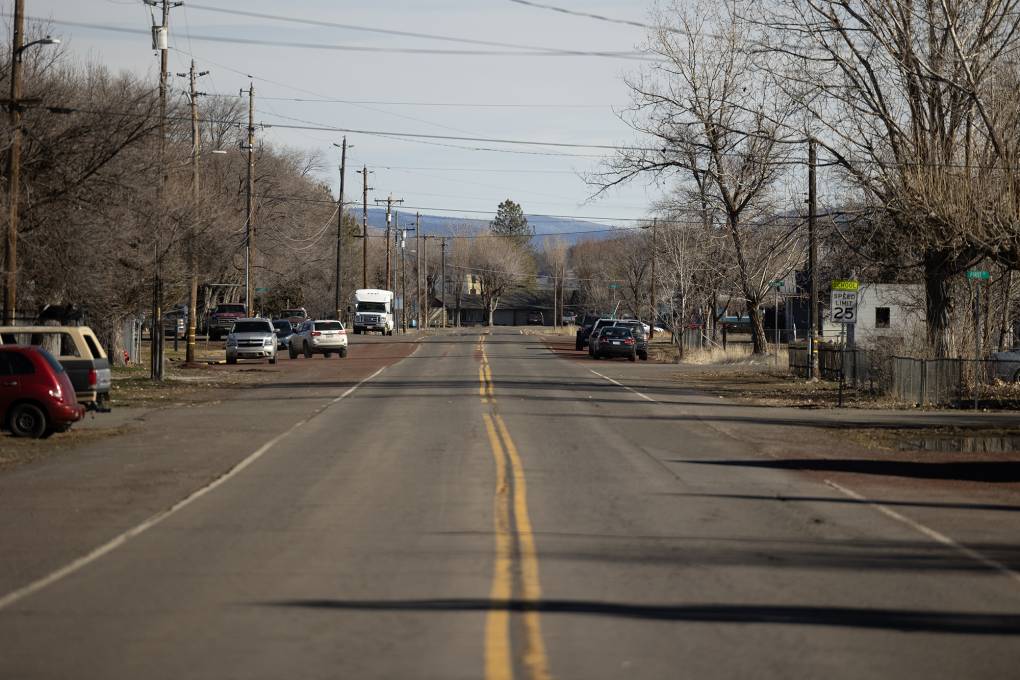

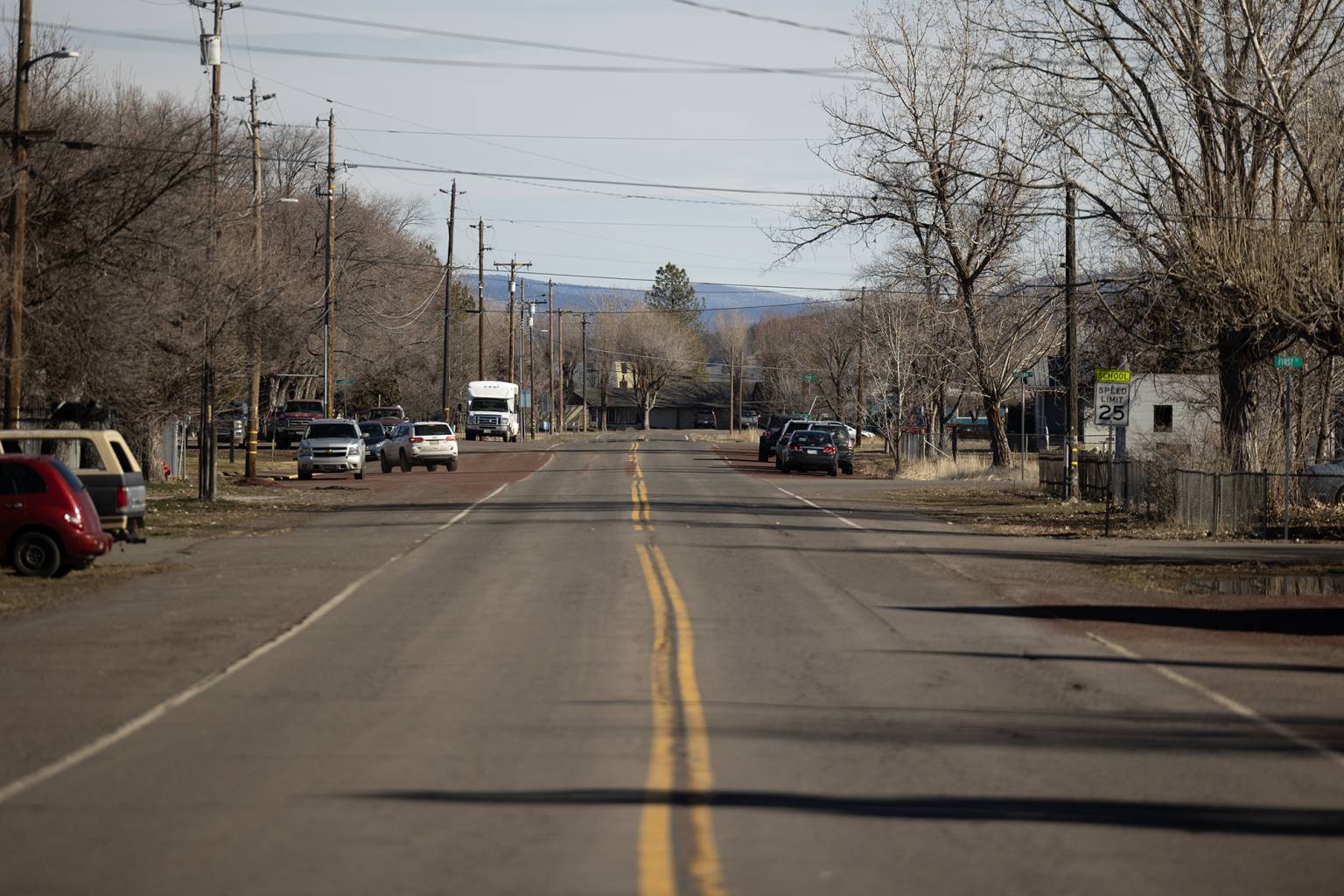
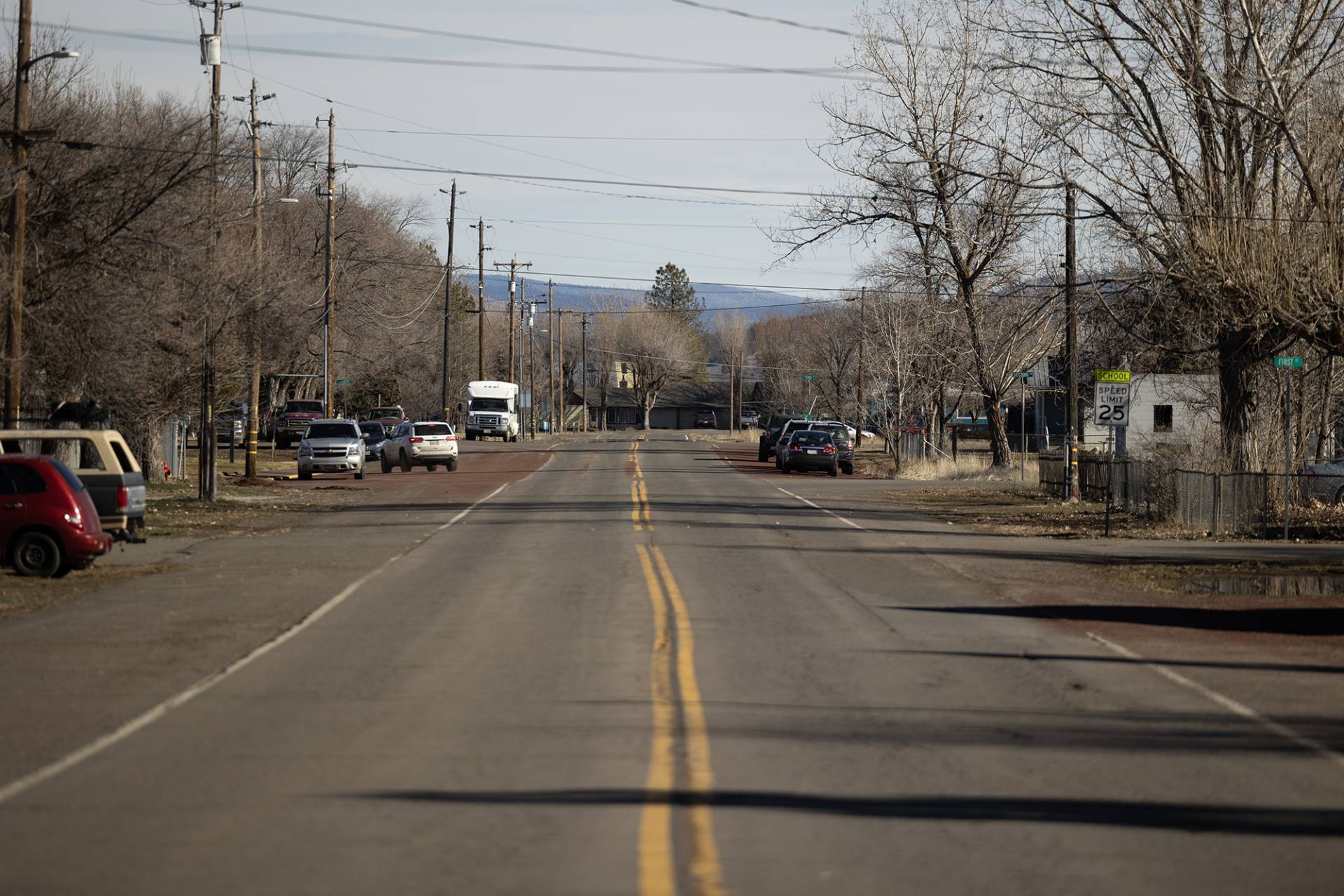
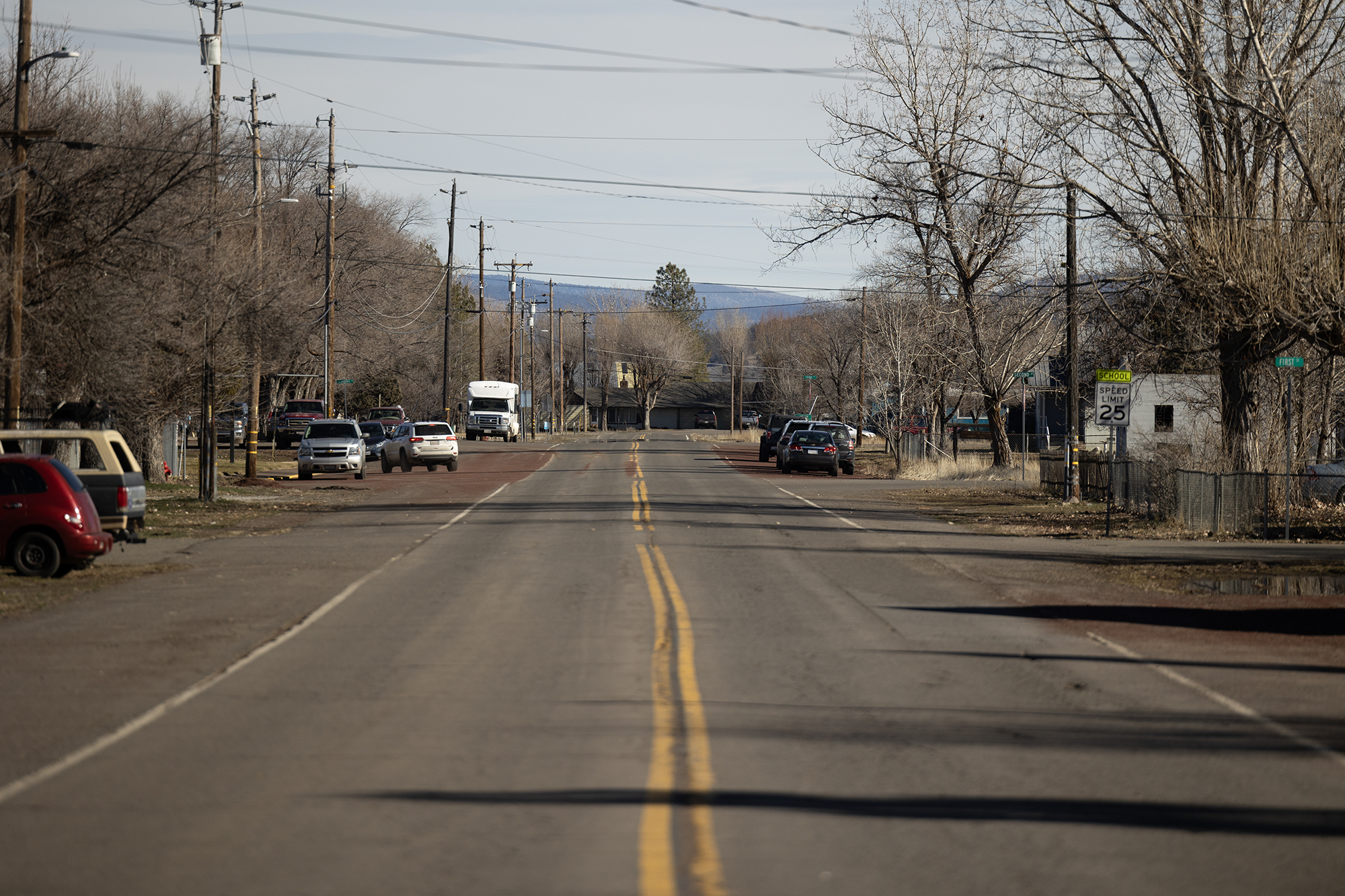

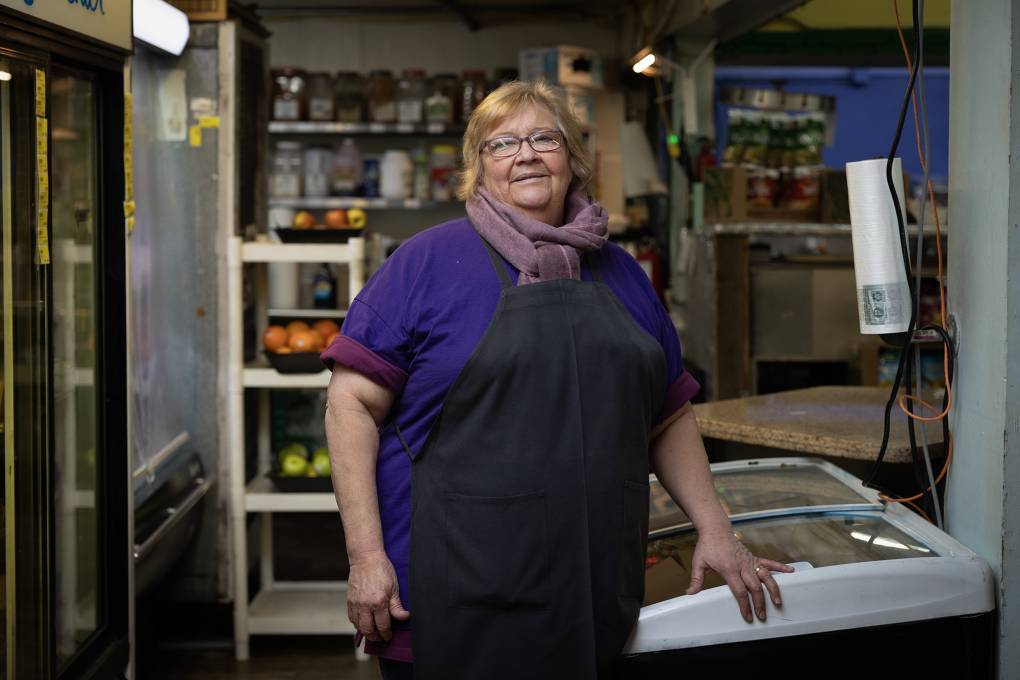

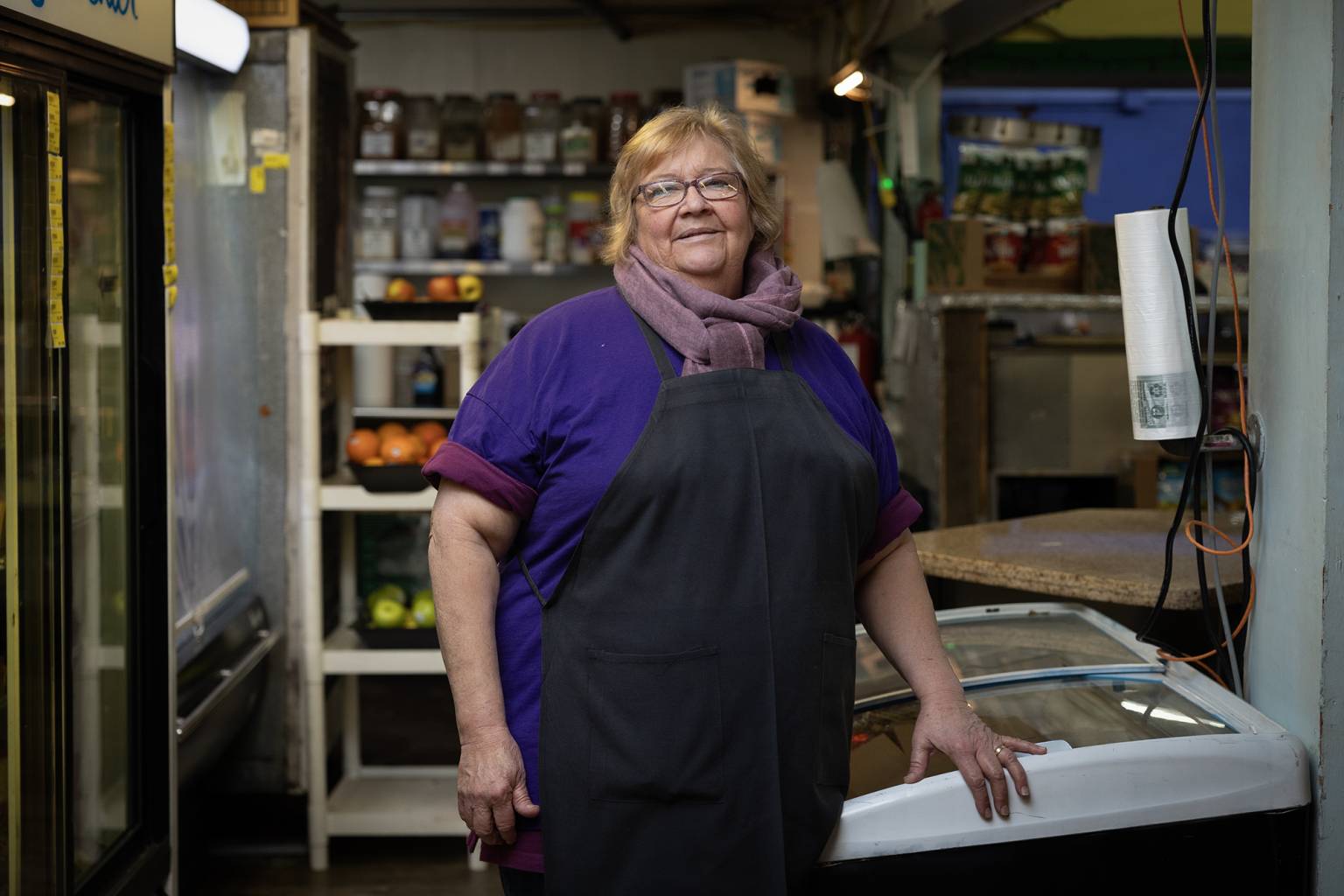
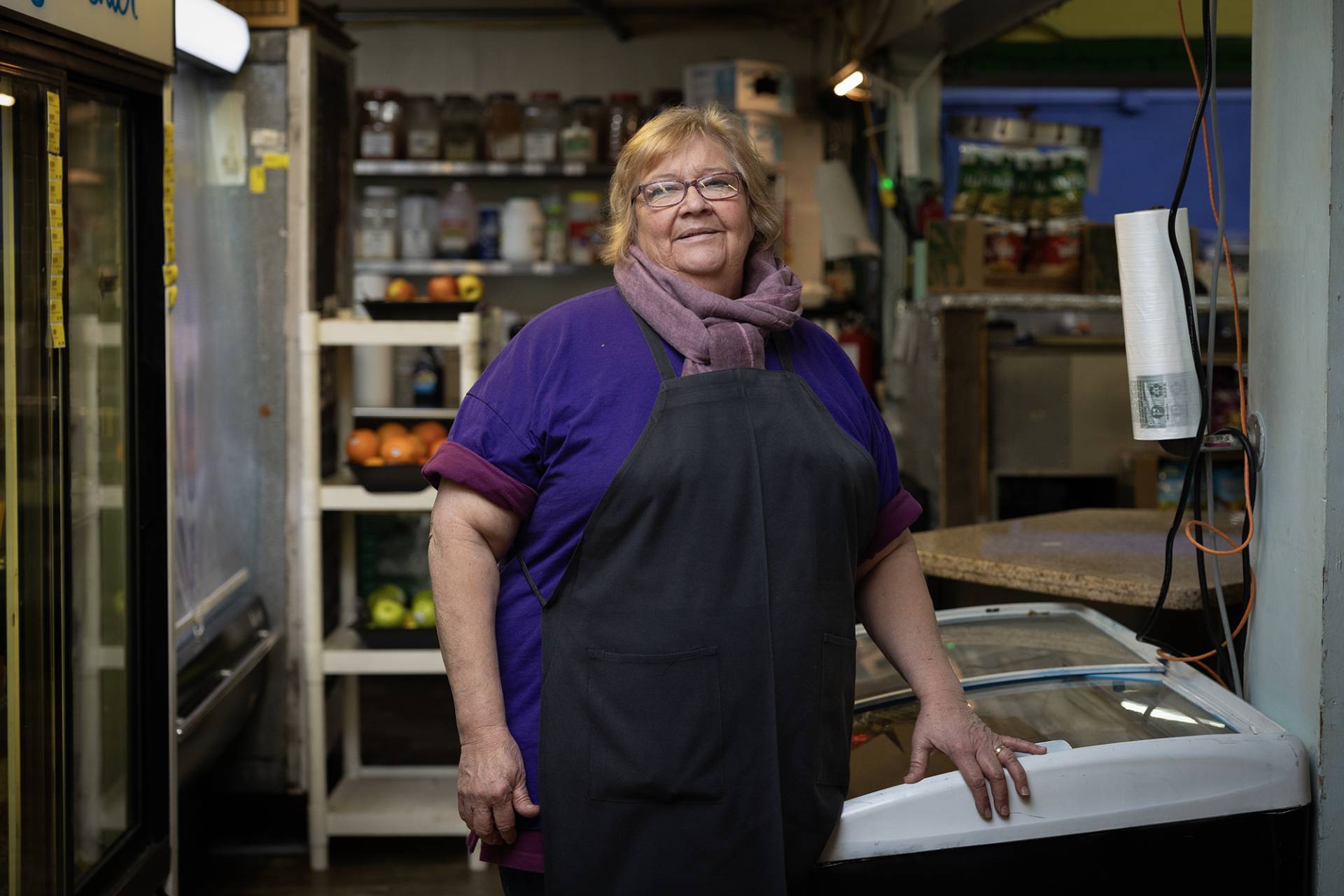
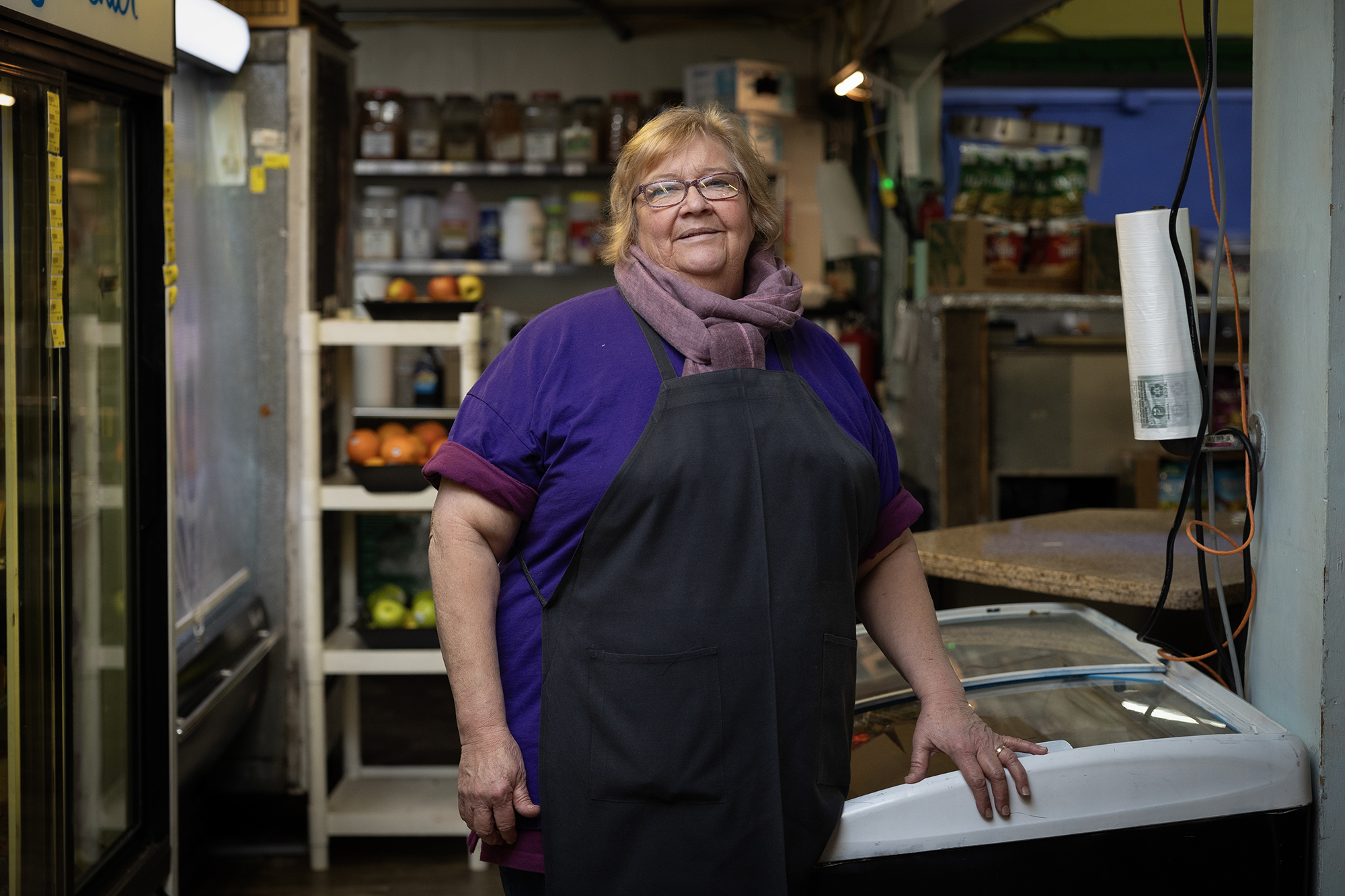

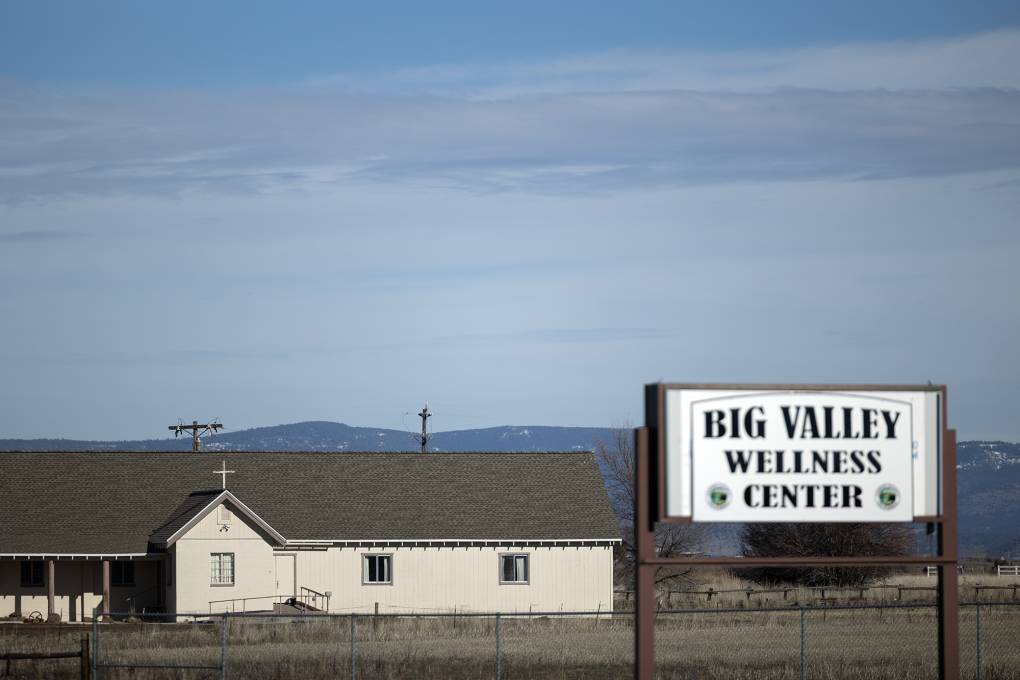

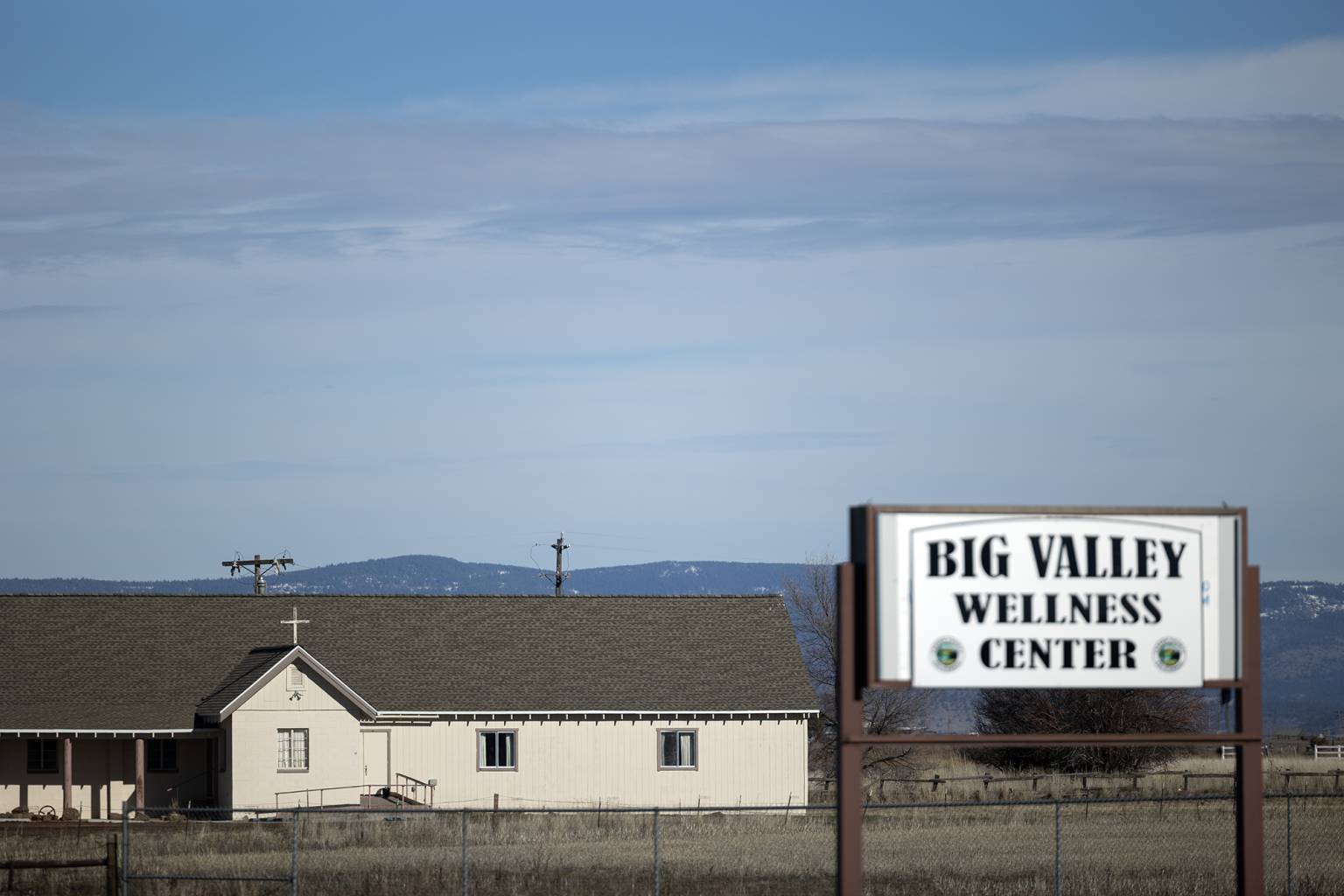
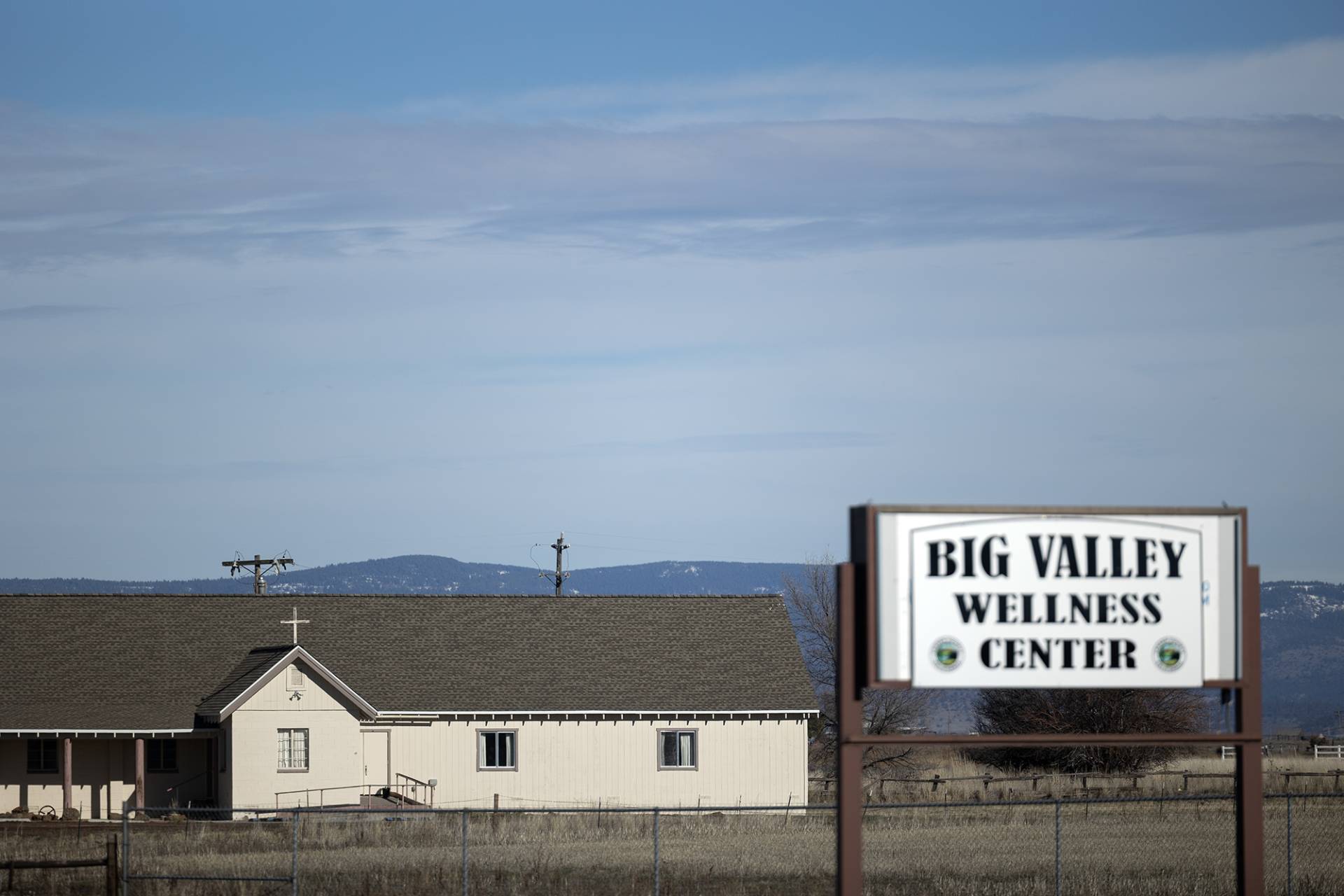
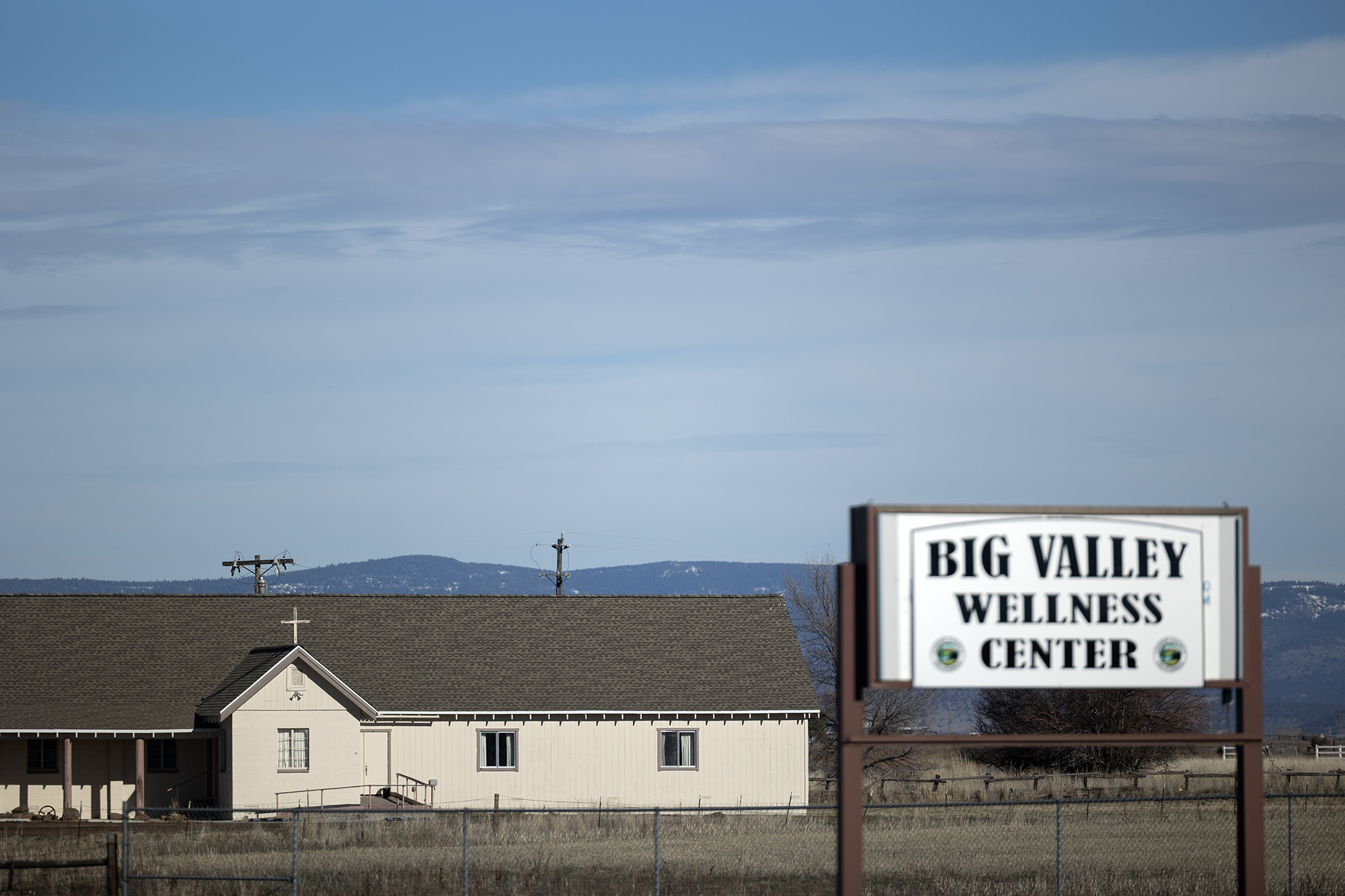

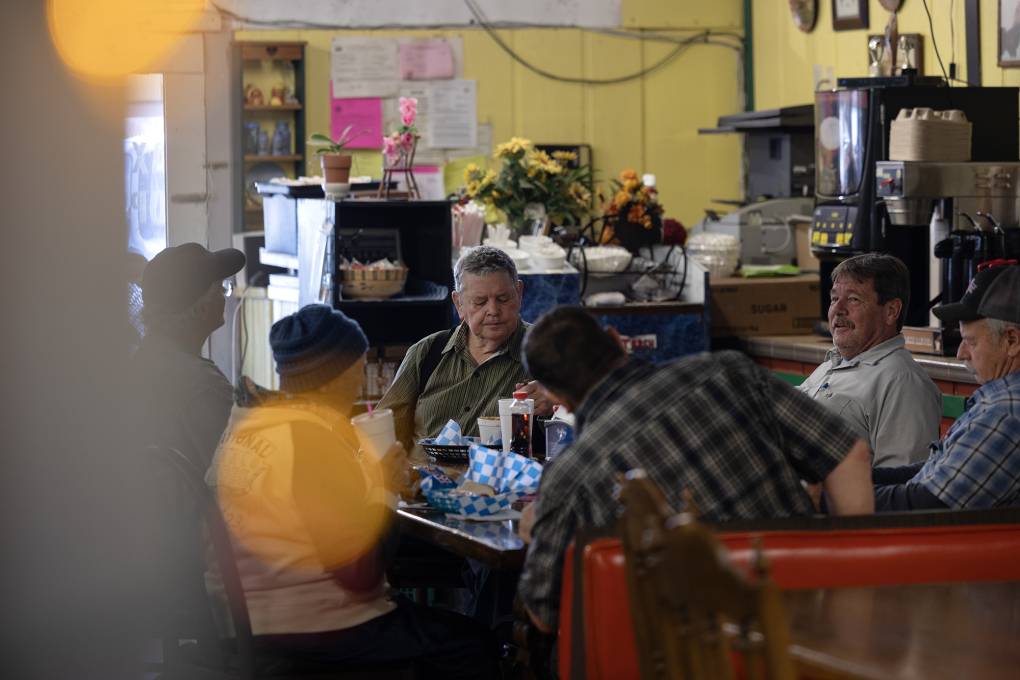

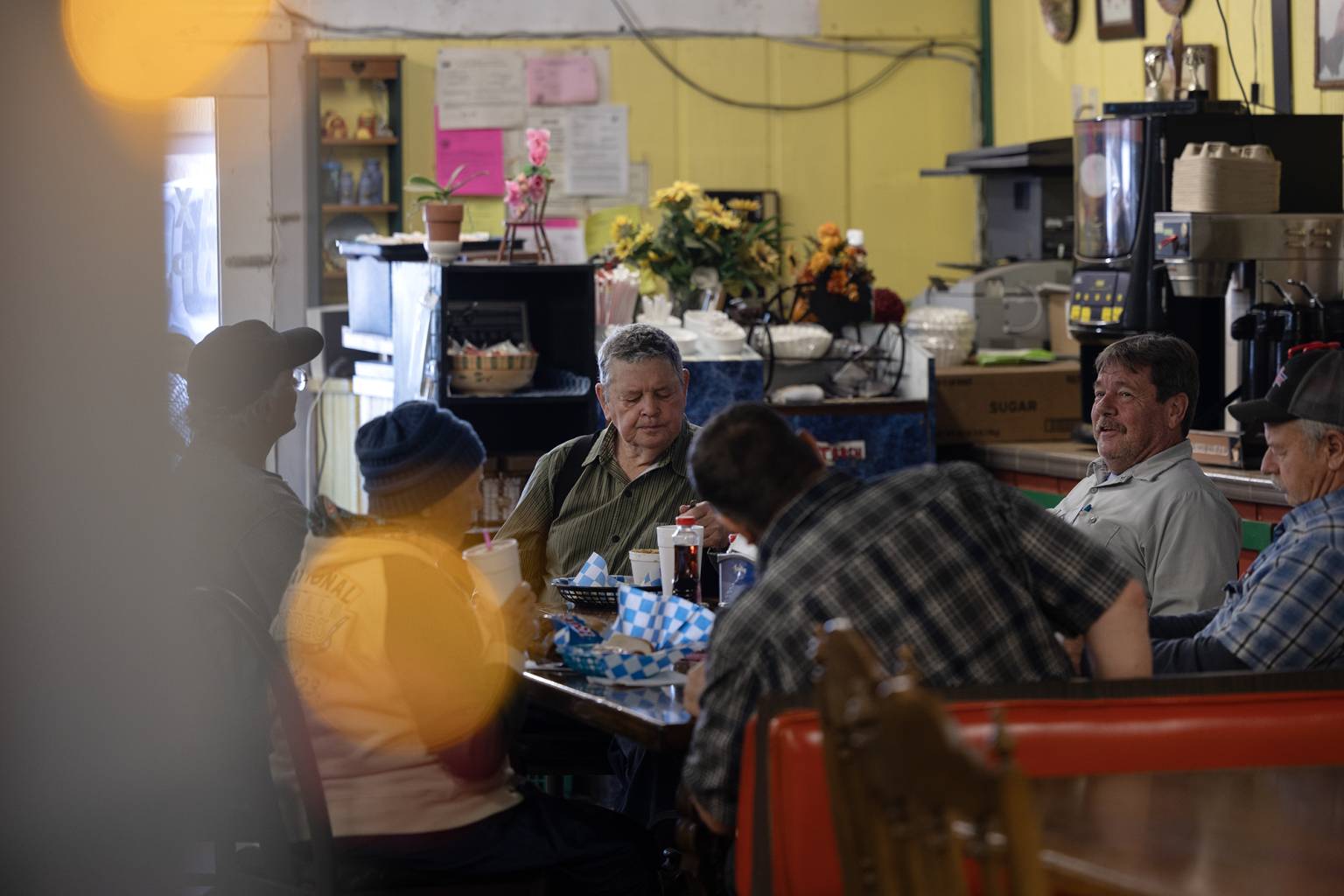
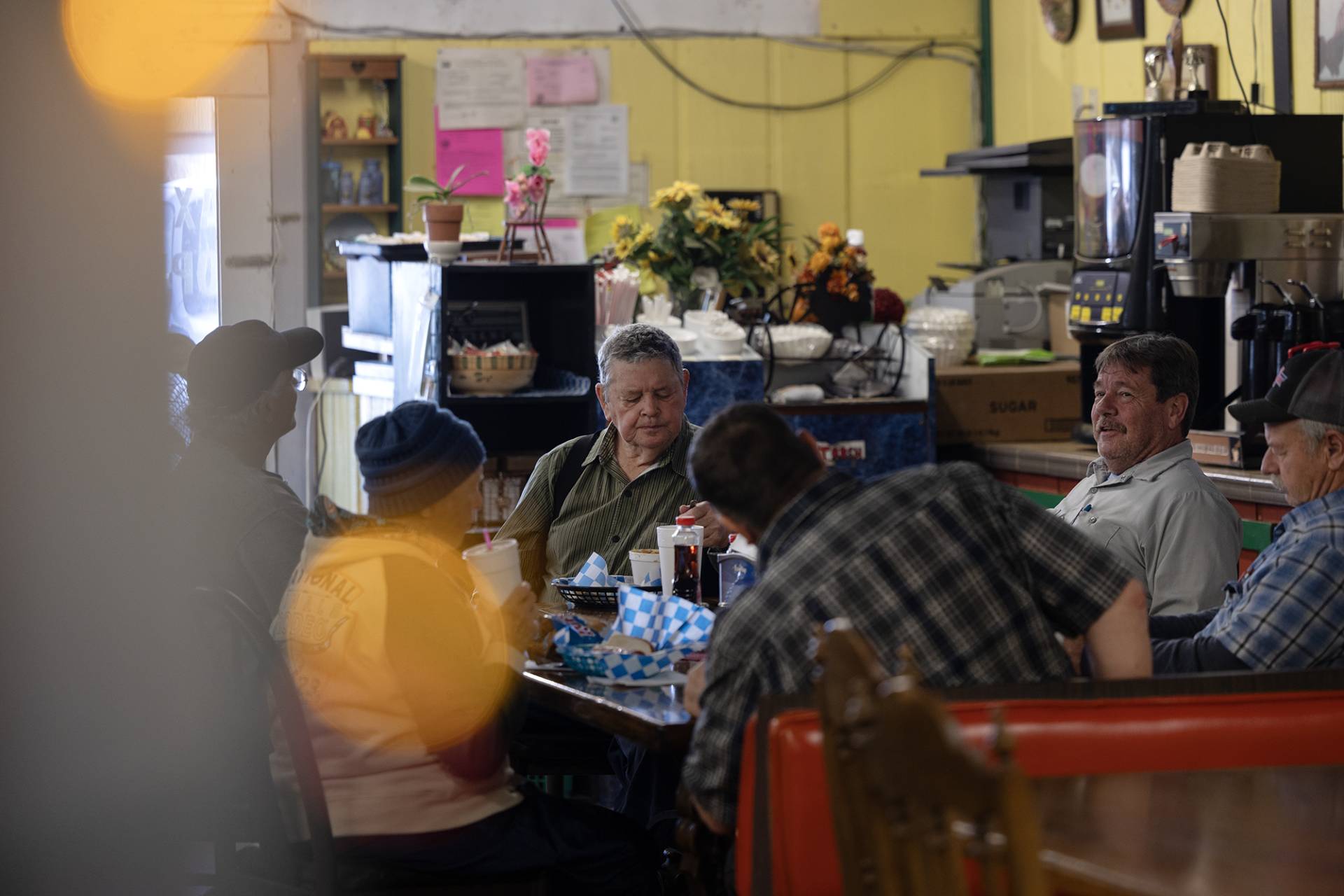
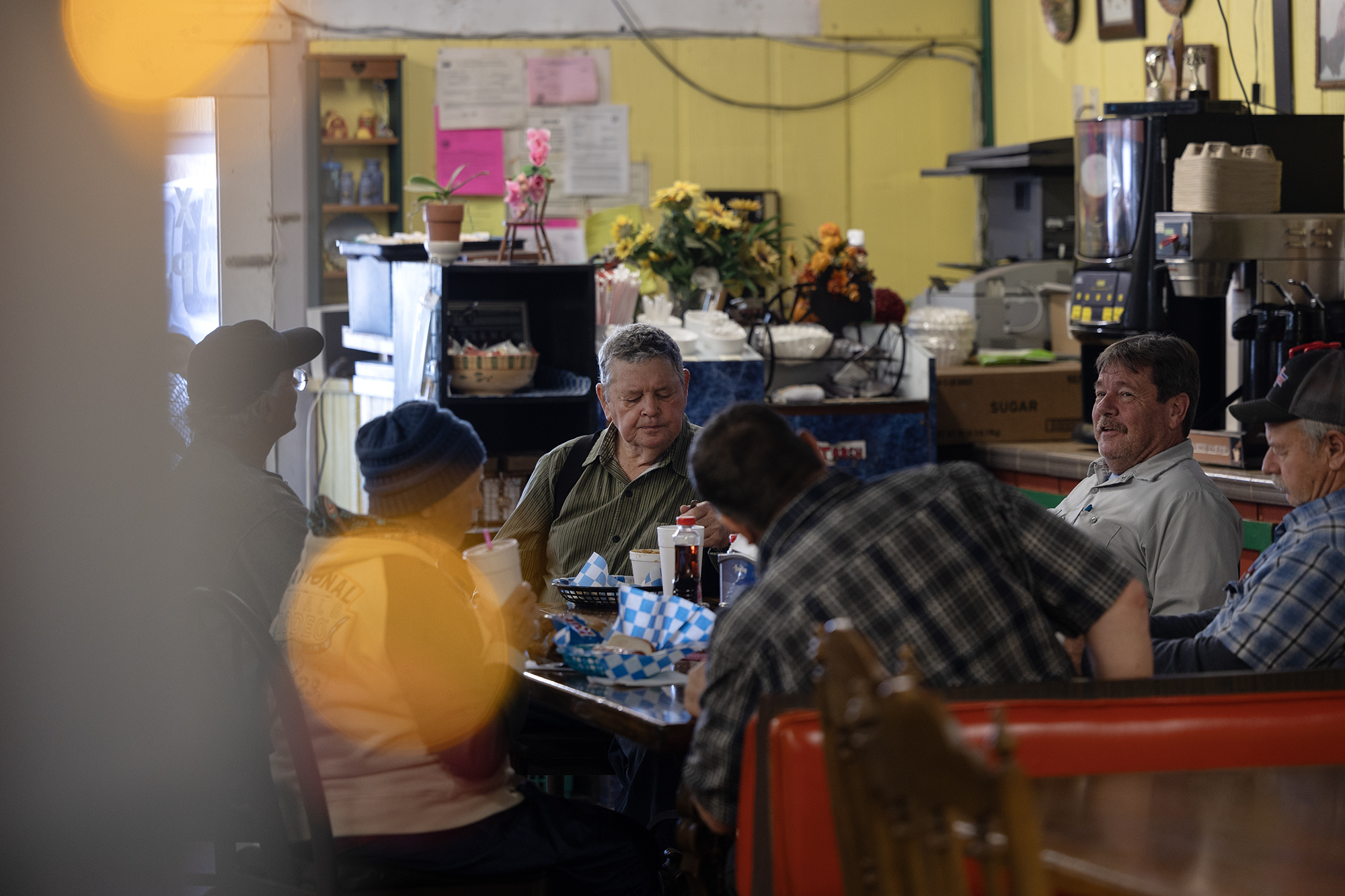







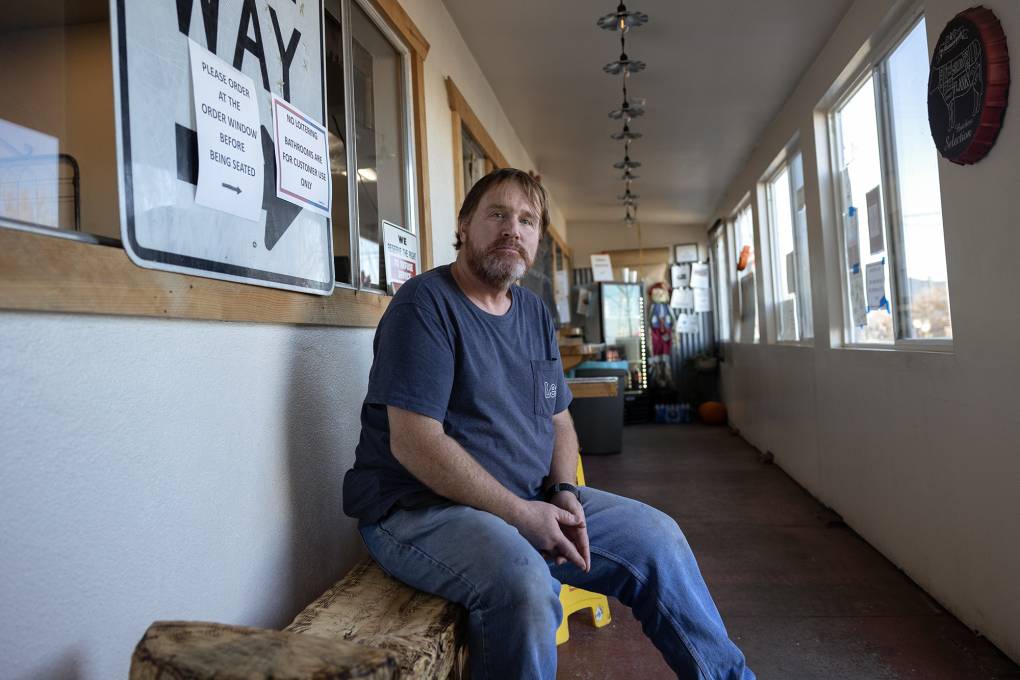

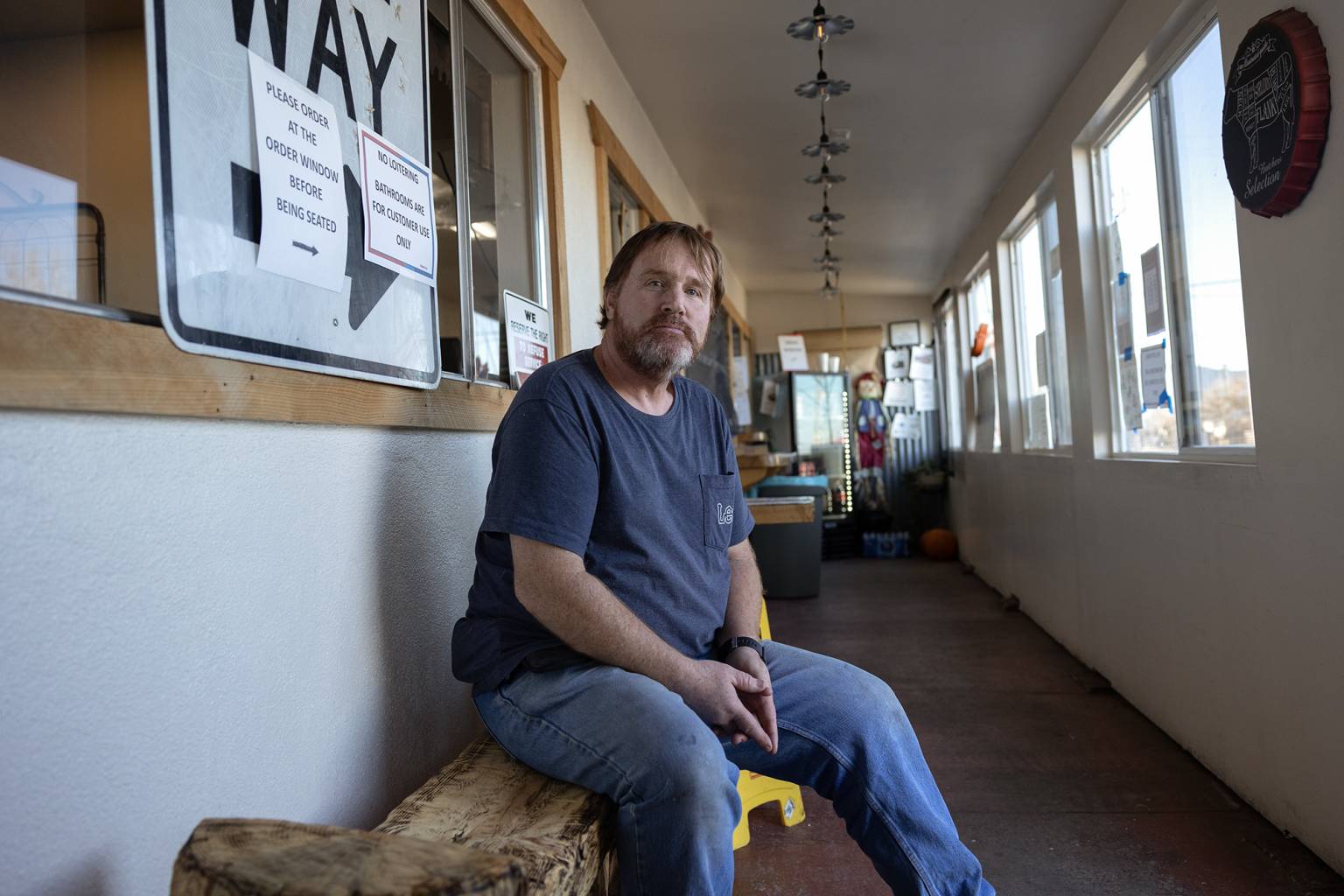
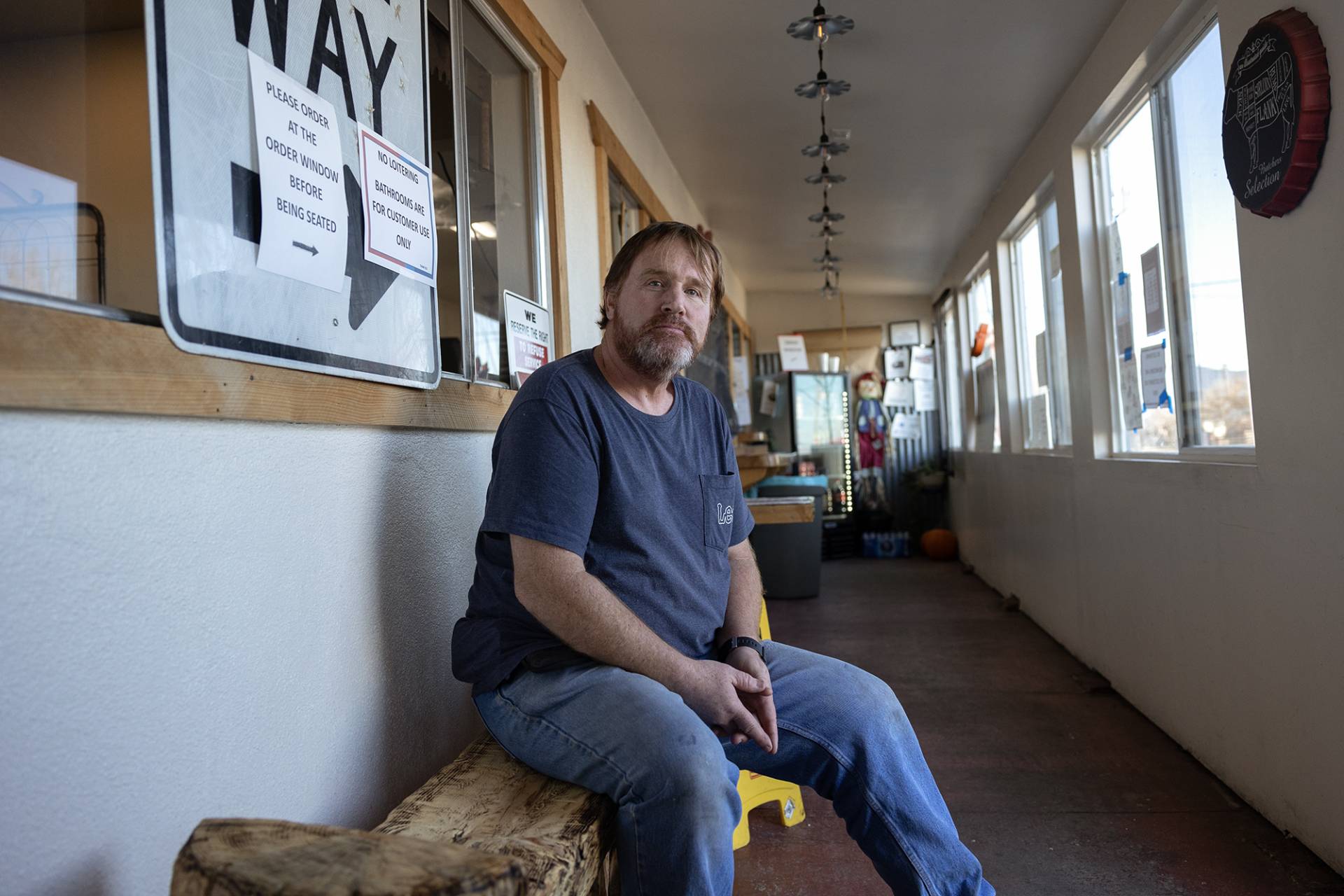
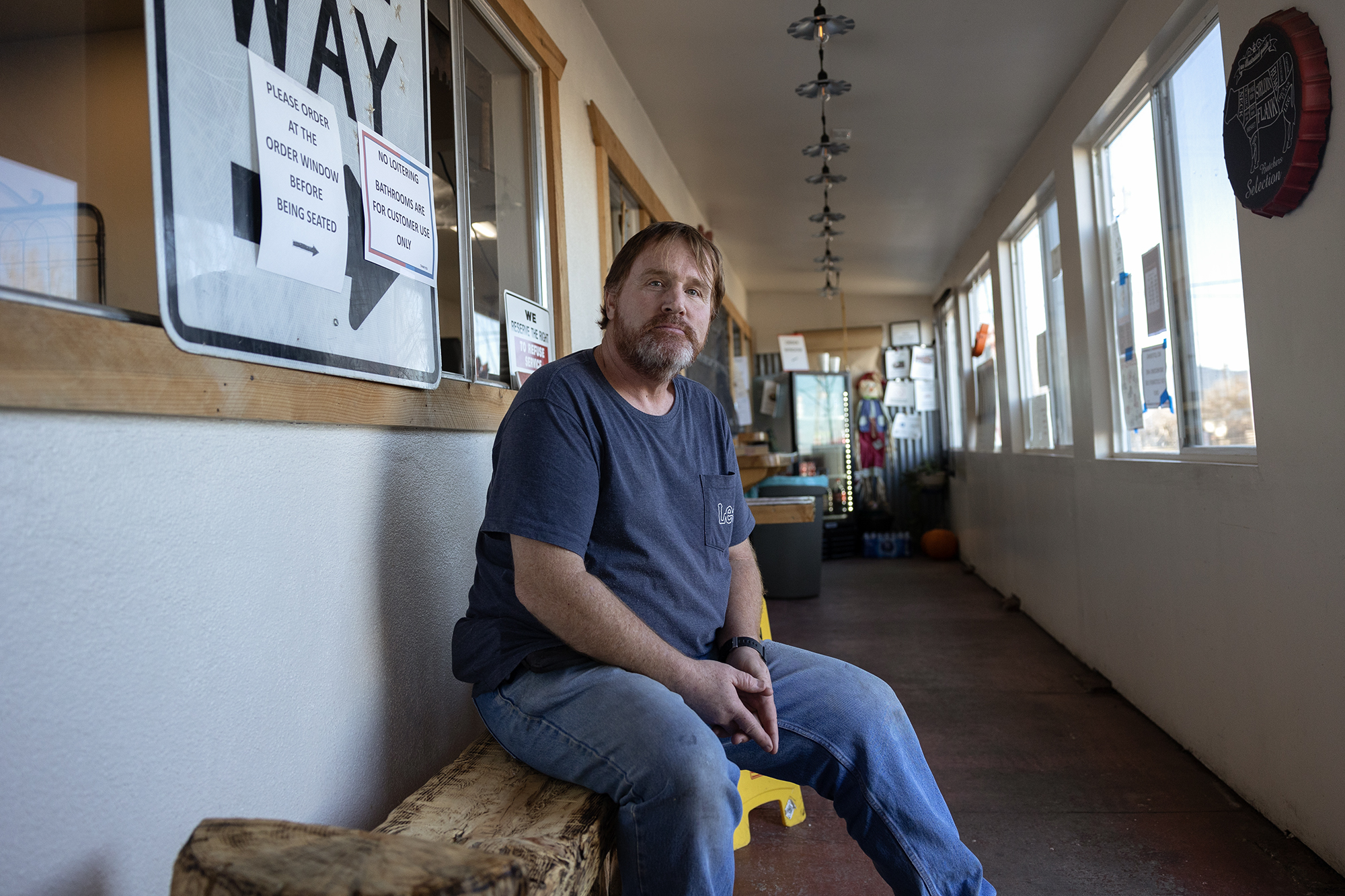


Related Knowledge Center: Climate economics
Climate change is now a driver of the world’s economy. The impact is profound:
- Catastrophic weather events — hurricanes, floods, droughts, high temperatures — are more frequent and more extreme. The cost can be measured in both the initial damage caused and the longer-term impact on the economy.
- Vulnerable communities are increasing climate-related investments, hardening infrastructure and taking other protective measures.
- Investment in carbon capture and storage technologies is increasingly rapidly.
- Governments are making investments and crafting regulations to reduce emissions of carbon dioxide and other greenhouse gases.
On top of all of this is the cost of uncertainty. As the Fourth National Climate Assessment, released in 2018 by the U.S. Global Change Research Program, says, “The assumption that current and future climate conditions will resemble the recent past is no longer valid.”