
How climate change made Europe’s extreme June heat worse
14 Jul 2026
How climate change made Europe’s extreme June heat worse
In the first part of our special Substack mini-series examining the impact of climate change, Liam Dutton explores why temperatures are rising and heatwaves are becoming more frequent.
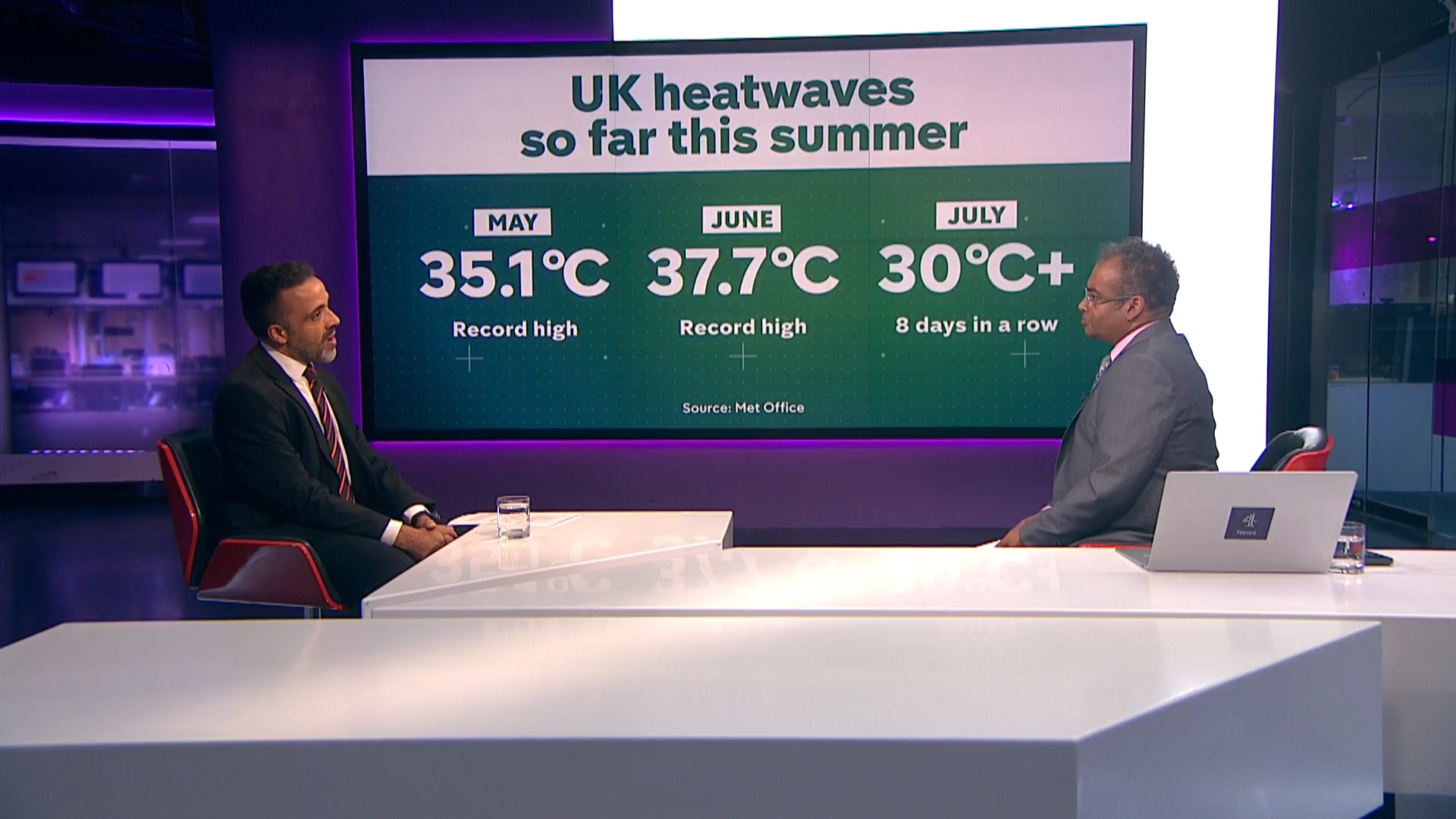
We’re just approaching the midpoint of meteorological summer, and western Europe has already experienced its third major and record-breaking heatwave so far this year. The hot weather has been relentless, intense, and covered a large area.
Whilst the highest temperatures, reaching well into the 40s, have been focused across mainland Europe, the UK has been feeling heat too.
The UK set new maximum temperature records for May and June, of 35.1C and 37.7C, respectively – surpassing previous records by more than two degrees.
The most recent July heatwave hasn’t broken any records but somewhere has recorded 30C or above for eight consecutive days.
You’re reading the first in Channel 4 News’ special mini-series on Substack examining the impact of climate change, after record-breaking temperatures were recorded across the world over the last month.
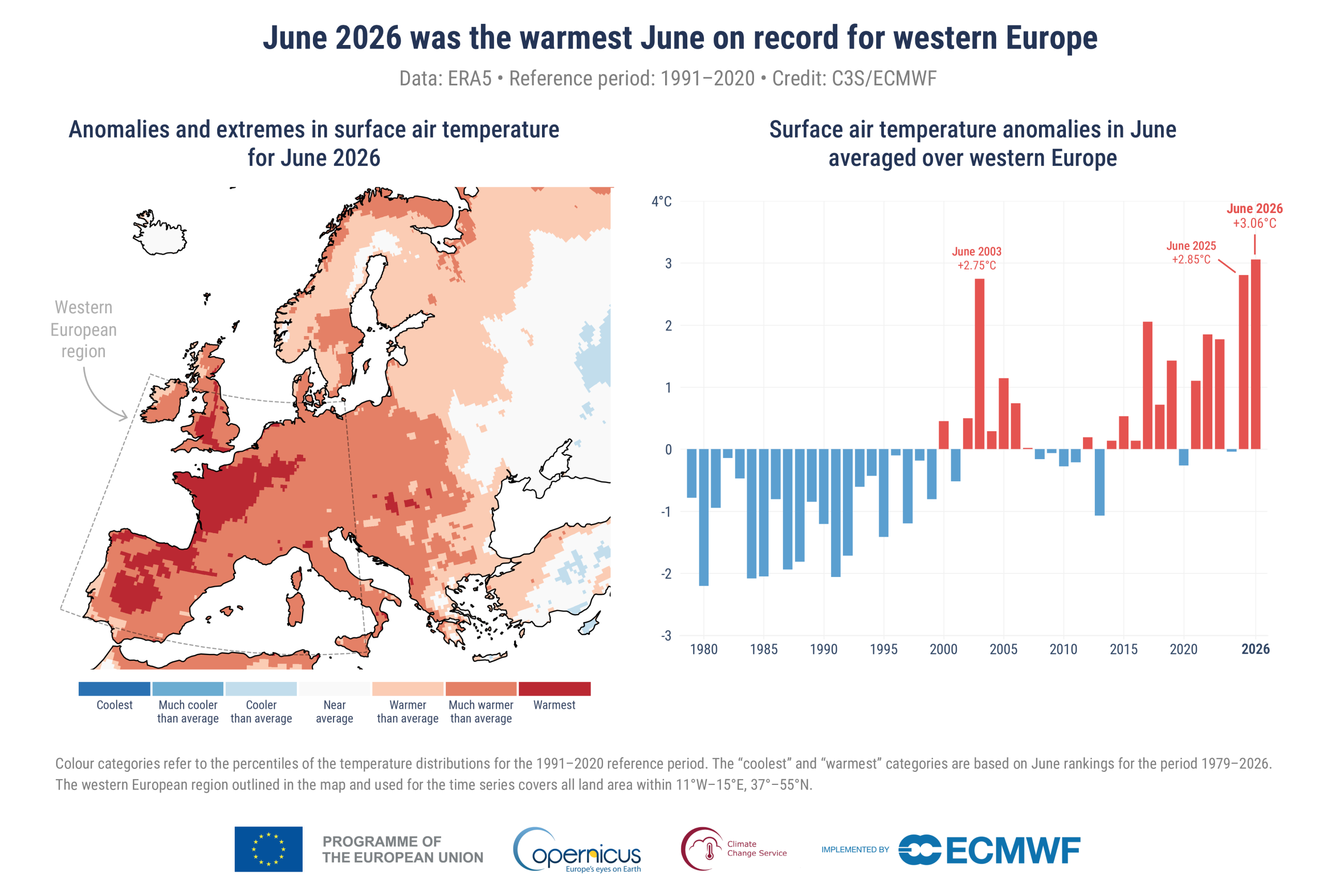
Out of the three heatwaves that have hit Europe in recent months, June’s was the most intense, with Copernicus, Europe’s climate agency, confirming that June 2026 was the hottest on record for western Europe. The average temperature was 3.05C above the 1991-2020 average, beating the previous record that was only set in June 2025.
Why so many heatwaves?
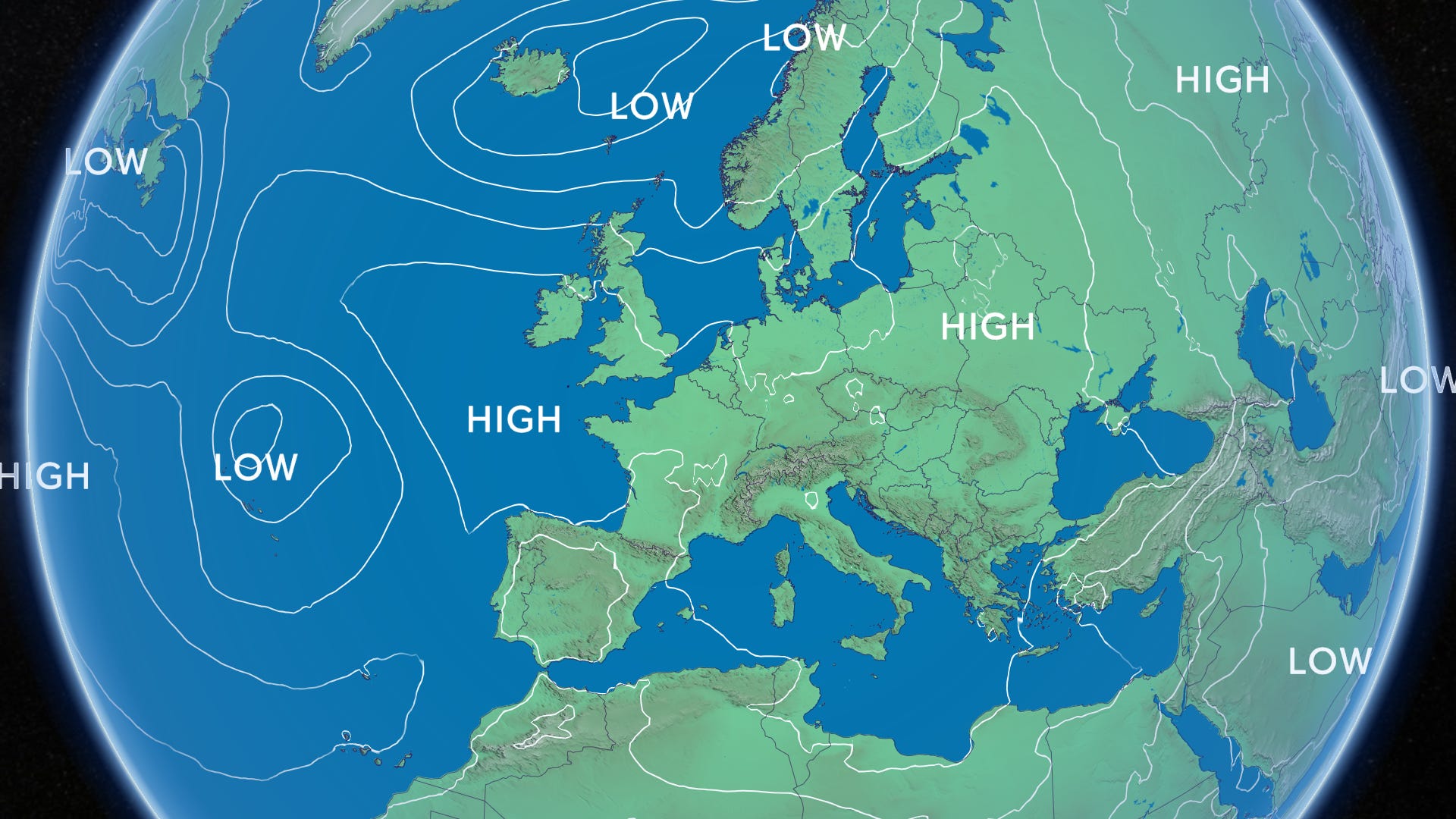
Each of the heatwaves so far this year has been caused by strong and slow-moving areas of high pressure forming close to or over the western side of Europe – sometimes referred to as a ‘heat dome’.
They act as a lid on the atmosphere, which traps heat and allows it to get hotter over time through two ways.
Firstly, the high pressure compresses air and pushes it towards the ground, causing it to warm further and dissipate clouds, increasing the amount of sunshine.
Secondly, with more hours of daylight than night at this time of year over Europe, there is a net-gain of heat energy each day – lifting temperatures further.
Societies struggling to cope
Countries across Europe have struggled to cope with the extreme heat, sometimes accompanied by high humidity, making it feel more oppressive and bringing a greater danger to health.
According to the World Health Organisation, extreme heat has claimed more than 200,000 lives across Europe in the past four years. This year’s heatwaves will increase that number markedly.
The impacts have extended beyond people, affecting infrastructure, agriculture, and creating environments in which wildfires can spread quickly.
The prevalence of hot weather across Europe in recent months has added a lot of heat to our seas and oceans, leading to marine heatwaves that will have significant ecological impacts.
Impact of climate change
In a nutshell, climate change makes heatwaves more frequent, more intense and long-lasting, not just in the UK and Europe, but also globally.
Worldwide Weather Attribution carried out a study on June’s extreme European heatwave. It found that the temperatures seen would have been virtually impossible in June without the effects of climate change.
It also examined how the same heatwave would have been in past cooler climates. The results are astonishing. Had it happened in 2003 and 1976, daytime maximum temperatures would have been 2C and 3.5C cooler, respectively. This shows just how rapidly our climate is warming.
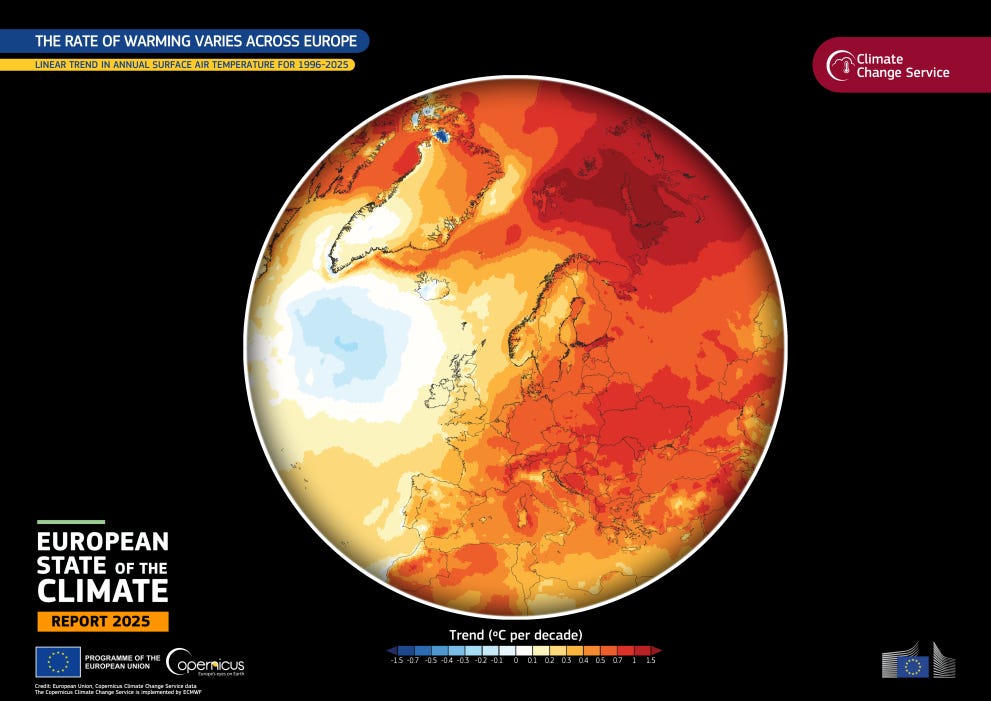
Europe is Earth’s fastest-warming continent, with temperatures rising around 0.56C per decade since the mid-1990s – more than double the global average.
What about the rest of the summer?
The longer-term trend for Europe and the UK suggests that the chance of heatwaves will be higher than average for the rest of summer.
Weather models are signalling that high pressure will be dominant in the coming months, which would increase the chance of dryness and sunshine, combined with higher-than-average temperatures.
Without further reductions in greenhouse gases, the warming of climate is only going to continue. So, whilst the recent heat is considered extreme and record-breaking now, it could become the new normal in decades to come.