
Ground under change: Climate risk across the development life cycle
Authors: Ziaul Hoque, Dr Shon Williams and Dr Tom Henman
RSK Geosciences highlights key geotechnical insights from CIRIA’s latest guidance, showing how climate-driven changes in ground behaviour translate into real project risks and how they can be mitigated across the development life cycle, offering practical approaches for designers to support more informed decision-making during site assessment, design and construction.
Climate change is already altering ground behaviour across the UK, creating new challenges for those responsible for delivering and maintaining resilient development and infrastructure.
CIRIA C824 provides the first good-practice guidance that links climate change and extreme weather impacts directly to geo-based risks across the development life cycle. It links climate projections to physical effects and the resulting implications for assessing and mitigating geotechnical and geoenvironmental risks.
Bridging the gap
Climate change is no longer a future concern. Across the UK, high-temperature records continue to be smashed, and extreme weather events (EWEs) are already challenging many of the assumptions that have traditionally underpinned geotechnical design. These changes, along with rapid swings between climatic extremes (‘climate whiplash’), have the potential to influence ground behaviour in ways that challenge conventional design assumptions and established geotechnical risk management approaches.
With an evolving climate, practitioners must consider whether current standards and best practice guidance remain fit for purpose and, importantly, how increasing uncertainty should be addressed in design practice.
Although climate projections are inherently scenario-based and become less certain over longer timescales, uncertainty cannot be used as a justification for inaction, particularly where buildings and infrastructure assets are expected to remain in use for many decades.
Geotechnical engineers are required to make decisions at the site level, often with incomplete information about the conditions below ground now and in the future. The challenge lies in determining how those changes could affect ground conditions over the lifetime of an asset. This raises practical questions, but more importantly, how these potential changes should be addressed today.
Climate change and its effects are increasingly recognised within current and emerging industry standards and technical guidance documents, as detailed within CIRIA report C824. However, until now, there has not been a framework detailing how to integrate climate risk considerations into geotechnical design. CIRIA C824 was developed to help bridge that gap.
Climate change signals
Climate projections encompass a range of weather-related impacts, which for the UK can be categorised into hotter, drier summers; warmer, wetter winters; sea level rise; and more intense storm events. Many of the associated geotechnical hazards considered within the guidance will be familiar to practitioners: clay shrink–swell, groundwater variability, slope instability, scour, flooding, and mining and dissolution hazards.
Climate change has the potential to alter the likelihood, severity and timing of these hazards throughout an asset’s life. Figure 1, taken from C824, illustrates the links between these physical effects and changes to geotechnical hazards and risks.
For the projected trend towards warmer, wetter winters, increased winter rainfall tends to lead to higher rates of groundwater recharge and, consequently, elevated groundwater levels. While higher groundwater levels may not be a hazard in themselves, they can increase hydrostatic pressures and buoyancy forces acting on structures founded below ground level, resulting in groundwater ingress, cracking, differential heave or overstressing of basement walls and slabs if not adequately considered within the initial design. These issues can lead to structural damage, increased maintenance requirements, operational disruption and reduced asset performance over the design life of a development.
This example demonstrates how a broad climate projection can be translated into tangible geotechnical risks that are relevant to site investigation, assessment and design. Similar cause-and-effect relationships can be identified for other climate change effects, such as hotter, drier summers leading to increased clay desiccation or more intense rainfall events resulting in greater erosion, scour and slope instability risks. Understanding these linkages is important in ensuring that climate change considerations are incorporated into geotechnical decision-making in a consistent and proportionate manner.
From reactive to adaptive
Historically, geotechnical design has often focused on satisfying current standards based on empirical measurements and specific project requirements. However, climate resilience requires a longer-term perspective that considers ground conditions throughout the operational life of a geotechnical structure.
The guidance introduces a practical framework and tools intended to support this transition. A key element, as shown in Figure 2, is the development of a series of ‘geotechnical watchpoints’. These are integrated within the Eurocode 7 (EC7) geotechnical design process to help practitioners systematically consider climate-related impacts at each stage and are intended to support engineering judgement with structured consideration of evolving risks.
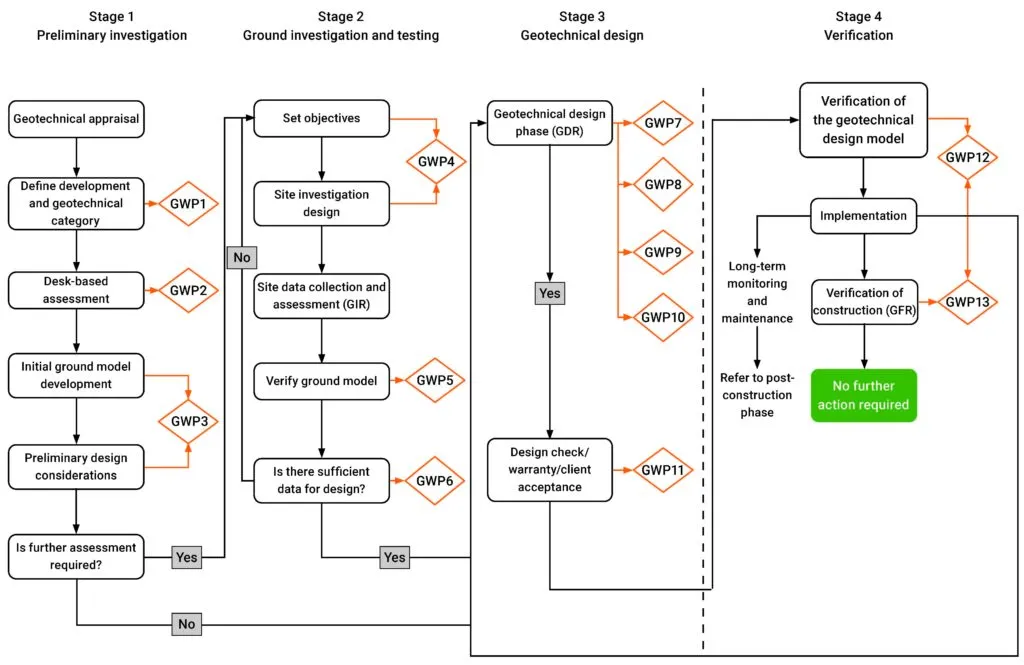
Figure 2: Flowchart integrating climate change impacts into the existing EC7 geotechnical design process
Consider a proposed development incorporating a basement in an area where climate projections indicate warmer, wetter winters. During the early stages of assessment, climate risk screening may identify rising groundwater levels as a potential future hazard, triggering a review of how future groundwater conditions could alter the ground model and whether additional monitoring or data collection is required to better understand seasonal groundwater behaviour.
As the design progresses, the engineer should then consider whether the assumed groundwater levels used in the geotechnical design remain appropriate throughout the design life of the structure. If future groundwater rise is considered credible, additional hydrostatic pressures and uplift forces will need to be allowed for within the basement design.
The final design stage then considers whether the proposed solution provides sufficient resilience, whether further adaptation measures are required, and whether any residual risks should be managed through monitoring or maintenance as part of operational asset management.
Application of the framework will not always result in changes to the design. Initial screening may determine that the site is located within an area where projected changes in groundwater levels, shrink–swell potential or flood risk are expected to be negligible, so no further assessment is needed.
Design lifetimes will also affect the decision-making process; a temporary retaining structure with a design life of only a few years may be more susceptible to EWEs than long-term climate change, whereas both may be important for housing and other developments with long design lifetimes.
While the design stage typically offers the greatest opportunity to mitigate climate-related impacts on geotechnical risks, taking account of uncertainties, there may be a balance between incorporating the mitigation versus later adaptation, such as retrofitting. Such decisions will need to take into account several factors, including site-specific climate risk and design lifetimes.
Climate resilience should also be considered beyond the design stage. Construction activities, temporary works, asset management and long-term monitoring may all be affected by more frequent EWEs, meaning climate resilience needs to be considered throughout the life of an asset, not just during its design.
Knowledge gaps
Research programmes such as ACHILLES, together with improved climate datasets, have helped us better understand how changing climate conditions may influence ground behaviour and the performance of structures. However, the findings need to be distilled rapidly into design codes and day-to-day engineering practice beyond the second-generation Eurocode 7.
One of the biggest difficulties is dealing with uncertainty. Climate projections should be viewed as plausible futures rather than predictions, which inevitably makes engineering decisions more challenging, but it shouldn’t stop engineers from considering future climate risks. CIRIA C824 helps to address that gap by providing a practical framework that can be integrated into existing geotechnical assessments, rather than introducing a completely new way of working.
There are practical challenges. Regional climate projections need to be translated into site-specific engineering decisions, but the data needed to do this are not always available. While useful datasets already exist for issues such as flooding, coastal erosion and shrink–swell potential, significant uncertainty remains around changes in soil moisture, future groundwater conditions and how different climate effects may combine at a particular site. As our understanding improves, so too will the tools available to support geotechnical assessment and design.
While this is a rapidly moving field and our understanding of climate change will continue to evolve, CIRIA C824 provides a practical starting point, giving engineers a framework for considering climate change as part of existing geotechnical assessment and design processes.
The project was funded by GB Card & Partners, Heathrow Airport, John F Hunt Regeneration, Mott MacDonald, Natural Resources Wales, Stantec, Tesco and Wales & West Utilities.