
“Green energy is not just an obligation” - Interview with László Pokol and Ildikó Varga-Futó of Green Cloud
“At the core of our service is providing companies with real, physically produced domestic renewable electricity, not merely paper-based Guarantees of Origin (GO) certificates,” said Green Cloud, one of Hungary’s most innovative energy providers, a pioneer and key player in the country’s green energy market.
A scalable and commercially viable energy strategy
The company’s primary goal is to provide businesses with a scalable and commercially viable energy strategy. Its innovative hybrid model enables renewable energy to match consumer demand in real time, while ensuring full security of supply.
“The electricity produced at solar plants (e.g., the Szihalom plant, one of Europe’s most efficient solar facilities) is integrated into E.ON’s balance group, supplemented with fossil energy when necessary,” László Pokol, Green Cloud CEO, explained. “This unique structure enables our customers to access a reliable 24/7 electricity supply by combining renewable and fossil sources, while maximising the share and value of genuinely green energy, delivering a solution that is sustainable, predictable, and competitively priced.”
Through the Green Cloud platform, corporate customers receive an integrated decarbonisation package. One component of this is long-term power purchase agreements (PPAs), where Green Cloud assumes the risk, ensuring stable prices and predictability. The company-specific, scalable hybrid energy strategy is built on flexible, modular solutions that are tailored to the company’s needs.
“Green energy is not just an obligation; it is also a business interest, a source of value, and a competitive advantage for companies and their stakeholders,” Ildikó Varga-Futó, Commercial Director, points out when discussing ESG and regulatory compliance. “This is not greenwashing, but genuine, verifiably physically generated renewable energy.”
Next-generation, adaptive solar power plants designed for extreme weather
Green Cloud’s portfolio primarily consists of solar plants located across various regions of Hungary. A key reference for the company is the 69 MWp solar facility commissioned in 2024 in Szihalom, Heves County. The plant has an annual output of 101.6 GWh, covers an area of 86 hectares, and operates 104,550 solar panels.
“From a technological perspective, the Szihalom power plant represents a new generation: it is built on row-by-row optimised, sun-tracking structures, capable of adaptively adjusting panel tilt and orientation based on real-time weather data, while mitigating storm and hail risks,” László Pokol explained.
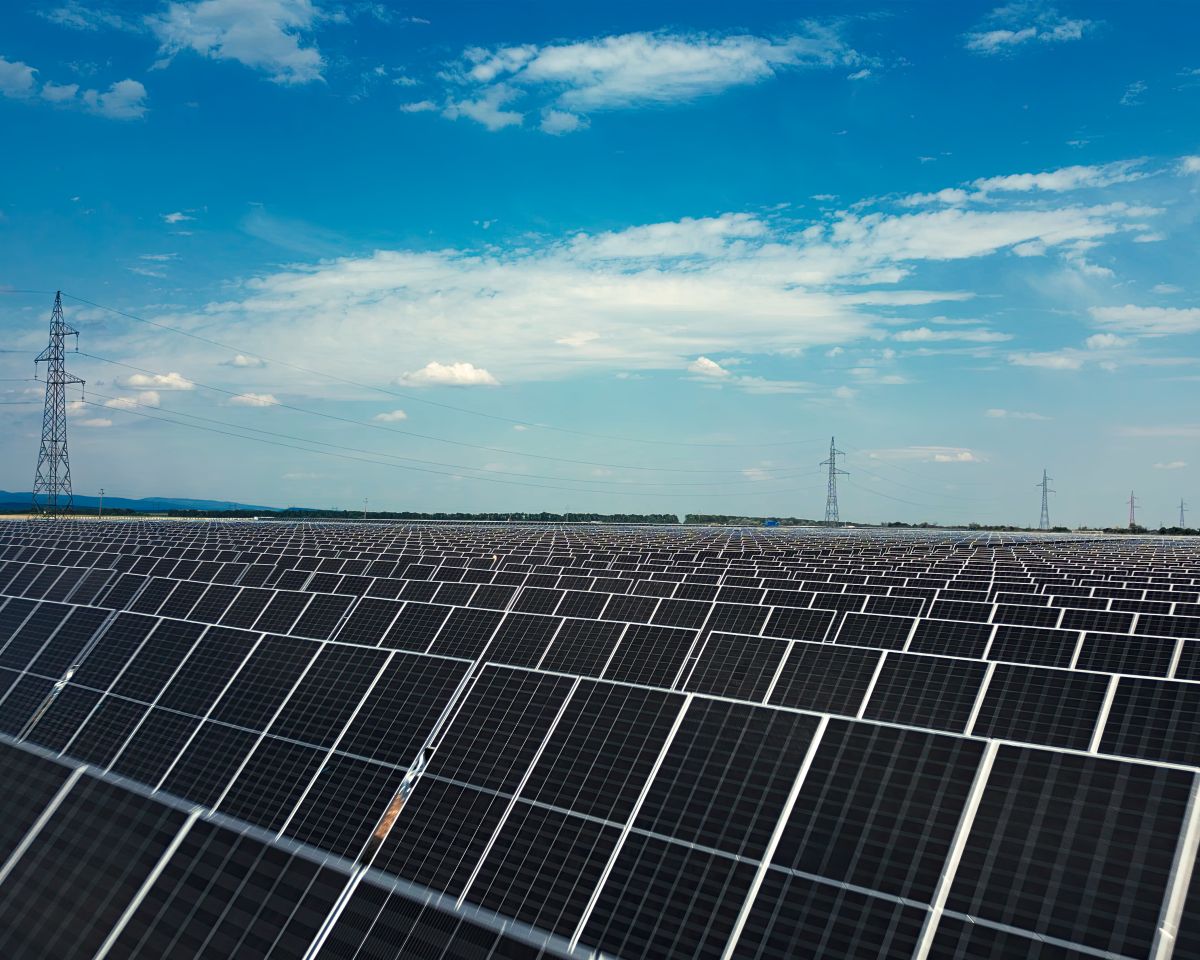
They also discuss their flagship project, the solar power plant in Hódmezővásárhely, one of the country’s most advanced facilities, designed to withstand extreme weather conditions: it features nearly 98,000 solar panels, has an annual production capacity of around 105 GWh, and operates with a dynamic, weather-adaptive control system.
“In 2026, a key milestone will be the commissioning of the energy storage capacity at the Hódmezővásárhely project, transforming the facility into a true hybrid power plant,” said László Pokol.
Why do Hungarian companies struggle to go green?
Discussing the challenges facing Hungarian companies during the green transition, Green Cloud cites misconceptions and a lack of information as the primary issues. “Many still believe that green energy is more expensive or less reliable than the fossil-based supply. In reality, a well-structured PPA can be cheaper and more predictable in the long run than purchasing electricity on the market,” explained Ildikó Varga-Futó, Commercial Director.
The spread of GO certificates can also pose a challenge, as many companies believe that holding them fulfils green energy requirements, while in reality, they do not consume physical renewable energy. With tightening ESG expectations, this could pose an increasing risk.
Geopolitical risks have accelerated the corporate green transition
Geopolitical risks have significantly accelerated the corporate green transition in Hungary as well. The drastic rise in energy prices in 2021–2022 made energy independence a strategic issue for many large companies.
However, motivations are now more complex, as László Pokol pointed out. “At the top is the need for price stability. Corporate sustainability reporting requirements are also driving companies toward green energy, while multinational buyers increasingly require the use of renewable energy in supplier audits,” Green Cloud explained, highlighting the main drivers of the corporate green transition.”
From shopping centres to data centres
Corporate demand for green energy in Hungary has grown rapidly over the past three to four years, in parallel with the expansion of the European PPA market.
“Large shopping centres and retail chains (e.g., Westend, dm) were among the first to act due to ESG expectations and consumer pressure. Banks and insurers enter green energy agreements as part of their sustainability strategies, but long-term price stability is particularly attractive to factories and industry due to continuous, high-energy-demand production. And of course, we must not forget the technology sector and data centres,” Green Cloud outlined.

At the same time, the Central and Eastern European PPA market is still developing, although significant progress has been made over the past two years. In the region, Poland and Czechia lead in the number of corporate PPA contracts, while in Hungary, the market is only now reaching the maturity level where large corporate demand can meet adequate supply. Green Cloud positions itself in this market-creating role: it does not merely offer contracts, but unites the entire ecosystem – producer, trader, and consumer – into a single integrated model.
From large corporations to small enterprises
“Traditionally, PPAs have been most viable for large energy consumers (above 5–10 GWh annually), where the contracted volume allows for risk sharing and more favourable pricing,” said László Pokol. “At the same time, as the market develops, opportunities are opening up for small and medium-sized enterprises as well, primarily through aggregated PPA models, where multiple smaller consumers jointly contract capacity. Green Cloud’s open marketplace model is currently focused on larger industrial consumers.”
Risk management does not fall on the company
Security of supply and long-term energy hedging are cornerstones of the Green Cloud model. If a client can fix the price of green energy in a contract for 10 years, it provides predictability and represents a significant competitive advantage. “Specific contractual guarantees and risk-sharing mechanisms are defined on a case-by-case basis for each PPA, based on the consumer’s needs, size and risk tolerance, said Ildikó Varga-Futó. “A key element of the Green Cloud model is that risk management does not fall on the company, but is included as part of the service package.”
Sponsored content