
‘Global simultaneity’
A quarter of a century. It’s so hard to fathom. I’m going to get out of the way and share some of the best essays, articles and videos about today’s 9/11 anniversary.
Scroll down for the latest from James Talarico, Maria Bartiromo, McClatchy, Stephen Colbert, and more. I’ll be back on Saturday with a weekend-reads edition.
“The September 11 assault, like all terrorist acts, was devised to be witnessed, to terrorize,” David Friend writes in this exceptional Vanity Fair essay about the “shock and awe” and all the ways the world changed.
Al-Qaeda “sought maximum media exposure by their choice of targets: the World Trade Center and the Pentagon,” Friend writes. And maximum bloodshed.
He describes how “three new technologies, all coming of age at the turn of the millennium, allowed much of the planet to see the same image, concurrently.”
The result, he says, was “global simultaneity,” with the whole world watching at once.
People in New York City looked up in shock and dismay; people everywhere else watched their favorite anchors on old-fashioned television sets and looked for updates on very rudimentary versions of news websites.
There were no live-streams, no tweets, no AI-generated deepfakes. No one had to wonder if the videos were made up.
Carol Lin was the 8 a.m. anchor on CNN that day. “The leading stories were whether Michael Jordan should return to the NBA and an update on plans to renovate the nation’s Capitol building,” Deseret’s Emily Walker wrote in this new profile of Lin.
At 8:46, when the North Tower was attacked, CNN was in a commercial break. Lin was about to move off the main anchor desk “for a human-interest segment.” She saw a CNN executive “running towards the control room,” and she “knew something was up. No one ran in the newsroom.
At 8:49, Lin broke in and showed a skyline camera showing the tower on fire. The newsroom got “loud,” Lin recalled to Walker, calling it “organized chaos.”
CNN videographer Ric Blackburn started filming the newsroom’s all-hands response. The “incredible recording is available in two parts on YouTube and offers a rare vantage point on how a global operation like CNN responded to one of the biggest stories of the century,” TVNewser’s Mark Mwachiro wrote.
I think many fellow journalists rewatch news coverage of the attacks and appreciate the same things I do: Steadiness under pressure, not panic; humility, not hysteria; sobriety, not sensationalism.
The LAT’s Stephen Battaglio spoke with five TV journalists about how covering 9/11 changed their lives and careers. Byron Pitts, then at CBS News, says it’s “the only story I think about every day.” WABC’s N.J. Burkett, whose crew captured the South Tower collapsing behind him, says he later sought out increasingly dangerous assignments: “Looking back, I was running from 9/11. That was my way of coping.”
Elsewhere, David Muir told Vanity Fair how watching Diane Sawyer and Peter Jennings that day taught him “the truest journalists aren’t afraid to show their humanity.” In fact, it’s necessary.
That’s the headline atop USA Today this morning. Several major newspapers have special sections and features about the anniversary today. The New York Times’ special section lists the names of the dead and includes a must-read essay by Dan Barry about the “fleeting memories and indelible images” of that day. Online, his article is accompanied by then-and-now photos of lower Manhattan. Wow.
Newsday’s remembrance features an essay by assistant managing editor Monica Quintanilla, who led the paper’s coverage during the attacks. “This was a time before we all carried one or two cellphones,” she points out. “Google News and social media posts were still in the future. In those days, most reporters and editors carried beepers. A select few had access to BlackBerrys. We used landlines to call each other.”
The New York Post includes a 20-page pullout section in print. I was struck by this opinion piece by Barbara Butcher, who worked for the city’s Office of the Chief Medical Examiner on 9/11, and who says she is “still fighting the sickening lie of 9/11’s ‘jumpers.’”
The people who fell from the buildings, she says, were not suicidal; they were “pushed by forces beyond their control.”
If you’re old enough to remember 2001, you know that TV networks pointedly refrained from showing photos and videos of people falling and jumping from the towers.
AP photographer Richard Drew’s iconic “Falling Man” photo “ran once” in most newspapers “and never again,” Tom Junod wrote in this feature for Esquire that gets widely shared on every 9/11 anniversary.
Newspapers that showed the photo, Junod wrote, “were forced to defend themselves against charges that they exploited a man’s death, stripped him of his dignity, invaded his privacy, turned tragedy into leering pornography.”
The debates didn’t end there. There were lengthy discussions about whether, when and how the TV networks should show other potentially traumatic content, like videos of the planes hitting the towers. To this day, networks like CNN are sensitive to those concerns and are thoughtful about when they show the most intense scenes.
But on YouTube and a phalanx of other sites that were launched years after 9/11, there’s no editor to think through the sensitivities and no end to the looped video clips.
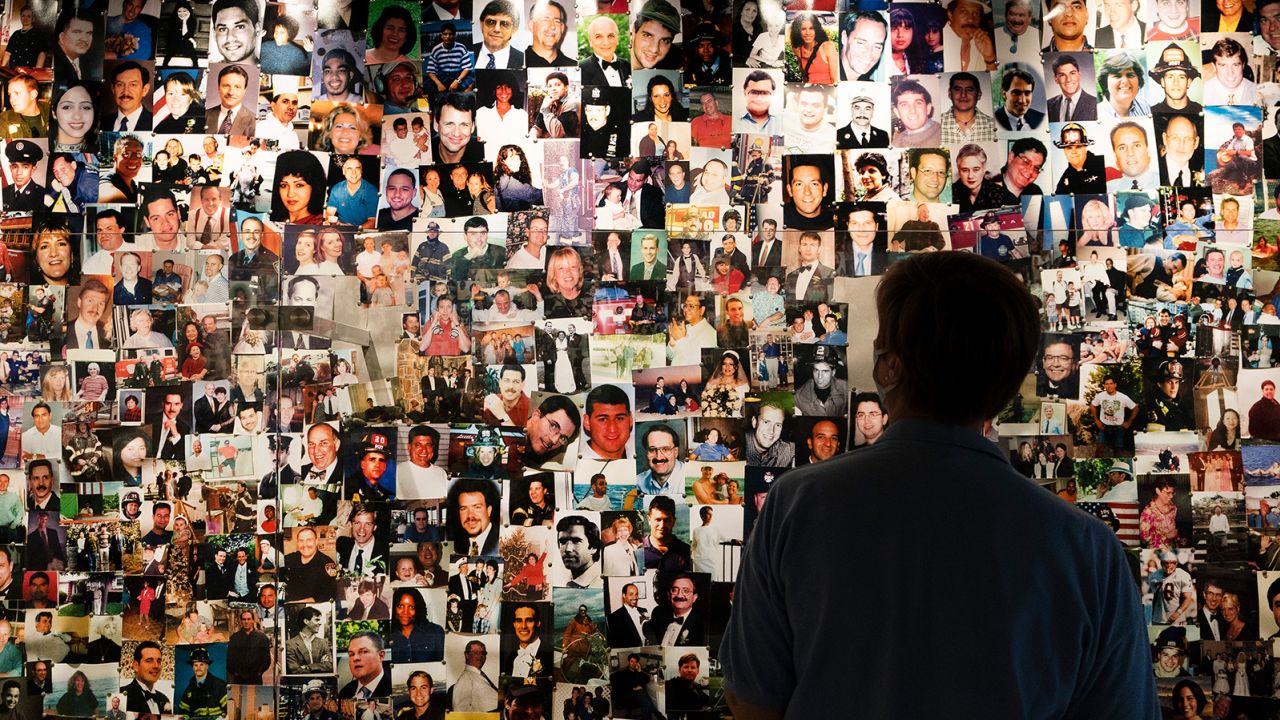
Yesterday we wrote about the countless hours of 9/11 footage scattered across the internet. But one set of images — a kind of “Holy Grail” for 9/11 “completists” — has never surfaced.
As Michael Wilson writes in this fascinating NYT story, a disposable camera was reportedly found in the pocket of a man who died at the WTC. The FBI developed the film, “revealing pictures taken from inside one of the towers as the Sept. 11 attacks were unfolding.”
Documentary filmmaker Jonathan Walczak has spent 15 years trying to obtain those photos. To him, they’re “the Zapruder film of 9/11” — “singular and unique, a point of view unlike any other.” He sued the FBI last year. But so far the bureau has been unable to track the photos down…
For more than a year after 9/11, Wendell Jamieson ran the NYT’s extraordinary Portraits of Grief series that profiled every victim who died in the attacks. In a compelling essay for Air Mail, he says that “it was the assignment of a lifetime,” but there was also “a dark side” to the project:
“For every grieving family member who called to thank us, another called to curse us. They were angry that we’d missed a key detail, or not mentioned a beloved child or — and this happened many times — that we’d made people look better than they were.” Read the full piece here…
Fox News reporter Eric Shawn, who spent more than a month reporting from the “shocking hellscape” of Ground Zero after 9/11, spoke with People mag about the health problems he has suffered in the years since — and the thousands of others still living with 9/11-related illnesses.
“I went there because that’s where the story was. We’re not the heroes,” he told Vanessa Etienne.
His goal in speaking out is to “try and focus on, not me, but the vast number of people who are sick.” As Shawn put it: “9/11 was one day, but for many people, it’s every day and continues now.” Read the full interview here…
That’s the headline on Garrett Graff’s new story for WIRED, arguing that one of 9/11’s “most important and pernicious impacts” was how it changed “our society’s very understanding and relationship to facts and truth.”
Graff traces how Alex Jones became “a key force in the spread of 9/11 conspiracies” as the theories “took root in the early internet,” including via viral video “Loose Change” and its “‘we’re-just-asking-questions’ tone.”
Jones has since “suffered a remarkable comedown,” Graff notes. But 25 years after 9/11, “it’s hard not to see that his conspiracism has won the broader war.”
Following this morning’s somber special reports, there will be specials in primetime on ABC, CBS and NBC.
ABC will have a one-hour special at 8 p.m. ET, “9/11 Tribute in Light: Live from Lower Manhattan,” led by David Muir, Robin Roberts and Diane Sawyer.
Over at CBS, Tony Dokoupil will anchor the network’s “We Remember” special at 8 p.m. CBS will air a new documentary, “Daughters of 9/11,” at 9.
On NBC, a special edition of “Dateline” led by Lester Holt will feature “never before seen footage.”
President Trump tried a familiar tactic yesterday, declaring victory in such a way that it can’t be proven whether he was right or wrong.
He bragged on Truth Social that night one of the GOP’s midterm convention had “really big numbers, despite going up against the NFL. The overall numbers beat the NFL.”
The overall numbers of… what? The convention was shown by lots of outlets that aren’t rated by Nielsen, like C-SPAN and obscure MAGA streaming platforms, so technically there is no way to know the overall audience. The NFL kickoff was shown on NBC, Peacock and Telemundo, and those Nielsen #s won’t be in until Monday.
The kickoff game usually exceeds 20 million TV viewers, so there’s really no conceivable world where Trumpapalooza would beat that. But there’s also no method to disprove Trump’s preposterous boast.
So we’re left to stare at the Fox News ratings, since Fox aired Trump in full, while most other networks did not. Fox News averaged 2.5 million viewers during the speech, which is basically what Sean Hannity and Greg Gutfeld average on a typical night. In other words: There was no “Trump bump.”
We’ll see if night two was any better for the president…
“Thank you to all friends & followers for your amazing words I am so grateful for the outpouring of love on SM & texts. I love you all,” the former Fox News host said yesterday, screwing up some punctuation in her first X post since being ousted last week. “Here’s a great shot of the 🌈 breaking through, I snapped the other day,” she wrote.
I’m told Bartiromo has been holed up in her Hamptons mansion in the days since Fox “parted ways” with her…
“The FCC has threatened me or threatened my show, our network, even our local ABC stations because they want to make our editorial decisions for us, which of course we cannot accept,” Jimmy Kimmel said at the top of his interview with James Talarico, which was posted to YouTube late last night. It already has more than 1.7 million views.
Kimmel’s first softball to Talarico was, “Why are they so scared of you?” The pair then jumped into Talarico’s bid for the Senate, with no additional discussion of why the sit-down didn’t air on ABC’s stations. Talarico, however, addressed the subject on MS NOW earlier in the day, saying the Trump administration is committing “the most dangerous form of cancel culture.”
The White House hit back at Kimmel and defended Brendan Carr. I wrote about it all here.
Stephen Colbert’s visit to Kimmel will happen next Tuesday, “marking his first late-night guest appearance since ‘The Late Show with Stephen Colbert’ signed off in May,” Jed Rosenzweig scooped for LateNighter.
Kimmel announced the booking last night and quipped, “Maybe I’ll let him sit here, I don’t know.”
The ailing newspaper giant “made deep job cuts on Thursday to newsrooms across the country” — slashing at least 90 journalists at dozens of publications in what one journalist has dubbed “a blood bath,” the NYT’s Katie Robertson reports. We’ll have more on this tomorrow…
>> TikTok “has rejected ads from Meta that call on TikTok and other tech platforms to join Meta in settling with U.S. state attorneys general in a landmark children’s safety lawsuit,” Sara Fischer reports. (Axios)
>> Janelle Rodriguez is leaving NBC News. Catherine Kim will “expand her duties to include NBC News Now and specials, adding to oversight over digital and newsgathering.” (Deadline)
>> From journalist to VC: Sources newsletter author Alex Heath, who recently wrote a TIME cover story about OpenAI, “is joining Guy Oseary’s Sound Ventures as a partner.” (Newcomer)
>> Gov. Gavin Newsom “signed into law restrictions on addictive social media technology and interactions with harmful artificial intelligence chatbots, ushering in some of the strongest online protections for young users in the United States,” Cecilia Kang and Laurel Rosenhall report. (NYT)
This edition of Reliable Sources was edited by Andrew Kirell and produced with Liam Reilly. Email us your feedback and tips here.