
Four Creatives Harnessing the Energy of the Sun
The nuclear fusion reactions at the core of the sun convert four million tons of matter into energy every second—and only a small fraction of the energy produced by the hot, blazing star is needed to support all life on Earth. Humans, of course, have been developing mythological, religious, economic, and artistic narratives about the sun since the beginning of time. The gaseous object lies beneath the very concept of timekeeping itself. But while the sun has come to symbolize hope, creativity, and joy, in the light of today’s climate crisis, its all-encompassing, life-giving power and untamable heat can also evoke destruction and despair.
“Solar energy needs a new narrative,” says German textile designer Shani Nahum, “one that moves away from the traditional focus on efficiency and the payback time of blue solar panels.” Her project The Boiling Purple aims to shift that understanding.
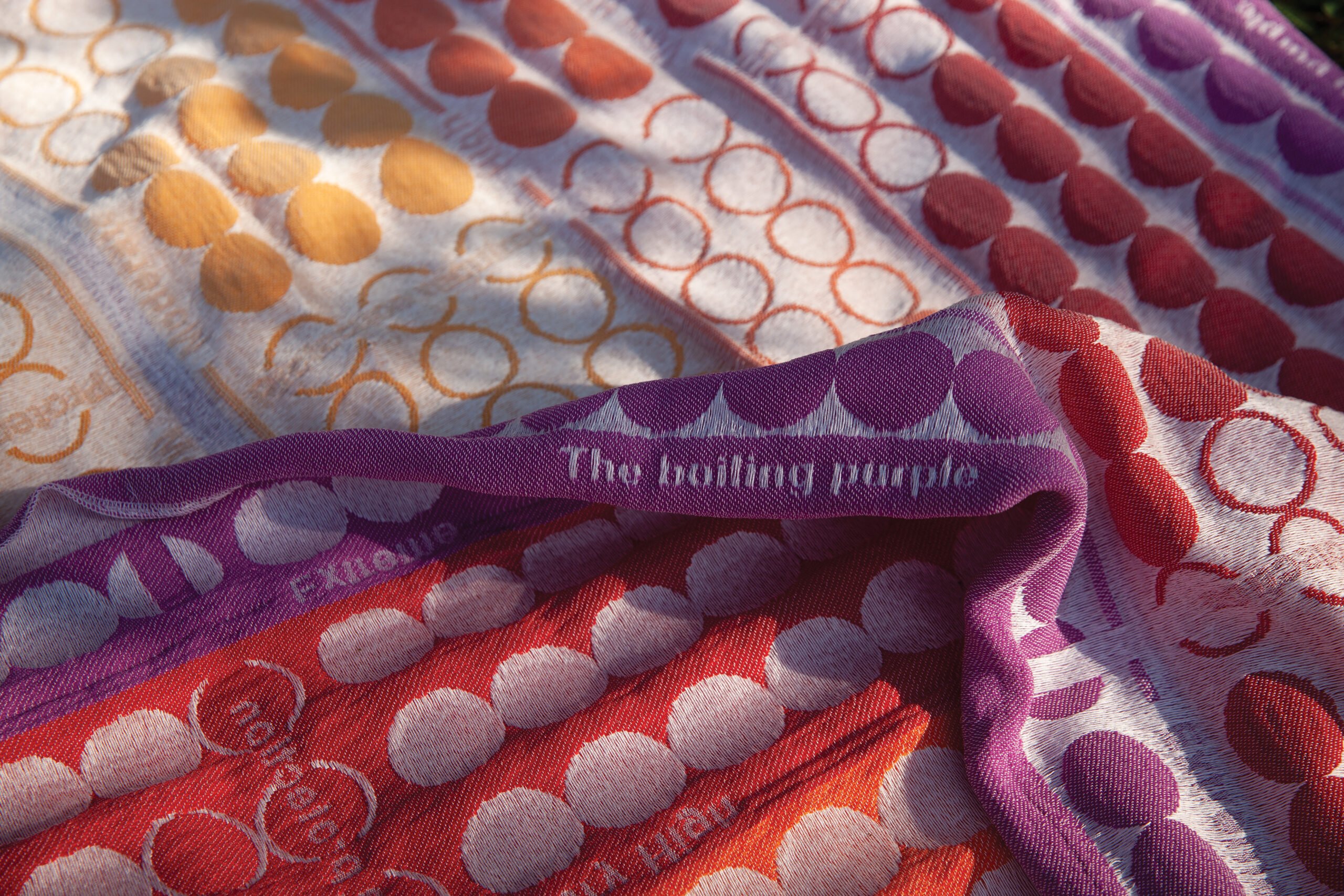
Sun-Inspired Textiles and UV Radiation Awareness
Evolving out of her master’s thesis work at University of Art & Design Burg Giebichenstein Kunsthochschule Halle, The Boiling Purple is a textile collection consisting of five beach towels made of Econyl recycled nylon and Sunkolor, a material that changes from white to purple when exposed to high ultraviolet (UV) radiation. Incorporating the global UV index’s semiotic color scale and sun-inspired circular elements, Nahum turns a functional item into a poetic commentary on climate change, warning users of harmful UV exposure while also providing a reminder of the sun’s powerful duality as both life giver and potential threat.
“UV radiation is one of the sun’s most significant characteristics, but it is naturally invisible to the human eye and other senses. UV radiation has both immediate and long-term effects on the skin and eyes, as well as environmental implications,” Nahum explains. “While The Boiling Purple doesn’t directly involve solar technology, it does engage with the sun’s properties as a central element, using them to provoke thought and raise awareness.”
Textiles that Illuminate the Climate Crisis
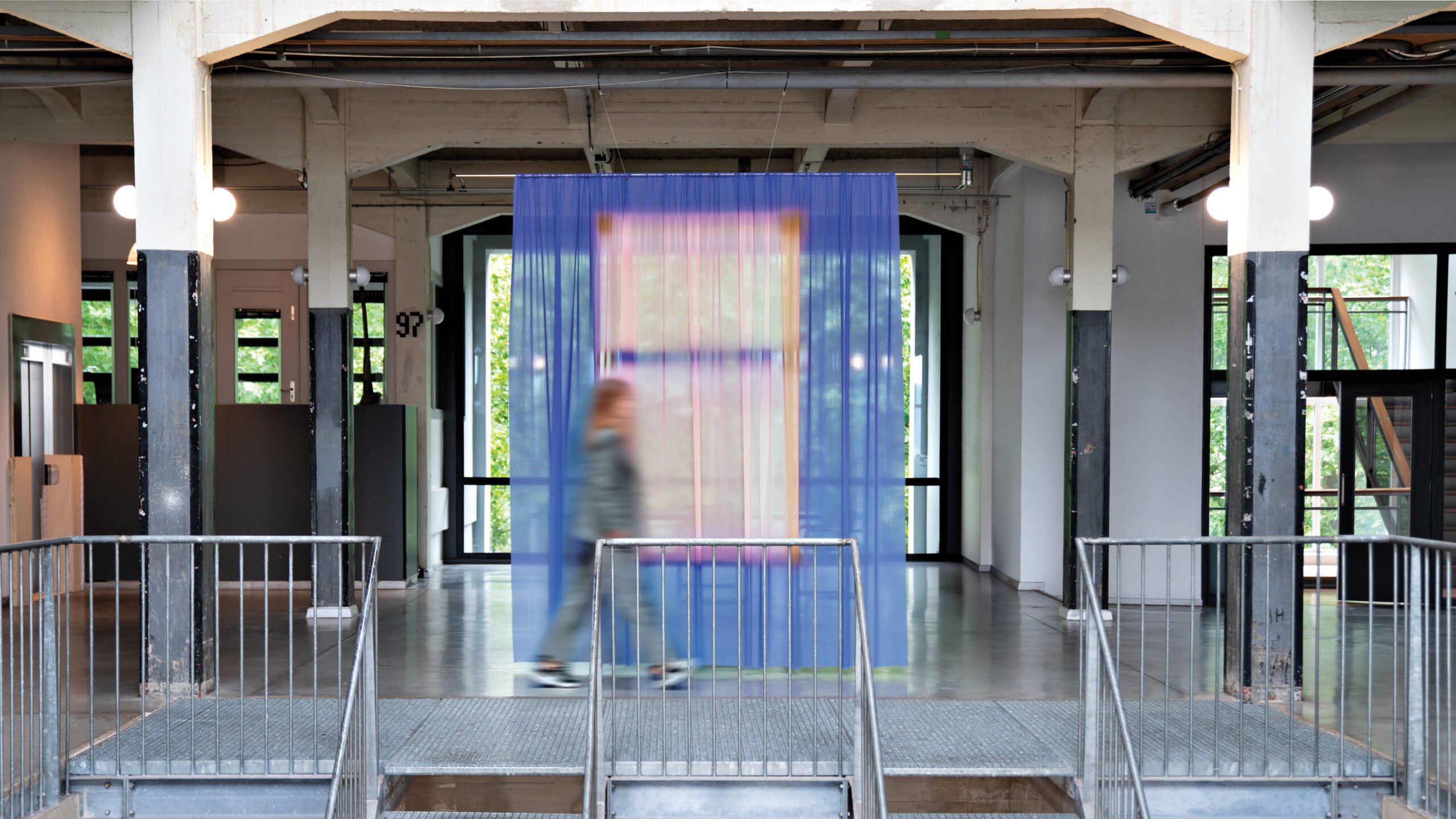
Nahum is just one of many contemporary designers creating textiles that shed light on the climate crisis. For Amsterdam-based Yvonne Mak, textiles are also a medium for provoking thought and inspiring action. Her surreal series of curtains titled Imprint captures “how the sun’s impact, much like climate change, leaves an indelible impression on objects and landscapes, reminding us of the passage of time and the consequences of our actions,” she wrote in an artist statement for Dutch Design Week 2024. Her sun-bleached curtains mimic the slow fading of a textile, creating an illusion of windows left in place for decades. The effect is haunting and evocative, inviting viewers to consider how climate change gradually impacts our lives. “The curtains serve as a metaphor for the way climate change slowly intrudes into and alters our everyday lives. As global temperatures rise, homes and living spaces increasingly need to adapt to the changing environment.”
While Mak’s and Nahum’s work evokes symbolic and data-driven narratives, other designers are focusing on blending expression and function, integrating solar energy into textiles themselves. Dutch designer Pauline van Dongen notes, “Textiles have such a tactile, human quality, and combining that with solar energy allows us to reimagine what a ‘functional’ material can be—something that’s not just technical but also expressive, inviting, and imaginative.”