
Flaws in Government Tool to ID Noncitizen Voters
Republican Sen. Mike Lee said that he believes there are “at least tens of thousands, probably hundreds of thousands” of noncitizens illegally registered to vote in the U.S., adding that a federal tool used in nearly two dozen states would help identify the number. But the tool has wrongly flagged many as being noncitizens, and there’s no evidence of widespread noncitizen voting.
The data-matching program employed in those states over the last year identified about 10,000 potential noncitizens on voter registration lists, out of about 49 million voter registrations checked, according to reporting by the New York Times citing federal officials. But upon further investigation, county officials found U.S. citizens were among those identified.
In addition, election officials determined some noncitizens were inadvertently added by county officials to voter lists, and still others were noncitizens who mistakenly checked a box for voter registration even after acknowledging on the same forms that they were noncitizens.
Experts and state audits refute the idea of widespread noncitizen voting.
The SAVE America Act championed by Lee — and touted by President Donald Trump as necessary to stop illegal voting by noncitizens — would require all states to submit their voter registration lists to the Department of Homeland Security to be run through this tool, called the Systematic Alien Verification for Entitlements, or SAVE, program. The bill passed the House and is being debated in the Senate. Lee made his comments about noncitizens being registered to vote in a March 22 interview on Fox News’ “Sunday Morning Futures.”
Jasleen Singh, a senior counsel and manager in the Brennan Center for Justice’s democracy program, said that Lee’s speculation about the number of noncitizens on voter registration lists amounts to “another outlandish claim without evidence.” The reality, Singh said, is that “noncitizen voting is vanishingly rare.”
The SAVE program, Singh said, “is one of many tools that election officials have in their toolbox to use. It comes with a myriad of data flaws, and any results that come directly from a search to the SAVE program need to be viewed with that lens and with a good degree of skepticism.”
Acting upon an executive order from Trump in March 2025, DHS overhauled the SAVE program last spring to include Social Security data. Trump also waived fees to states to access the database, allowing bulk searches.
“What we do know is that in states that have started reviewing the voter registration files in order to weed out those [ineligible people] who might have registered, perhaps inadvertently … already there have been thousands of voter registration files identified in just the handful of states doing their own reviews,” Lee told the Hill on March 20.
We reached out to Lee’s office but did not get a response.
Many states — predominantly ones run by Democrats — have refused to share their voting lists with the SAVE program. U.S. Attorney General Pam Bondi has sued 29 states and the District of Columbia for failing to provide the federal government with their lists.
But nearly two dozen states have utilized the SAVE program. Lee is correct that “thousands” of people have been flagged as potentially being noncitizens. As we said, of the 49.5 million voter registrations checked, DHS referred about 10,000 cases to investigators, according to a Jan. 14 New York Times report that attributed the figures to a spokesman for U.S. Citizenship and Immigration Services. (There were 174 million people registered to vote in the U.S. for the 2024 election, according to the U.S. Census. In other words, less than a third of all names on state voter registration lists nationwide have been run through the SAVE program.)
But the Times reported that local election officials began to discover that some of the names flagged by the SAVE program turned out to be citizens. That appeared to be particularly true for recently naturalized citizens. Tens of thousands of people are naturalized as citizens every month, according to U.S. Citizenship and Immigration Services data.
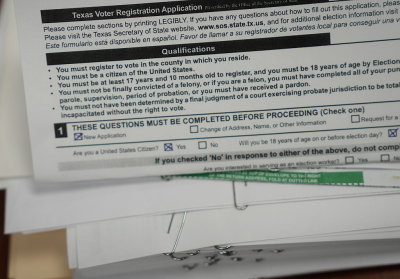
A joint investigation by ProPublica and the Texas Tribune found that in addition to many citizens being wrongly flagged as noncitizens, several election officials “came across instances in which voters marked on registration forms that they weren’t citizens, but were registered by election office staffers in error. Clerks also said voters have told them they’d misunderstood questions about eligibility when getting drivers’ licenses.”
Ongoing research by the Center for Election Innovation & Research “continues to find that sweeping allegations about noncitizen registrations or voting appear to arise from misunderstandings, mischaracterizations, or outright fabrications about complex voter data. In every examined case, when claims about large numbers of noncitizens on voting rolls are subject to scrutiny and properly investigated, the number of alleged instances falls drastically.”
Even in the states that have used the federal SAVE program, “Claims of large numbers of possible noncitizens on voter records are revised significantly downward after proper investigation and scrutiny. Most often, investigations into large claims reveal that at least some early flags were based on outdated, incomplete, or improperly matched data that incorrectly labeled eligible citizens as possible noncitizens,” CEIR reported in February. Those smaller, revised numbers “generally receive far less public attention.”
Lee’s Home State of Utah
Interestingly, the SAVE America Act faces significant opposition from the top Republican election official in Lee’s home state of Utah, which last year initiated a citizenship review of all registered voters in the state. Ultimately, officials announced in January that they were only able to confirm the state voter rolls included one noncitizen, and that person did not vote.
State officials first compared voter records against driver’s license data, which records citizenship status. The conclusion: 99.9% of the state’s 2 million voters were citizens. But that left the status of 71,314 people unclear, so officials checked those against the SAVE database, which narrowed the potential number of noncitizens to 8,836. Staff in the state elections office then reviewed the remaining voters’ information. That narrowed the list to 486 they could not immediately verify were citizens. Officials sent letters to everyone in that group and got back 52 responses, including many from older voters who registered before the state required a driver’s license or Social Security number.
“The bottom line is, there is not a widespread problem,” Lt. Gov. Deidre Henderson, a Republican, said at the time. “You hear people say hundreds or thousands — it’s just not.”
Henderson, who oversees elections in the state, wrote in a January press release that through Utah’s citizenship review, “We also learned that the federal government does not keep accurate databases.”
The SAVE program, she said, “is notoriously inaccurate and frequently flags individuals who are, in fact, citizens.”
Henderson and others have also raised concerns about the SAVE America Act requiring states to use the DHS database immediately, in the midst of a midterm election year.
“If we want a federal law mandating voter ID or DPOC [documentary proof of citizenship], and it’s really not about disenfranchising a bunch of voters, then states and voters need an onramp with time to prepare — get the documents, obtain the right ID, set up the system,” Henderson wrote in a social media post on March 17. “That’s not what’s happening with the SAVE America Act. This bill would be effective immediately in the middle of an election year.”
SAVE Flaws Found in Other States
Similar stories have played out in other states that used the SAVE program.
One of the first states to implement the SAVE program was Texas, and on Oct. 22, Texas’ secretary of state, Jane Nelson, announced that it had completed a full comparison of the state’s voter registration list against citizenship data in the SAVE database. Calling it a “game changer,” Nelson said the SAVE program identified 2,724 potential noncitizens on the state’s voter registration rolls — or less than 0.02% of more than 18 million voters.
Nelson said the list of those potential noncitizens was sent to Texas counties to conduct investigations, with the understanding that those deemed to be noncitizens would be purged from voter registration lists and those who were found to have voted illegally would be referred to the Texas attorney general for prosecution.
“Everyone’s right to vote is sacred and must be protected. We encourage counties to conduct rigorous investigations to determine if any voter is ineligible — just as they do with any other data set we provide,” Nelson said.
But that’s where things began to fall apart.
As a joint investigation by ProPublica and the Texas Tribune documented, lacking clear guidance, some counties investigated; others didn’t. Some sent letters to people on the list and purged those who failed to respond; others didn’t purge any names.
Some counties compared the names on their list to databases kept by the Department of Public Safety, which requires proof of citizenship if residents register to vote when obtaining a driver’s license. Those checks found many of those on the list identified as potentially noncitizens were citizens.
In Potter County, for example, three of nine voters on the list had proof of citizenship on file, the ProPublica/Texas Tribune investigation found. In Travis County, it was 11 of the 97 voters flagged by the SAVE program. Overall, the counties that checked the SAVE-generated list against DPS records found “more than 5% of the voters SAVE identified as noncitizens proved to be citizens,” the investigation concluded.
“It has proven to be inaccurate,” Travis County’s voter registrar, Celia Israel, told the publications. “Why would I rely on it?”
While the SAVE program accurately identified many on the voter registration rolls who were ineligible to vote, “Several [counties] came across instances in which voters marked on registration forms that they weren’t citizens, but were registered by election office staffers in error. Clerks also said voters have told them they’d misunderstood questions about eligibility when getting drivers’ licenses,” the ProPublica/Texas Tribune report said.
In Louisiana, the SAVE program identified 403 potential noncitizens registered to vote, out of 2.96 million registered voters. That’s about 0.014%. Of those potential noncitizens, 83 cast at least one vote going back to the 1980s (though it was not clear how many of those were later verified to be noncitizens). In 2024, 2,006,975 people voted in the presidential election in Louisiana. Even if all 83 of them voted that year, that would translate to about 0.004% of all votes cast in the state.
“I want to be clear: noncitizens illegally registering or voting is not a systemic problem in Louisiana,” Louisiana Secretary of State Nancy Landry said when the preliminary results were revealed last September.
Missouri also employed the SAVE program and generated lists of potential noncitizens, which it then circulated to local officials.
On Dec. 3, more than 70 county election clerks from both parties wrote a letter to the state’s speaker of the House warning, “These lists are deeply flawed: they are outdated, inaccurate, and include individuals we know to be U.S. citizens—our neighbors, colleagues, and even voters we have personally registered at naturalization ceremonies.”
It’s not clear how many noncitizens flagged by the SAVE database actually voted. But there have been relatively few arrests nationwide for illegal voting by noncitizens.
That makes sense, Singh told us, considering the stiff consequences for convictions for voting illegally as a noncitizen. Current federal law requires those registering to vote to attest that they are citizens under penalty of perjury. Noncitizens convicted of voting in federal elections face fines, jail time and deportation.
“Someone who is in this country, who may not have documents, or who has a legal presence and is not a citizen yet, whatever it is, they’re not going to risk their ability to be in this country to cast a ballot, because they will be subject to deportation,” Singh said. “And it’s just not a risk that folks are, if we think about it logically and reasonably, that folks are going to be willing to take.”
According to the conservative Heritage Foundation’s election fraud database, just under 100 noncitizens have been convicted of illegally voting or registering to vote since 1982.
There may be so few prosecutions, Singh said, because by and large, when noncitizens are on registration rolls “it’s likely a mistake or because of an error by the person registering, or maybe the DMV … whatever it is, it’s a mistake rather than an actual intentional act.”
“The evidence is that the number of noncitizens illegally voting in federal elections is extremely low, not high enough to have changed the party outcome of any federal election in recent years,” Walter Olson, a senior fellow at the libertarian Cato Institute, told us last April. “Audits and investigations in states like Ohio, Nevada, and North Carolina have found the numbers to be tiny in relation to votes cast. … The consistent experience has been that very few persons in this category mistakenly or deliberately vote.”
Editor’s note: FactCheck.org does not accept advertising. We rely on grants and individual donations from people like you. Please consider a donation. Credit card donations may be made through our “Donate” page. If you prefer to give by check, send to: FactCheck.org, Annenberg Public Policy Center, P.O. Box 58100, Philadelphia, PA 19102.
The post Flaws in Government Tool to ID Noncitizen Voters appeared first on FactCheck.org.