
Farmers and business owners were promised financial help for energy upgrades. They’re still waiting for the money
For Joshua Snedden, a REAP grant was the key to making his 10-acre farm in Monee, Illinois, more affordable and environmentally sustainable. But months after installing a pricey solar array, he’s still waiting on a reimbursement from the federal government — and the delay is threatening his bottom line.
“I’m holding out hope,” said Snedden, a first-generation farmer in northeast Illinois. “I’m trying to do everything within my power to make sure the funding is released.”
In December, his five-year old operation, Fox at the Fork, began sourcing its power from a new 18.48 kilowatt solar array which cost Snedden $86,364. The system currently offsets all the farm’s electricity use and then some.
REAP offers grants for up to half of a project like this, and loan guarantees for up to 75 percent of the cost. For Snedden, a $19,784 REAP reimbursement grant made this solar array possible. But the reimbursement, critical to Snedden’s cash flow, was frozen by Trump as part of a broader review of the USDA’s Biden-era commitments.
Snedden grows the produce he takes to market — everything from tomatoes to garlic to potatoes — on about an acre of his farm. He also plans to transform the rest of his land into a perennial crop system, which would include fruit trees like pears, plums, and apples planted alongside native flowers and grasses to support wildlife.
A solar array was always part of his plans, “but seemed like a pie in the sky” kind of project, he said, adding he thought it might take him a decade to afford such an investment.
The REAP program has been a lifeline for Illinois communities struggling with aging infrastructure and growing energy costs, according to Amanda Pankau with the Prairie Rivers Network, an organization advocating for environmental protection and climate change mitigation across Illinois.
“By lowering their electricity costs, rural small businesses and agricultural producers can put that money back into their business,” said Pankau.
That’s exactly what Snedden envisioned from his investment in the solar power system. The new solar array wouldn’t just make his farm more resilient to climate change, but also more financially viable, “because we could shift expenses from paying for energy to paying for more impactful inputs for the farm,” he said.
He anticipates that by switching to solar, Fox at the Fork will save close to $3,200 dollars a year on electric bills.
Now, Snedden is waiting for the USDA to hold up their end of the deal.
“The financial strain hurts,” said Snedden. “But I’m still planning to move forward growing crops and fighting for these funds.”
At the start of the year, Jon and Brittany Klimstra were nearly ready to install a solar array on their Polk County, North Carolina farm after being awarded a REAP grant in 2024.
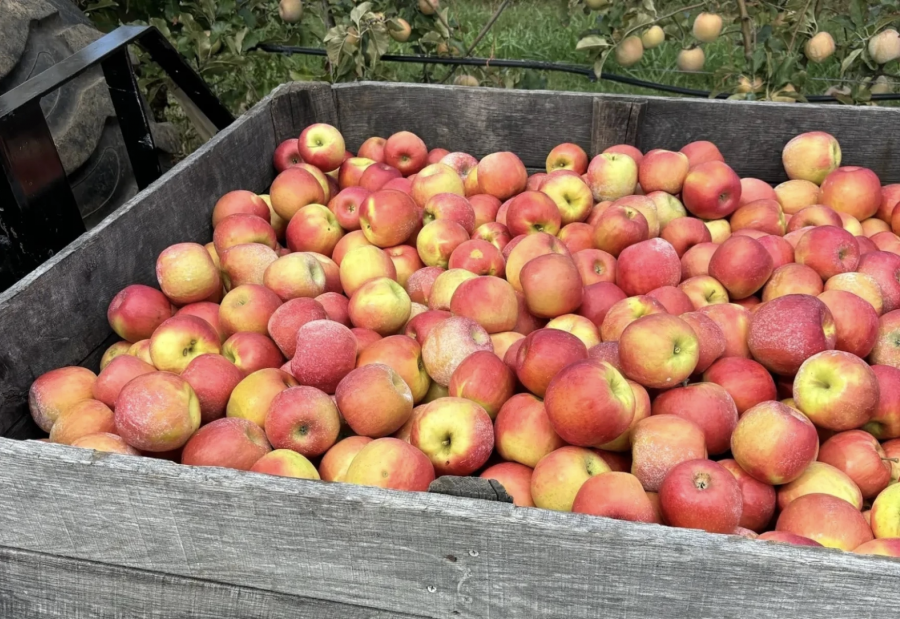
As two former scientists who had moved back to western North Carolina 10 years ago to grow apples and be close to their families, it felt like a chance to both save money and live their values.
“We’ve certainly been interested in wanting to do something like this, whether it be for our personal home or for our farm buildings for a while,” said Jon. “It just was cost prohibitive up to this point without some type of funding.”
That funding came when they were awarded $12,590 from REAP for the installation. But, after the Trump administration’s funding freeze, the money never came.
“We were several site visits in, several engineering conversations. We’ve had electricians, the solar company,” said Brittany . “It’s been a very involved process.”
Since the grant is reimbursement-based, the Klimstras have already paid out-of-pocket for some costs related to the project. Plus, the farm had been banking on saving $1,300 in utilities expenses per year. In a given month, their electricity bill is $300-$400.
Across Appalachia, historically high energy costs have made the difference between survival and failure for many local businesses, said Heather Ransom, who works with Solar Holler, a solar company that serves parts of Virginia, West Virginia, Kentucky, and Ohio.
“We have seen incredible rate increases across the region in electricity over the past 10, even 20 years,” she said.
Through Solar Holler, REAP grants also passed into the hands of rural library systems and schools; the company installed 10,000 solar panels throughout the Wayne County, West Virginia school system. About $6 million worth of projects supported by Solar Holler are currently on hold.
In other parts of the region, community development financial institutions like the Mountain Association in eastern Kentucky combatted food deserts through helping local grocery stores apply for REAP.
Solar Holler also works in coal-producing parts of the region, where climate change discussions have been fraught with the realities of declining jobs and revenue from the coal industry. The program helped make the case for communities to veer away from coal and gas-fired energy.
“What REAP has helped us do is show people that it’s not just a decision that’s driven by environmental motives or whatever, it actually makes good business sense to go solar,” Ransom said. In her experience, saving money appeals to people of all political persuasions. “At the end of the day, we’ve installed just as much solar on red roofs as we do blue roofs, as we do rainbow roofs or whatever.”
The grants aren’t only for solar arrays and other renewable energy systems. Many are for energy efficiency improvements to help farmers save on utility bills, and in some cases cut emissions. In Georgia, for instance, one farm was awarded just under $233,000 for a more efficient grain dryer, an upgrade projected to save the farm more than $16,000 per year. Several farms were awarded funding to convert diesel-powered irrigation pumps to electric.
The USDA did not directly answer Grist’s emailed questions about the specific timeline for REAP funds, the amount of money under review, or the future of the program. Instead, an emailed statement criticized the Biden administration’s “misuse of hundreds of billions” of IRA and bipartisan infrastructure law (BIL) funds “all at the expense of the American taxpayer.”
“USDA has a solemn responsibility to be good stewards of the American people’s hard-earned taxpayer dollars and to ensure that every dollar spent goes to serve the people, not the bureaucracy. As part of this effort, Secretary Rollins is carefully reviewing this funding and will provide updates as soon as they are made available,” the email said.
Two federal judges have already ordered the Trump administration to release the impounded IRA and BIL funds. Earthjustice, a national environmental law organization, filed a lawsuit last week challenging the freeze of USDA funds on behalf of farmers and nonprofits.
“The administration is causing harm that can’t be fixed, and fairness requires that the funds continue to flow,” said Jill Tauber, vice president of litigation for climate and energy at Earthjustice.
Rollins released the first tranche of funding February 20 and announced the release of additional program funds earlier this month. That did not include the REAP funding.
The USDA announced Wednesday it would expedite funding for farmers under a different program in honor of National Agriculture Day, but as of March 20 had not made an announcement about REAP.
Rahul Bali of WABE contributed reporting to this story.