
Elementor #26094
Bananito Broke the Internet: The Rise and Fall of TikTok’s Most Viral AI Show
One anonymous creator. Zero budget. 300 million views in 9 days. The story of Fruit Love Island and what it says about where social media is headed.
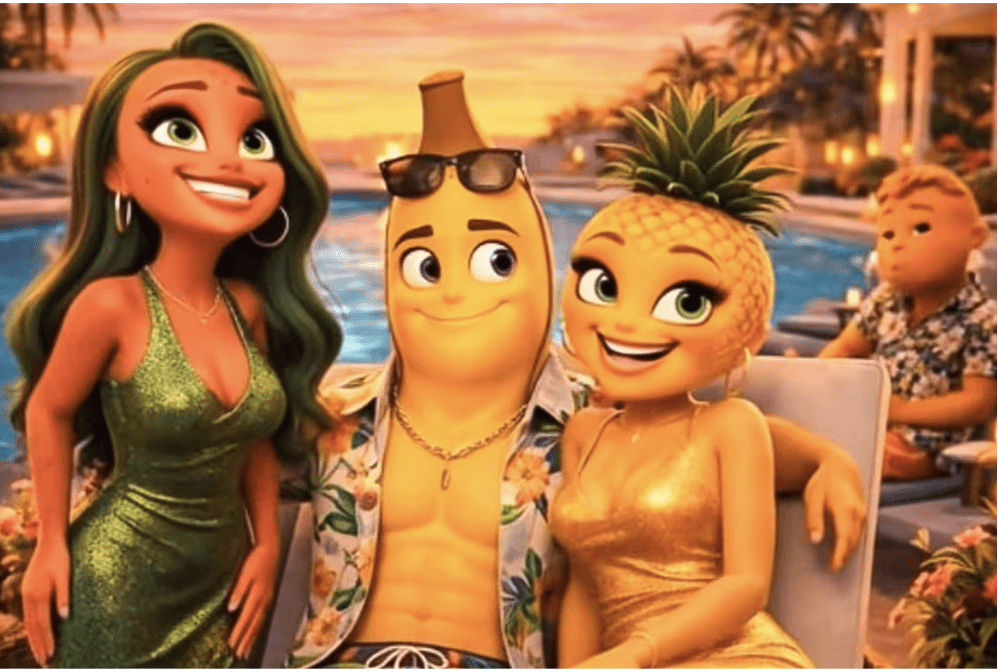
Imagine this, you’re mindlessly scrolling TikTok at 2 a.m. when something stops you. A buff banana in an open shirt is on a sunset date. A strawberry is sobbing over a love triangle. A green apple is hosting it all like she was born for reality TV. You think it’s a joke. You watch anyway. Then you watch the next one. And the one after that. Welcome to Fruit Love Island, which, for 15 days in March 2026, was the most-watched show on the internet.
On March 13, 2026, an anonymous TikTok account called AI Cinema posted its first episode. No crew. No budget. No name. Just one person, a laptop, and a wild idea: take the format of Love Island and replace every human contestant with an AI-generated piece of fruit. The cast of the show was Strawberina, Bananito, Cherrita, Pinapina, and a voluptuous green apple host holding it all together. Each episode ran 2 to 4 minutes and took roughly three hours to make, combining AI tools for visuals, voice synthesis, and script generation.
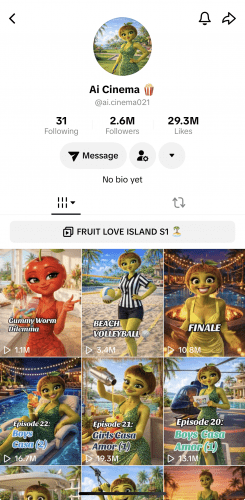
The numbers that followed were hard to believe. In just nine days, AI Cinema had over 300 million total views and 3.3 million followers, making it the fastest-growing account in TikTok history. Individual episodes averaged 10 to 15 million views each. Episode 15 alone hit 39 million. For context, the entire 2025 Eurovision Song Contest, a big-budget, globally broadcast event, reached 166 million people. One AI fruit episode got nearly a quarter of that. After this rapid rise, the account’s fortunes shifted: today, it has 2.6 million followers and 29.3 million likes—a visible drop from its peak, a direct result of the takedowns and the chaos that followed. The rise was historic, but the fall was fast.
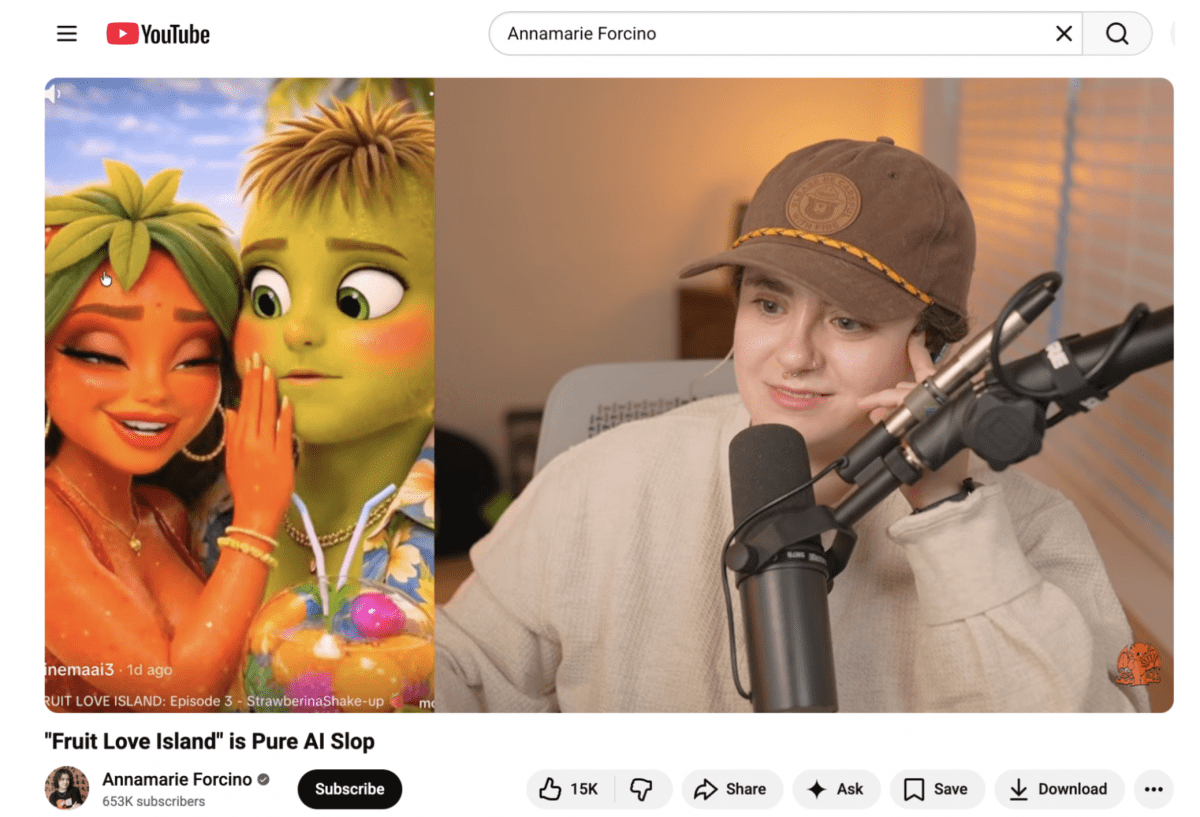
The show was winding down because people complained about glitchy animation, robotic AI voices, and characters randomly changing color mid-scene. Critics had a field day, calling it an “AI slop” term for low-quality content mass-produced by AI solely to grab attention. YouTuber Annamarie Forcino titled her review “Fruit Love Island is Pure AI Slop” However, even after this, millions of people continued to watch.
So why did millions of people keep watching something so objectively bad? According to Psychology Today, our brains are wired to crave constant stimulation; the more we scroll, the more we need. Platforms are designed to keep us hooked, and once you’re in, it’s almost impossible to stop. There’s also the hate-watching factor — the glitches don’t hurt the show, they make it funnier. The absurdity of watching fruit carry high-stakes drama has its own unique appeal.
After interviewing Esther, a self-described doomscroller, it became clear why.
“Yea I watch all the fruit TikToks, idk why I do it — it kinda catches my attention and I end up watching a 4 minute video about random fruits cheating on each other.”
Turns out, absurd is its own kind of addictive.
It wasn’t the AI that made Fruit Love Island addictive. It was the format. New episodes dropped daily, each ending on a cliffhanger. Fans voted via Google Form on which fruits coupled up, and audience plot submissions were written directly into the next episode. When you voted for Bananito to recouple, you had a reason to come back tomorrow. That’s just reality TV psychology on a $0 budget.
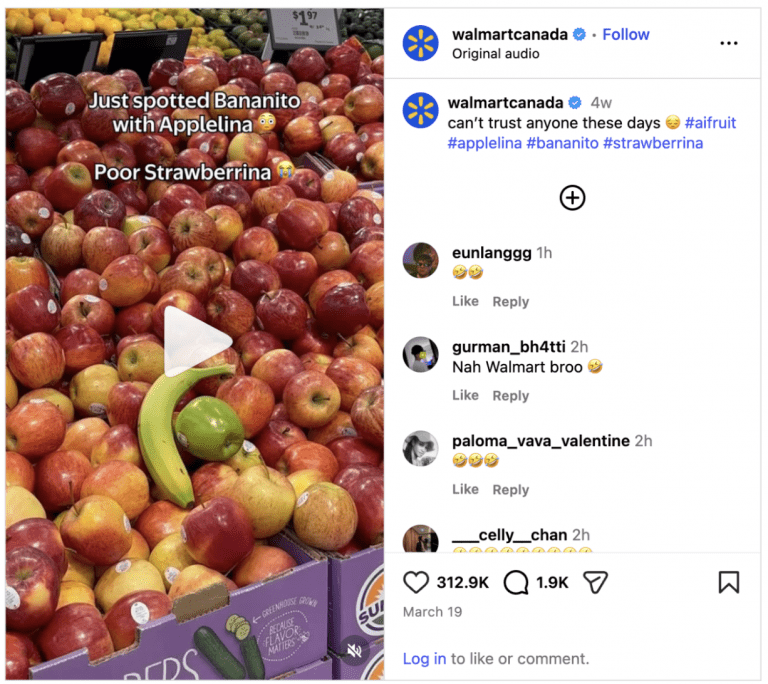
The formula worked so well that even Walmart Canada posted a banana on a pile of apples with the caption: “Just spotted Bananito with Applelina. Poor Strawberina.” When a major retailer is name-dropping your AI banana, the trend has officially gone mainstream.
Then it all came crashing down. TikTok removed 12 of 22 episodes for “low quality content.” YouTube deleted the backup channel overnight. Copyright issues loomed because the show had been using Love Island’s name, format, and theme music, all owned by ITV Studios, with no confirmed permission. The creator’s farewell said it all: “All my videos banned. I make no money.” The fastest-growing account in TikTok history is gone in 15 days.
The real question is, were those 300 million views even real? Some users think the whole thing was just bots watching bot content. And honestly? Nobody has fully proven otherwise. However, real people were clearly watching. Kaylor Martin and JaNa Craig, who are actual Love Island USA cast members, made reaction videos. So people were watching. But if AI makes the content and bots fake the views, what does going viral even mean anymore?
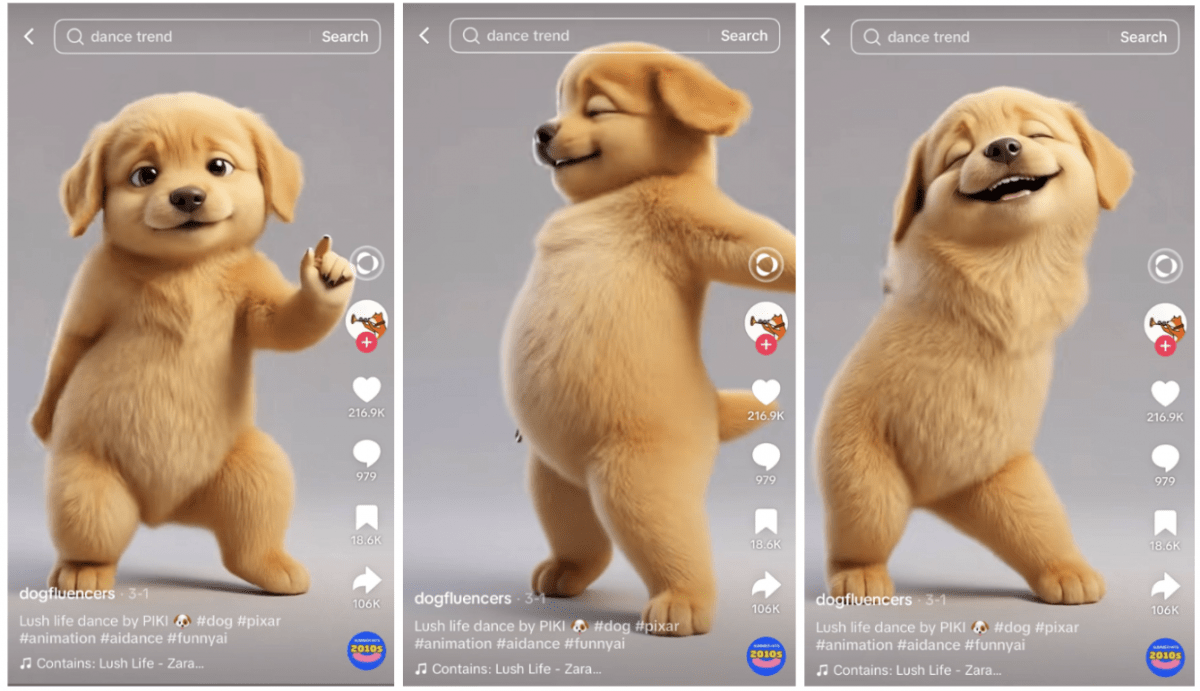
Fruit Love Island may be gone, but the genre it helped explode is very much alive. Before it, there was a TikTok account posting videos about a strawberry having an affair with her eggplant boss. After it, copycat shows, telenovela-style fruit dramas, and revenge arc videos flooded TikTok, Reels, and Shorts. And it didn’t stop at fruit — the same wave of AI-generated content brought dancing animals and endless character-driven videos taking over For You pages everywhere.
The show died. The genre didn’t. If anything, it opened a door that nobody seems to know how to close.
Data:
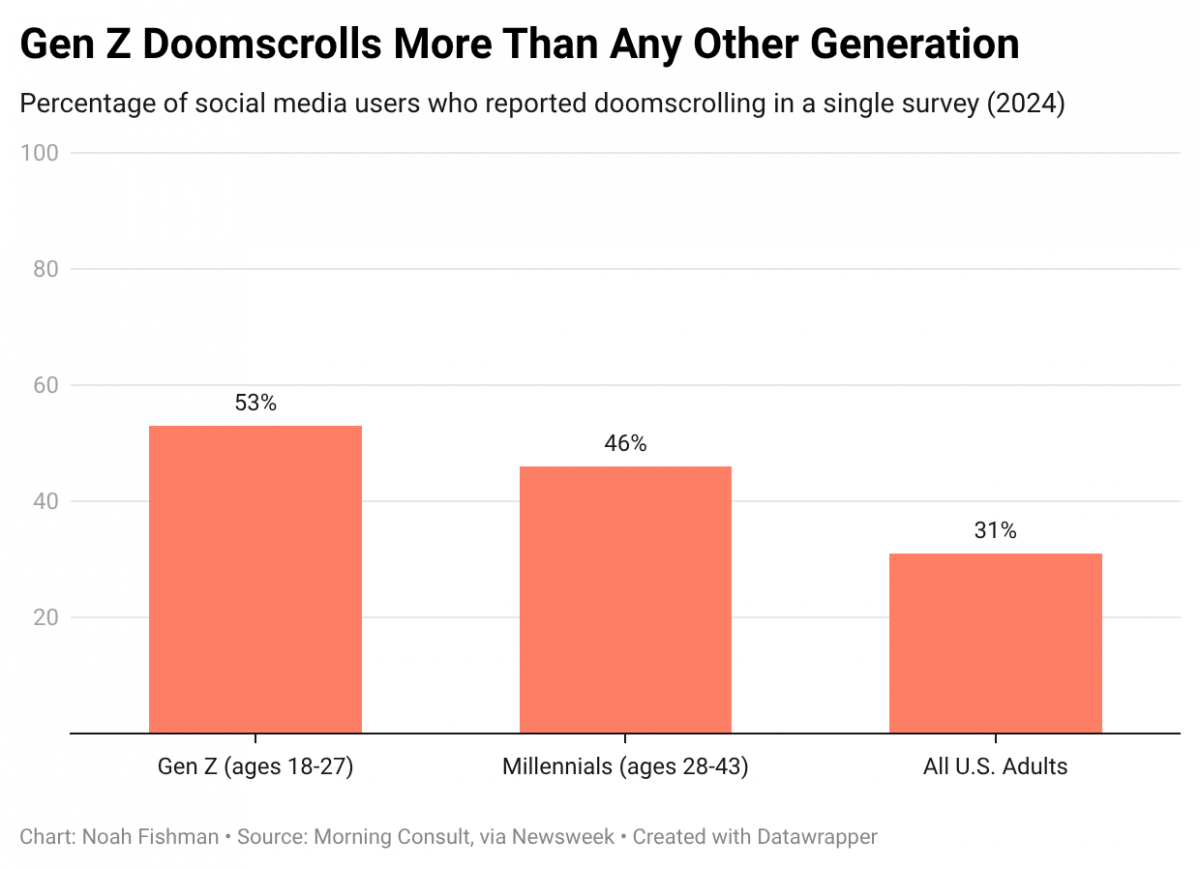
The first graphic came from a Morning Consult survey (2024) via Newsweek. This data was used to illustrate how widespread doomscrolling is across generations, providing context for why audiences are drawn to content like Fruit Love Island. Gen Z’s 53% rate is particularly relevant, given that they are the primary audience for TikTok.
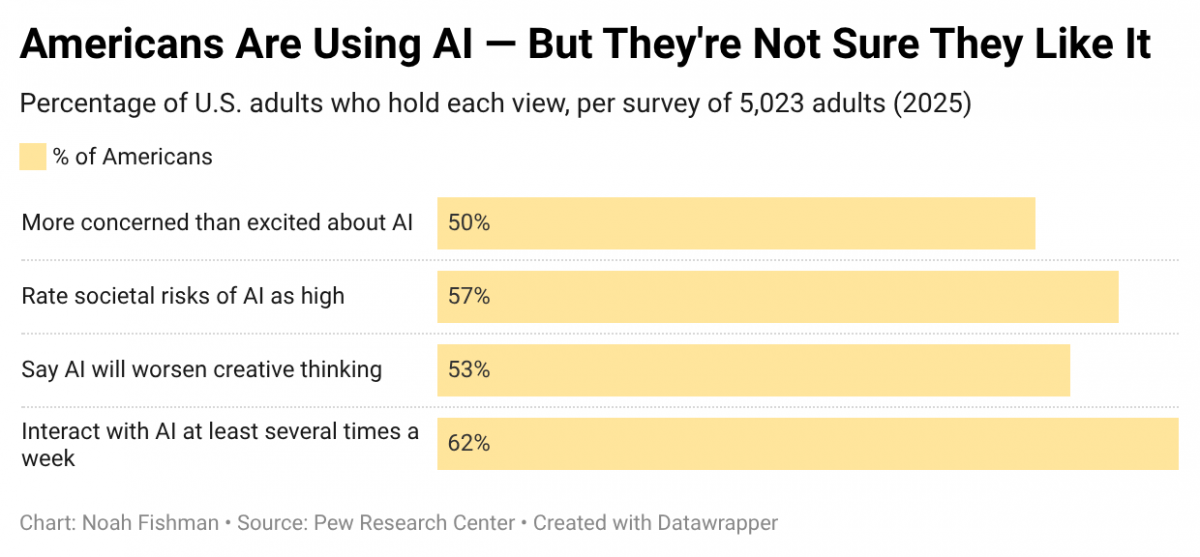
The second graphic came from the Pew Research Center (2025), one of the most credible research organizations in the country. This data was used to show the tension at the heart of the story — Americans are consuming AI content at record rates while simultaneously expressing serious concerns about it.
View count data and follower statistics throughout the article were sourced from DesignRush, AFP wire reports, and NBC News. The current AI Cinema follower count of 2.6 million was taken directly from a personal screenshot of the TikTok page, which served as a primary source for the account’s decline following the takedowns.
My Story’s Social Media Plan:
Since Fruit Love Island built its audience on TikTok, Instagram Reels, and YouTube, those are the three platforms where this story would be posted. On TikTok and Instagram Reels, I would post short clips that match the aesthetic and energy of the AI fruit videos themselves —meaning dramatic music, bold on-screen text, and fast cuts, so that fans of the trend would naturally stop scrolling and engage. The goal is to meet the audience where they already are and speak their language. On YouTube, a short-form video essay breaking down the rise and fall of Fruit Love Island would work well, since that audience tends to go deeper on topics they’re already invested in. Across all three platforms, captions would be written to spark debate — “Was Fruit Love Island actually good or were you just bored?” driving real comments and shares.
The post Elementor #26094 first appeared on Storybench.