
El Niño's likely return sparks fears of worsening climate crisis
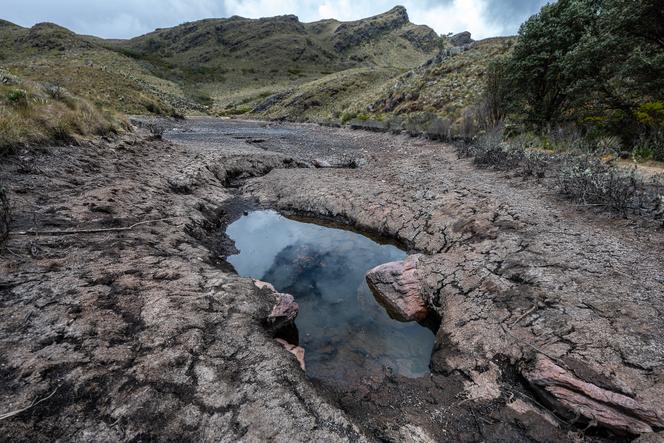
The “Pacific’s enfant terrible” could unleash its fury this year. The El Niño phenomenon, a warming of the equatorial Pacific Ocean, has a high likelihood of reappearing in the coming months. The probability of its emergence reaches 62% between June and August and 80% in fall, according to the US National Oceanic and Atmospheric Administration (NOAA) in an analysis published on March 12. On Thursday, March 19, the International Research Institute for Climate and Society at Columbia University (New York) even estimated this risk at 80% as early as this summer.
This natural oscillation is being closely monitored because it acts as an amplifier of climate change: It pushes up the global average temperature and favors the occurrence of extreme events in many regions of the world.
El Niño occurs on average every two to seven years and usually lasts between nine months and a year. The previous episode, between 2023 and 2024, turned out to be the fifth strongest on record, although it did not reach an extreme level.
An increase of 0.2°C to 0.3°C in the global temperature
For now, the Pacific remains under the influence of La Niña – its opposite phase, which is associated with cooling. But this episode is expected to end in April, giving way to a neutral phase before a possible shift. In that case, El Niño would strengthen throughout autumn before peaking between December and January – the period from which it takes its name, in reference to the child Jesus (El Niño Jesus in Spanish). Its potential intensity, however, remains highly uncertain. NOAA estimates the probability of a “strong” event between October and December at about one in three.
You have 66.17% of this article left to read. The rest is for subscribers only.