
Does possible Piney sale mean Denver Water is developing a future Wolcott-area reservoir?
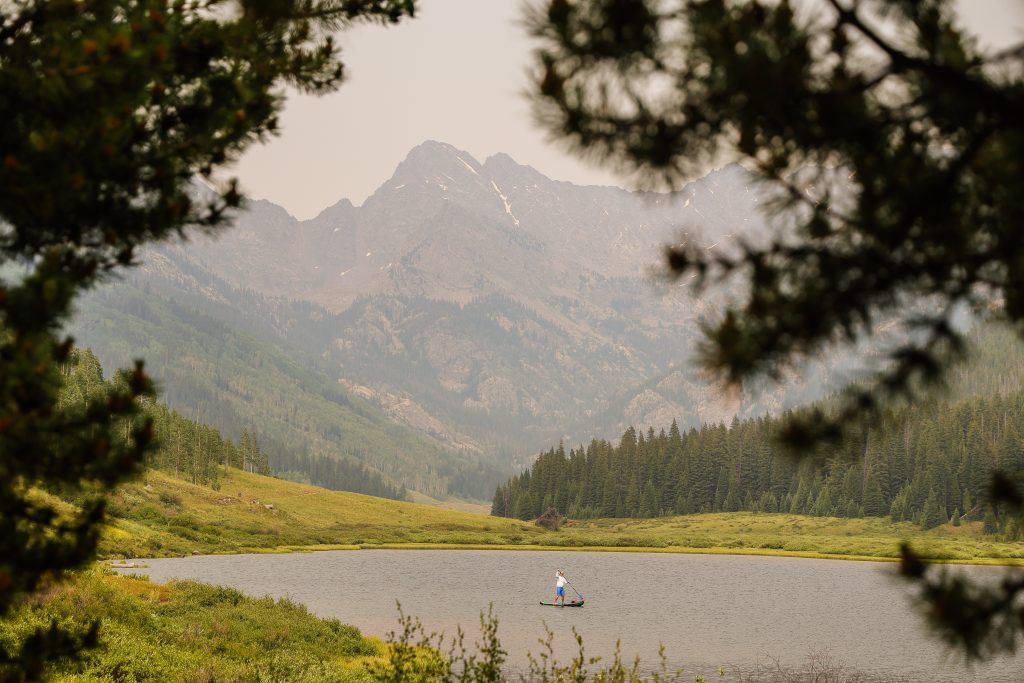
With town of Vail officials now closely monitoring the situation 13 miles north of town at Piney River Ranch — a private retreat now in its final summer of operation on 60 acres of leased Denver Water land along the shores of Piney Lake — the question of what the state’s largest water utility is up to hovers over the Gore Range like a monsoonal rain cloud in late July.
Denver Water is exploring “surplussing” the 60-acre inholding in the White River National Forest, since it relinquished its water rights associated with the property to settle litigation in 2007. Surplussing would be an official declaration that could lead to the sale of the property. It did not offer a long-term lease extension to the ranch operators, who are shutting down in September.
The Vail Daily asked Denver Water to detail its plans in Eagle County and whether the possible sale of the Piney property means the utility is looking to use those resources to develop other water rights locally, including a future reservoir near Wolcott.
According to Aspen Journalism, “the Glenwood Springs-based Colorado River Water Conservancy District has rights from 1972 for the 66,000-acre-foot Wolcott Reservoir on Ute Creek in Eagle County, and Denver Water has plans for the 350,000-acre-foot Eagle-Colorado Reservoir on Alkali Creek in Eagle County using water rights from 2007.”
An acre foot is approximately 326,000 gallons of water.
Support Local Journalism
“The Eagle-Colorado Reservoir water storage right along with water rights for diversion of water from the Eagle River and the Colorado River continue to be viable water rights but were modified as part of the 2007 settlement agreement,” Denver Water spokesperson Todd Hartman explained in an email in response to Piney inquiries earlier this month.
As part of the 2007 settlement, which was negotiated following litigation filed by local water districts, the modifications included limiting the diversion from the Eagle River to 500 cfs (cubic feet per second), abandoning the gravity diversion point, and limiting the diversion from the Colorado River to 600 cfs.
“The reservoir would be a joint-use reservoir limiting the total volume of the Eagle-Colorado Reservoir and the River District’s Wolcott Reservoir to a total of 350,000 acre-feet,” Hartman added. “Use of the reservoir is limited to on-site recreation, direct beneficial uses within the Colorado River basin, indirect beneficial uses by replacement, substitution, and exchange by West Slope and East Slope water users, and endangered fish flow purposes. There shall be no direct delivery to the East Slope.”
And that’s why longtime Boulder water attorney Glenn Porzak, who negotiated that 2007 settlement, says Denver Water is unlikely to ever move ahead with its Eagle County reservoir plans.
“The only thing they could really do was a Wolcott reservoir, but the water in the Wolcott reservoir could not be transmountain diverted,” Porzak said in a phone interview. “That was a big, big thing. And I haven’t looked at it in a while, but basically, it had to be a joint venture with the Eagle River Water and Sanitation District, the Upper Eagle Regional Water Authority and Eagle County.”
Porzak, who also helped negotiate the Eagle River MOU in the 1990s, just thinks Denver Water is considering whether or not to surplus the Piney property because it no longer has any water rights attached to it. And he adds it’s unlikely the utility will develop its Wolcott rights.
“They kept the placeholder, but in my opinion, there’s real no use,” Porzak said. “They’re not going to spend the money to build a reservoir there. And while they own property there, they don’t own all the property, and it has a much more limited use for them.”

Denver Water services 1.5 million customers in the Denver metro area, drawing most of its diversions from the Fraser River in Grand County and Dillon Reservoir in Summit County. Overall, it’s estimated Denver Water gets about 50% of its water from transmountain diversions from the Western Slope to the eastern side of the Continental Divide.
“That’s a good reservoir site for the Western Slope,” Porzak said of Wolcott. “I don’t think it’s a great wet reservoir site for Denver Water because they can’t transmountain divert it. But maybe you could store historic consumptive use credits in that water right, in that storage facility. And that would be an aid against any compact call in the future.”
If Denver Water is looking to cash out on its Piney property, Porzak said its far more likely the utility would funnel those funds into its ongoing Gross Reservoir expansion of its dam on South Boulder Creek, which also holds water diverted from the Fraser River via the Moffat Tunnel.
“I mean, that’s where they threw their money and a lot of money to do that enlargement,” Porzak said. “That was kind of the decision that they made. I just don’t see realistically that any of that’s (Wolcott) part of their future game plan.”